
Biggest Issues Shaping the World Today: What Are the Major Global Challenges?
The world is changing faster than ever, and many of the biggest issues shaping the world today are interconnected. Climate change affects economies and migration, geopolitical tensions influence energy and food prices, artificial intelligence is transforming jobs and education, while inequality continues to affect opportunities across societies. At the same time, population growth, urbanization, public health concerns, cybersecurity threats, and resource shortages are creating new challenges for governments, businesses, and communities.
Understanding these issues is important because decisions made today can influence the economic, social, environmental, and political future of generations to come. But what are the biggest global challenges facing humanity, and why do they matter so much?
What Are the Biggest Issues Shaping the World Today?
The biggest issues shaping the world today are not limited to one country or region. They cross borders and often require international cooperation. Some problems develop gradually, while others can create immediate crises.
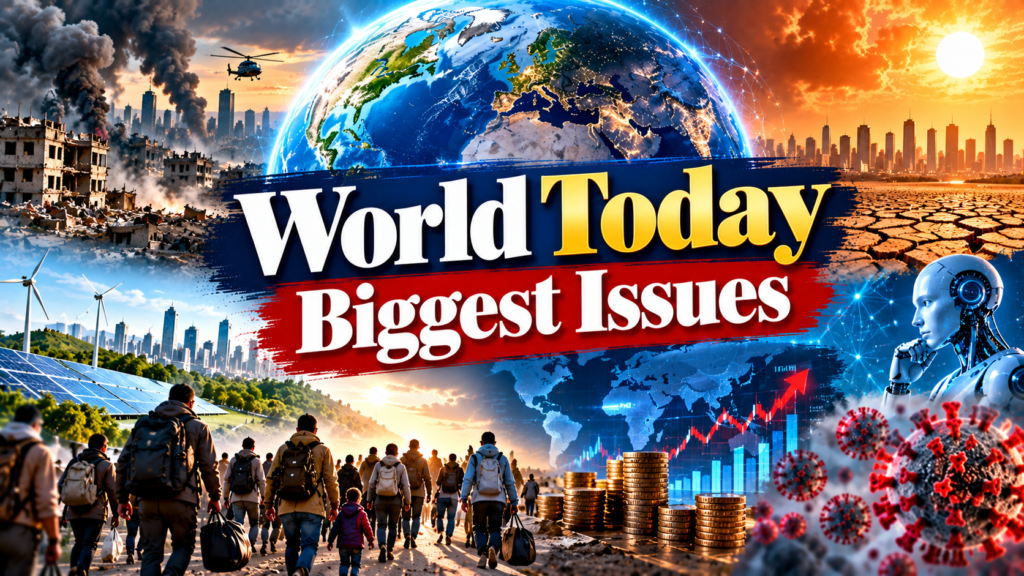
Among the most important global issues are:
- Climate change and environmental degradation
- Geopolitical conflicts and international security
- Economic inequality and the cost of living
- Artificial intelligence and technological disruption
- Global health and healthcare access
- Migration and refugee movements
- Food and water security
- Energy security and the transition to cleaner energy
- Cybersecurity and digital threats
- Education and the future of employment
- Population growth and demographic change
- Human rights and social inequality
Each of these biggest issues shaping the world today challenges can influence the others, making global problems increasingly complex.
Why Is Climate Change One of the Biggest Global Issues Today?
Climate change remains one of the most significant challenges facing the world. Rising temperatures, changing weather patterns, melting ice, sea-level rise, droughts, floods, and extreme heat can affect communities, agriculture, infrastructure, economies, and ecosystems.
The issue is not simply about warmer temperatures. Climate change can influence food production, water availability, public health, insurance costs, migration, and economic development. Countries that contribute relatively little to global emissions can also face severe consequences because of their geographic and economic vulnerability.
Why is climate change particularly difficult to address? Modern economies have historically depended heavily on fossil fuels for electricity, transportation, manufacturing, and heating. Moving toward cleaner energy requires significant investment, infrastructure development, technological innovation, and changes in consumption patterns.
Some of the major climate-related priorities include:
- Reducing greenhouse-gas emissions
- Expanding renewable energy
- Improving energy efficiency
- Protecting forests and biodiversity
- Building climate-resilient infrastructure
- Preparing cities for extreme weather
- Supporting vulnerable communities
- Developing low-carbon technologies
The challenge is finding a balance between environmental protection, economic development, energy affordability, and social stability.
How Are Geopolitical Conflicts Shaping the World?
Geopolitical tensions are another major issue affecting the international community. Competition between countries can influence diplomacy, military spending, trade, energy supplies, technology, and global markets.
Conflicts can have consequences far beyond the countries directly involved. They can disrupt supply chains, increase food and energy prices, create refugee movements, and affect international cooperation.
Why are geopolitical tensions becoming increasingly important? The global system includes multiple major powers with different strategic interests. Competition over territory, resources, technology, trade routes, and political influence can create friction.
At the same time, diplomacy remains an essential tool for preventing escalation and resolving disputes. International organizations, regional alliances, negotiations, humanitarian efforts, and economic cooperation all play important roles in maintaining global stability.
Is Economic Inequality Still a Major Problem Around the World?
Economic inequality continues to shape societies and political debates. While economic growth has created wealth and improved living standards in many parts of the world, opportunities and income are not distributed equally.
Why does inequality matter? Large economic gaps can affect access to education, healthcare, housing, technology, and employment. When people feel excluded from economic opportunities, social dissatisfaction can increase.
The cost of living has also become a major concern for many households. Housing, food, transportation, education, and healthcare costs can place pressure on family budgets.
Reducing inequality does not necessarily mean creating identical incomes for everyone. Instead, many policymakers focus on improving access to opportunities and essential services.
Important biggest issues shaping the world today approaches can include:
- Expanding access to quality education
- Supporting job creation
- Improving worker skills
- Encouraging entrepreneurship
- Strengthening social safety nets
- Increasing financial inclusion
- Making essential services more accessible
- Supporting small and medium-sized businesses
The future of economic inequality will depend heavily on technological change, education, government policy, demographic trends, and global economic growth.
How Is Artificial Intelligence Changing the World?
Artificial intelligence has quickly become one of the biggest technological forces shaping modern society. AI can influence business, healthcare, education, transportation, entertainment, scientific research, finance, and communication.
But does AI represent only an opportunity? Not necessarily. AI can increase productivity and help solve complex problems, but it can also create concerns about employment, misinformation, privacy, bias, cybersecurity, and the responsible use of technology.
One of the biggest questions is how AI will affect jobs. Some tasks may become automated, while other jobs may change rather than disappear completely. New occupations may also emerge around AI development, data management, cybersecurity, digital governance, and human-AI collaboration.
As AI becomes more powerful, societies will need to consider:
- AI ethics and responsible development
- Protection of personal data
- Workplace transformation
- Digital literacy
- AI regulation
- Misinformation and deepfakes
- Algorithmic bias
- Cybersecurity
- Access to AI technology
The key question may not simply be whether AI will replace humans, but how humans and AI will work together.
Why Is Global Health Still a Critical Issue?
Health remains one of the most important global concerns. Diseases can spread across borders rapidly, while healthcare systems in some regions continue to face shortages of doctors, medicines, facilities, and funding.
Global health challenges include infectious diseases, chronic illnesses, mental health concerns, aging populations, healthcare inequality, and the ability of countries to respond to future health emergencies.
Why is international cooperation important in healthcare? Diseases do not recognize national borders. Surveillance, scientific research, vaccine development, medical supply chains, and public-health communication can all require cooperation between countries.
Healthcare systems also need to become more resilient. That means investing in medical infrastructure, healthcare workers, digital health technologies, disease prevention, and emergency preparedness.
How Is Migration Changing the Global Landscape?
Migration is another major issue shaping the world. People move between countries and regions for many reasons, including employment, education, family reunification, conflict, economic hardship, and environmental pressures.
Migration can create opportunities for both migrants and destination countries. Migrant workers contribute to many economies, fill labor shortages, start businesses, and bring cultural diversity.
However, rapid or poorly managed migration can also create pressure on housing, infrastructure, public services, and political systems.
The challenge is developing migration policies that protect human dignity while addressing the economic and social realities faced by both migrants and host communities.
Important areas of discussion include:
- Refugee protection
- Legal migration pathways
- Border management
- Integration
- Employment rights
- Human trafficking prevention
- International cooperation
- Support for displaced populations
Could Food Security Become a Bigger Global Challenge?
Food security is closely connected to climate, agriculture, economics, conflict, and population growth. A secure food system requires people to have reliable access to sufficient, safe, and nutritious food.
Climate-related disasters can damage crops and reduce agricultural productivity. Conflicts can disrupt farming, transportation, trade, and food distribution. Economic instability can also make food unaffordable for vulnerable households.
How can countries strengthen food security?
They can invest in climate-resilient agriculture, modern irrigation, sustainable farming practices, agricultural technology, better storage systems, and efficient supply chains.
Reducing food waste is another important opportunity. Large amounts of food are lost or wasted at different stages of production, transportation, retail, and consumption.
Why Is Water Scarcity Becoming a Global Concern?
Water is one of the world’s most essential resources, yet many communities face water stress. Population growth, urbanization, pollution, climate change, inefficient water use, and changing rainfall patterns can all affect water availability.
Why does water scarcity matter beyond drinking water? Agriculture requires enormous quantities of water, while industries and energy systems also depend on reliable supplies. Water shortages can therefore affect food production, economic development, public health, and social stability.
Countries can address water challenges through:
- Water conservation
- Efficient irrigation
- Wastewater treatment and reuse
- Infrastructure investment
- Pollution prevention
- Rainwater management
- Sustainable groundwater use
- Better water governance
Water management is likely to become increasingly important as cities grow and climate patterns change.
How Is the Global Energy Transition Changing Economies?
Energy is fundamental to modern life. Homes, factories, transportation networks, hospitals, data centers, and businesses all require reliable energy.
At the same time, countries are attempting to reduce dependence on high-emission energy sources. This has accelerated interest in solar power, wind energy, battery storage, electric vehicles, nuclear energy, hydrogen, and other technologies.
But the transition presents challenges. Countries must maintain reliable and affordable energy while investing in new infrastructure.
The energy transition can also reshape global economic relationships because countries may compete for critical minerals, technology, manufacturing capacity, and energy infrastructure.
Why Is Cybersecurity One of the Biggest Issues of the Digital Age?
As societies become more digitally connected, cybersecurity becomes increasingly important. Governments, companies, hospitals, financial institutions, schools, and individuals all depend on digital systems.
Cyberattacks can target personal information, financial systems, critical infrastructure, and business operations. Ransomware, identity theft, data breaches, phishing, and other threats can create significant economic and social consequences.
Artificial intelligence can make cybersecurity more complicated because the same technologies can potentially be used by defenders and attackers.
Individuals can improve their digital security by using strong passwords, multifactor authentication, software updates, secure networks, and careful online practices. Organizations also need strong security policies, employee training, monitoring systems, and emergency-response plans.
What Does the Future of Work Look Like?
The workplace is undergoing major changes because of automation, artificial intelligence, remote work, digital platforms, robotics, and evolving consumer behavior.
What skills will workers need in the future? Technical knowledge will remain important, but human capabilities such as communication, creativity, critical thinking, adaptability, collaboration, and problem-solving are also likely to remain valuable.
Education systems therefore face an important challenge: preparing students for jobs that may not yet exist.
Businesses and governments may need to invest more heavily in lifelong learning and reskilling so workers can adapt as industries evolve.
Why Is Education One of the Most Important Global Priorities?
Education affects almost every other global challenge. People with access to quality education generally have greater opportunities to participate in the economy and contribute to their communities.
Yet education access and quality remain unequal in many parts of the world. Conflict, poverty, displacement, infrastructure shortages, digital divides, and economic inequality can prevent children and adults from receiving the education they need.
Technology can expand access through online learning and digital resources, but it can also create new inequalities if students lack reliable internet access or suitable devices.
The future of education will likely involve a combination of classroom learning, digital tools, personalized instruction, vocational training, and lifelong education.
How Are Population Changes Affecting the World?
Demographic change is another important global trend. Some countries are experiencing population growth, while others are dealing with aging populations and declining birth rates.
Population changes can affect labor markets, pension systems, healthcare demand, housing, education, and government spending.
An aging population may increase demand for healthcare and elderly care, while younger and rapidly growing populations may require more schools, jobs, housing, and infrastructure.
Understanding demographic trends is therefore essential for long-term planning.
Why Are Human Rights Still a Major Global Issue?
Human rights remain central to discussions about freedom, equality, justice, security, and dignity. Issues such as discrimination, freedom of expression, access to education, workers’ rights, gender equality, and the treatment of displaced people continue to influence societies around the world.
Technology has also introduced new human-rights questions. Digital surveillance, facial recognition, artificial intelligence, online censorship, data collection, and algorithmic decision-making can create difficult ethical debates.
Protecting human rights in an increasingly digital and interconnected world requires effective institutions, transparent policies, public awareness, and accountability.
How Does Misinformation Affect the Modern World?
The internet has made information easier to access than ever, but it has also made misinformation easier to spread.
False or misleading information can influence public opinion, financial decisions, health behavior, elections, social relationships, and international tensions.
Social media algorithms can amplify content that attracts attention, sometimes allowing sensational or misleading claims to spread rapidly.
How can people respond? Media literacy is increasingly important. Individuals should evaluate sources, check claims against reliable information, look for evidence, and avoid sharing content simply because it is emotionally compelling.
Can Global Cooperation Solve the World’s Biggest Problems?
Many of the biggest issues shaping the world today cannot be solved by one country acting alone. Climate change, pandemics, cybercrime, migration, financial instability, international conflicts, and environmental degradation all have cross-border consequences.
Global cooperation does not mean every country must agree on every issue. It means countries can identify areas where cooperation produces better outcomes than isolation.
International agreements, scientific partnerships, humanitarian programs, trade relationships, diplomatic negotiations, and regional cooperation can all contribute to addressing global challenges.
What Can Individuals Do About Global Problems?
Global challenges can sometimes seem too large for individuals to influence, but personal decisions and community actions can contribute to broader change.
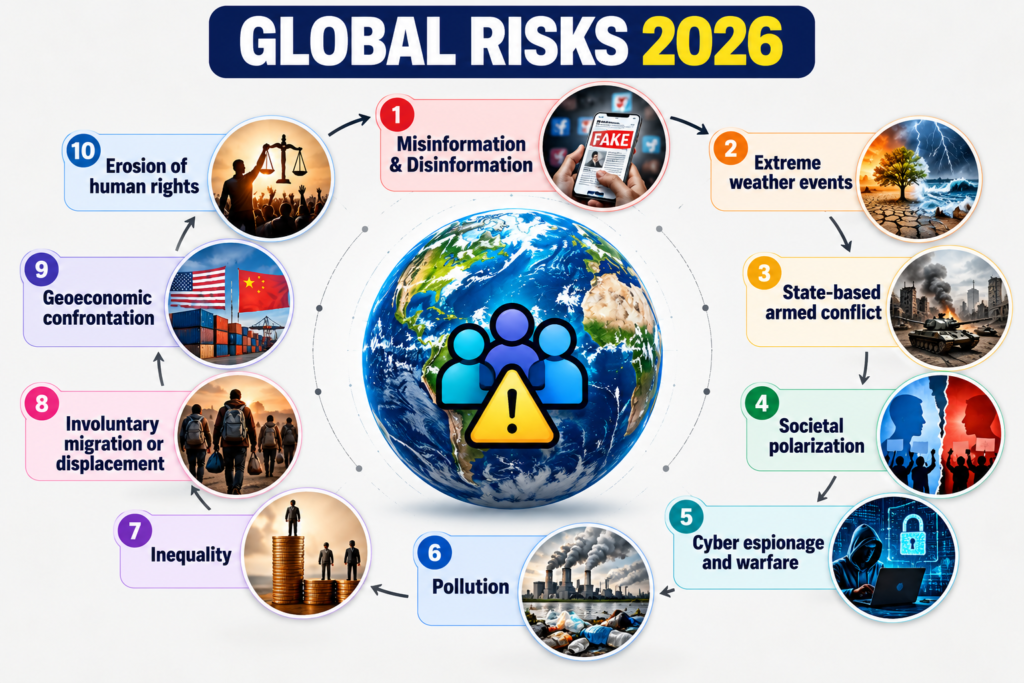
People can:
- Stay informed through credible sources
- Reduce unnecessary waste
- Use energy and water responsibly
- Develop digital and media literacy
- Support education and community initiatives
- Participate responsibly in civic life
- Respect people from different backgrounds
- Learn new skills
- Protect personal cybersecurity
- Make thoughtful purchasing and consumption decisions
Individual action alone cannot solve every global problem, but informed communities can influence businesses, institutions, and governments.
What Will Shape the World’s Future?
The future will be shaped by the interaction of technology, climate, economics, demographics, politics, education, and human behavior. No single issue exists in isolation.
For example, climate change can influence migration. Migration can affect politics and labor markets. AI can change employment and economic productivity. Economic inequality can influence social stability. Energy policy can affect both climate goals and geopolitical relationships.
This interconnectedness means that solving global challenges requires systems thinking rather than isolated solutions.
What Are the Biggest Priorities for a Better Future?
Although global challenges are complex, several priorities can help build a more resilient future:
- Strengthen international cooperation to address problems that cross borders.
- Invest in education and skills so people can adapt to technological and economic changes.
- Accelerate sustainable development while maintaining access to affordable energy.
- Improve healthcare systems and global preparedness for health emergencies.
- Protect the environment and increase resilience to climate-related risks.
- Promote inclusive economic growth and expand access to opportunity.
- Strengthen cybersecurity as digital dependence increases.
- Support responsible artificial intelligence through appropriate governance and public awareness.
- Improve food and water security through sustainable resource management.
- Protect human rights and democratic institutions while encouraging social inclusion.
What Is the Most Important Global Issue of All?
It is difficult to identify one single issue as the most important because global challenges are deeply connected. Climate change, geopolitical instability, inequality, technological disruption, health, migration, food security, and cybersecurity can all influence one another.
Perhaps the biggest challenge is the world’s ability to cooperate while facing rapid change. Countries, businesses, communities, and individuals must make decisions under conditions of uncertainty.
The choices made today will influence what kind of world future generations inherit.
Conclusion: Why Should We Understand the Biggest Issues Shaping the World Today?
The biggest issues shaping the world today affect almost every aspect of modern life, from the economy and environment to technology, health, education, security, and international relations. Understanding these challenges is the first step toward making informed decisions about the future.
The world faces significant risks, but it also has enormous opportunities. Advances in technology, renewable energy, medicine, education, science, and international cooperation can help societies address some of their most difficult problems.
The future will not be determined by one technology, one government, or one global event. It will be shaped by millions of decisions made by individuals, organizations, and countries.
For that reason, staying informed about major global issues is more important than ever. The better societies understand the challenges ahead, the better prepared they can be to create a safer, more sustainable, innovative, and inclusive future.
Read More – Digital Nomad Communities in Europe