
Most Unique Traditions Across Europe: Fascinating Customs, Festivals, and Cultural Celebrations
Europe is a continent rich in history, cultural diversity, and fascinating traditions that have survived for centuries. From colorful carnivals and ancient seasonal celebrations to unusual local customs and traditional ceremonies, every European country has its own way of preserving its identity. Unique traditions across Europe reflect the beliefs, values, history, and everyday lives of the people who practice them.
What makes European traditions particularly interesting is the way they combine ancient customs with modern lifestyles. Some celebrations are rooted in religious beliefs, while others welcome the changing seasons, celebrate local legends, or bring communities together through music, food, dance, and traditional clothing.
Whether it is Spain’s famous tomato festival, Scotland’s traditional Highland Games, Italy’s historic horse races, or Finland’s unusual wife-carrying competition, Europe’s cultural landscape offers countless experiences that surprise and inspire visitors.
Exploring the most unique traditions across Europe provides an opportunity to understand the continent beyond its famous landmarks and tourist attractions. These customs offer a glimpse into the stories, relationships, and cultural identities that make European societies distinctive.
1. What Is La Tomatina, and Why Does Spain Celebrate It?
One of the most unusual festivals in Europe is La Tomatina, held in the Spanish town of Buñol. This famous event is known for its enormous tomato fight, during which participants throw ripe tomatoes at one another in a lively, colorful celebration.
La Tomatina takes place annually, traditionally on the last Wednesday of August. Although its origins are associated with a local street altercation in the 1940s, the festival gradually developed into an internationally recognized event.
Today, the celebration attracts visitors who want to experience an unforgettable combination of excitement, humor, and community spirit. Participants gather in designated areas, follow event safety rules, and enjoy the playful atmosphere created by thousands of flying tomatoes.
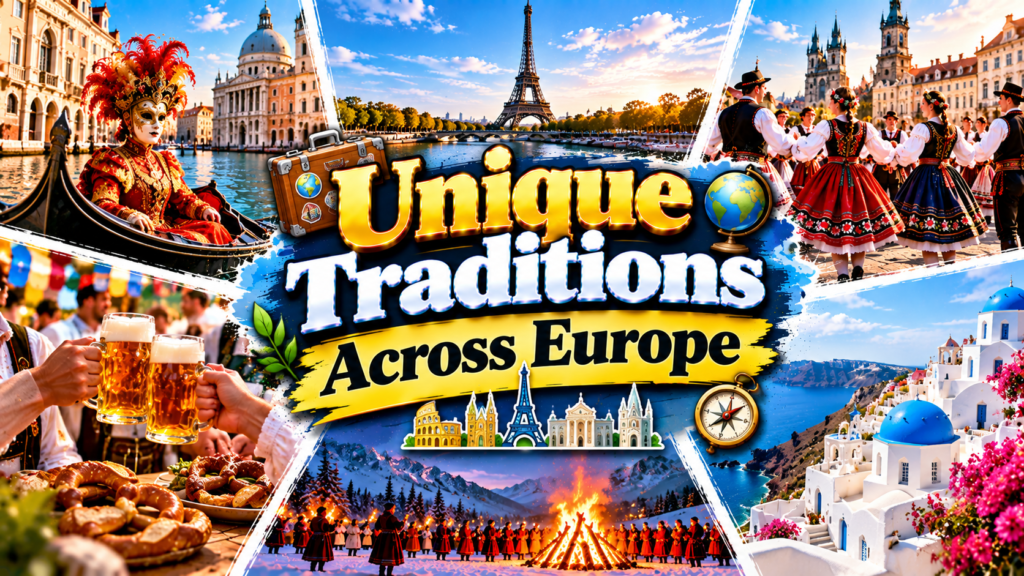
Why is La Tomatina so popular?
- It offers a playful alternative to conventional cultural festivals.
- It attracts visitors from different countries and backgrounds.
- It showcases the festive and social character of Spanish culture.
- It gives the small town of Buñol international recognition.
La Tomatina demonstrates how an unusual local activity can evolve into a celebrated cultural event while continuing to bring people together.
2. Why Is the Venice Carnival One of Italy’s Most Fascinating Traditions?
The Venice Carnival is one of the most recognizable cultural celebrations in Italy. Famous for its elaborate masks, elegant costumes, and historic atmosphere, the carnival transforms Venice into a spectacular celebration of art, history, and creativity.
The tradition dates back centuries, with historical records documenting the carnival in medieval Venice. Masks became particularly significant because they allowed people to temporarily conceal their identities and participate in social activities with fewer distinctions based on social status.
Today, the Venice Carnival features costume parades, masked gatherings, cultural performances, and artistic events throughout the city. Visitors can admire beautifully decorated masks inspired by traditional Venetian designs, including the white-faced Bauta and the long-nosed Medico della Peste.
What makes the Venice Carnival unique?
- Traditional masks reflect Venice’s artistic heritage.
- Historical costumes recreate the atmosphere of earlier centuries.
- The festival combines theater, fashion, music, and craftsmanship.
- The city’s canals and historic architecture provide a distinctive setting.
The Venice Carnival remains an important example of how traditional celebrations can preserve historical identity while inspiring contemporary artists and travelers.
3. What Is the Cheese-Rolling Tradition in England?
England is home to one of Europe’s most unusual competitions: the Cooper’s Hill Cheese-Rolling event near Brockworth in Gloucestershire.
During this annual event, a round of cheese is released down a steep hillside, and participants chase after it. The first person to reach the bottom according to the event’s rules is traditionally declared the winner.
The competition is famous for its unpredictable nature. Because the hill is steep and uneven, participants frequently stumble or tumble while attempting to catch the rolling cheese. For this reason, the event requires careful organization and carries a risk of injury.
Although the precise origins of cheese-rolling are uncertain, the custom is often associated with older rural traditions and local celebrations.
Why does cheese-rolling attract so much attention?
- It preserves a distinctive local custom.
- It demonstrates the importance of community participation.
- It combines competition, humor, and local pride.
- It attracts spectators and international media attention.
The event highlights the diversity of British cultural traditions and demonstrates that some of Europe’s most memorable celebrations are rooted in small communities rather than grand historical institutions.
4. Why Are Highland Games an Important Scottish Tradition?
The Highland Games are an important part of Scotland’s cultural heritage. These events combine traditional athletic competitions, music, dancing, and community celebrations, often against the backdrop of Scotland’s spectacular countryside.
Some of the best-known competitions involve traditional strength events such as the caber toss, hammer throw, and stone put. Participants also take part in running races and other athletic activities.
The caber toss is particularly distinctive. Competitors attempt to lift and throw a large wooden pole so that it turns end over end and lands in a particular direction. The objective is based on the accuracy of the landing rather than simply the distance thrown.
Highland Games frequently feature bagpipe performances, traditional Scottish dancing, and displays of regional dress, including kilts.
What makes the Highland Games culturally significant?
- They celebrate Scotland’s historical and regional identity.
- They preserve traditional music and dance.
- They encourage participation across generations.
- They bring communities and visitors together through sport and entertainment.
Although individual games vary in size and programming, they remain a meaningful expression of Scottish heritage and community life.
5. What Is the Krampus Tradition in Austria and Other Alpine Regions?
Krampus is a fascinating winter folklore tradition found in Austria and several neighboring Alpine regions. In traditional stories, Krampus is a horned figure who accompanies Saint Nicholas during the early December season.
While Saint Nicholas rewards well-behaved children in the familiar tradition, Krampus represents a frightening counterpart associated with mischief and the consequences of bad behavior.
Krampus celebrations often include participants wearing elaborate masks, fur costumes, horns, and bells. During events known as Krampus runs, performers move through streets while creating a dramatic atmosphere.
The appearance of Krampus varies by region, and contemporary celebrations may combine traditional folklore with modern entertainment.
Why is the Krampus tradition so distinctive?
- It combines Christian seasonal customs with older Alpine folklore.
- Its elaborate costumes demonstrate traditional craftsmanship.
- It preserves regional legends through public performances.
- It creates a striking contrast with the cheerful atmosphere of many Christmas celebrations.
Krampus has also gained international popularity through photographs, films, and social media, making this Alpine tradition recognizable far beyond its original cultural setting.
6. Why Do People Celebrate Midsummer in Sweden?
Midsummer is one of Sweden’s most beloved annual celebrations. It welcomes the summer season and is closely connected with nature, community, traditional food, and the long daylight hours experienced in northern Europe.
The celebration takes place around the summer solstice, usually in late June. Families and friends gather in gardens, parks, villages, and countryside locations to enjoy meals, sing songs, and participate in traditional activities.
One of the most recognizable features is the midsummer pole, often decorated with leaves and flowers. Participants may dance around it while singing traditional songs.
Typical Midsummer activities include:
- Decorating homes and gathering places with flowers.
- Wearing flower crowns.
- Enjoying traditional meals featuring potatoes, herring, and seasonal ingredients.
- Singing, dancing, and spending time outdoors.
- Gathering with family and friends to celebrate the arrival of summer.
Why is Midsummer so important in Sweden? The celebration reflects the country’s close relationship with seasonal changes and the natural environment. After the long winter months, the extended daylight creates an opportunity for outdoor gatherings and shared experiences.
Midsummer remains an excellent example of how a seasonal tradition can become an important part of national identity.
7. What Is the Battle of the Oranges in Italy?
The Battle of the Oranges is a remarkable carnival tradition held in Ivrea, a town in northern Italy. During this unusual event, teams participate in organized orange-throwing battles that fill parts of the town with color and excitement.
The celebration forms part of Ivrea’s historic carnival and is connected with a local legend about resistance to a tyrannical ruler. The modern event is often interpreted as a symbolic reenactment of a popular uprising.
Participants are divided into teams, and the orange battles take place in designated areas under established event rules. The festival also includes historical processions, traditional costumes, and other carnival activities.
What makes the Battle of the Oranges special?
- It combines local history with public participation.
- It reflects the importance of storytelling in Italian traditions.
- It transforms ordinary streets into a large-scale cultural event.
- It brings residents together through shared historical identity.
The festival is unusual even by European carnival standards. However, it also involves considerable physical activity and potential injury, so participants and visitors should follow official safety instructions.
8. How Does Spain Celebrate the Night of San Juan?
The Night of San Juan is a popular midsummer celebration in parts of Spain, particularly along Mediterranean coastal areas. Celebrated around June 23 and 24, it is associated with bonfires, gatherings, music, and traditions welcoming the summer season.
The celebration combines elements of the Christian feast of Saint John the Baptist with older seasonal customs connected with the summer solstice.
In coastal communities, people gather on beaches to enjoy meals, watch fireworks where permitted, and participate in local celebrations. Bonfires have traditionally symbolized purification, renewal, and the departure of negative influences.
Some regions have their own customs, which may include jumping over small fires under controlled conditions or entering the sea at midnight.
Why is the Night of San Juan so popular?
- It marks a seasonal transition into summer.
- It creates opportunities for families and friends to gather.
- It combines local folklore with religious and cultural influences.
- It encourages community celebrations in coastal towns and cities.
Traditions vary considerably across Spain, so the experience in Barcelona may differ from celebrations in Galicia, Alicante, or other regions. Visitors should follow local fire regulations and beach safety guidance.
9. What Makes the Carnival of Binche in Belgium So Special?
The Carnival of Binche is one of Belgium’s most distinctive traditional celebrations. Held in the town of Binche, it is particularly famous for the Gilles, masked performers who wear elaborate costumes and participate in ceremonial processions.
The main celebrations take place during the days leading up to Ash Wednesday. The Gilles traditionally wear distinctive outfits, wax masks, and decorative accessories. On Shrove Tuesday, they may wear tall feathered hats and throw oranges to spectators as a symbolic gesture of good fortune.
The carnival has deep roots in local community life, and participation is closely connected with established customs and social traditions.
Why is the Carnival of Binche important?
- It preserves traditional costumes, music, and performances.
- It reflects the strong community identity of the town.
- It brings together generations of local residents.
- It has received international recognition for its cultural significance.
The carnival demonstrates that traditional festivals are not simply entertainment. They can also serve as living expressions of collective memory and local identity.
10. Why Is Finland’s Wife-Carrying Competition So Unusual?
Finland is known for its outdoor activities and distinctive sporting events, including the wife-carrying competition associated with Sonkajärvi.
In this competition, participants carry a partner through an obstacle course that may include water and uneven terrain. The objective is to complete the course according to the event’s rules.
Despite its unusual name, the event is generally presented as a lighthearted sporting competition. Participants are not necessarily married couples, and the precise eligibility requirements depend on the organizers’ rules.
The competition has attracted international attention because of its unusual format and entertaining atmosphere.
What makes wife-carrying distinctive?
- It combines physical endurance with balance and coordination.
- It encourages teamwork between partners.
- It reflects Finland’s playful approach to some sporting events.
- It attracts competitors and spectators from different countries.
The competition illustrates how unusual sporting traditions can become part of a destination’s identity and attract visitors interested in experiences beyond conventional tourism.
11. What Is the Running of the Bulls in Pamplona, Spain?
The Running of the Bulls, known locally as the encierro, is one of Spain’s most internationally recognized traditions. It takes place during the San Fermín festival in Pamplona, Navarre, in July.
During the traditional run, bulls move along a designated route through the city’s streets toward the bullring. Participants run ahead of the animals, creating a fast-paced and potentially dangerous spectacle.
The wider San Fermín festival includes religious ceremonies, music, parades, traditional clothing, food, and public celebrations.
Why is the Running of the Bulls famous?
- It is associated with a historic regional festival.
- It attracts international attention and tourism.
- It forms part of a broader celebration of Navarre’s cultural identity.
- It has inspired extensive discussion about animal welfare and public safety.
The run carries a substantial risk of serious injury. It is not suitable for inexperienced participants, and anyone considering attending should consult official guidance and understand the applicable rules.
The tradition demonstrates how cultural heritage can remain popular while also generating important discussions about safety, ethics, and changing social attitudes.
12. How Does Portugal Celebrate the Feast of Saint Anthony?
The Feast of Saint Anthony is a major cultural celebration in Lisbon, Portugal, particularly around June 12 and 13.
Saint Anthony is closely associated with Lisbon and is widely regarded as a patron saint of the city. The festivities combine religious observances with lively street celebrations, music, food, and neighborhood gatherings.
One of the most recognizable features is the decoration of streets with colorful streamers and lights. Local communities organize music and dancing, while grilled sardines become a popular seasonal food.
The celebration also has a romantic dimension. Saint Anthony is associated with matchmaking, and traditional wedding-related events form part of Lisbon’s cultural identity.
What makes this celebration unique?
- It combines religious devotion with public festivities.
- It showcases Lisbon’s neighborhood culture.
- It highlights traditional Portuguese food and music.
- It connects historical customs with contemporary city life.
For visitors, the festival offers a chance to experience Lisbon through its local communities rather than only through monuments and museums.
13. Why Is the Oktoberfest Tradition Important in Germany?
Oktoberfest in Munich is one of the world’s best-known folk festivals. Although internationally associated with beer, it also celebrates Bavarian culture through traditional clothing, music, food, parades, and community gatherings.
The festival originated in 1810, when celebrations were held to mark the marriage of Crown Prince Ludwig of Bavaria and Princess Therese of Saxony-Hildburghausen. The event eventually developed into an annual tradition.
Today, Oktoberfest features large festival tents, traditional Bavarian music, amusement rides, regional foods, and cultural processions.
What makes Oktoberfest more than a beer festival?
- Traditional clothing, including dirndls and lederhosen, is widely worn.
- Bavarian music and dancing feature prominently.
- Regional foods introduce visitors to local culinary traditions.
- Parades and other events celebrate historical and cultural identity.
Although the festival has become an international attraction, its cultural roots remain closely connected with Munich and Bavaria. Visitors can appreciate many aspects of the event without consuming alcohol, including its food, music, performances, and traditional atmosphere.
14. What Is the Walpurgis Night Tradition in Northern Europe?
Walpurgis Night, celebrated on April 30 in several European countries, is associated with seasonal folklore, bonfires, and the arrival of spring.
The celebration is particularly notable in Sweden, Finland, Germany, and parts of Central Europe. Its customs vary between regions, reflecting different historical, religious, and folk influences.
In Sweden, Walpurgis Night, known as Valborg, often includes public bonfires, student celebrations, and traditional songs welcoming spring. In parts of Germany, the night is connected with folklore about witches and gatherings in mountainous areas.
Why is Walpurgis Night culturally significant?
- It marks the transition from winter toward warmer weather.
- It preserves folklore associated with seasonal change.
- It encourages public gatherings and community celebrations.
- It reflects the diversity of European regional customs.
The celebration shows how similar seasonal events can develop different meanings across countries. Although bonfires remain an important feature in many places, visitors should follow local safety rules and attend authorized events.
15. Why Is the Icelandic Christmas Tradition of the Yule Lads Unique?
Iceland has a distinctive Christmas folklore tradition featuring the Yule Lads, known as Jólasveinar. These figures are part of Iceland’s rich storytelling heritage and bring a different character to the Christmas season.
According to modern Icelandic tradition, there are thirteen Yule Lads, each associated with a particular personality or mischievous behavior. They visit children on the thirteen nights leading up to Christmas.
Children traditionally place a shoe on a windowsill. Well-behaved children may receive a small gift, while those who have misbehaved may find a potato instead.
The Yule Lads are connected with the larger folklore of Iceland, including their mother, Grýla, and the Christmas Cat, known as Jólakötturinn.
What makes the Yule Lads special?
- Each character has an individual name and personality.
- The tradition combines humor with lessons about behavior.
- It preserves Icelandic folklore through family storytelling.
- It gives the Christmas season a distinctive national identity.
The Yule Lads demonstrate how local folklore can become an important part of modern holiday celebrations while remaining rooted in older cultural narratives.
16. How Does Greece Celebrate Apokries Carnival?
Apokries is the traditional carnival season in Greece, taking place before the beginning of Orthodox Lent. It is characterized by costumes, parades, music, dancing, and festive gatherings.
Celebrations vary by region, with Patras hosting one of Greece’s best-known carnivals. The city becomes a center of elaborate floats, masked participants, street parties, and organized events.
In other parts of Greece, local customs may involve traditional dances, theatrical performances, or symbolic rituals connected with the changing seasons.
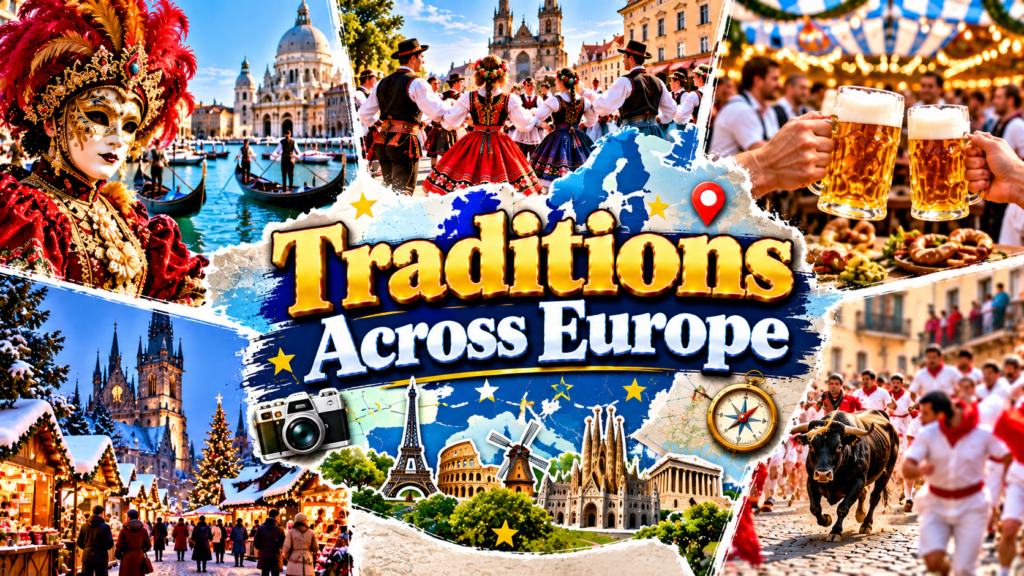
Why is Apokries important in Greek culture?
- It combines local traditions with the Orthodox Christian calendar.
- It encourages public participation and creative expression.
- It preserves regional music, dancing, and costume traditions.
- It offers a festive period before the more restrained season of Lent.
Apokries highlights Greece’s cultural diversity and shows how religious calendars, community life, and public entertainment can influence one another.
17. What Is the Krampuslauf, and How Is It Different From Other Winter Festivals?
The Krampuslauf, or Krampus run, is a public procession in which performers dressed as Krampus move through streets wearing elaborate masks, fur costumes, horns, and bells.
Although closely connected with the broader Krampus tradition, the Krampuslauf places particular emphasis on theatrical performance and the dramatic appearance of the participants.
These events are held in different Alpine communities, especially in Austria, with local variations in costumes, procession routes, and accompanying activities.
What distinguishes a Krampuslauf from other European winter celebrations?
- It emphasizes folklore characters rather than gift-giving alone.
- It showcases detailed handmade masks and costumes.
- It combines historical storytelling with contemporary public performance.
- It preserves a distinctive regional identity during the Christmas season.
The Krampuslauf illustrates the importance of folklore in European cultural life and shows how traditions can remain relevant through organized public events.
18. Why Do European Traditions Matter in the Modern World?
European traditions are important because they connect people with their history, communities, and cultural identities. Although many customs originated centuries ago, they continue to evolve as societies change.
Traditional festivals can support local businesses, encourage tourism, preserve historic crafts, and create opportunities for younger generations to learn about their heritage.
They also encourage cultural exchange. Visitors who attend a regional celebration may discover unfamiliar foods, music, beliefs, and social customs that challenge stereotypes and create a deeper appreciation of cultural diversity.
However, preserving traditions does not mean keeping every custom unchanged. Communities may adapt their celebrations in response to environmental concerns, public safety, animal welfare, and changing social values.
How can people help preserve European traditions?
- Learn about the history and meaning behind local celebrations.
- Support traditional craftspeople, musicians, and community organizations.
- Attend festivals respectfully and follow local guidance.
- Encourage younger generations to learn traditional songs, recipes, and stories.
- Recognize regional differences rather than treating Europe as a single culture.
- Support responsible tourism that benefits local communities.
By understanding these customs in their historical and social contexts, people can appreciate the diversity of Europe while recognizing that cultural heritage is a living part of everyday life.
Conclusion: Which European Tradition Would You Like to Experience?
The most unique traditions across Europe reveal a continent filled with remarkable customs, colorful festivals, unusual competitions, and meaningful cultural celebrations. From the tomato-filled streets of Buñol and the masked elegance of Venice to Sweden’s Midsummer gatherings and Iceland’s mischievous Yule Lads, each tradition tells a story about the people and places that preserve it.
Some celebrations focus on ancient folklore, while others highlight local history, seasonal changes, religious beliefs, or community pride. Despite their differences, they share a common purpose: bringing people together and keeping cultural memories alive.
For travelers, these traditions offer an opportunity to discover Europe beyond its famous landmarks. For residents, they provide a connection to family, history, and regional identity. For anyone interested in world cultures, they demonstrate how customs can remain meaningful across generations.
As Europe continues to evolve, its traditions will likely change alongside modern lifestyles. Yet their ability to create shared experiences and preserve local stories ensures that they will remain an important part of the continent’s cultural landscape.
Whether you dream of watching the Venice Carnival, celebrating Midsummer in Sweden, or discovering a small village festival, exploring Europe’s unique traditions can make any cultural journey more memorable.
The next time you plan a European adventure, consider including a traditional celebration in your itinerary. You may discover that the most unforgettable part of your journey is not a famous monument, but the people, stories, and customs that make each destination unique.
Read More – World Most Livable Cities