
Remote Work Opportunities in Europe: How to Find Jobs, Build Your Career, and Work From Anywhere
Remote work opportunities in Europe have become an attractive option for professionals seeking flexibility, better work-life balance, and access to international employers. Remote work allows employees to perform their duties outside a traditional office, often from home, a coworking space, or another suitable location. Depending on the employer, some positions are fully remote, while others follow a hybrid model that requires occasional office visits. Across Europe, businesses in technology, marketing, finance, customer service, education, consulting, and creative industries offer different types of remote working arrangements.
These opportunities appeal to experienced professionals, recent graduates, freelancers, digital nomads, and people looking to change careers. However, working remotely for a European company does not automatically mean that an employee can live in any European country. Employers may restrict hiring to specific countries because of tax, employment, payroll, data protection, or immigration requirements. Understanding these differences is an essential first step for anyone planning to build a successful remote career in Europe.
Why Are Remote Jobs Becoming Popular Across Europe?
Why are more professionals choosing remote work in Europe? One major reason is the growing demand for flexibility in professional life. Remote employment can reduce commuting time, provide more control over daily schedules, and make it easier to balance personal responsibilities with career goals. Employers can also benefit by recruiting skilled people from a wider geographical area instead of limiting their search to candidates who live near an office. Many businesses use digital collaboration tools, cloud platforms, video conferencing, and project management software to manage distributed teams.
These technologies make it possible for employees to collaborate across cities and countries. Remote work can also help companies reduce certain office expenses and improve access to specialist talent. Nevertheless, remote employment is not suitable for every role or personality. Some employees prefer in-person communication, while others find it challenging to separate working hours from personal time. The best remote arrangement depends on the nature of the job, the employer’s expectations, and the worker’s individual circumstances.
Which Countries Offer Remote Work Opportunities in Europe?
Which countries should job seekers consider when searching for remote employment in Europe? The answer depends on the industry, language requirements, employer policies, and the candidate’s right to work. Several European countries have established technology sectors, international businesses, startup communities, and professional networks that may offer remote or hybrid positions.
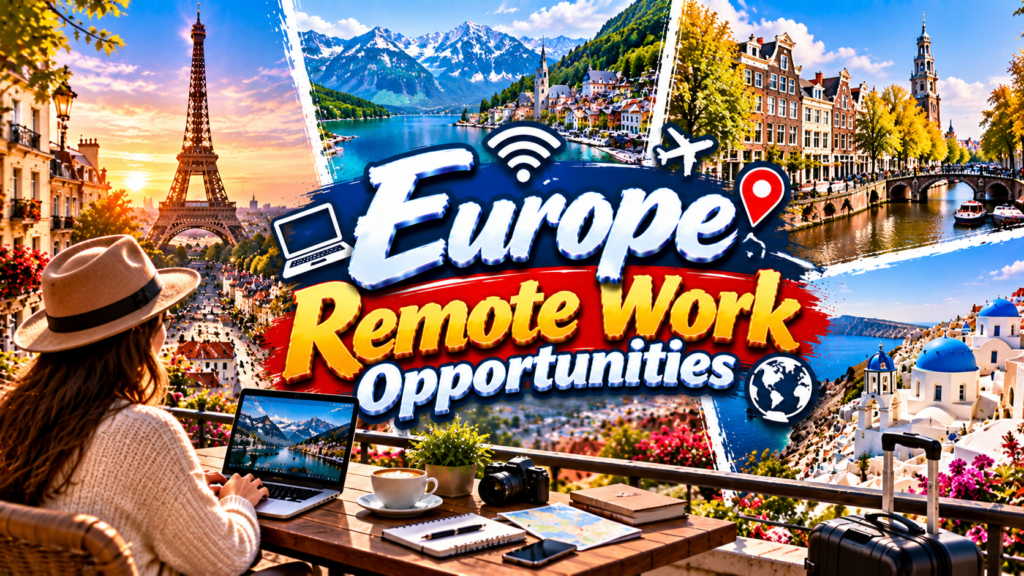
- Germany: Germany offers opportunities in software development, engineering, business operations, digital marketing, consulting, and technology services.
- The Netherlands: International companies and technology businesses provide opportunities in software engineering, customer success, online marketing, and product management.
- Ireland: Ireland’s international business environment includes opportunities in technology, financial services, customer support, sales, and digital operations.
- Spain: Spain attracts remote professionals through opportunities in technology, tourism-related digital services, marketing, design, and international customer support.
- Portugal: Portugal has an active international startup and digital professional community, with opportunities in technology, consulting, and online services.
- France: France offers remote and hybrid roles in technology, communications, finance, design, consulting, and digital business.
- Poland: Poland has opportunities in IT services, software development, business process operations, cybersecurity, and multilingual customer support.
- Sweden and Denmark: These countries have technology-oriented businesses and opportunities in software, product development, digital services, and specialist professional roles.
These examples are starting points rather than a ranking of the best destinations. Job availability changes over time, and a position advertised by a company based in one country may only be open to residents of selected locations. Applicants should read the location and eligibility requirements carefully before applying.
What Are the Best Remote Jobs Available in Europe?
What types of remote jobs are suitable for people who want to work with European employers? The strongest opportunities often involve tasks that can be completed using computers, online communication, digital systems, and measurable project outcomes. Some roles require advanced qualifications, while others focus on practical skills, language ability, customer service, or creative experience.
1. Software Development and IT
Software development is an important field for remote employment because much of the work can be completed online. Companies recruit frontend developers, backend developers, full-stack engineers, mobile app developers, DevOps engineers, and software testers. Candidates with knowledge of programming languages, databases, cloud infrastructure, version control, and application security may find opportunities across different industries. Employers commonly evaluate technical ability through portfolios, coding assessments, interviews, and previous project experience.
2. Digital Marketing and SEO
Why is digital marketing suitable for remote work? Businesses need online visibility, website traffic, leads, and customer engagement regardless of where their employees live. Remote marketing positions may include SEO specialists, content strategists, social media managers, email marketing specialists, paid advertising professionals, and digital marketing executives. Knowledge of keyword research, analytics, search intent, content optimisation, campaign management, and performance reporting can strengthen an application. Candidates can demonstrate their abilities through case studies, published articles, campaign examples, and measurable results.
3. Content Writing and Editing
Content writing offers opportunities for professionals who can communicate clearly and adapt their writing to different audiences. European businesses and international publications may need blog writers, copywriters, technical writers, editors, product description writers, and content researchers. Strong grammar, research skills, originality, and an understanding of SEO are useful advantages. Applicants should create a portfolio featuring relevant writing samples rather than relying only on a résumé. Writers who specialise in technology, business, travel, lifestyle, finance, or other subjects may be able to distinguish themselves in a competitive market.
4. Customer Support and Customer Success
Remote customer support professionals help customers through email, telephone, live chat, and online support systems. Customer success specialists may also help clients use products effectively, solve problems, and maintain long-term relationships with a company. Employers often look for clear communication, patience, problem-solving ability, product knowledge, and familiarity with customer relationship management tools. Knowledge of German, French, Spanish, Italian, Dutch, or other European languages can be particularly valuable for multilingual positions.
5. Graphic Design and Video Editing
Creative professionals can find remote assignments in branding, advertising, website design, social media graphics, motion graphics, animation, and video editing. Employers and clients typically want to see evidence of visual quality, creative thinking, attention to detail, and the ability to meet deadlines. A strong online portfolio can be more persuasive than a long list of general skills. Familiarity with commonly used design and editing software can also improve a candidate’s prospects.
6. Data Analysis and Cybersecurity
Data analysts help organisations understand business performance, customer behaviour, operational efficiency, and market trends. Relevant skills may include spreadsheets, SQL, data visualisation, statistics, and business intelligence tools. Cybersecurity professionals, meanwhile, support the protection of networks, systems, applications, and sensitive information. These roles can require specialist training, practical experience, certifications, and strict compliance with security procedures. Because some positions involve confidential information or regulated systems, not every employer permits them to be performed from any location.
7. Online Teaching and Translation
Online education offers opportunities for language tutors, subject teachers, course creators, and professional trainers. Translation and localisation professionals help businesses adapt websites, software, documents, and marketing materials for different language markets. Teaching positions may require recognised qualifications or previous experience, while translation work often depends on language proficiency, subject knowledge, accuracy, and cultural awareness. Candidates should check whether a particular employer or platform requires formal credentials.
8. Virtual Assistance and Administrative Support
Virtual assistants support businesses with scheduling, email management, research, data entry, customer communication, document preparation, and other administrative tasks. These positions may suit organised applicants who have strong digital skills and reliable internet access. More specialised roles can involve bookkeeping support, executive assistance, project coordination, or e-commerce administration. Applicants should understand the required working hours, software, confidentiality expectations, and scope of responsibility before accepting an offer.
How Can You Find Legitimate Remote Jobs in Europe?
How can job seekers identify genuine remote employment opportunities without wasting time on misleading advertisements? A practical approach combines reputable job platforms, company career pages, professional networking, and targeted applications. Instead of applying to every vacancy, candidates should concentrate on positions that match their skills, experience, preferred working hours, and legal eligibility.
Useful places to search include:
- LinkedIn Jobs: Search for remote positions using job titles, country filters, experience levels, and relevant keywords.
- EURES: Explore European employment opportunities and information about working and living in participating European countries. Check the specific eligibility and location requirements of each vacancy.
- Indeed: Search for remote roles and refine results by location, job category, and experience.
- Wellfound: Explore startup jobs, including opportunities with technology companies and growing businesses.
- We Work Remotely: Browse remote vacancies across technology, marketing, customer support, and other professional categories.
- Remote OK: Search for remote positions across several digital and professional fields.
- Company career websites: Visit the official careers pages of European employers to confirm job descriptions, application procedures, and location restrictions.
When searching, use specific phrases such as “remote SEO specialist Europe,” “remote software developer Germany,” “European timezone customer support,” or “remote content writer worldwide.” Remember that a remote job advertised by a European company may require the successful applicant to reside in a particular country. Always verify the original vacancy before submitting personal information.
What Skills Do You Need to Get a Remote Job in Europe?
What skills help candidates compete for remote positions with European employers? Technical knowledge is important, but employers also value communication, reliability, independent problem-solving, and the ability to collaborate across digital channels. Remote employees need to manage their responsibilities without constant supervision and communicate progress clearly to colleagues and managers.
The most useful skills often include:
- Digital literacy: Confidence using office software, cloud storage, online meetings, and collaboration platforms.
- Written communication: The ability to write clear emails, reports, project updates, and customer responses.
- Time management: Organising tasks, prioritising deadlines, and maintaining consistent productivity.
- Problem-solving: Identifying issues independently and knowing when to request help.
- Technical or specialist expertise: Skills in programming, marketing, analytics, finance, design, writing, or another relevant field.
- Cross-cultural communication: Working respectfully with colleagues and customers from different backgrounds.
- Cybersecurity awareness: Protecting passwords, confidential information, devices, and company systems.
English is widely used in international business, but language requirements differ by employer and role. Positions serving local customers may require fluency in a specific European language. Applicants should assess job descriptions carefully and present their genuine language proficiency accurately.
Can You Get a Remote Job in Europe Without Experience?
Can beginners secure remote work with European companies? Yes, although entry-level opportunities can be competitive, and some employers prefer candidates with previous professional experience. Beginners can improve their prospects by developing practical skills, completing relevant training, and creating evidence of their abilities through personal projects or volunteer assignments.
Potential starting points include content writing, junior digital marketing, customer support, administrative assistance, basic graphic design, online tutoring, and selected software testing roles. The availability of these jobs depends on the employer, the applicant’s qualifications, and the countries in which the employer can hire.
A beginner can follow these steps:
- Choose one career area based on existing strengths and interests.
- Learn the essential tools and concepts required for entry-level positions.
- Build two or three practical projects that demonstrate relevant skills.
- Create a concise résumé and a professional online profile.
- Apply for junior roles, internships, apprenticeships, or suitable freelance assignments.
- Practise interviews and prepare examples of problem-solving, teamwork, and reliability.
For example, someone interested in SEO could prepare a sample keyword analysis, optimise a demonstration article, and create a report explaining how website performance might be measured. A beginner interested in graphic design could build a portfolio of social media graphics and brand concepts. Practical evidence can help employers evaluate potential when a candidate has limited work experience.
How Much Can You Earn From Remote Jobs in Europe?
How much do remote workers earn in Europe? Salaries vary significantly according to the country, occupation, seniority, employer, contract type, and working hours. A specialist software engineer may earn considerably more than an entry-level administrative assistant, while freelance income may fluctuate depending on the number of clients and projects.
The following factors influence remote earnings:
- Professional experience: Experienced workers may qualify for higher-level positions and greater responsibility.
- Specialised skills: Skills in cybersecurity, cloud engineering, data science, and other technical areas can command competitive compensation.
- Employer location: Salary structures may reflect local labour markets, company policies, and the employee’s place of residence.
- Employment arrangement: Full-time employees, part-time workers, contractors, and freelancers may receive different compensation and benefits.
- Language ability: Multilingual professionals may qualify for roles serving multiple markets.
- Benefits and working hours: Paid leave, pension contributions, insurance, and overtime arrangements can affect the overall value of an offer.
There is no single salary figure that accurately represents all remote jobs in Europe. Applicants should compare current vacancies for their occupation and seniority, review salary information from reliable sources, and confirm whether advertised figures are gross or net. Freelancers should also account for taxes, insurance, unpaid leave, equipment, and periods without work when estimating their actual earnings.
Can People Outside Europe Apply for European Remote Jobs?
Can someone living outside Europe work remotely for a European company? In many cases, yes, but the answer depends on the employer’s hiring policy, the applicant’s country of residence, and the legal structure used to employ or contract the worker.
Some businesses hire internationally through overseas subsidiaries, employer-of-record providers, or independent contractor agreements. Other organizations restrict remote vacancies to people who already have the legal right to work in a specific country. A vacancy described as “remote in Europe” does not necessarily accept applicants from Asia, Africa, or the Americas.

International applicants should check the following details:
- Does the employer accept applications from the applicant’s country of residence?
- Is the position restricted to a particular European country or time zone?
- Will the company offer employment through a suitable legal entity or an employer-of-record arrangement?
- Is the role an employee position or an independent contractor engagement?
- What tax, invoicing, social security, and employment obligations apply?
- Are there restrictions on handling company data from outside the employer’s approved locations?
Applicants should never assume that a tourist visa or short-stay permission authorises employment while physically present in a European country. Immigration and remote-working rules differ between jurisdictions, and digital nomad visas have specific eligibility conditions. Anyone planning to relocate should verify the applicable requirements through official government sources before making commitments.
What Is the Difference Between Remote Work, Hybrid Work, and Freelancing?
What type of working arrangement should you choose when exploring opportunities in Europe? Understanding the differences can help you identify positions that match your lifestyle and financial goals.
Remote employment generally means performing an employee role away from the employer’s office. Employees may receive a regular salary and benefits, depending on the contract and local law. Some positions are fully remote, but geographical restrictions may still apply.
Hybrid employment combines remote work with attendance at an office or another workplace. Employees may be expected to attend meetings, collaborate in person, or work on-site on selected days.
Freelancing involves providing services to clients as an independent professional. Freelancers may have greater flexibility in selecting projects and clients, but they are usually responsible for finding work, managing invoices, understanding tax obligations, and arranging their own benefits.
Remote contracting typically involves delivering services under a contract rather than a standard employment relationship. The precise legal classification depends on the actual working arrangement and applicable law, not simply the title used in the agreement.
For people seeking predictable income, employee positions may be attractive. Those who value independence and already have marketable skills may prefer freelancing. Hybrid roles can provide a balance between flexibility and face-to-face collaboration.
How Can You Create a Strong Resume for Remote Jobs in Europe?
How should you prepare a résumé that attracts European employers offering remote positions? A strong résumé should be clear, concise, relevant to the vacancy, and focused on demonstrable achievements. Rather than listing every task performed in previous jobs, explain how your work contributed to business goals.
Include these elements:
- A short professional summary tailored to the role.
- Relevant work experience, internships, freelance projects, or practical training.
- Technical skills and software knowledge requested in the vacancy.
- Measurable achievements where reliable figures are available.
- Relevant education, certifications, and language proficiency.
- A portfolio, professional website, or appropriate work samples.
- Your location and, where useful, your availability or time-zone overlap.
For remote roles, demonstrate that you can work independently, communicate effectively, meet deadlines, and collaborate online. For example, a digital marketer could describe improvements in organic traffic or campaign performance if those results are verified. A customer support candidate could highlight experience handling enquiries, resolving problems, or maintaining service quality.
Applicants should avoid exaggerated claims and unnecessary personal information. Follow the employer’s application instructions, use a professional email address, and tailor the résumé to each relevant vacancy. A cover letter can also explain why your experience matches the employer’s needs and how you would contribute to a distributed team.
What Challenges Should You Expect When Working Remotely in Europe?
Is remote work always easier than working in an office? Not necessarily. Although remote employment offers flexibility, it can also introduce challenges involving communication, isolation, time management, and professional development.
Time-zone differences may make it difficult to coordinate meetings with colleagues in other countries. Employees may also struggle to disconnect from work when their home becomes their main workplace. Without informal office conversations, misunderstandings can take longer to resolve, and new employees may need to make a greater effort to build relationships.
Common challenges include:
- Maintaining a healthy separation between professional and personal time.
- Managing distractions in a home environment.
- Staying connected with colleagues and supervisors.
- Understanding expectations when working across time zones.
- Accessing training, mentoring, and career development.
- Protecting confidential data on home networks and personal devices.
- Dealing with inconsistent income when working on freelance contracts.
To overcome these issues, establish a regular work routine, use a suitable workspace, clarify deadlines, document important decisions, and take appropriate breaks. Employees should communicate their availability and raise concerns early. Freelancers should plan for irregular income and avoid depending entirely on a single client where possible.
How Can You Avoid Remote Job Scams in Europe?
How can applicants distinguish legitimate remote vacancies from fraudulent offers? Job scams often target people attracted by international employment, high salaries, or promises of quick recruitment. Some advertisements request upfront payments, collect sensitive information, or use fake company identities to gain trust.
Warning signs include:
- Requests to pay recruitment fees, training charges, or deposits to secure a job.
- Offers of unusually high earnings for minimal work without a credible explanation.
- Interviews conducted exclusively through suspicious accounts or unverified messaging channels.
- Email addresses and websites that imitate genuine company names.
- Requests for bank details, identity documents, or other sensitive information before the employer’s legitimacy has been established.
- Pressure to accept an offer immediately or transfer money on behalf of the supposed employer.
- Requests to purchase equipment from a specific seller as a condition of recruitment.
Before applying, check the vacancy on the company’s official website, verify the recruiter’s identity, and independently confirm the organisation’s contact details. Never pay an unknown recruiter to guarantee employment. Do not send money, share passwords, or transfer funds for a supposed employer. If an offer seems suspicious, stop communicating until you can verify it through an independent, trusted channel.
What Are the Future Prospects for Remote Work in Europe?
What does the future hold for remote employment across Europe? Digital collaboration, cloud computing, artificial intelligence, online customer services, and distributed business operations continue to influence how organisations structure their work. However, remote work policies vary by industry and employer, and some businesses may expand office attendance or introduce hybrid arrangements.
Technology-related positions are likely to remain relevant wherever organisations need software, secure systems, data analysis, and digital products. Marketing, content production, design, consulting, and customer services may also offer remote opportunities when their responsibilities can be handled effectively online. At the same time, artificial intelligence and automation are changing the tasks required in many occupations. Professionals who combine specialist expertise with digital literacy, adaptability, and sound judgement may be better prepared for these changes.
Job seekers should focus on skills that solve genuine business problems rather than relying on the assumption that every online occupation will continue to grow. Reviewing current vacancies, learning emerging tools, developing professional networks, and updating portfolios can help candidates respond to changing employer needs.
Conclusion: How Can You Start Your Remote Career in Europe?
Remote work opportunities in Europe can provide access to international employers, flexible working arrangements, and a wide range of professional career paths. From software development and digital marketing to writing, customer support, data analysis, and online education, candidates can explore roles that match their experience and ambitions.
The most effective starting point is to choose a suitable career area, develop relevant skills, create a strong résumé, and search through reputable job platforms and official company websites. Applicants should also check geographical restrictions, compensation terms, employment status, and any legal requirements that apply to their circumstances.
Success in remote work requires more than finding an online vacancy. Clear communication, dependable performance, continuous learning, and careful research are essential for building a sustainable career. By taking a focused and realistic approach, job seekers can improve their chances of finding legitimate opportunities and establishing long-term professional relationships with European employers.
Read More – Europe Street Food Trends