
European Rail Travel: A Complete Guide to Scenic Routes, Train Tickets, Costs and Travel Tips
European rail travel is one of the most enjoyable ways to explore the continent, offering travellers an opportunity to discover historic cities, picturesque villages, beautiful coastlines, and breathtaking mountain landscapes from the comfort of a train. Europe has an extensive railway network connecting major capitals, cultural destinations, countryside communities, and neighbouring countries. Whether you are planning a short weekend getaway or an extended international holiday, travelling by train can make the journey itself an unforgettable part of the experience.
Unlike air travel, which often requires early airport arrivals, security checks, and transfers to airports outside city centres, trains frequently connect central locations. Passengers can enjoy spacious seating, watch changing landscapes, read a book, work during the journey, or simply relax while travelling between destinations.
Another reason European rail travel remains popular is its flexibility. Travellers can choose high-speed trains for quick connections, regional trains for exploring smaller towns, overnight services for longer journeys, and scenic railways for spectacular views. With proper planning, train travel can suit solo travellers, couples, families, students, and adventure seekers.
Why Should You Choose Trains to Explore Europe?
Choosing trains for a European holiday offers several advantages beyond simply reaching your destination. Rail journeys can provide a more relaxed travel experience, reduce the need for domestic flights, and allow travelers to discover places they might otherwise overlook.
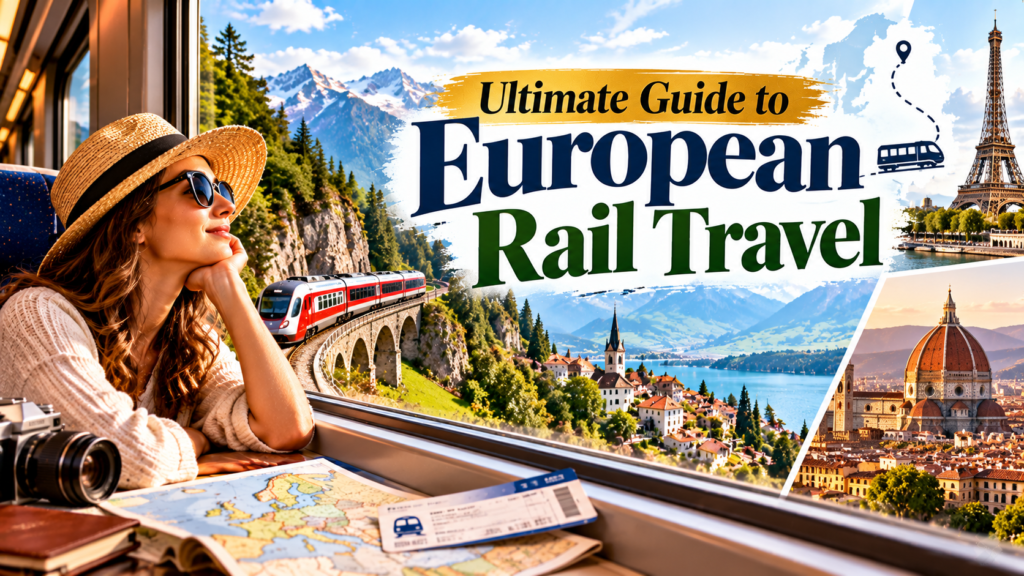
Some of the main benefits include:
- Convenience: Many stations are located in or near city centres, making it easier to reach hotels, attractions, and restaurants.
- Scenic experiences: Train windows provide views of mountains, lakes, forests, rivers, vineyards, and historic towns.
- Comfort: Many services offer comfortable seating, luggage space, onboard toilets, and food or drink options.
- International connections: Numerous routes connect European countries without requiring passengers to change airports.
- Flexible itineraries: Travellers can combine famous destinations with smaller towns and lesser-known regions.
- Potential environmental benefits: Trains can produce lower greenhouse gas emissions per passenger than flying, although the difference depends on the route, electricity source, and occupancy.
European rail travel is particularly appealing to travellers who value cultural discovery, comfortable transportation, and a slower, more immersive way of experiencing different countries.
Which European Countries Are Best for Train Travel?
Several European countries offer excellent railway networks, making them ideal destinations for travellers who want to explore by train. The best choice depends on your interests, travel budget, available time, and preferred landscapes.
1. Switzerland
Switzerland is famous for its mountain railways, crystal-clear lakes, alpine villages, and panoramic journeys. Travellers can explore destinations such as Zurich, Lucerne, Interlaken, Zermatt, and the surrounding Alpine regions by train.
Mountain routes are particularly attractive to photographers and nature enthusiasts. Some panoramic services feature large windows designed to showcase dramatic landscapes. Travellers should check seasonal timetables, reservation requirements, and any additional charges before booking.
2. Italy
Italy combines convenient intercity rail connections with extraordinary cultural and culinary experiences. High-speed trains connect major cities such as Rome, Florence, Milan, Naples, and Bologna, while regional services provide access to smaller destinations.
Travellers can enjoy Renaissance architecture, ancient Roman landmarks, coastal scenery, historic villages, and traditional Italian cuisine. Booking high-speed tickets early can help secure better fares on popular routes.
3. France
France offers extensive rail connections between Paris, Lyon, Marseille, Bordeaux, Strasbourg, and many other destinations. High-speed services make it possible to travel between major cities relatively quickly.
Beyond urban destinations, regional trains provide access to wine-producing areas, Mediterranean beaches, countryside communities, and historic towns. France is a strong choice for travellers interested in art, gastronomy, architecture, and cultural experiences.
4. Germany
Germany has a broad railway network linking major cities, historic towns, and scenic regions. Travellers can explore Berlin, Munich, Hamburg, Cologne, Frankfurt, and numerous destinations in Bavaria and the Rhine Valley.
Regional trains can be especially useful for discovering castles, traditional villages, and countryside landscapes. Travellers should compare long-distance and regional ticket options because the best-value choice depends on the journey.
5. Austria
Austria is an excellent destination for travellers seeking Alpine scenery, elegant cities, and cultural heritage. Vienna, Salzburg, Innsbruck, and Graz offer different experiences, from imperial architecture to mountain adventures.
Train journeys through Austria can feature impressive mountain views, green valleys, and picturesque towns. Combining Austria with neighbouring Germany, Switzerland, or Italy can create a rewarding multi-country itinerary.
6. Spain
Spain offers high-speed rail connections between destinations such as Madrid, Barcelona, Valencia, Seville, and other major cities. Travellers can experience historic architecture, Mediterranean beaches, regional cuisine, and lively cultural traditions.
Because rail services, booking systems, and reservation requirements differ by operator, checking the route before purchasing a pass or individual ticket is important.
What Are the Most Scenic Train Journeys in Europe?
Some European railway journeys are destinations in their own right. They allow travellers to enjoy spectacular views while moving between towns, cities, and natural landmarks.
Popular scenic journeys include:
- Glacier Express, Switzerland: A celebrated panoramic journey through Alpine landscapes, mountain valleys, and picturesque villages.
- Bernina route, Switzerland and Italy: Known for dramatic mountain scenery, impressive viaducts, and changing landscapes between the Alpine regions.
- West Highland Line, Scotland: Features rugged mountains, lochs, and remote Highland scenery.
- Flåm Railway, Norway: A mountain railway known for steep gradients, waterfalls, and spectacular valley views.
- Semmering Railway, Austria: A historic railway celebrated for its mountain engineering and beautiful scenery.
- Rhine Valley routes, Germany: Offer views of riverside villages, vineyards, castles, and the winding Rhine.
- Cinque Terre railway, Italy: Connects coastal villages along the Ligurian Sea, providing convenient access to colourful seaside communities.
Before booking a scenic train journey, check the route, season, direction of travel, seat reservation rules, and whether special panoramic services charge a supplement. Ordinary trains may cover parts of the same landscapes at a different price.
How Can You Plan a European Rail Travel Itinerary?
Planning a successful European rail trip starts with identifying your interests and deciding how much time you can spend travelling. Trying to visit too many countries in a short period can make a holiday exhausting and expensive.
Begin by selecting a few destinations that are connected by convenient rail services. For example, a first-time visitor might combine Paris, Brussels, Amsterdam, and Cologne, while someone interested in mountains might prefer Zurich, Lucerne, Innsbruck, and Salzburg.
Follow these steps to build a practical itinerary:
- Choose your travel style: Decide whether you prefer cities, nature, historical attractions, food experiences, or a mixture.
- Set your travel duration: Allocate sufficient time for sightseeing rather than spending every day in transit.
- Check railway connections: Compare journey times, direct trains, transfers, and departure stations.
- Allow flexibility: Leave room for weather changes, spontaneous stops, and unexpected discoveries.
- Consider accommodation: Staying near a central railway station can simplify early departures and late arrivals.
- Check entry requirements: Confirm visa rules, passport validity, and border requirements for every country on your itinerary.
- Review seasonal conditions: Winter weather, summer demand, engineering work, and public holidays can affect travel plans.
A balanced itinerary generally includes enough time in each destination to explore its main attractions without rushing. For longer trips, consider staying two or three nights in major cities and adding shorter stops where convenient.
How Much Does European Rail Travel Cost?
The cost of European rail travel varies according to the country, route, distance, train type, travel date, demand, and booking conditions. There is no single price that applies across the continent.
High-speed and international trains may offer lower advance fares, while last-minute tickets can be considerably more expensive on certain routes. Regional trains may have different pricing structures and can sometimes provide good value for shorter journeys.
Travellers should budget for more than the ticket itself. Additional expenses can include seat reservations, accommodation, meals, local public transport, station transfers, luggage storage, and optional scenic railway supplements.
Here are some ways to manage your travel budget:
- Book popular high-speed journeys early when advance fares are available.
- Compare individual tickets with rail passes before making a purchase.
- Use regional trains when they offer a convenient and affordable alternative.
- Travel during less busy periods when your schedule allows.
- Consider overnight trains if they suit your itinerary and help reduce daytime travel.
- Check whether tickets are refundable or changeable before choosing the cheapest fare.
- Compare the complete journey cost, including reservation fees and local transfers.
For example, a journey with several inexpensive regional tickets may cost less than a rail pass, while a trip involving multiple long-distance journeys may make a pass worth considering. Always calculate the total cost for your specific itinerary.
Should You Buy a Eurail or Interrail Pass?
Rail passes can be useful for travellers planning multiple journeys across participating European railway networks. However, the best option depends on your residency, itinerary, and travel frequency.
Eurail generally serves eligible residents of countries outside Europe, while Interrail is designed for eligible European residents. Eligibility rules and participating countries should be checked through the official providers before purchasing.
Rail passes can offer convenience because eligible journeys are covered under the pass conditions. However, some trains require additional seat reservations, and high-demand international or panoramic services may involve extra charges.
Before choosing a pass, consider:
- How many long-distance journeys you plan to take.
- Whether your preferred trains require paid reservations.
- Whether you need consecutive travel days or flexible travel days.
- The cost of individual tickets for your planned routes.
- Any age-based discounts or other eligible benefits.
- The rules for using the pass on domestic journeys in your country of residence.
A pass is not automatically the cheapest option. Compare its total price, reservation fees, and practical benefits against the cost of buying individual tickets.
How Can You Book Train Tickets in Europe?
Booking train tickets in Europe is relatively straightforward once you understand the main options. Tickets can be purchased through national railway websites, international rail booking platforms, station ticket offices, and ticket machines.
For the most accurate information, check the official railway operator for your route. Examples include SNCF for many French services, Deutsche Bahn for Germany, Trenitalia for many Italian services, and SBB for Switzerland.
A simple booking process includes:
- Enter your departure station and destination.
- Select the date and approximate departure time.
- Compare available trains, journey durations, and transfers.
- Review ticket conditions and reservation requirements.
- Enter passenger details where required.
- Complete payment and save the ticket or booking confirmation.
- Check the platform and departure information before travelling.
For international journeys, verify whether a booking covers the entire trip or whether separate tickets are required. If separate tickets are used, leave sufficient time between connections because a delay on one ticket may not automatically protect a later booking.
Keep your ticket accessible offline, particularly when travelling through areas with limited mobile coverage.
What Is the Difference Between High-Speed, Regional and Night Trains?
Europe’s railway network includes different train types designed for different travel needs.
High-speed trains connect major cities quickly. They are ideal for travellers with limited time, but many services require advance booking or reserved seats.
Regional trains stop at more stations and are useful for reaching smaller towns, suburbs, and rural destinations. They can provide greater flexibility on some routes, although journey times are often longer.
Intercity trains connect cities and regional centres, balancing journey speed and destination coverage. Their facilities and reservation rules vary by operator.
Night trains allow passengers to travel while sleeping. Depending on the service, accommodation can include reclining seats, couchettes, or private sleeping compartments. Night trains can save daytime travel hours, but fares and availability vary.
When choosing a train, compare total journey time, departure and arrival times, comfort, reservation costs, and how convenient the stations are for your accommodation.
What Should You Pack for a European Train Journey?
Packing thoughtfully can make European rail travel considerably easier. Train stations may involve stairs, platforms, transfers, and walking between accommodation and transport, so luggage that is easy to handle is especially useful.
Essential items include:
- A valid passport and any required travel documents.
- Train tickets, reservation confirmations, and travel insurance details.
- A smartphone with offline maps and saved booking information.
- A charging cable and suitable power adapter.
- Comfortable walking shoes and weather-appropriate clothing.
- A reusable water bottle and light snacks where permitted.
- Essential medication and basic personal-care items.
- A small day bag for valuables and daily sightseeing.
- A luggage lock and identification tag.
Check luggage rules for the relevant railway operator, particularly on international and high-speed services. Keep passports, money, electronics, and other valuable items secure and within reach.
For longer journeys, packing a light jacket, eye mask, earplugs, and a small travel pillow can make the experience more comfortable.
How Can You Travel Safely by Train in Europe?
European rail travel is generally a convenient way to get around, but travellers should still take sensible precautions. Busy stations can attract pickpockets, and unfamiliar platforms or tight transfers can create unnecessary stress.
Arrive early enough to find your platform, especially at large international stations. Follow station displays and announcements because platforms and departure times can change. Keep your belongings in sight and secure valuables in a closed bag.
Additional safety tips include:
- Use official ticketing channels and avoid suspicious ticket offers.
- Check the train number and destination before boarding.
- Confirm the platform for connecting services.
- Keep an eye on luggage when travelling through crowded areas.
- Save emergency contacts and accommodation details.
- Follow railway staff instructions and local safety rules.
- Avoid running across platforms to catch a departing train.
Travellers with tight connections should check whether their tickets are protected as part of a through-booking. When separate tickets are involved, consider allowing a longer transfer time to reduce the risk of missing the next service.
Is European Rail Travel Suitable for Families and Solo Travellers?
Yes. European rail travel can suit families, solo travellers, couples, and groups, provided the itinerary reflects their needs.
Families may appreciate the opportunity to move around during longer journeys, enjoy views, and avoid some airport transfers. Parents should check child fares, family seating options, luggage rules, and reservation requirements before booking.
Solo travellers can benefit from the convenience of central stations and the ability to plan independent itineraries. Sharing a journey with fellow passengers can also provide opportunities to learn about local destinations, although personal belongings and travel documents should always remain secure.
Couples may enjoy scenic journeys, historic cities, and overnight rail experiences, while groups can benefit from booking seats together when reservations are available.
Travellers with mobility requirements should contact the railway operator in advance to confirm station accessibility, boarding assistance, step-free routes, accessible toilets, and suitable seating. Accessibility differs between stations, trains, and countries, so checking each part of the journey is important.
When Is the Best Time for European Rail Travel?
The best time for European rail travel depends on the destinations you want to visit and the experiences you prefer.
Spring, from March to May: Many regions experience milder weather, blossoming landscapes, and opportunities for city sightseeing. Conditions vary by country, particularly in mountain areas.
Summer, from June to August: Longer daylight hours are ideal for outdoor activities and scenic journeys. However, popular destinations can be crowded, accommodation can be expensive, and advance reservations may be especially important.
Autumn, from September to November: Travellers may enjoy changing foliage, harvest experiences, and quieter periods in some destinations. Weather becomes less predictable as the season progresses.
Winter, from December to February: Winter rail journeys can offer snowy Alpine scenery, Christmas markets, and seasonal city experiences. Weather disruptions and shorter daylight hours should be considered.
There is no universally perfect season. Check local weather, railway timetables, seasonal services, and event calendars before finalising your travel dates.
How Can You Make European Rail Travel More Sustainable?
Rail travel can be a more environmentally friendly choice than flying for many journeys, particularly where trains operate with low-carbon electricity and carry substantial numbers of passengers. However, the environmental impact depends on the route, energy mix, occupancy, and alternative transport options.
Travellers can make thoughtful choices by selecting direct rail connections where practical, combining nearby destinations into one itinerary, and using local public transport rather than unnecessary car journeys.
Other helpful practices include carrying a reusable bottle, avoiding excessive single-use packaging, respecting natural areas, and supporting locally owned businesses.
Responsible travel also means respecting residents, cultural traditions, historic sites, and local environments. Travelling by train can help visitors discover smaller destinations and spread tourism beyond the busiest cities, especially when they choose to stay longer and explore responsibly.
What Common Mistakes Should You Avoid When Travelling by Train in Europe?
Even experienced travellers can encounter difficulties when planning an international railway holiday. Understanding common mistakes can help you avoid unnecessary costs and travel disruptions.
Some frequent mistakes include:
- Booking too late: Popular trains may sell out or become more expensive as departure approaches.
- Assuming every train is reservation-free: Some high-speed and international services require reservations, even when using a rail pass.
- Ignoring station locations: Some cities have multiple stations, and choosing the wrong one can cause delays.
- Planning unrealistic connections: Tight transfers can be risky, particularly when travelling on separate tickets.
- Overpacking: Heavy luggage can make station changes and crowded trains more difficult.
- Ignoring ticket conditions: Cheap tickets may have restrictions on refunds, changes, or specific departures.
- Overloading the itinerary: Visiting too many destinations can leave little time for meaningful exploration.
- Forgetting offline access: Mobile data or internet connections may not always be available when needed.
A little research before departure can make a significant difference to the comfort, cost, and reliability of your trip.
How Can You Discover Hidden Gems Through European Rail Travel?
One of the greatest advantages of travelling by train is the opportunity to explore beyond Europe’s most famous capitals. Smaller towns, regional centres, lakeside communities, and historic villages can offer memorable experiences without requiring complicated transport arrangements.
Consider adding a smaller destination between major cities when direct connections make it practical. Explore local markets, regional museums, traditional restaurants, historic neighbourhoods, and countryside walking routes.
For example, a trip through Germany might include a stop in a Rhine Valley town, while a journey through Italy could include a smaller city known for its architecture or regional cuisine. Travellers in Switzerland and Austria may discover quieter Alpine communities outside the busiest resort areas.
Before adding a stop, check train frequency, local transport, luggage storage, accommodation availability, and the time needed to explore. A carefully selected smaller destination can enrich a trip more than adding another major city to an already crowded schedule.
What Are the Best Tips for First-Time European Rail Travellers?
First-time visitors can make their journeys easier by focusing on a few basic principles: plan the essential details, keep documents organised, and allow enough time for changes.
Start with a manageable route rather than attempting to cover the entire continent. Book essential long-distance services early when appropriate, but leave room for spontaneous local experiences. Read ticket conditions carefully and understand the difference between a travel pass and a reservation.
Before each journey, confirm the departure station, train number, departure time, platform, and arrival station. If you have a connection, identify the next train in advance and check how much time is available.
It is also helpful to learn a few local phrases, carry a payment method that works internationally, and download maps and tickets before leaving your accommodation.
Most importantly, remember that railway travel is not only about reaching the next destination. Watching the countryside change, discovering a new station, and observing everyday life along the way can become some of the most memorable parts of a European holiday.
Is European Rail Travel Worth It for Your Next Holiday?
European rail travel is an excellent option for travellers who want to experience the continent through its landscapes, cultures, historic cities, and local communities. With extensive railway connections, a range of train types, and numerous scenic routes, travelling by rail can combine transportation with the enjoyment of the journey itself.
Whether you choose Switzerland’s Alpine railways, Italy’s historic cities, France’s cultural destinations, Germany’s riverside towns, or Austria’s mountain scenery, a well-planned itinerary can offer comfort, convenience, and unforgettable experiences.
The key to a successful trip is to compare ticket options, check reservation requirements, select realistic connections, and allow sufficient time to explore each destination. By balancing famous attractions with lesser-known places, travellers can create a journey that reflects their interests and budget.
European rail travel is more than a way to move between cities. It is an opportunity to discover Europe at a different pace, appreciate its remarkable diversity, and create lasting memories along the way.
Plan your next European rail adventure with Europe Saga and discover the routes, destinations, and travel experiences that make exploring Europe by train so rewarding.
Read More – European Wellness Trends to Watch