
What Are European Traditions and Why Are They Important?
European traditions represent the customs, beliefs, celebrations, and cultural practices that have shaped the identity of European societies for centuries. From traditional folk dances and seasonal festivals to family gatherings, religious ceremonies, and regional cuisines, these traditions reflect the history and diversity of the European continent. Every country has its own distinctive cultural expressions, influenced by geography, historical events, religion, language, and local communities.
European traditions are important because they connect generations and preserve the stories of the past. Many customs have been passed down from parents and grandparents, allowing younger generations to understand their heritage and cultural roots. Some traditions have remained almost unchanged for centuries, while others have adapted to modern lifestyles.
Today, European traditions continue to influence art, fashion, architecture, music, food, tourism, and everyday life. Whether it is celebrating Christmas in Germany, enjoying traditional music in Ireland, attending a summer festival in Spain, or exploring historic villages in Greece, these cultural experiences offer valuable insights into the European way of life.
How Did European Traditions Develop Throughout History?
European traditions developed through a combination of ancient civilizations, religious influences, migration, trade, and social change. The ancient Greeks and Romans contributed significantly to European cultural heritage through philosophy, architecture, literature, theatre, public celebrations, and civic life. Their ideas influenced later generations and helped shape many aspects of European society.
During the Middle Ages, Christianity played a major role in establishing religious festivals, pilgrimage practices, church celebrations, and seasonal customs. Local communities also maintained folk traditions connected with agriculture, harvests, marriage, birth, and changing seasons. These customs often combined religious beliefs with older regional practices.
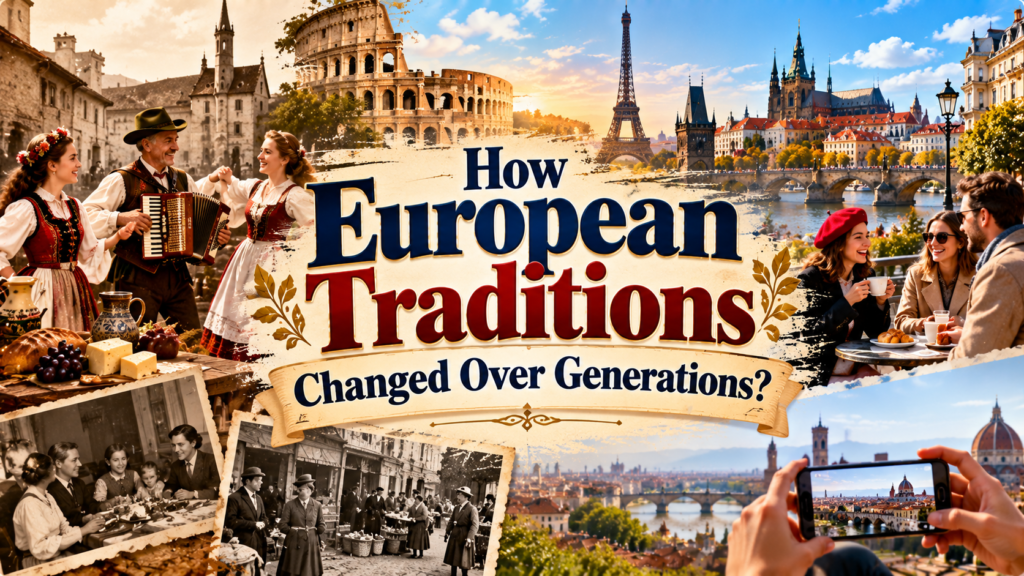
The Renaissance encouraged artistic expression, scientific discovery, literature, and new approaches to education. Later, the Industrial Revolution transformed working life, family structures, transportation, and urban communities. Despite these changes, many Europeans continued to preserve their traditional celebrations and cultural identities.
Today, European traditions reflect both historical continuity and modern influences. Some communities actively protect their intangible cultural heritage, including traditional craftsmanship, oral storytelling, folk music, and regional celebrations.
What Are the Most Popular Traditional Festivals in Europe?
European festivals bring communities together through music, dance, food, costumes, and public celebrations. Many festivals are associated with religious occasions, historical events, seasonal changes, or local identities. They also attract visitors who want to experience European culture beyond its famous monuments and tourist attractions.
Some well-known European traditions festivals include:
- Oktoberfest in Germany: A major celebration in Munich featuring Bavarian music, traditional clothing, regional food, and community gatherings.
- Carnival in Venice, Italy: Famous for elaborate masks, historical costumes, artistic performances, and festive events.
- La Tomatina in Spain: A distinctive festival in Buñol that features a large, organized tomato-throwing event.
- Edinburgh Festival Fringe in Scotland: An internationally recognized performing arts festival featuring theatre, comedy, music, and experimental performances.
- St. Patrick’s Day in Ireland: A celebration of Irish heritage through parades, music, dancing, and community activities.
- Midsummer celebrations in Nordic countries: Seasonal festivities that welcome the summer with flowers, traditional foods, dancing, and outdoor gatherings.
Each festival reflects the character of its local community. While some are internationally famous, smaller village festivals can offer equally meaningful opportunities to understand regional customs and cultural history.
How Do European Countries Celebrate Christmas and Other Winter Traditions?
Christmas is one of the most widely celebrated seasonal occasions across Europe, although the customs differ significantly between countries and communities. For many people, the season combines religious observance, family gatherings, traditional food, gift-giving, music, and festive markets.
In Germany and Austria, Christmas markets are especially popular. Visitors can explore wooden stalls selling handmade decorations, gifts, seasonal treats, and hot drinks. Advent calendars and wreaths are also familiar parts of the season in many European households.
In Italy, Christmas traditions often include religious celebrations, nativity scenes, family meals, and regional sweets. In parts of Scandinavia, winter celebrations may feature candles, warm drinks, traditional pastries, and gatherings designed to bring comfort during the darker months.
Other important winter customs include:
- Saint Nicholas celebrations: Observed in various European countries, often involving gifts or treats for children.
- Three Kings’ Day: Celebrated on January 6 in many Christian communities, particularly in Spain and other parts of southern Europe.
- New Year’s traditions: Some communities follow local customs involving special meals, music, symbolic foods, or family gatherings.
- Epiphany and regional winter festivals: Religious and local celebrations that mark important dates in the traditional calendar.
These customs demonstrate how European winter traditions combine faith, family, regional identity, and the joy of seasonal celebrations.
What Are the Traditional Foods and Eating Customs of Europe?
European traditions food is an essential part of the continent’s cultural heritage. Recipes often reflect local climates, agricultural practices, available ingredients, trade routes, and historical influences. Food traditions are also closely connected with hospitality, family relationships, celebrations, and community life.
In Italy, pasta, risotto, regional cheeses, and traditional breads form part of a diverse culinary heritage. France is widely associated with breadmaking, pastries, cheese, and regional dishes. Spain offers traditions involving tapas, paella, and shared meals, while Greece is known for dishes featuring olive oil, vegetables, herbs, grains, and seafood.
Northern and Central European cuisines often reflect colder climates and historical farming practices. Traditional dishes may include potatoes, root vegetables, rye bread, preserved foods, meat, and hearty soups. Portugal has a strong seafood tradition, while the cuisines of Eastern Europe include a variety of dumplings, fermented foods, stews, and filled pastries.
European traditions eating customs also differ from region to region. In some Mediterranean communities, meals can be leisurely social occasions that bring extended families together. Elsewhere, Sunday lunches, festive dinners, and seasonal dishes hold special significance.
Popular food-related European traditions include:
- Preparing special recipes during Christmas, Easter, and other religious holidays.
- Baking regional breads, cakes, and pastries for festivals.
- Sharing traditional meals during weddings and family celebrations.
- Visiting local markets to purchase seasonal produce and regional specialties.
- Passing family recipes from one generation to the next.
These culinary traditions preserve local knowledge while allowing visitors to experience the history and identity of European communities through food.
How Do European Traditions Influence Family Life and Social Customs?
Family life and social customs remain important elements of European traditions culture, although practices vary according to country, region, generation, and individual circumstances. Many communities value spending time with relatives, celebrating important milestones, and maintaining connections with friends and neighbors.
Birthdays, weddings, anniversaries, graduations, and religious milestones are often marked with gatherings, meals, gifts, and local customs. In some regions, extended families meet regularly for Sunday lunch or holiday celebrations. In others, friends and community groups play a particularly important role in social life.
Hospitality is another meaningful cultural practice. Guests may be welcomed with homemade food, coffee, tea, regional sweets, or a shared meal. The specific customs depend on local habits, family preferences, and the occasion.
Traditional weddings offer a particularly rich variety of customs. Depending on the region, celebrations may feature folk music, ceremonial clothing, symbolic gifts, traditional dances, and special dishes. Some communities maintain distinctive pre-wedding rituals, while others combine family customs with contemporary wedding styles.
European social traditions continue to evolve as migration, urbanization, technology, and changing family structures influence everyday life. Nevertheless, celebrations and shared experiences remain important ways for people to maintain relationships and preserve cultural memories.
What Traditional Clothing Represents European Cultural Heritage?
European traditions clothing reflects regional history, climate, craftsmanship, social identity, and local materials. Although most Europeans wear contemporary fashion in everyday life, traditional garments remain important during festivals, national celebrations, weddings, folk performances, and cultural events.
In Bavaria and parts of Austria, dirndls and lederhosen are associated with regional dress and certain festive occasions. Scottish Highland dress may include kilts and distinctive tartan patterns connected with family, regional, or ceremonial identities.
Traditional clothing in Nordic countries varies by region and community. Norwegian bunads, for example, are worn for national celebrations, weddings, and other special occasions. Across Eastern and Southeastern Europe, embroidered shirts, woven garments, aprons, head coverings, and decorative accessories preserve distinctive regional techniques.
Traditional European clothing is important for several reasons:
- Cultural identity: Garments can communicate regional belonging and community heritage.
- Historical preservation: Designs and techniques provide insights into earlier ways of life.
- Artistic craftsmanship: Embroidery, weaving, lacework, and textile decoration demonstrate specialized skills.
- Celebrations: Traditional dress adds meaning to festivals, weddings, and national occasions.
- Modern inspiration: Contemporary designers often draw inspiration from traditional patterns, fabrics, and silhouettes.
These garments are more than historical costumes. In many communities, they remain living expressions of cultural pride and creativity.
How Do European Music and Dance Preserve Traditional Culture?
Music and dance have played important roles in European community life for generations. Traditional performances have accompanied harvest celebrations, weddings, religious festivals, seasonal gatherings, and local ceremonies. Through songs and dances, communities preserve stories, values, languages, and collective memories.
Irish traditional music is known for instruments such as the fiddle, tin whistle, and bodhrán. Flamenco, associated particularly with Andalusia in Spain, combines music, singing, rhythmic expression, and dance. Greek folk dances are performed at festivals and social gatherings, while traditional music in the Balkans reflects a wide variety of regional influences.
Other examples include Portuguese fado, French regional folk music, Scandinavian folk dances, and traditional polkas in parts of Central Europe. These styles differ considerably, demonstrating the diversity of European musical heritage.
Folk dance often involves coordinated steps, distinctive clothing, and live musical accompaniment. Some dances are performed in circles or lines, encouraging participation and strengthening community connections.
Traditional music remains relevant today through:
- Local folk festivals and cultural events.
- Music schools and community dance groups.
- Performances by contemporary musicians who reinterpret traditional styles.
- Digital recordings and online cultural archives.
- Intergenerational teaching of instruments, songs, and dance techniques.
By combining preservation with innovation, European traditions communities continue to introduce traditional music and dance to new audiences.
What Role Do Religion and Spirituality Play in European Traditions?
Religion has influenced European history, architecture, holidays, art, literature, music, and community customs. Christianity has historically shaped many European celebrations, while Judaism, Islam, and other religious traditions have also contributed significantly to the continent’s cultural diversity.
Churches, cathedrals, monasteries, synagogues, mosques, and historic religious sites illustrate the varied spiritual histories of European communities. Religious traditions can include worship services, processions, pilgrimages, fasting periods, charitable activities, and festivals.
Easter is an important Christian celebration in many European countries. Customs may include church services, decorated eggs, family meals, and regional foods. In parts of Spain, Holy Week processions feature distinctive religious imagery and community participation. Orthodox Christian communities in Greece and Eastern Europe observe Easter according to their respective calendars and traditions.
Jewish communities maintain traditions associated with occasions such as Passover, Hanukkah, and Rosh Hashanah. Muslim communities across Europe celebrate Ramadan and Eid, contributing to the continent’s contemporary cultural life.
It is important to recognize that Europe is not religiously uniform. Some people are deeply religious, others follow different spiritual traditions, and many identify as secular. Understanding these differences helps provide a more complete picture of European cultural heritage.
How Do European Traditions Differ Between Northern, Southern, Eastern, and Western Europe?
European traditions vary considerably across geographical regions, reflecting differences in climate, language, history, religion, agriculture, and social development. Although regional categories can be useful, every country contains its own internal diversity.
Northern Europe: Countries such as Sweden, Norway, Denmark, Finland, and Iceland have traditions associated with seasonal changes, nature, folk music, winter celebrations, and midsummer gatherings. In some areas, traditional crafts and local folklore remain important cultural expressions.
Southern Europe: Italy, Spain, Portugal, and Greece are known for rich culinary traditions, religious festivals, regional music, historic town celebrations, and strong connections between food and social life. Mediterranean climates have also influenced agriculture and seasonal customs.
Western Europe: France, Belgium, the Netherlands, and neighboring countries have diverse traditions involving regional cuisine, public festivals, artistic heritage, historic markets, and local celebrations. Each country maintains distinctive linguistic and cultural practices.
Eastern Europe: Countries across Eastern Europe preserve a wide variety of folk songs, embroidery, traditional dances, seasonal customs, regional dishes, and religious celebrations. Many communities maintain cultural practices shaped by complex histories and changing political boundaries.
Central Europe also has a rich heritage of folk festivals, Christmas markets, traditional craftsmanship, music, and regional cuisines.
These regional differences highlight why European traditions should not be treated as a single uniform culture. The continent’s richness comes from the coexistence of many distinct identities and shared historical influences.
What Are Some Unique Wedding and Marriage Traditions in Europe?
European wedding traditions vary widely, with each region maintaining customs connected to family, community, religion, and local history. Although contemporary weddings often incorporate international trends, traditional ceremonies and symbolic practices remain meaningful for many couples.
In some Italian communities, wedding celebrations emphasize elaborate meals, family participation, and regional food. In parts of Greece, religious wedding ceremonies may include symbolic rituals involving crowns and the couple’s shared participation in the ceremony. Scottish weddings may incorporate tartan clothing, traditional music, and regional customs.
In several Eastern European communities, wedding celebrations can include folk dances, ceremonial bread, traditional songs, and symbolic gifts. The details vary considerably between countries and even between neighboring villages.
Common elements of traditional European weddings include:
- Special clothing associated with the couple or their region.
- Family blessings and religious ceremonies where applicable.
- Traditional music and dances.
- Regional dishes and celebratory cakes.
- Symbolic gifts or customs representing good wishes for the couple.
- Gatherings that bring together relatives, friends, and community members.
Not every couple follows traditional practices, and customs continue to change with contemporary lifestyles. Nevertheless, weddings remain an important setting for preserving and adapting cultural heritage.
How Are European Traditions Preserved in the Modern World?
Preserving European traditions requires cooperation between families, local communities, cultural organizations, museums, educational institutions, and governments. As societies become more connected through travel, technology, and migration, some traditional practices face challenges related to declining participation, changing lifestyles, and the loss of specialized skills.
However, modern technology also provides new opportunities to protect cultural knowledge. Digital archives can record traditional songs, recipes, oral histories, crafts, and regional languages. Social media enables communities to share festivals, traditional clothing, and local celebrations with international audiences.
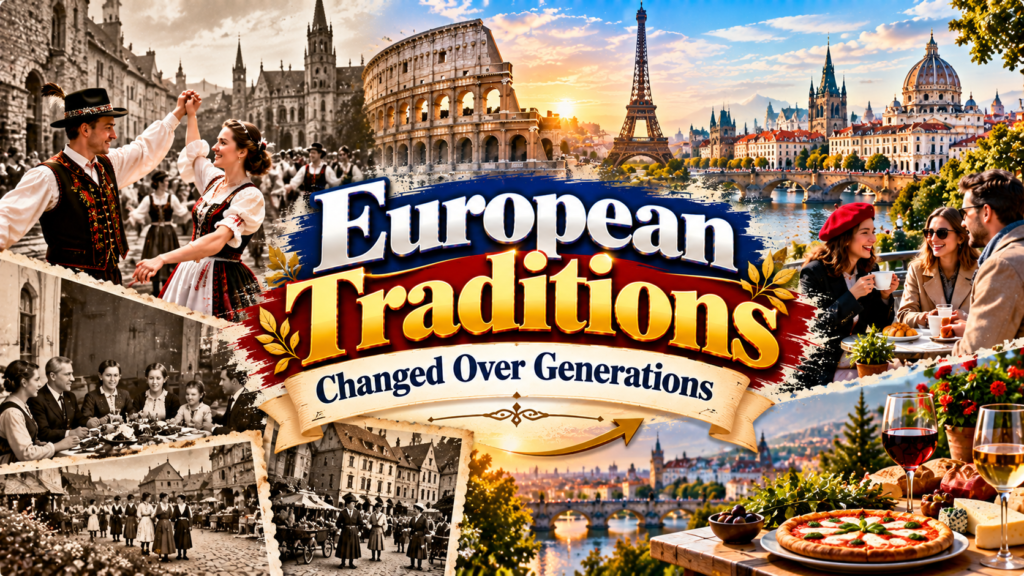
Cultural preservation can take many forms:
- Organizing local festivals and traditional craft demonstrations.
- Teaching regional languages, songs, and dances to younger generations.
- Recording oral histories from older community members.
- Supporting traditional artisans and locally produced goods.
- Protecting historic buildings and culturally significant sites.
- Including regional history and folklore in educational programs.
- Documenting traditional recipes and family customs.
- Encouraging responsible cultural tourism.
Preservation should also respect the wishes of the communities whose traditions are being shared. Cultural practices are not simply tourist attractions; they often carry deep personal, historical, and spiritual meanings.
The most successful approaches allow European traditions to remain meaningful in contemporary life rather than treating them as unchanging relics of the past.
Why Should Travelers Explore European Traditions?
Exploring European traditions helps travelers understand destinations beyond famous landmarks, museums, and shopping districts. Cultural experiences provide opportunities to discover how local communities celebrate, prepare food, create art, maintain historic buildings, and express their identities.
Travelers can experience traditional European culture by visiting seasonal markets, attending public festivals, exploring historic villages, joining guided heritage tours, and discovering regional cuisine. Museums and cultural centers can also explain the historical background of local customs.
A meaningful cultural itinerary might include attending a traditional music performance in Ireland, visiting a Christmas market in Germany, exploring historic religious sites in Italy, discovering folk crafts in Eastern Europe, or participating in a public summer celebration in Scandinavia.
Travelers can make these experiences more rewarding by following a few simple principles:
- Learn basic greetings in the local language.
- Research the history and meaning of important celebrations.
- Follow local rules concerning photography and religious sites.
- Dress appropriately when visiting religious or ceremonial locations.
- Support local artisans, independent businesses, and community-led tours.
- Ask permission before photographing people during private or sacred ceremonies.
- Respect the fact that some traditions are intended for local communities rather than visitors.
Responsible cultural tourism can support local economies and encourage the preservation of traditional knowledge. It also helps travelers develop a deeper appreciation of Europe’s diverse societies.
How Do European Traditions Influence Art, Architecture, and Literature?
European traditions have had a lasting influence on artistic expression, architecture, literature, and design. Historic buildings, folk stories, religious paintings, traditional textiles, and regional music offer evidence of how cultural beliefs and community practices have shaped creative work.
Architectural heritage ranges from ancient Greek temples and Roman structures to medieval castles, Gothic cathedrals, Renaissance palaces, and traditional rural homes. Each architectural style reflects the materials, technologies, beliefs, and social conditions of its time.
European literature preserves legends, fairy tales, epic narratives, folk songs, and stories that have been shared across generations. Traditional storytelling often explores universal themes such as courage, love, family, justice, nature, and the struggle between good and evil.
Artistic traditions also influence contemporary creators. Designers may reinterpret folk embroidery, architects may draw inspiration from regional building techniques, and musicians may incorporate traditional instruments into modern compositions.
This relationship between heritage and innovation demonstrates that European traditions are not limited to the past. They continue to inspire new artistic ideas and shape contemporary cultural expression.
What Can Younger Generations Learn From European Traditions?
European traditions offer younger generations opportunities to learn about history, community values, creativity, and cultural diversity. Understanding traditional customs helps young people appreciate how earlier generations lived, worked, celebrated, and responded to social change.
Learning traditional crafts, music, dance, cooking, and storytelling can develop practical skills while strengthening connections between generations. Cultural festivals also provide opportunities for young people to participate in community life and understand the meaning behind local celebrations.
Traditional knowledge can teach valuable lessons about sustainability as well. Regional cooking often emphasizes seasonal ingredients, while traditional crafts may demonstrate the careful use of local materials and techniques developed over time.
Younger generations can help preserve traditions by:
- Learning family recipes and documenting their origins.
- Interviewing older relatives about childhood memories and local customs.
- Participating in community festivals and cultural workshops.
- Exploring regional music, literature, and folk art.
- Learning about different European languages and cultural histories.
- Sharing accurate information about local heritage through digital platforms.
Traditions should not prevent cultural progress. Instead, they can provide a foundation for understanding the past while encouraging creativity, respect, and informed choices about the future.
What Is the Future of European Traditions?
The future of European traditions will depend on how communities balance cultural preservation with social change. Globalization, digital communication, migration, tourism, and evolving lifestyles continue to influence the ways people celebrate and express their identities.
Some traditional customs may become less common as younger generations move away from rural communities or adopt new lifestyles. Others are experiencing renewed interest through cultural festivals, heritage tourism, online communities, and contemporary artistic projects.
European traditions are also becoming more inclusive as communities recognize the contributions of different cultural and religious groups. This evolution reflects the fact that culture is continually shaped by human interaction.
Technology can help preserve languages, songs, crafts, and historical records, while schools and community organizations can encourage active participation. At the same time, meaningful preservation requires more than digital documentation. Traditions survive when people continue to practice, teach, adapt, and value them.
The future of European heritage will therefore depend on both protecting historic knowledge and allowing communities to develop new customs that reflect their contemporary experiences.
Conclusion: Why Do European Traditions Continue to Matter Today?
European traditions remain an essential part of the continent’s cultural identity. From traditional festivals and regional cuisines to folk music, clothing, family celebrations, and religious customs, they reveal the many ways European communities have expressed their beliefs, creativity, and shared experiences throughout history.
Although customs differ across countries and regions, they often share common themes: family connections, community participation, seasonal celebrations, artistic expression, and respect for cultural memory. These traditions create meaningful links between generations and help people understand the historical forces that shaped their surroundings.
In the modern world, preserving European traditions does not mean resisting change. It means recognizing the value of cultural heritage while allowing it to evolve naturally. Families, educators, travelers, artisans, and cultural organizations all have a role to play in keeping these practices alive.
For anyone interested in European culture, exploring traditional customs offers a rewarding way to discover the continent’s diversity. Every regional dish, folk song, historic festival, and traditional craft tells a story about the people who created it and the communities that continue to cherish it.
By celebrating and protecting this heritage, Europe can maintain a strong connection with its past while inspiring future generations to appreciate cultural diversity, creativity, and shared humanity.
Read More – Europe Economy Key Trends to Watch in 2026