
Know About How Is AI Changing Lifestyle and Work in Europe?
Artificial Intelligence (AI) is transforming the way people live, work, communicate, travel, learn, and make decisions across Europe. From smart homes and digital healthcare to automated workplaces and personalised education, AI has become an important part of modern European society. What once seemed like futuristic technology is now influencing everyday activities, business operations, public services, and economic development. Across countries such as Germany, France, the United Kingdom, Italy, Spain, the Netherlands, and Sweden, AI is creating new opportunities while introducing important questions about employment, privacy, security, and the future of human skills.
As Europe continues to embrace digital transformation, artificial intelligence is becoming a major force behind innovation and lifestyle changes. Businesses are adopting AI-powered tools to improve productivity, healthcare providers are using intelligent systems to support medical professionals, and individuals are relying on AI assistants to simplify daily routines. But how exactly is AI changing lifestyle and work in Europe? What benefits does it offer, and what challenges should people prepare for? Understanding these changes can help individuals, businesses, and communities adapt to an increasingly technology-driven future.
1. What Is Artificial Intelligence, and Why Is It Becoming Important in Europe?
Artificial Intelligence refers to computer systems and software designed to perform tasks that traditionally require human intelligence. These tasks include understanding language, recognising images, analysing information, solving problems, making predictions, and generating content. AI technologies learn from data and use patterns to provide recommendations, automate activities, and support decision-making.
Europe is increasingly investing in artificial intelligence because the technology has the potential to strengthen economic competitiveness, improve public services, support scientific research, and address social challenges. European governments, universities, technology companies, and research institutions are exploring AI applications across different industries.
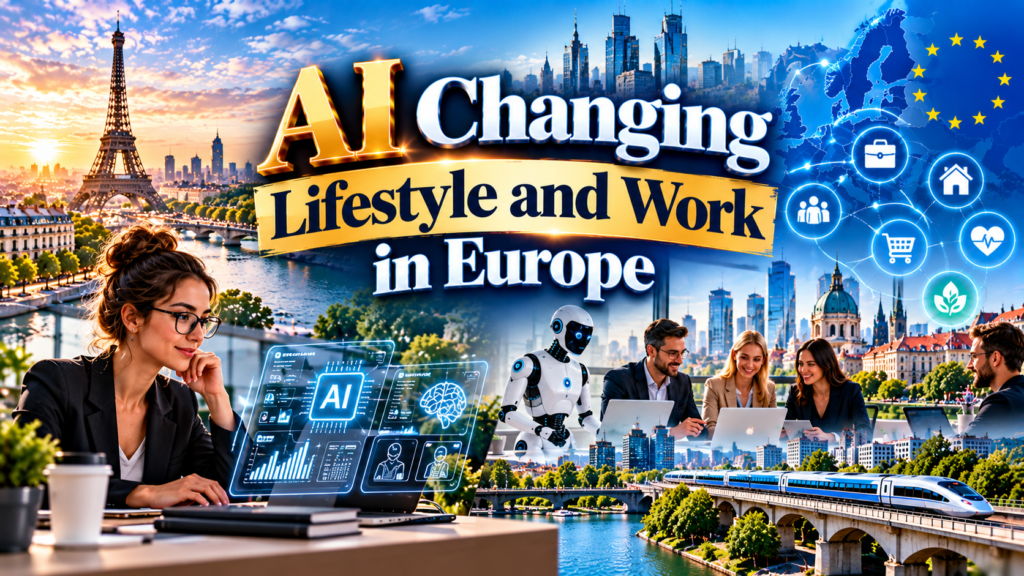
The growing importance of AI in Europe can be understood through several developments:
- Digital transformation: Organisations are introducing intelligent technologies to modernise their operations.
- Business productivity: AI helps companies automate repetitive tasks and improve efficiency.
- Healthcare innovation: AI supports medical research, diagnostics, and patient management.
- Education development: Intelligent learning platforms offer personalised educational experiences.
- Sustainable development: AI can help optimise energy consumption and resource management.
- Scientific research: Researchers use AI to analyse complex information and accelerate discoveries.
Artificial intelligence is therefore not simply another technological trend. It is becoming an important part of Europe’s economic, social, and cultural transformation.
2. How Is AI Changing Everyday Lifestyle in Europe?
One of the most noticeable effects of artificial intelligence is the way it is changing everyday lifestyles. People increasingly interact with AI through smartphones, online shopping platforms, navigation applications, digital assistants, and smart household devices.
In European cities, AI-powered applications help residents organise their schedules, find transport routes, manage finances, communicate in different languages, and access information. These technologies are making several everyday activities faster and more convenient.
For example, someone living in Paris can use an AI-powered navigation application to identify alternative travel routes, while a family in Berlin can use smart home technology to manage heating and electricity consumption. Similarly, residents in Amsterdam or Madrid can use intelligent shopping platforms to discover products based on their interests.
Some important lifestyle changes include:
- Automated reminders and personal scheduling.
- Intelligent navigation and traffic predictions.
- Personalised entertainment recommendations.
- Smart home management.
- AI-powered translation and communication.
- Digital shopping assistance.
- Personalised fitness and wellness applications.
Although these technologies offer convenience, people must also understand how their personal information is collected and used.
3. How Is AI Transforming Workplaces Across Europe?
Artificial intelligence is changing traditional workplaces by automating repetitive activities, improving decision-making, and helping employees complete tasks more efficiently. European businesses are increasingly exploring AI-powered tools to manage documents, analyse data, communicate with customers, and improve operational performance.
Industries such as banking, manufacturing, retail, logistics, telecommunications, and professional services are adopting different forms of AI technology.
For example, manufacturing companies in Germany are using intelligent systems to monitor production processes and identify potential equipment problems. Financial institutions can use AI to analyse transactions and detect unusual activities. Retail companies are introducing AI-powered inventory management systems to understand customer demand.
AI is changing workplaces in several ways:
- Task automation: Repetitive administrative activities can be completed more quickly.
- Data analysis: Employees can examine large amounts of information and identify useful patterns.
- Customer support: AI chatbots can answer common questions and provide assistance.
- Communication: AI tools help prepare reports, summarise meetings, and translate documents.
- Decision-making: Intelligent systems provide insights that support business planning.
- Productivity: Employees can spend more time on creative and strategic responsibilities.
However, AI is not replacing every human responsibility. In many workplaces, the technology is being used as an assistant that supports employees rather than completely replacing their expertise.
4. Can AI Create New Job Opportunities in Europe?
Artificial intelligence is changing employment patterns, but it is also creating opportunities for new careers. As businesses adopt advanced technologies, they require professionals who can develop, manage, maintain, and evaluate AI systems.
The demand for technology-related skills is encouraging individuals to explore careers in artificial intelligence, data science, cybersecurity, robotics, machine learning, and digital transformation.
Europe’s growing technology ecosystem is creating opportunities for professionals in both established companies and innovative startups.
Some emerging career opportunities include:
- AI engineers: Develop intelligent software and applications.
- Data scientists: Analyse information to identify patterns and support decisions.
- Machine learning specialists: Build systems that learn from data.
- AI ethics professionals: Help organisations address fairness, transparency, and responsible AI use.
- Cybersecurity experts: Protect digital systems against security threats.
- Robotics engineers: Design and maintain intelligent machines.
- AI consultants: Help businesses introduce artificial intelligence into their operations.
- Automation specialists: Develop systems that improve workplace efficiency.
At the same time, the transition requires investment in education and professional training. Workers must develop new skills to remain competitive in a changing employment market.
5. How Is AI Changing Healthcare and Medical Services in Europe?
Healthcare is one of the most promising areas of artificial intelligence development in Europe. Hospitals, medical research centres, and healthcare technology companies are exploring AI applications to support doctors, improve patient services, and accelerate medical discoveries.
AI systems can analyse medical images, identify patterns in patient information, support clinical decision-making, and assist researchers in understanding diseases. These applications may help healthcare professionals make more informed decisions.
For example, AI-powered imaging tools can help radiologists examine X-rays, CT scans, and MRI images. Intelligent systems can also assist hospitals with appointment scheduling, patient records, and administrative processes.
Some important applications of AI in European healthcare include:
- Medical image analysis.
- Early identification of potential health risks.
- Drug discovery and medical research.
- Remote patient monitoring.
- Personalised healthcare support.
- Hospital resource management.
- Administrative automation.
AI-powered health applications are also changing personal wellness habits. People can use digital tools to track physical activity, monitor sleep patterns, and receive general health information.
However, artificial intelligence should support qualified medical professionals rather than replace medical judgement. Patient privacy, data protection, accuracy, and clinical safety remain essential considerations.
6. Is AI Changing the Way Europeans Learn and Study?
Education is experiencing significant changes because of artificial intelligence. Schools, universities, training institutions, and online learning platforms are exploring AI-powered solutions to make education more accessible and personalised.
Traditional education often follows a common learning structure, but AI tools can help students understand subjects at their own pace. Intelligent learning applications can identify areas where students need additional support and suggest relevant educational materials.
Students across Europe can use AI-powered tools to:
- Explain complicated academic concepts.
- Practise foreign languages.
- Generate study schedules.
- Summarise educational materials.
- Improve grammar and writing.
- Explore additional learning resources.
- Receive personalised practice exercises.
Teachers can also benefit from AI by using it to prepare educational materials, organise lesson plans, and reduce certain administrative responsibilities.
European universities are increasingly discussing how AI should be used in academic environments. One important concern is academic integrity. Students need to understand the difference between using AI as a learning assistant and submitting AI-generated work as their own.
The future of education will likely combine traditional teaching, human interaction, digital resources, and responsible AI assistance.
7. How Is AI Transforming Shopping and Consumer Behaviour in Europe?
Shopping habits are changing as artificial intelligence makes online and physical retail experiences more personalised. European consumers increasingly encounter AI-powered recommendations when browsing shopping websites, comparing products, or exploring fashion and lifestyle trends.
Online retailers use intelligent algorithms to analyse browsing behaviour, purchase history, and product preferences. These systems recommend products that may be relevant to individual customers.
AI is also helping businesses understand customer demand and manage their supply chains more efficiently.
Some important changes in shopping include:
- Personalised product recommendations.
- AI-powered virtual shopping assistants.
- Automated customer service.
- Intelligent inventory management.
- Visual product searches.
- Personalised fashion suggestions.
- Improved demand forecasting.
For example, a consumer interested in sustainable fashion may receive recommendations for environmentally conscious clothing brands. A customer searching for home appliances may receive suggestions based on product features and previous browsing activity.
However, consumers should remain aware that personalised shopping systems may rely on extensive data collection. Understanding privacy settings and checking product information independently can help people make better purchasing decisions.
8. Can AI Make Transportation and Travel Easier in Europe?
Europe has a well-developed transportation network, connecting major cities through trains, buses, airports, roads, and public transport systems. Artificial intelligence is helping improve the efficiency and convenience of these transportation services.
AI-powered navigation applications analyse traffic information, road conditions, and travel patterns to suggest suitable routes. Public transport operators can use predictive systems to understand passenger demand and manage services more effectively.
In the aviation industry, AI can support operational planning, baggage management, and aircraft maintenance. Rail operators can explore intelligent systems to monitor infrastructure and identify maintenance requirements.
AI is influencing European travel through:
- Real-time traffic predictions.
- Intelligent route recommendations.
- Smart parking applications.
- Predictive vehicle maintenance.
- Automated travel assistance.
- Public transport demand forecasting.
- Translation tools for international travellers.
Tourists visiting European destinations can also use AI-powered travel assistants to discover attractions, understand local information, and organise itineraries.
For international visitors, AI translation tools are particularly useful when communicating in unfamiliar languages.
Although autonomous vehicles and advanced transport automation continue to develop, their widespread adoption depends on infrastructure, safety standards, regulations, and public acceptance.
9. How Is AI Supporting Smart Homes and Modern Living?
Smart home technology is becoming increasingly popular as people look for convenient ways to manage household activities. Artificial intelligence allows connected devices to respond to user preferences, learn certain patterns, and automate everyday functions.
European households can use intelligent technologies to manage lighting, heating, security systems, and household appliances.
For example, smart thermostats can adjust heating according to programmed schedules and household preferences. AI-powered home assistants can help residents manage reminders, control compatible devices, and access information through voice commands.
Important smart home applications include:
- Intelligent heating and cooling systems.
- Automated lighting.
- Smart security cameras.
- Voice-controlled assistants.
- Energy consumption monitoring.
- Connected household appliances.
- Automated home entertainment systems.
Energy efficiency is particularly important in Europe, where households and businesses are increasingly interested in reducing energy consumption.
AI-powered home management can help people understand their electricity usage and identify opportunities to improve efficiency. However, the actual savings depend on the equipment, household behaviour, energy prices, and local conditions.
10. Is AI Helping Europe Become More Environmentally Sustainable?
Environmental sustainability is an important priority across Europe. Artificial intelligence has the potential to support climate-related research, renewable energy management, waste reduction, and more efficient use of natural resources.
AI systems can analyse environmental information and identify patterns that may help governments, businesses, and researchers make informed decisions.
In the renewable energy sector, intelligent forecasting tools can help predict electricity generation from solar and wind sources. Energy providers can use AI to balance supply and demand and manage electricity networks.
AI can also support environmental monitoring by analysing satellite images, weather information, and pollution data.
Some important applications include:
- Predicting renewable energy production.
- Improving electricity grid management.
- Monitoring air quality.
- Supporting precision agriculture.
- Reducing industrial energy waste.
- Improving waste collection systems.
- Analysing environmental changes.
European agricultural businesses can use intelligent systems to monitor soil conditions, identify crop diseases, and improve irrigation planning.
Nevertheless, AI infrastructure also consumes energy and requires computing resources. Responsible development should consider the environmental impact of data centres, electronic equipment, and large-scale AI systems.
11. How Is AI Changing Communication and Social Connections in Europe?
Communication is becoming easier as artificial intelligence helps people interact across languages and geographical boundaries. Europe has a diverse linguistic environment, with different languages and cultural communities living and working together.
AI-powered translation tools allow people to translate messages, understand documents, and communicate with individuals who speak different languages.
This technology can be useful for international businesses, students, tourists, remote workers, and multicultural communities.
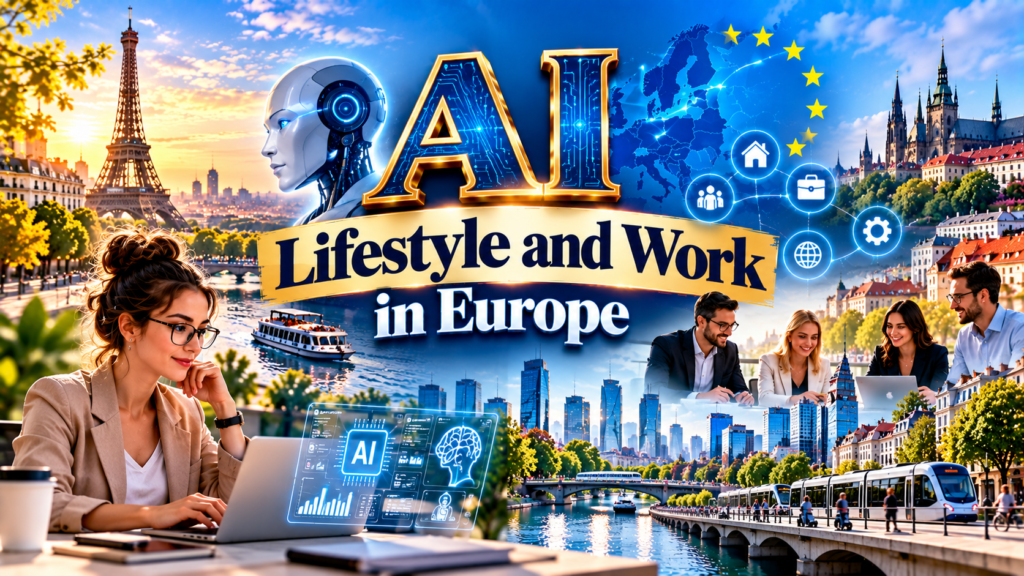
AI is also influencing communication through:
- Automatic translation.
- Voice recognition.
- Speech-to-text applications.
- Writing assistance.
- AI-powered customer support.
- Personalised digital content.
- Meeting transcription and summaries.
For example, an employee working with colleagues in France, Germany, and Spain can use translation tools to understand messages and collaborate more effectively.
However, AI-generated communication cannot completely replace genuine human interaction. Emotional understanding, cultural awareness, trust, and personal relationships remain important parts of communication.
12. How Is AI Influencing the Banking and Financial Sector in Europe?
The financial industry is another major area where artificial intelligence is changing everyday services and professional operations.
European banks and financial institutions can use AI to analyse transactions, identify suspicious activities, assess certain financial risks, and improve customer support.
AI-powered chatbots can answer common banking questions, while intelligent fraud detection systems can help identify unusual transaction patterns.
Customers may also encounter AI-based financial tools that organise spending information and provide general budgeting insights.
Important applications include:
- Fraud detection and prevention.
- Automated customer assistance.
- Financial data analysis.
- Risk assessment.
- Personalised banking services.
- Operational automation.
- Improved cybersecurity monitoring.
Despite these benefits, financial institutions must ensure that AI systems are secure, transparent, and appropriately supervised.
Consumers should also avoid sharing sensitive banking information with unverified AI applications.
13. What Are the Biggest Challenges of AI Adoption in Europe?
Although artificial intelligence offers many advantages, its rapid development also creates challenges that European societies must address.
One major concern is employment disruption. Automation may change certain occupations, particularly those involving repetitive administrative, manufacturing, and customer service activities. Workers may need additional training to adapt to changing job requirements.
Another concern involves personal privacy. AI systems often depend on large amounts of data, raising questions about how information is collected, stored, and processed.
Other important challenges include:
- Job displacement: Certain tasks and roles may become less necessary.
- Data privacy: Personal information must be protected.
- Cybersecurity: AI systems can introduce new security risks.
- Misinformation: AI-generated content can spread misleading information.
- Algorithmic bias: Poorly designed systems may produce unfair outcomes.
- Digital inequality: Not everyone has equal access to advanced technology.
- Dependence on automation: Excessive reliance on AI may weaken certain human skills.
- Copyright concerns: The use of creative and published material in AI development raises legal questions.
Addressing these challenges requires cooperation between governments, businesses, researchers, educators, and citizens.
14. What Is the European Union Doing to Regulate Artificial Intelligence?
The European Union has taken important steps towards establishing rules for the responsible development and use of artificial intelligence.
One of the most significant developments is the European Union AI Act, which entered into force on 1 August 2024. It introduces a risk-based regulatory framework designed to address potential harms associated with different AI applications.
Under this framework, AI systems are classified according to the level of risk they may create.
The main categories include:
- Unacceptable risk: Certain AI practices are prohibited because they threaten fundamental rights and safety.
- High risk: Specific AI systems must meet strict requirements relating to safety, transparency, documentation, and human oversight.
- Limited risk: Certain systems have transparency obligations, such as informing users when they are interacting with AI in relevant situations.
- Minimal risk: Many everyday AI applications are subject to fewer regulatory requirements.
The rules are being implemented in stages, with different provisions applying on different dates.
The European approach aims to encourage innovation while protecting fundamental rights, consumer interests, and public safety.
For European businesses, understanding these requirements is becoming increasingly important as AI adoption expands across industries.
15. How Is AI Changing Small Businesses and Startups in Europe?
Artificial intelligence is creating new possibilities for small businesses and startups. Previously, many advanced digital services required significant financial investment and specialised teams. Today, accessible AI tools allow smaller organisations to perform several tasks more efficiently.
European entrepreneurs can use AI to support marketing, customer communication, market research, content development, and business planning.
For example, a small fashion business in Italy can use AI tools to analyse customer preferences and prepare marketing materials. A tourism startup in Spain can use intelligent chatbots to answer common customer questions.
AI can help small businesses with:
- Social media content planning.
- Customer service automation.
- Market research.
- Sales forecasting.
- Business administration.
- Website personalisation.
- Customer feedback analysis.
These tools may help smaller companies compete in digital markets and improve their services.
However, successful AI adoption requires businesses to select appropriate tools, protect customer information, and ensure that generated content and recommendations are reviewed by qualified people.
16. Will AI Replace Human Workers in Europe?
One of the biggest questions surrounding artificial intelligence is whether machines will replace human workers.
The answer is more complicated than a simple yes or no. AI is likely to automate certain tasks, transform existing jobs, and create new professional opportunities. Its impact will differ across industries, occupations, and skill levels.
Jobs involving repetitive activities may experience greater automation. However, professions requiring creativity, emotional intelligence, leadership, complex communication, and practical human judgement may continue to depend heavily on people.
For example, AI can help teachers prepare learning materials, but human educators remain important for mentoring students and understanding individual needs. Similarly, AI can support doctors by analysing medical information, but healthcare professionals remain responsible for clinical decisions.
The future workplace will likely involve greater collaboration between humans and intelligent systems.
Workers who develop digital literacy, problem-solving abilities, adaptability, and AI-related skills may be better prepared for this transition.
17. Why Are AI Skills Becoming Important for European Workers?
As artificial intelligence becomes more common in workplaces, understanding how to use digital tools is becoming an increasingly valuable professional skill.
Employees do not necessarily need to become AI engineers to benefit from this technology. Many occupations will require basic knowledge of AI applications, responsible usage, data awareness, and digital communication.
Workers can prepare for the future by developing the following skills:
- AI literacy and digital awareness.
- Data analysis and interpretation.
- Critical thinking.
- Problem-solving.
- Creative communication.
- Cybersecurity awareness.
- Adaptability and lifelong learning.
- Ethical and responsible technology use.
European educational institutions, training organisations, and employers can support this transition by providing accessible professional development programmes.
Continuous learning will be particularly important as AI technologies and workplace requirements continue to evolve.
18. How Will AI Shape the Future of Lifestyle and Work in Europe?
The future of artificial intelligence in Europe will depend on technological innovation, public trust, investment, education, and regulation.
AI is expected to become more deeply integrated into workplaces, transportation networks, healthcare services, educational platforms, and household technologies.
In the coming years, individuals may experience more personalised digital services, while businesses could use intelligent systems to improve efficiency and develop new products.
Some possible future developments include:
- More advanced personal AI assistants.
- Greater automation in manufacturing.
- Improved medical research and diagnostics.
- Smarter energy management systems.
- More personalised educational experiences.
- Advanced robotics in logistics and industry.
- Intelligent transport and mobility services.
- Increased demand for AI-related professional skills.
However, technological progress should not be measured only by how much automation is achieved. It should also be evaluated by whether it improves people’s quality of life, protects individual rights, and creates opportunities for society.
Europe’s ability to combine technological innovation with responsible regulation will play an important role in shaping its digital future.
19. How Can Europeans Prepare for an AI-Driven Future?
Preparing for an AI-driven future requires individuals, businesses, educational institutions, and governments to work together.
Individuals can begin by understanding basic AI applications and learning how these tools can support their personal and professional activities. Businesses should identify tasks where AI can create genuine value while maintaining appropriate human supervision.
Educational institutions can introduce practical digital skills and encourage students to think critically about AI-generated information.
Some practical steps include:
- Learn how commonly used AI tools work.
- Develop digital and analytical skills.
- Explore AI applications relevant to your profession.
- Verify information generated by AI systems.
- Protect personal and professional data.
- Participate in continuous learning programmes.
- Understand the ethical responsibilities of using AI.
- Maintain human creativity and independent thinking.
Adapting to technological change does not mean depending entirely on machines. Instead, it means learning how to use technology responsibly while strengthening the human abilities that make individuals and organisations valuable.
20. Is Artificial Intelligence Making Life Better in Europe?
Artificial intelligence has the potential to make life more convenient, productive, and connected across Europe. From simplifying household activities to improving workplace operations, its influence is becoming increasingly visible.
People can use AI to save time, access information, communicate across languages, and manage everyday responsibilities. Businesses can improve productivity, develop innovative products, and offer better customer experiences. Healthcare providers and researchers can explore new ways to improve medical services and scientific discoveries.
However, the benefits of AI will not automatically reach everyone equally. Issues such as employment disruption, privacy, cybersecurity, misinformation, and unequal access to technology must be addressed.
The real success of artificial intelligence will depend on how effectively European societies balance innovation with responsibility.
AI should be viewed as a tool that enhances human capabilities rather than a replacement for human intelligence, creativity, and judgement.
Conclusion: Is AI Redefining the Future of Lifestyle and Work in Europe?
Artificial intelligence is reshaping the European way of life by influencing how people work, study, travel, communicate, shop, and manage their homes. It is creating new opportunities for businesses, supporting scientific progress, and encouraging the development of innovative digital services.
At the same time, AI is changing employment requirements and raising important questions about privacy, security, fairness, and human responsibility. European governments and organisations must ensure that technological progress benefits society while protecting fundamental rights.
The future of Europe will not be determined by artificial intelligence alone but by how people choose to develop, regulate, and use it. Those who embrace continuous learning, responsible innovation, and human-centered technology will be better positioned to benefit from the changes ahead.
Ultimately, AI is not simply changing the tools Europeans use; it is transforming the possibilities of modern living and the future of work.
Read More – Most Affordable Europe Property Markets