
How to Plan a Europe Trip: Everything You Need to Know Before You Go
Planning a trip to Europe is an exciting experience, whether you dream of exploring historic cities, enjoying beautiful landscapes, discovering different cultures or experiencing world-famous attractions. Europe offers something for every kind of traveller, from romantic streets in Paris and historic landmarks in Rome to scenic Swiss mountains, charming villages in Austria and stunning coastlines in Greece. However, travelling across multiple European countries requires thoughtful planning, especially when it comes to choosing destinations, preparing a budget, booking accommodation and understanding transportation options.
If you are wondering how to plan a Europe trip, the best approach is to start with a clear travel itinerary and organise the essential details well in advance. A well-planned European holiday can help you save money, avoid unnecessary travel stress and make the most of your time. Whether you are travelling alone, with family, as a couple or with friends, understanding the basics of European travel will help you enjoy a memorable journey.
This guide explains how to plan a Europe trip step by step, including the best time to visit, popular destinations, travel costs, visas, transportation, accommodation, packing essentials and practical travel tips.
1. Why Should You Plan a Europe Trip in Advance?
Planning a Europe trip in advance allows you to organize your journey according to your interests, available time and travel budget. Europe consists of numerous countries, each offering unique attractions, traditions, cuisines and experiences. Without proper planning, travelers may spend too much time moving between destinations or miss important attractions because of limited availability.
Advance planning also makes it easier to compare flight prices, reserve hotels, understand visa requirements and book popular attractions. Many European cities attract millions of visitors every year, particularly during summer and major holiday periods. Booking essential services early can help you secure better options and avoid last-minute expenses.
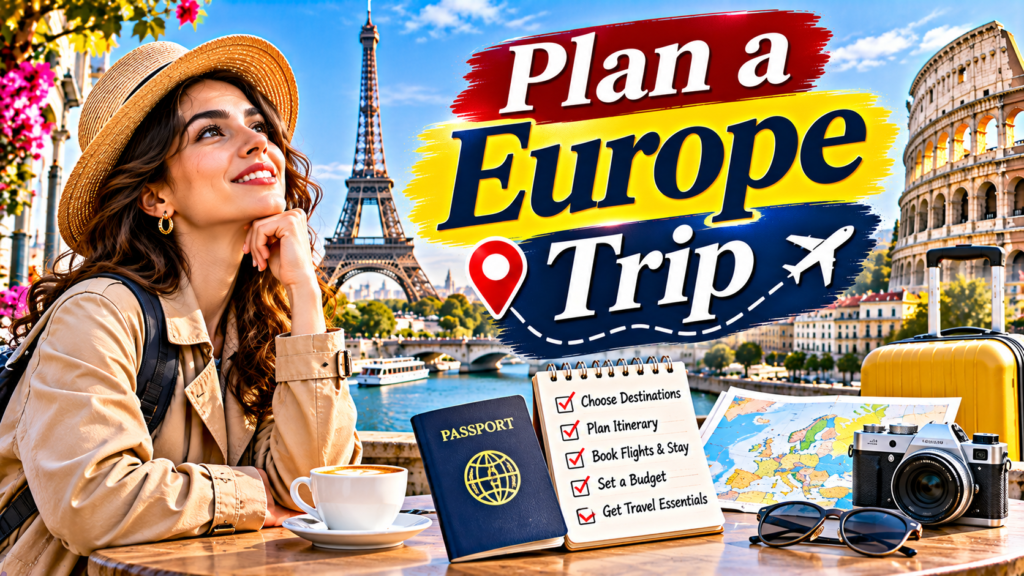
Some important benefits of planning ahead include:
- Finding affordable international flights.
- Comparing accommodation options.
- Creating a realistic travel itinerary.
- Understanding visa and entry requirements.
- Managing daily travel expenses.
- Reserving popular attractions and experiences.
- Avoiding unnecessary transportation costs.
A little preparation can make your European holiday more comfortable, organised and enjoyable.
2. What Is the Best Time to Visit Europe?
Choosing the right season is one of the most important decisions when planning a Europe trip. The weather, tourist crowds, accommodation prices and available activities can vary significantly throughout the year. The best time to visit Europe depends on the destinations you want to explore and the type of holiday experience you prefer.
Spring (March to May)
Spring is an excellent season for exploring European cities, gardens and countryside destinations. Temperatures gradually become warmer, flowers bloom across parks and gardens, and outdoor attractions become more enjoyable.
Popular spring destinations include Paris, Amsterdam, Rome, Prague and Florence. Travellers can enjoy sightseeing, outdoor cafés and scenic walks without experiencing the busiest summer crowds in many locations.
Summer (June to August)
Summer is one of the busiest travel seasons in Europe. Longer daylight hours, warm weather and numerous festivals make it popular among international tourists. Coastal destinations in Italy, Spain, Croatia and Greece are particularly attractive during this period.
However, summer travel can be expensive because flights and hotels often experience higher demand. Popular tourist attractions may also have long queues.
Autumn (September to November)
Autumn is a wonderful time to explore Europe, especially if you prefer comfortable temperatures and fewer crowds. Many destinations feature beautiful autumn colours, seasonal food festivals and cultural events.
Countries such as Germany, Switzerland, France and Austria offer memorable autumn experiences. September and October can be particularly appealing for sightseeing and countryside exploration.
Winter (December to February)
Winter transforms many European destinations into beautiful seasonal holiday locations. Travellers can enjoy Christmas markets, snowy mountain landscapes, winter sports and festive celebrations.
Austria, Switzerland, Germany and Finland are popular winter destinations. However, some attractions and transport services may operate on reduced schedules, depending on the location and weather.
Which season should you choose? Spring and autumn are excellent for comfortable sightseeing, summer is ideal for beach holidays and outdoor activities, while winter is perfect for Christmas markets and snow experiences.
3. Which European Countries Should You Include in Your Trip?
One of the biggest challenges when planning a Europe trip is deciding which countries to visit. Europe has many beautiful destinations, and every country offers a different travel experience. Instead of trying to visit too many places, select countries that match your interests and are conveniently connected by road, rail or air.
Here are some popular European countries worth including in your itinerary.
France
France is famous for Paris, the Eiffel Tower, the Louvre Museum, beautiful countryside, vineyards and the French Riviera. It is an excellent destination for culture, food, shopping and romantic holidays.
Italy
Italy attracts visitors with its ancient Roman landmarks, Renaissance architecture, delicious cuisine and picturesque coastal towns. Rome, Venice, Florence and Milan are popular choices.
Switzerland
Switzerland is ideal for travellers who love mountains, lakes, scenic train journeys and outdoor adventures. Interlaken, Lucerne, Zermatt and the Jungfrau region are major attractions.
Netherlands
The Netherlands is known for Amsterdam’s canals, cycling culture, historic architecture, tulip fields and charming villages. It is a wonderful destination for relaxed city exploration.
Czech Republic
Prague offers medieval architecture, historic squares, beautiful bridges and a lively cultural atmosphere. It is also worth considering for travellers looking for a comparatively affordable European city break.
Spain
Spain offers sunny beaches, impressive architecture, exciting nightlife and outstanding food. Barcelona, Madrid, Seville and Valencia are among its most popular destinations.
Other destinations worth considering include Austria, Germany, Greece, Portugal, Hungary, Croatia and Belgium. Choose two to four countries for a shorter holiday rather than attempting to explore the entire continent in one visit.
4. How Many Days Do You Need for a Europe Trip?
The ideal duration of a Europe trip depends on your budget, travel preferences and the number of destinations you want to explore. Europe has excellent transportation connections, but travelling between countries still requires time for transfers, accommodation check-ins and sightseeing.
Here is a general guide:
- 5–7 days: Ideal for exploring one country or two nearby cities.
- 10–12 days: Suitable for visiting two or three countries.
- 14–15 days: Good for exploring three or four countries at a comfortable pace.
- 20–25 days: Suitable for a more extensive European holiday.
- 30 days or longer: Ideal for travellers interested in exploring several regions and lesser-known destinations.
For first-time visitors, a 10-to-15-day itinerary is often a practical starting point. It offers enough time to explore major attractions without spending most of the holiday travelling between destinations.
Remember that visiting fewer places often creates a more enjoyable experience than rushing through several countries.
5. How Can You Create the Perfect Europe Travel Itinerary?
Creating a realistic itinerary is essential for a successful European holiday. Start by selecting your preferred countries and identifying the cities you want to visit. Then organise destinations geographically to reduce travel time and unnecessary expenses.
For example, a first-time visitor might consider a route covering France, Switzerland and Italy.
Example: 14-Day Europe Travel Itinerary
| Destination | Suggested stay |
|---|---|
| Paris, France | 3 days |
| Lucerne, Switzerland | 2 days |
| Interlaken, Switzerland | 2 days |
| Venice, Italy | 2 days |
| Florence, Italy | 2 days |
| Rome, Italy | 3 days |
This itinerary combines iconic landmarks, scenic landscapes, cultural experiences and famous European cities.
What Should You Include in Your Daily Travel Plan?
Your daily schedule should include:
- Morning sightseeing at major attractions.
- Lunch at local restaurants or cafés.
- Afternoon visits to museums, markets or neighbourhoods.
- Evening walks, cultural activities or local dining.
- Sufficient rest and flexibility for unexpected changes.
Avoid scheduling too many attractions in one day. Allow time to enjoy the atmosphere of each destination rather than simply checking places off a list.
6. What Is the Estimated Budget for a Europe Trip?
Budget planning is one of the most important aspects of organising a European holiday. The total cost depends on your departure country, travel season, accommodation preferences, destinations and daily activities.
For travellers departing from India, the following estimates can help with initial planning.
| Expense | Estimated cost per person |
|---|---|
| Return international flights | ₹45,000–₹85,000 |
| Accommodation (14 nights) | ₹35,000–₹80,000 |
| Food and drinks | ₹20,000–₹35,000 |
| Local transportation | ₹12,000–₹25,000 |
| Intercity travel | ₹15,000–₹30,000 |
| Attractions and activities | ₹10,000–₹20,000 |
| Visa and travel insurance | ₹10,000–₹15,000 |
| Miscellaneous expenses | ₹10,000–₹15,000 |
Illustrative planning estimates in Indian rupees, not live quotations. Actual costs can vary considerably by season, route, exchange rate and booking date.
A two-week European holiday may cost approximately ₹1.57 lakh to ₹3.05 lakh per person, excluding major shopping expenses.
How Can You Save Money on a Europe Trip?
Travelling in Europe does not always require an expensive budget. With careful planning, you can enjoy memorable experiences while controlling your expenses.
Consider these money-saving tips:
- Book international flights several months in advance when possible.
- Travel during shoulder seasons.
- Compare hotels, hostels and apartment rentals.
- Use public transportation instead of taxis.
- Purchase attraction tickets online where appropriate.
- Explore free walking tours and public parks.
- Eat at local cafés and neighbourhood restaurants.
- Compare train, coach and budget airline fares.
- Avoid changing hotels every day.
- Keep an emergency travel fund.
A realistic budget should also include a contingency amount for unexpected expenses.
7. Do You Need a Schengen Visa to Visit Europe?
Visa requirements depend on your nationality, destination and travel purpose. Travellers holding Indian passports generally need a Schengen visa for short tourist visits to countries in the Schengen Area.
The Schengen visa allows eligible visitors to travel within participating countries for short stays, generally up to 90 days within any 180-day period, subject to the applicable conditions.
What Documents Are Required for a Schengen Tourist Visa?
Commonly required documents include:
- A valid passport.
- Completed visa application form.
- Recent passport-sized photographs.
- Flight reservation or travel itinerary.
- Hotel or accommodation details.
- Travel medical insurance meeting Schengen requirements.
- Bank statements and financial evidence.
- Employment, business or student documents, as applicable.
- Evidence of the purpose of travel.
- Proof of intention to return, where required.
You should generally apply through the country that is your main destination. If you are spending equal time in multiple Schengen countries, the first country of entry may determine where you apply.
Visa rules, appointment availability, fees and documentation requirements can change. Always check the official embassy or consulate website and authorised visa application centre before submitting your application.
It is also important to remember that not every European country belongs to the Schengen Area. Some destinations have separate entry requirements.
8. How Should You Book Flights for a Europe Trip?
International flights can represent a significant portion of your European holiday budget. Therefore, comparing flight options is an important step in travel planning.
Travellers departing from India can compare flights from major international airports such as Delhi, Mumbai, Bengaluru, Chennai and Hyderabad, depending on their location and preferred airline.
When comparing flights, consider:
- Total ticket price, including baggage charges.
- Direct flights versus connecting flights.
- Layover duration and airport facilities.
- Arrival and departure timings.
- Baggage allowance.
- Cancellation and modification policies.
- Airport distance from your accommodation.
You can compare options through flight search platforms and airline websites. Flexible travel dates may also help you find more affordable fares.
Whenever possible, choose an arrival and departure airport that fits your itinerary. For example, arriving in Paris and departing from Rome may save you from returning to your starting destination unnecessarily.
9. What Is the Best Way to Travel Between European Countries?
Europe has a well-developed transportation network that makes travelling between countries relatively convenient. Depending on your route, budget and available time, you can choose trains, buses, flights or rental cars.
Train Travel
Trains are among the most popular ways to explore Europe. High-speed railway services connect several major cities, while regional trains provide access to smaller towns and scenic destinations.
Train travel is particularly useful for routes such as Paris to Brussels, Paris to Amsterdam and Rome to Florence.
Bus Travel
Long-distance coaches are often an economical alternative to trains. Companies operating across European countries offer routes between major cities and smaller destinations.
However, bus journeys can take longer, so compare total travel time before booking.
Budget Airlines
Budget airlines can be useful for travelling longer distances or connecting destinations without convenient rail routes. However, check baggage allowances, airport locations and additional charges before booking.
Rental Cars
Hiring a car is useful for exploring countryside destinations, remote villages and scenic routes. Before driving, understand local traffic rules, parking regulations, insurance requirements and international driving permit rules applicable to your circumstances.
Should You Buy a Eurail Pass?
A Eurail Pass may be useful for travellers planning multiple train journeys across participating European countries. However, it is not automatically cheaper than buying individual tickets.
Compare your planned routes, reservation charges, travel dates and pass conditions before making a decision.
10. Where Should You Stay During Your Europe Trip?
Choosing the right accommodation can make a significant difference to your European holiday. Europe offers a wide range of accommodation options, including luxury hotels, budget hostels, boutique properties, serviced apartments and family-friendly hotels.
Your choice should depend on your budget, travel style, group size and preferred location.
What Are the Best Accommodation Options?
Hotels: Hotels are suitable for travellers who prefer comfort, privacy and convenient services. You can choose from budget properties to luxury hotels depending on your requirements.
Hostels: Hostels are popular among solo travellers, backpackers and students. They offer affordable accommodation and opportunities to meet other international travellers.
Apartments: Holiday apartments are useful for families and groups who want additional space, kitchen facilities and a more independent experience.
Boutique hotels: These properties are ideal for travellers interested in distinctive interiors, personalised hospitality and local character.
How Can You Choose the Right Location?
Consider staying near public transportation stations, major attractions and restaurants. Accommodation in the city centre may cost more, but it can save time and transportation expenses.
Before confirming a booking, check:
- Guest reviews and property ratings.
- Distance from railway stations and airports.
- Public transport connections.
- Check-in and check-out timings.
- Cancellation policies.
- Additional taxes and service charges.
- Available facilities and room amenities.
Booking refundable accommodation can provide additional flexibility if your travel plans change.
11. Which European Attractions Should You Visit?
Europe is home to some of the world’s most recognizable attractions. From historic monuments and magnificent palaces to beautiful natural landscapes, the continent offers countless opportunities for sightseeing.
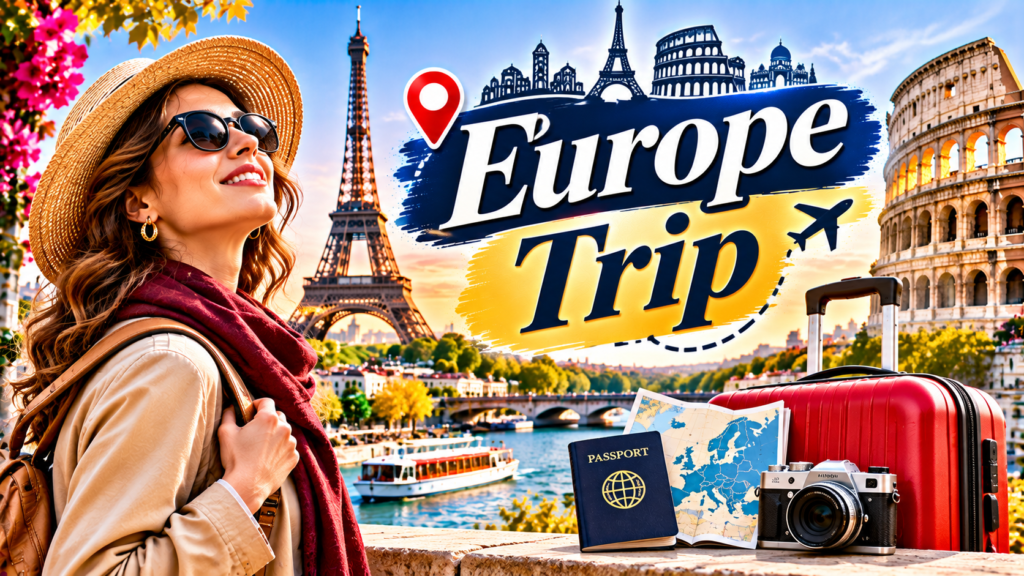
Here are some attractions worth including in your travel plans:
- Eiffel Tower: Enjoy panoramic views of Paris and admire one of the world’s most recognisable landmarks.
- Colosseum: Explore the remarkable remains of an ancient Roman amphitheatre.
- Louvre Museum: Discover world-famous artworks and historical collections.
- Matterhorn: Experience breathtaking Alpine scenery and mountain activities.
- Sagrada Familia: Admire the extraordinary architecture of Antoni Gaudí.
- Santorini: Enjoy spectacular coastal scenery, whitewashed buildings and beautiful sunsets.
- Charles Bridge: Walk across a historic bridge surrounded by beautiful architecture.
- Big Ben: Visit one of London’s best-known landmarks.
Check ticket availability and opening schedules before visiting major attractions. Some popular museums and monuments require advance reservations, particularly during peak tourist periods.
12. What Food Should You Try During a Europe Trip?
Food is an essential part of experiencing European culture. Every country has its own culinary traditions, regional specialities and dining customs. Exploring local cuisine can make your holiday even more memorable.
Some popular European dishes include:
- Italy: Pizza, pasta, risotto, gelato and tiramisu.
- France: Croissants, baguettes, crêpes and French pastries.
- Spain: Paella, tapas, tortilla española and churros.
- Germany: Pretzels, schnitzel, sausages and traditional baked goods.
- Greece: Moussaka, souvlaki, Greek salad and baklava.
- Belgium: Belgian waffles, chocolates and fries.
- Austria: Wiener schnitzel, apple strudel and traditional pastries.
If you have dietary preferences or restrictions, research suitable restaurants before travelling. Vegetarian, vegan, halal and gluten-free options are available in many European cities, although availability varies by destination.
13. What Should You Pack for a Europe Trip?
Packing appropriately can help you stay comfortable throughout your European holiday. The clothes and accessories you need will depend on the season, destinations and planned activities.
For example, summer travellers may need lightweight clothing, sunglasses and comfortable walking shoes, while winter visitors should pack thermal layers, warm jackets, gloves and suitable footwear.
Essential Europe Travel Packing Checklist
Packing checklist
0/16 packed
Travel documentsValid passport and required visaFlight and hotel confirmationsTravel insurance documentsCopies of important documents
Clothing and footwearWeather-appropriate clothesComfortable walking shoesJacket or warm layersExtra socks and undergarments
ElectronicsMobile phone and chargerUniversal travel adapterPower bankHeadphones and camera
Personal essentialsPrescription medicines, if applicableBasic toiletriesSunscreen and sunglassesSmall first-aid kit
Reset checklist
Also check airline baggage restrictions and the weather forecast for each destination before departure.
14. How Can You Stay Connected to the Internet in Europe?
Internet access is important for navigation, online reservations, communication and accessing travel information. Fortunately, travellers have several options for staying connected across Europe.
An international roaming plan from your existing mobile provider may be convenient, but it can sometimes be expensive. Alternatively, you can purchase a local SIM card or an international eSIM.
Which Internet Option Is Best?
- International eSIM: Convenient for travellers with compatible smartphones who want to activate a data plan digitally.
- Local SIM card: Useful for longer stays and travellers who prefer a local mobile number.
- International roaming: Suitable for people who want to continue using their existing mobile number.
- Public Wi-Fi: Available in many hotels, cafés, airports and public spaces, although it should be used carefully.
Download offline maps before leaving your accommodation and keep important travel documents accessible without an internet connection.
15. How Can You Manage Money Safely While Travelling in Europe?
Managing money carefully is important when visiting multiple European countries. Although the euro is the common currency in many European destinations, not every European country uses it.
For example, Switzerland uses the Swiss franc, the United Kingdom uses the British pound and the Czech Republic uses the Czech koruna.
Before travelling, research the currencies accepted in your destinations and understand the exchange rates.
Some useful money management tips include:
- Carry a small amount of local currency for emergencies.
- Use internationally accepted debit or credit cards.
- Inform your bank about international travel if required.
- Check foreign transaction fees.
- Prefer reputable currency exchange providers.
- Keep cash and cards in separate locations.
- Use ATMs located inside banks or secure public places.
- Maintain an emergency fund.
Always check whether a card transaction offers payment in local currency or your home currency. Paying in local currency often helps avoid unfavourable dynamic currency conversion rates.
16. Is Europe Safe for First-Time Travellers?
Europe is a popular destination for international tourists, and many cities offer well-developed public services and transport systems. However, like any major travel destination, visitors should take sensible precautions.
Pickpocketing and petty theft can occur in crowded tourist areas, railway stations, public transport and busy shopping streets.
To improve your travel safety:
- Keep your passport and valuables secure.
- Avoid displaying large amounts of cash.
- Stay aware of your surroundings in crowded places.
- Use licensed taxis or trusted transportation services.
- Keep emergency contact details accessible.
- Follow local laws and public transport regulations.
- Avoid poorly lit or unfamiliar areas late at night.
- Share your itinerary with someone you trust.
- Keep digital and physical copies of important documents.
- Purchase suitable travel insurance.
Travellers should also understand local emergency numbers. The number 112 works across the European Union for emergency assistance.
17. What Cultural Etiquette Should You Know Before Visiting Europe?
Europe is culturally diverse, and customs can differ significantly between countries. Understanding local traditions and basic etiquette can help visitors interact respectfully with residents.
For example, greetings, dining customs, tipping practices and communication styles may vary from one destination to another.
Here are some useful etiquette tips:
- Learn a few basic words in the local language.
- Respect religious buildings and cultural landmarks.
- Follow dress codes at churches and other religious sites.
- Be punctual for scheduled tours and reservations.
- Follow restaurant and public transport etiquette.
- Ask permission before photographing people.
- Respect local rules about noise and public spaces.
- Check tipping customs instead of assuming they are identical everywhere.
Making an effort to understand local traditions can enrich your travel experience and help you connect with the places you visit.
18. What Are the Most Common Mistakes to Avoid When Planning a Europe Trip?
Even experienced travellers can make mistakes when organising an international holiday. Avoiding common planning errors can help you save money, manage your time and enjoy a smoother experience.
Some mistakes to avoid include:
- Visiting too many countries: Trying to explore too many destinations in a short period can make your holiday exhausting.
- Ignoring travel distances: Nearby countries may still require several hours of transportation.
- Booking flights without checking baggage rules: Budget airlines often have different luggage policies.
- Not checking visa requirements: Different European countries may have different entry conditions.
- Underestimating expenses: Food, transportation, sightseeing and additional charges can increase your total budget.
- Ignoring travel insurance: Unexpected medical expenses, cancellations or lost luggage can create financial difficulties.
- Not reserving popular attractions: Some major landmarks and museums have limited entry slots.
- Overpacking: Carrying heavy luggage between multiple destinations can make travelling uncomfortable.
- Ignoring local holidays: Public holidays can affect opening hours and transportation schedules.
A flexible itinerary, careful budgeting and proper research can help prevent many of these problems.
19. Can You Plan a Europe Trip Independently or Should You Choose a Travel Package?
Travellers can organise a Europe trip independently or book a package through a professional travel agency. Both approaches have advantages, and the right choice depends on your experience, budget and travel preferences.
Planning a Europe Trip Independently
Independent travel gives you complete control over your itinerary, accommodation, transportation and sightseeing activities.
It is particularly suitable for travellers who enjoy researching destinations and comparing different options.
Benefits include:
- Greater flexibility in choosing destinations.
- Freedom to adjust your daily schedule.
- Opportunities to discover lesser-known locations.
- More control over accommodation and dining expenses.
- Freedom to customise your travel experience.
Choosing a Europe Tour Package
A guided tour package can be convenient for travellers who prefer organised arrangements. Many packages include accommodation, transportation, sightseeing and professional tour assistance.
Benefits include:
- Less time spent organising travel arrangements.
- Pre-planned itineraries.
- Assistance with transportation and accommodation.
- Opportunities to meet other travellers.
- Convenient arrangements for first-time visitors.
Before purchasing a package, carefully review the destinations, inclusions, exclusions, hotel categories, cancellation policies and additional charges.
20. What Are the Best Tips for First-Time Visitors to Europe?
A first European holiday can be an unforgettable experience. However, travelling across different countries requires some preparation and an understanding of how things work locally.
Here are some practical tips for first-time visitors:
- Start with two or three countries rather than planning an extensive tour.
- Research the weather conditions before choosing your travel dates.
- Book important transportation and accommodation in advance.
- Keep digital copies of your passport and travel documents.
- Learn basic greetings in the languages spoken at your destinations.
- Use public transport whenever practical.
- Carry comfortable shoes for walking around historic cities.
- Check museum and attraction opening schedules.
- Keep some emergency money available.
- Avoid planning every hour of your holiday.
- Respect local traditions and cultural practices.
- Try regional food and explore neighbourhoods beyond popular tourist attractions.
- Purchase appropriate travel insurance.
- Check the latest entry requirements before departure.
- Allow sufficient time between connecting flights and train journeys.
Most importantly, remember that a European holiday is about more than visiting famous monuments. It is also an opportunity to discover different lifestyles, meet people, experience local traditions and create lasting memories.
Frequently Asked Questions (FAQs) About Planning a Europe Trip
Q1. How much money do you need for a Europe trip?
Ans: The budget depends on your travel duration, destinations, accommodation and lifestyle. For a two-week trip from India, a preliminary estimate may range from ₹1.5 lakh to ₹3 lakh per person, excluding extensive shopping and luxury experiences.
Q2. What is the best month to visit Europe?
Ans: May, June, September and October are popular months for European travel. May and September are particularly attractive for sightseeing because many destinations offer pleasant weather and potentially fewer crowds than peak summer.
Q3. How many countries can you visit in 10 days in Europe?
Ans: You can visit two or three countries in 10 days, depending on their geographical locations and transportation connections. However, choosing fewer destinations can provide a more relaxed experience.
Q4. Is Europe expensive for Indian tourists?
Ans: Europe can be expensive compared with many Indian travel destinations, particularly in cities such as Paris, Zurich, London and Amsterdam. However, choosing budget accommodation, using public transportation and travelling during shoulder seasons can reduce expenses.
Q5. Do Indians need a visa to travel to Europe?
Ans: Indian passport holders generally require a Schengen visa for short tourist visits to Schengen countries. Some European countries outside the Schengen Area have separate visa requirements.
Q6. Which European country is best for first-time visitors?
Ans: France, Italy, Switzerland, Spain and the Netherlands are popular choices for first-time visitors. Your ideal destination depends on your interests, budget and preferred travel experiences.
Q7. Is train travel better than flying in Europe?
Ans: Train travel is convenient for many short and medium-distance journeys, especially between major cities. Flights may be more practical for longer distances. Compare total costs, journey times and airport or station locations before booking.
Q8. Can you explore Europe on a limited budget?
Ans: Yes. Travellers can explore Europe on a limited budget by choosing affordable destinations, staying in hostels, travelling by coach, preparing some meals and taking advantage of free attractions.
Q9. Is travel insurance necessary for a Europe trip?
Ans: Travel medical insurance is generally required for Schengen visa applications and must meet the applicable coverage conditions. Travel insurance can also help protect against eligible medical emergencies, cancellations and baggage-related problems.
Q10. How early should you plan a Europe holiday?
Ans: Starting your planning three to six months before departure is a useful general guideline. Allow additional time if you need a visa appointment, are travelling during peak season or have a complicated itinerary.
Conclusion: How Can You Make Your Europe Trip Truly Memorable?
Planning a Europe trip becomes easier when you organise your journey step by step. From choosing the right countries and deciding when to travel to preparing a realistic budget, arranging transportation and booking accommodation, every detail contributes to a successful holiday.
Whether you want to admire the Eiffel Tower in Paris, explore ancient Roman landmarks in Italy, experience the breathtaking Swiss Alps or enjoy Mediterranean beaches, Europe offers endless possibilities for unforgettable travel experiences.
The secret to a successful European holiday is finding the right balance between preparation and flexibility. Avoid rushing through destinations, explore local cultures, try traditional cuisines and leave enough time to enjoy unexpected discoveries along the way.
With thoughtful planning, the right travel arrangements and a clear itinerary, your dream European holiday can become a wonderful reality. Start preparing early, research your preferred destinations and get ready to discover the beauty, history and diversity of Europe.
Read More – World Most Influential Designers