
European Coffeehouse Culture: How Coffeehouses Shaped Europe’s History, Society and Lifestyle
What makes European coffeehouse culture so special, and why have cafés remained an important part of everyday life across the continent for centuries? European coffeehouses are much more than places where people gather to enjoy a cup of coffee. They represent a rich cultural tradition shaped by history, intellectual conversations, artistic movements, political discussions, literature, and social connections. From the elegant historic cafés of Vienna to the lively espresso bars of Italy and the fashionable coffee shops of Paris, coffeehouses have played an important role in defining Europe’s cultural identity.
European coffeehouse culture has evolved significantly over time, adapting to changing lifestyles while preserving its traditional charm. These establishments have provided welcoming spaces for writers, philosophers, musicians, artists, businesspeople, students, and ordinary citizens. They have also influenced European architecture, hospitality, food traditions, and urban lifestyles.
Today, coffeehouses continue to serve as social meeting points where people can relax, work, exchange ideas, and experience local traditions. Whether it is enjoying a cappuccino in Rome, drinking Viennese coffee in Austria, or spending an afternoon at a Parisian pavement café, the European coffeehouse experience offers a fascinating connection between the past and present.
Let’s explore how European coffeehouse culture developed, why it became so influential, and how it continues to shape modern European society.
1. What Is European Coffeehouse Culture?
European coffeehouse culture refers to the traditions, customs, social activities, and lifestyle associated with drinking coffee in cafés and coffeehouses across Europe. It is an important part of European social history and reflects the continent’s diverse cultural identities.
Unlike places where coffee is primarily consumed as a quick beverage, traditional European coffeehouses often encourage people to slow down and enjoy their surroundings. Customers may spend hours reading newspapers, discussing current affairs, meeting friends, writing, or simply watching the world go by.
Coffeehouses have traditionally offered more than refreshments. They have created environments where different generations and communities can interact.
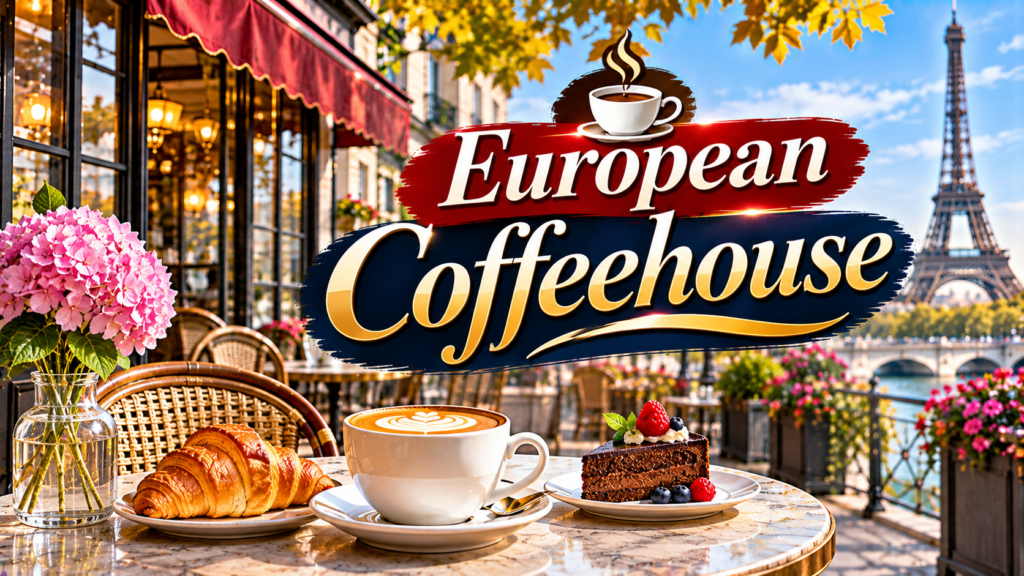
Some important characteristics of European coffeehouse culture include:
- Social interaction: Cafés provide spaces for friends, families, colleagues, and strangers to connect.
- Intellectual discussions: Coffeehouses have historically encouraged debates about politics, philosophy, science, and literature.
- Artistic inspiration: Writers, painters, musicians, and creative professionals have used cafés as meeting places and sources of inspiration.
- Local traditions: Different European countries have developed distinctive coffee-drinking customs.
- Relaxed lifestyles: Many European cafés encourage customers to enjoy coffee without rushing.
- Culinary experiences: Coffee is often accompanied by pastries, cakes, sandwiches, and regional specialities.
These characteristics make European coffeehouse culture an important part of the continent’s cultural and social heritage.
2. How Did Coffeehouse Culture Begin in Europe?
How did coffee become such an important part of European society? The story begins with the introduction of coffee from the Middle East and the Ottoman world into European trading networks during the seventeenth century.
Coffee had already been enjoyed in regions of the Arabian Peninsula and the Ottoman Empire before becoming popular in European cities. Merchants, travellers, and diplomats helped introduce the beverage to European markets.
Venice became one of the important gateways for coffee entering Europe through its trading connections. Gradually, coffee became fashionable among wealthy Europeans before reaching a wider audience.
The first European coffeehouses appeared during the seventeenth century.
Some important developments included:
- Venice: Coffee became popular through commercial and cultural connections with the Ottoman world.
- Oxford and London: Coffeehouses emerged as places for conversation, business, and intellectual exchange.
- Paris: Coffeehouses became associated with literature, politics, and artistic communities.
- Vienna: Coffeehouse traditions developed into a distinctive cultural institution.
- Other European cities: Coffeehouses gradually spread throughout major commercial and cultural centres.
As coffee became more accessible, coffeehouses transformed from fashionable establishments into important social spaces.
3. Why Did Coffeehouses Become Important to European Society?
Why did European coffeehouses become so influential? Their popularity was closely connected to the changing social and economic conditions of European cities.
During the seventeenth and eighteenth centuries, European societies experienced significant developments in commerce, science, education, journalism, and political thought. People needed places where they could exchange information, discuss new ideas, and build professional relationships.
Coffeehouses offered exactly that environment.
They were often more accessible than private clubs and formal institutions. People from different backgrounds could meet, listen to conversations, read publications, and participate in debates.
Coffeehouses became particularly important because they:
- Encouraged public discussions and intellectual exchanges.
- Supported business networking and commercial communication.
- Provided access to newspapers and political information.
- Created opportunities for writers and artists to meet.
- Offered social spaces outside homes and workplaces.
- Helped establish new urban leisure traditions.
In many European cities, coffeehouses became important landmarks in neighbourhood life.
4. How Did Coffeehouses Influence European Literature and Philosophy?
Did coffeehouses help shape European intellectual history? Absolutely. Historic coffeehouses became important meeting places for writers, philosophers, journalists, and thinkers.
During the Enlightenment, coffeehouses provided environments where people could discuss reason, science, government, education, and social reform. These conversations contributed to the wider culture of intellectual exchange that developed across Europe.
In London, coffeehouses were associated with writers, publishers, merchants, and political commentators. In Paris, cafés became popular gathering places for literary and philosophical communities.
Writers often used cafés as informal workplaces, finding inspiration in conversations, observations, and the atmosphere around them.
Coffeehouses supported literature and philosophy in several ways:
- Creative discussions: Writers exchanged ideas and received feedback on their work.
- Access to information: Newspapers and publications helped people follow intellectual developments.
- Public debate: Philosophical questions and social issues could be discussed outside academic institutions.
- Networking: Authors connected with publishers, journalists, and other creative professionals.
- Inspiration: The activity and diversity of café life offered material for stories, essays, and artistic expression.
The relationship between coffeehouses and intellectual culture remains one of the most fascinating aspects of European history.
5. What Makes Viennese Coffeehouse Culture Unique?
Why is Vienna considered one of Europe’s most important coffeehouse destinations? The Austrian capital has developed a distinctive coffeehouse tradition that combines elegance, hospitality, literature, and relaxed social interaction.
Viennese coffeehouses became popular during the eighteenth and nineteenth centuries. They gradually developed into important meeting places for writers, artists, musicians, journalists, and intellectuals.
Unlike modern cafés designed primarily for quick service, traditional Viennese coffeehouses are associated with leisurely experiences. Customers may spend considerable time enjoying coffee, reading newspapers, or meeting friends.
Some popular Viennese coffee varieties include:
- Wiener Melange: Coffee prepared with steamed milk and milk foam.
- Einspänner: Strong coffee served with whipped cream.
- Verlängerter: An espresso-style coffee diluted with hot water.
- Kleiner Brauner: A small coffee served with a little cream.
Viennese coffeehouses are also famous for their traditional interiors, featuring marble tables, comfortable seating, chandeliers, wooden furnishings, and elegant decorations.
In 2011, Viennese coffeehouse culture was included in Austria’s national inventory of intangible cultural heritage. This recognition reflects its importance beyond the simple act of drinking coffee.
6. How Does Italian Coffeehouse Culture Reflect Italian Lifestyle?
What makes Italian coffee culture different from other European traditions? In Italy, coffee is closely connected to everyday routines, social interaction, and regional identity.
The traditional Italian coffee bar is often a lively neighbourhood meeting point. People visit before work, during breaks, after meals, and while meeting friends.
Espresso is at the centre of Italian coffee culture. It is usually served in a small cup and consumed quickly, particularly by customers standing at the counter.
Some popular Italian coffee drinks include:
- Espresso: A concentrated coffee served in a small cup.
- Cappuccino: Espresso combined with steamed milk and milk foam.
- Caffè Macchiato: Espresso with a small amount of milk.
- Caffè Latte: Coffee mixed with steamed milk.
- Caffè Americano: Espresso diluted with hot water.
Italian coffee traditions also differ by region. Cities such as Rome, Naples, Milan, and Florence have their own café environments and local preferences.
In Naples, espresso is particularly important to local identity and hospitality. In northern Italy, historic cafés often combine coffee traditions with elegant interiors and pastry culture.
Italian coffeehouse culture demonstrates how a simple beverage can become a meaningful part of national lifestyle.
7. Why Are Parisian Cafés an Important Part of European Culture?
What would Paris look like without its famous cafés? Parisian coffeehouse culture is one of the most recognisable elements of French urban life.
Traditional Parisian cafés have long been associated with literature, art, fashion, philosophy, and political discussion. Their terraces, small tables, and street-facing seating create a distinctive atmosphere that is closely connected to the city’s identity.
During the nineteenth and twentieth centuries, Paris became an international centre for artistic and intellectual activity. Cafés provided meeting places for writers, painters, journalists, musicians, and philosophers.
Many artists appreciated cafés because they offered opportunities to observe everyday life and interact with people from different backgrounds.
Parisian cafés continue to attract:
- Local residents meeting friends and colleagues.
- Tourists exploring the city’s historic neighbourhoods.
- Writers and creative professionals seeking inspiration.
- Students and professionals working independently.
- Visitors interested in French food and coffee traditions.
A typical Parisian café experience may include an espresso, café crème, croissant, or pastry while enjoying the lively atmosphere of the surrounding streets.
The combination of food, architecture, conversation, and outdoor seating makes Parisian cafés an essential part of European coffeehouse culture.
8. How Did Coffeehouses Influence Business and Trade in Europe?
Did coffeehouses contribute to the development of European business? Yes. Historically, coffeehouses provided informal environments where merchants, traders, investors, and entrepreneurs could exchange information.
During the seventeenth and eighteenth centuries, European commercial centres experienced rapid growth. Businesspeople needed places where they could discuss shipping, insurance, trade opportunities, commodities, and financial developments.
London’s coffeehouses became particularly influential in commercial history.
For example, Edward Lloyd’s coffeehouse developed into an important meeting place for merchants and maritime insurers. It eventually became associated with the development of Lloyd’s of London.
Coffeehouses offered several advantages to business communities:
- They provided accessible meeting spaces.
- Merchants exchanged commercial information.
- Traders discussed market developments.
- Entrepreneurs established professional relationships.
- Newspapers and business publications helped circulate information.
Although modern business meetings increasingly take place online and in offices, cafés continue to provide informal environments for networking and professional conversations.
9. What Role Did Coffeehouses Play in European Political History?
How did coffeehouses influence political discussions in Europe? Their open and conversational environments made them important places for sharing news, debating public affairs, and discussing political developments.
In eighteenth-century Europe, coffeehouses frequently attracted people interested in government, social reform, international affairs, and public policy.
In Britain, coffeehouses became associated with political discussion and the circulation of newspapers. In France, cafés later became important gathering places during periods of political transformation.
Coffeehouses contributed to political culture by:
- Making news and information more accessible.
- Encouraging discussion of government decisions.
- Providing spaces for exchanging political opinions.
- Supporting the circulation of pamphlets and publications.
- Connecting people interested in social and political change.
However, access was not always equal. Women, poorer communities, and certain social groups faced restrictions or exclusion from many historic coffeehouse environments.
Despite these limitations, coffeehouses helped develop a culture of public discussion that became an important part of European urban history.
10. Which Other European Countries Have Distinctive Coffeehouse Traditions?
European coffeehouse culture is not limited to Italy, France, and Austria. Several other countries have developed their own traditions that reflect local tastes and lifestyles.
Portugal:
Portuguese cafés and pastelarias are important neighbourhood meeting places. Locals often enjoy a small espresso known as a bica, accompanied by traditional pastries such as pastel de nata.
Greece:
Greek coffeehouse culture includes traditional kafeneia, where people gather for conversations, games, and social activities. Greek coffee is prepared in a small pot and served with its grounds.
Sweden:
Swedish coffee culture is closely connected to fika, a social tradition involving coffee, pastries, and time spent with friends, family, or colleagues. Cinnamon buns are a popular accompaniment.
Hungary:
Budapest is famous for its historic coffeehouses, which became important gathering places for writers, journalists, artists, and intellectuals during the nineteenth and early twentieth centuries.
Bosnia and Herzegovina:
Bosnian coffee is traditionally prepared in a special copper pot called a džezva. Coffee drinking is an important part of hospitality and social interaction.
Germany:
German café culture is associated with coffee and cake traditions, particularly the afternoon ritual known as Kaffee und Kuchen.
These regional differences demonstrate the diversity of European coffeehouse culture.
11. How Have Coffeehouses Influenced European Art and Music?
Why have artists and musicians historically been attracted to European cafés? Coffeehouses offer an environment filled with conversations, movement, cultural diversity, and everyday experiences.
For artists, these spaces provide opportunities to observe people, understand urban lifestyles, and develop creative ideas.
During the nineteenth and twentieth centuries, cafés became closely associated with artistic communities in cities such as Paris, Vienna, Berlin, and Prague.
Painters often represented café interiors, terraces, customers, and street scenes in their work. Writers used cafés as settings for stories and novels, while musicians sometimes performed in café-concerts and similar venues.

Coffeehouses influenced European creative culture in several ways:
- They encouraged interaction between artists from different backgrounds.
- They provided informal spaces for creative collaboration.
- They supported discussions about artistic movements.
- They helped emerging writers and musicians build networks.
- They became subjects of paintings, photographs, literature, and films.
Even today, independent cafés and creative coffee shops frequently host exhibitions, poetry readings, acoustic performances, and cultural events.
12. What Is the Difference Between Traditional European Coffeehouses and Modern Cafés?
How have European coffeehouses changed over the years? Traditional coffeehouses and modern cafés share a common purpose of bringing people together, but their atmosphere, design, and customer experiences can be quite different.
| Traditional coffeehouses | Modern cafés |
|---|---|
| Historic interiors and classic furniture | Contemporary and minimalist designs |
| Emphasis on leisurely visits | Often support quick service and takeaway |
| Traditional coffee recipes | Specialty coffee and innovative beverages |
| Newspapers, books, and conversation | Wi-Fi, laptops, and digital devices |
| Classic pastries and regional food | Diverse menus and international snacks |
| Strong historical identity | Contemporary lifestyle and branding |
However, the distinction is not absolute. Many modern cafés preserve traditional hospitality while introducing specialty coffee, sustainable products, and contemporary interiors.
Similarly, historic European coffeehouses have adapted to modern customer expectations without losing their cultural character.
13. How Has Specialty Coffee Changed European Coffeehouse Culture?
The specialty coffee movement has introduced new ways of producing, preparing, and appreciating coffee across Europe.
Modern consumers increasingly show interest in coffee origins, roasting methods, brewing techniques, flavour profiles, and ethical sourcing.
Specialty coffee shops often focus on quality, transparency, and experimentation rather than simply serving familiar beverages.
Some popular specialty coffee trends include:
- Single-origin coffee sourced from specific growing regions.
- Pour-over brewing methods.
- Cold brew and iced coffee.
- Alternative milk options.
- Latte art and creative coffee presentations.
- Direct relationships between coffee producers and roasters.
- Sustainable packaging and responsible sourcing.
Cities such as London, Copenhagen, Berlin, Amsterdam, and Stockholm have developed active specialty coffee communities.
These developments have expanded European coffeehouse culture while creating opportunities for independent businesses and coffee professionals.
14. Why Are European Coffeehouses Important for Tourism?
Why do travellers frequently include historic cafés in their European itineraries? Coffeehouses provide visitors with opportunities to experience local lifestyles, regional food traditions, architecture, and cultural history.
A historic café can offer a different perspective on a destination than a museum or famous monument. It allows travellers to observe everyday social interactions while enjoying traditional refreshments.
Some famous coffeehouse destinations include:
Café Central: Famous for its historic architecture and Viennese coffeehouse atmosphere.
Caffè Florian: An iconic Venetian café established in 1720.
Café de Flore: Known for its connections with literary and intellectual life.
Antico Caffè Greco: A historic Roman café associated with artists and writers.
New York Café: Recognised for its elaborate interior and historic café atmosphere.
These establishments demonstrate how coffeehouses can become important cultural attractions and contribute to local tourism economies.
15. How Do European Coffeehouses Support Community Life Today?
Are coffeehouses still important community spaces in modern Europe? Yes. Despite the growth of digital communication and changing working patterns, cafés continue to offer opportunities for face-to-face interaction.
In many neighbourhoods, local coffeehouses function as informal community centres. Residents meet friends, discuss local events, celebrate special occasions, and maintain social relationships.
Coffeehouses also provide spaces for people who may otherwise spend much of their time working or studying alone.
Their contribution to community life includes:
- Supporting neighbourhood relationships.
- Providing meeting places for different generations.
- Hosting cultural and community events.
- Offering welcoming environments for visitors and residents.
- Supporting independent businesses and local employment.
- Encouraging social interaction outside digital platforms.
For many Europeans, visiting a café is not simply about buying coffee. It is a familiar social ritual that contributes to their sense of belonging.
16. What Challenges Does the European Coffeehouse Industry Face?
Although European coffeehouse culture remains popular, the industry faces several challenges in the modern economy.
Rising operating expenses, changing consumer preferences, competition, and global coffee market fluctuations affect cafés of different sizes.
Some major challenges include:
Rising coffee prices: International coffee prices can fluctuate due to weather conditions, production costs, supply chain disruptions, and changes in demand.
Higher operating costs: Rent, electricity, wages, and ingredients create financial pressure for independent cafés.
Competition from international chains: Global coffee brands compete with traditional neighbourhood establishments and independent businesses.
Changing consumer preferences: Younger customers may prefer specialty beverages, takeaway options, and digital ordering.
Environmental concerns: Coffee production, disposable cups, packaging, and transportation raise sustainability questions.
Preserving traditional identity: Historic establishments must balance modern customer expectations with their cultural heritage.
Addressing these challenges will be important for maintaining the diversity and character of European coffeehouse culture.
17. How Is Sustainability Influencing European Coffeehouse Culture?
Why has sustainability become an important topic for European cafés? Modern consumers are increasingly interested in understanding how their coffee is produced and how businesses affect the environment.
Coffeehouses are responding by exploring more responsible sourcing, reducing waste, and adopting environmentally friendly business practices.
Some important sustainability initiatives include:
- Purchasing responsibly sourced coffee beans.
- Supporting fair working conditions in coffee-producing regions.
- Reducing single-use plastic packaging.
- Encouraging customers to use reusable cups.
- Introducing recyclable or compostable packaging where appropriate.
- Reducing food waste through better inventory management.
- Choosing energy-efficient coffee machines and equipment.
Sustainability is becoming an important part of the future of European coffeehouse culture, connecting everyday coffee consumption with broader environmental and social responsibilities.
18. What Does the Future of European Coffeehouse Culture Look Like?
Will European coffeehouses remain culturally relevant in the coming decades? Their long history suggests that they will continue adapting to changing lifestyles while preserving their central role as social spaces.
The future of European cafés is likely to combine traditional hospitality with innovation, technology, sustainability, and new consumer experiences.
Several trends may influence the next generation of European coffeehouses:
- Technology-driven services: Digital menus, contactless payments, and online ordering will continue to influence café operations.
- Specialty coffee experiences: Consumers will increasingly explore coffee origins, brewing techniques, and flavour profiles.
- Sustainable business models: More cafés will focus on responsible sourcing and waste reduction.
- Community-oriented spaces: Independent coffeehouses may expand their cultural activities and local partnerships.
- Flexible work environments: Cafés will continue attracting remote workers, students, and freelancers.
- Traditional coffee revival: Historic recipes, regional brewing methods, and classic café interiors may gain renewed attention.
- Personalised beverages: Cafés may offer more customised drinks to meet different tastes and dietary preferences.
Although the industry will continue changing, the essential attraction of European coffeehouses is likely to remain the same: people enjoy having places where they can meet, talk, relax, and connect.
19. Why Is European Coffeehouse Culture More Than Just Drinking Coffee?
What makes European coffeehouse culture an enduring cultural tradition? Its significance lies in the connections it creates between people, communities, history, and everyday experiences.
Coffeehouses have witnessed centuries of social transformation. They have provided spaces for intellectual debates, commercial discussions, literary creativity, artistic movements, and political conversations.
They have also become important symbols of European hospitality and urban identity.
A traditional Viennese café, a lively Italian espresso bar, a Parisian terrace, and a Swedish café offering fika may look very different. However, they share a common purpose: bringing people together through the simple pleasure of coffee.
This shared experience has helped coffeehouses become an important part of Europe’s cultural heritage.
Conclusion: How Will European Coffeehouse Culture Continue to Shape Society?
European coffeehouse culture represents a fascinating combination of history, tradition, creativity, and social interaction. From its early development in seventeenth-century trading cities to its influence on modern urban lifestyles, coffeehouses have played an important role in shaping European society.
They have provided meeting places for philosophers, writers, artists, merchants, politicians, and ordinary citizens. They have influenced literature, business, architecture, tourism, and regional food traditions.
Today, European coffeehouses continue to evolve through specialty coffee, sustainable practices, contemporary designs, and digital innovations. Yet their fundamental purpose remains unchanged: creating welcoming spaces where people can enjoy meaningful social experiences.
Whether someone visits a historic café in Vienna, enjoys espresso in Naples, explores the terraces of Paris, or experiences fika in Stockholm, European coffeehouse culture offers an opportunity to understand the continent through its everyday traditions.
Ultimately, coffeehouses are not simply places where coffee is served. They are living cultural spaces that connect generations, preserve local identities, encourage creativity, and strengthen community relationships. Their continued popularity demonstrates that even in a fast-moving digital world, the timeless pleasure of sharing a cup of coffee remains deeply meaningful.
Read More – How to Plan a Europe Trip