Why Is the Balance of Global Power Changing?
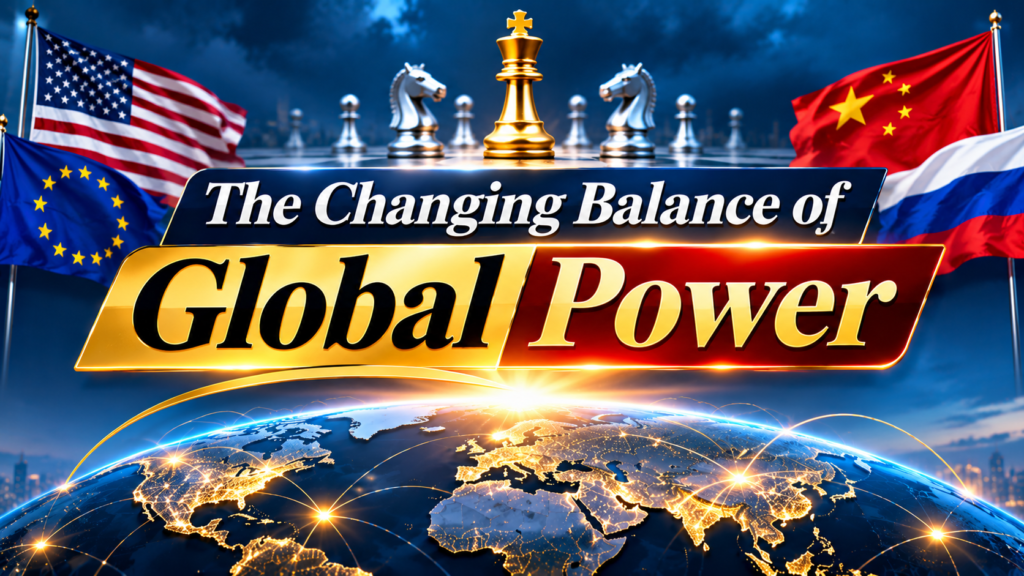
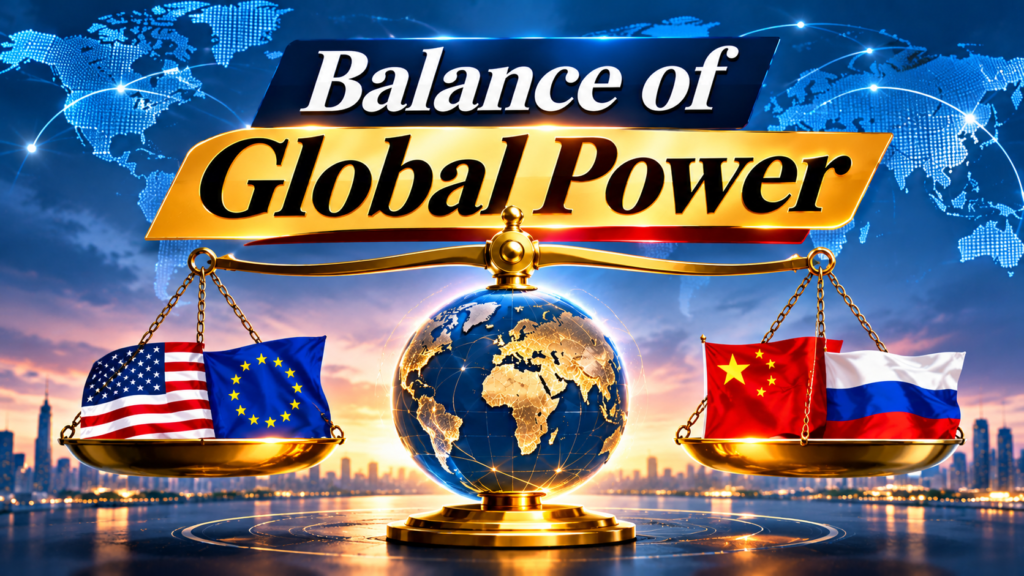
The balance of global power is undergoing a significant transformation. For decades, international politics, economic policies, military influence, and diplomatic relationships were largely shaped by a relatively small group of powerful nations. However, the global landscape is becoming increasingly complex as emerging economies gain influence, regional powers strengthen their positions, and technological developments reshape international competition.
Why is the world experiencing such a major shift in global power? The answer lies in several interconnected developments, including economic growth in Asia, changing international alliances, competition over natural resources, advancements in artificial intelligence, military modernization, and the growing importance of international trade.
The traditional global order, which was strongly influenced by Western powers after the Second World War and the end of the Cold War, is facing new challenges. Countries such as China, India, Brazil, and other emerging economies are seeking greater representation in international institutions and a stronger voice in global decision-making.
At the same time, established powers such as the United States and European countries continue to play influential roles in international security, finance, diplomacy, and technological innovation.
The changing balance of global power does not simply mean that one country is replacing another. Instead, it represents a broader redistribution of economic, political, military, and technological influence across different regions.
Understanding this transformation is essential for recognizing how international relationships are evolving and what the future may hold for global cooperation, competition, and stability.
1. What Does the Changing Balance of Global Power Mean?
The changing balance of global power refers to the redistribution of influence among countries and regions in international affairs. It describes how nations gain or lose the ability to shape global decisions, influence economic policies, establish diplomatic relationships, and affect international security.
Global power has traditionally been measured through military strength, economic performance, political influence, and technological capabilities. Today, however, the definition has expanded to include digital infrastructure, energy security, control of critical minerals, cybersecurity, innovation, and influence over international institutions.
For example, a country with a strong economy may influence international trade and investment, while a nation with advanced technology may shape global standards and digital markets. Similarly, countries with significant energy resources can influence international energy prices and strategic relationships.
Several important elements determine global power:
- Economic strength: The ability to influence international markets, trade, investment, and financial systems.
- Military capabilities: Defence spending, technological advancement, strategic partnerships, and military readiness.
- Political influence: The ability to shape international agreements, diplomatic decisions, and global institutions.
- Technological leadership: Progress in artificial intelligence, semiconductors, telecommunications, and scientific research.
- Natural resources: Access to energy, minerals, agricultural resources, and essential raw materials.
- Cultural influence: The ability to shape international opinions through education, entertainment, media, and cultural exchange.
The changing balance of global power reflects the growing importance of all these factors rather than relying on military or economic strength alone.
2. Why Is the Traditional World Order Being Challenged?
The traditional world order developed through major historical events, including the Second World War, the establishment of the United Nations, the creation of international financial institutions, and the Cold War.
For much of the period following the Cold War, the United States held an especially influential position in international politics, military affairs, finance, and technology. Western institutions and partnerships played a major role in shaping global economic and diplomatic systems.
However, several developments have challenged global power arrangement.
First, economic growth in emerging markets has changed the distribution of global production, trade, and investment. Second, countries increasingly seek independent foreign policies rather than aligning automatically with traditional power blocs. Third, regional conflicts and geopolitical competition have exposed limitations in international cooperation.
The growing influence of developing countries has also increased demands for reform within international institutions.
Another important factor is economic interdependence. Countries that once relied heavily on a few international suppliers are now seeking diversified trade relationships and more secure supply chains.
These developments suggest that the world is moving towards a more complex international system in which several powerful countries and regional groups influence global affairs.
3. How Is China Reshaping the Global Balance of Power?
China has become one of the most influential countries in the changing global power structure. Its rapid economic development, expanding industrial capabilities, technological investments, and international infrastructure partnerships have strengthened its position in world affairs.
Over recent decades, China has developed into a major manufacturing and trading centre. Its role in global supply chains has made it an important economic partner for countries across Asia, Europe, Africa, and the Americas.
China is also investing in advanced technologies, including artificial intelligence, electric vehicles, renewable energy, telecommunications, and semiconductor development.
The Belt and Road Initiative is another important element of China’s international strategy. Through infrastructure and connectivity projects, the country has sought to strengthen economic relationships with partners across multiple regions.
How is China influencing international politics?
- By expanding its diplomatic and economic partnerships.
- By increasing investment in infrastructure and international trade.
- By strengthening its military and naval capabilities.
- By developing domestic technological industries.
- By seeking greater influence in international organisations.
- By expanding its presence in global energy and commodity markets.
Nevertheless, China faces important challenges, including demographic pressures, economic restructuring, trade tensions, and geopolitical disagreements.
Its growing influence has created both opportunities for international cooperation and competition with established powers.
4. Why Is the United States Still a Major Global Power?
Despite the rise of emerging powers, the United States remains one of the world’s most influential countries. Its economic strength, military capabilities, financial institutions, technological industries, and international partnerships provide a significant foundation for its global position.
The US dollar continues to play a central role in international finance and trade. American financial markets, multinational corporations, research institutions, and technology companies influence economic activities worldwide.
The United States also maintains extensive defence partnerships through organisations and bilateral agreements, including NATO.
Its technological sector is particularly important. American companies and research institutions are influential in artificial intelligence, cloud computing, aerospace, biotechnology, software, and semiconductor design.
However, the United States faces several challenges that could influence its future international position.
These include domestic political divisions, public debt, economic competition, changing international relationships, and debates about its global commitments.
Does this mean American influence is declining? Not necessarily. It suggests that the United States increasingly operates in an international environment where other countries have greater economic and political influence than they did in previous decades.
The future of American global leadership will depend on its ability to maintain innovation, strengthen international partnerships, support economic growth, and respond effectively to geopolitical challenges.
5. How Is India Emerging as an Important Global Power?
India is becoming an increasingly important participant in the changing balance of global power. Its large population, expanding economy, technological capabilities, strategic geographical position, and growing diplomatic relationships have strengthened its international presence.
As one of the world’s major emerging economies, India has significant potential to influence global economic and political developments. Its expanding middle class, growing consumer market, digital infrastructure, and industrial development have attracted international investment.
India is also strengthening its position in science, technology, defence manufacturing, space exploration, and renewable energy.
Its foreign policy reflects an effort to maintain strategic independence while developing relationships with different international partners. India participates in organisations and forums such as the G20, BRICS, and the Quad, allowing it to engage with countries that have different economic and strategic interests.
What makes India particularly important in the new global power order?
- Economic growth: A growing economy creates opportunities for international trade, investment, and cooperation.
- Strategic location: Its position in the Indo-Pacific gives India an important role in regional security and maritime affairs.
- Technology development: Digital payments, information technology, space research, and innovation are expanding India’s international influence.
- Diplomatic engagement: India maintains relationships with major powers as well as developing countries.
- Defence modernization: Investments in domestic defence manufacturing and military capabilities are strengthening national security.
- Demographic potential: Its large working-age population provides opportunities for economic expansion.
India’s growing international influence also comes with challenges, including employment creation, infrastructure development, income inequality, regional security concerns, and the need for sustained economic reforms.
Nevertheless, India’s expanding role demonstrates that the future global order is likely to involve a wider range of influential countries.
6. Is Europe Losing Its Traditional Influence in Global Affairs?
Europe continues to hold considerable economic, diplomatic, technological, and cultural influence. The European Union represents one of the world’s largest economic blocs and plays an important role in international trade, environmental regulation, development assistance, and diplomatic negotiations.
Countries such as Germany, France, Italy, and other European nations contribute to global economic and political decision-making.
However, Europe faces a changing international environment. Economic competition, energy security concerns, demographic pressures, geopolitical tensions, and defence challenges have increased the importance of strategic coordination.
The conflict between Russia and Ukraine has particularly influenced European security priorities. It has encouraged European governments to reconsider defence spending, military preparedness, energy partnerships, and relationships with international allies.
Europe also faces competition in advanced manufacturing, artificial intelligence, electric vehicles, and semiconductor production.
Can Europe maintain its international influence?
Its future position will depend on several factors:
- Economic competitiveness: Strengthening industrial production, innovation, and international trade.
- Energy independence: Diversifying energy supplies and expanding renewable energy.
- Defence cooperation: Improving military coordination and security capabilities.
- Technological investment: Supporting research, artificial intelligence, and advanced manufacturing.
- Political unity: Maintaining cooperation among European countries despite differences in national priorities.
Rather than disappearing from the global power structure, Europe is adapting to a world in which economic and geopolitical competition is becoming more intense.
7. What Role Are Emerging Economies Playing in the New World Global Power Order?
Emerging economies are becoming increasingly important in international decision-making. Countries across Asia, Africa, Latin America, and the Middle East are seeking stronger positions in global trade, investment, diplomacy, and international institutions.
Their importance comes from expanding consumer markets, natural resources, growing populations, industrial development, and strategic geographical locations.
Brazil, Indonesia, South Africa, Mexico, Saudi Arabia, and several other countries are strengthening their international partnerships and economic relationships.
Many emerging economies are also seeking greater representation in institutions such as the International Monetary Fund, World Bank, and United Nations.
Why are these countries becoming more influential?
- Their economies are contributing increasingly to global production and consumption.
- Their natural resources are important for energy security and industrial development.
- Their geographical positions make them valuable strategic partners.
- Their diplomatic relationships allow them to participate in international negotiations.
- Their growing populations create new markets and labour opportunities.
The growing importance of these economies also challenges the traditional division between developed and developing countries.
Many emerging nations now have the ability to influence international discussions on climate change, trade agreements, infrastructure investment, food security, and global economic reforms.
Their increasing participation suggests that international leadership will become more distributed across different regions.
8. How Are BRICS Countries Influencing Global Power Dynamics?
BRICS has become an important platform for countries seeking greater cooperation among emerging and developing economies.
Originally consisting of Brazil, Russia, India, China, and South Africa, the grouping has expanded its membership. Its growing international presence reflects demands for a more representative global economic and political system.
BRICS members have different political systems, economic structures, and foreign policy priorities. However, they share interests in strengthening economic cooperation, increasing trade opportunities, encouraging investment, and expanding the influence of developing countries.
What are the major objectives associated with BRICS?
- Promoting economic cooperation among member countries.
- Encouraging trade using local currencies where commercially practical.
- Supporting infrastructure and development financing.
- Increasing the representation of emerging economies in global institutions.
- Strengthening cooperation in technology, energy, and agriculture.
- Creating additional platforms for diplomatic dialogue.
The New Development Bank, established by BRICS countries, is an example of an institution designed to support infrastructure and sustainable development projects.
However, BRICS is not a unified military alliance or a single political bloc. Differences among its members can make common policy decisions difficult.
Its importance lies in providing an additional platform through which emerging economies can coordinate their interests and participate in discussions about the future of global governance.
9. Why Is Technology Becoming a Major Source of Global Power?
Technology is transforming the traditional understanding of global power. In earlier decades, military strength, industrial capacity, and natural resources were among the most important measures of international influence. Today, technological leadership has become equally important.
Artificial intelligence, semiconductors, robotics, quantum computing, biotechnology, and advanced telecommunications are changing economies and national security strategies.
Countries that control important technological infrastructure and maintain strong research capabilities can influence international markets, industrial standards, and digital systems.
Artificial intelligence is particularly significant because it can improve productivity, support scientific research, transform industries, and influence military planning.
Semiconductors are another strategic priority. These small but essential components are used in smartphones, vehicles, computers, telecommunications equipment, and advanced defence systems.
Why are countries competing for technological leadership?
- Economic advantage: Advanced technology supports productivity, innovation, and industrial competitiveness.
- National security: Cybersecurity and advanced defence systems are increasingly important.
- International influence: Countries that develop widely adopted technologies can influence global standards.
- Supply chain security: Domestic production reduces dependence on potentially vulnerable international suppliers.
- Scientific leadership: Research and innovation strengthen long-term economic capabilities.
The competition for technological leadership is not limited to the United States and China. Europe, India, Japan, South Korea, and other economies are also investing in strategic technologies.
In the coming years, technological capabilities may become one of the most important determinants of international influence.
10. How Are Military Strength and Defence Alliances Changing?
Military strength remains a major component of global power. However, modern military capabilities are increasingly determined by advanced technology, intelligence systems, cybersecurity, satellite networks, drones, precision weapons, and logistical capabilities.
Countries are reconsidering their defence strategies in response to regional conflicts, geopolitical competition, and emerging security threats.
The war between Russia and Ukraine has demonstrated the importance of military preparedness, defence production, international assistance, and resilient infrastructure.
Meanwhile, tensions in the Indo-Pacific have increased attention towards maritime security and regional partnerships.
Military alliances also play a major role in shaping the international security environment.
NATO remains an important collective defence organisation, while other arrangements, including the Quad, contribute to strategic discussions and cooperation in the Indo-Pacific.
What factors are changing modern military power?
- Development of advanced missile and air defence systems.
- Increasing use of unmanned aerial vehicles and autonomous technologies.
- Expansion of cyber defence and intelligence capabilities.
- Modernization of naval and maritime security systems.
- Greater cooperation through international defence partnerships.
- Increased investment in domestic military manufacturing.
Nevertheless, military strength alone cannot guarantee lasting international leadership. Economic resilience, diplomatic credibility, technological innovation, and political stability are also essential.
11. What Impact Are Energy Resources Having on Global Power?
Energy security has become a major factor in international relations. Oil, natural gas, coal, nuclear energy, and renewable energy resources influence economic development, industrial production, international trade, and national security.
Countries with substantial energy reserves can have considerable influence over international energy markets. At the same time, nations dependent on imported energy must manage supply disruptions, price fluctuations, and geopolitical risks.
The Middle East remains an important region because of its role in global oil and natural gas production. Meanwhile, countries are investing in renewable energy to reduce dependence on traditional fossil fuels.
The transition towards clean energy is also increasing competition for critical minerals such as lithium, cobalt, nickel, and rare earth elements.
Global power materials are essential for batteries, electric vehicles, renewable energy infrastructure, and modern electronic equipment.
How is the global energy transition changing international power?
- Countries are diversifying energy suppliers to improve security.
- Renewable energy investment is creating new industrial opportunities.
- Critical mineral producers are gaining strategic importance.
- Energy technology is becoming an important source of economic competition.
- International climate agreements are influencing national energy policies.
The future balance of global power may increasingly depend on which countries can secure affordable, reliable, and sustainable energy supplies.
12. How Is Global Trade Reshaping International Relationships?
Global trade is one of the strongest connections between countries. It influences employment, economic growth, industrial development, investment, and diplomatic relationships.
For decades, international production networks became increasingly interconnected. Businesses developed supply chains that depended on raw materials, manufacturing facilities, technology, and consumer markets across multiple countries.
However, geopolitical tensions, trade restrictions, economic uncertainty, and supply chain disruptions have encouraged governments and businesses to reconsider their international dependencies.
Countries are increasingly focusing on supply chain diversification, domestic manufacturing, and partnerships with trusted economic partners.
What changes are taking place in international trade?
- Governments are encouraging domestic production in strategic industries.
- Businesses are diversifying manufacturing locations.
- Countries are negotiating new regional and bilateral trade agreements.
- Competition over advanced technologies is influencing trade policies.
- Developing economies are seeking greater access to international markets.
These changes do not necessarily indicate the end of globalization. Instead, they suggest that global trade is evolving towards a system that places greater importance on resilience, security, and strategic partnerships.
13. Why Is Africa Becoming More Important in the Global Power Structure?
Africa is increasingly important in discussions about the future balance of global power. Its natural resources, young population, agricultural potential, growing cities, and expanding consumer markets provide substantial opportunities for economic development.
The continent possesses important reserves of minerals that are essential for modern industries and clean energy technologies. Its agricultural resources also make it relevant to international food security.
Several African countries are developing infrastructure, expanding digital services, attracting foreign investment, and strengthening regional economic cooperation.
The African Continental Free Trade Area is an important initiative intended to improve trade and economic integration across the continent.
Why are international global powers paying greater attention to Africa?
- Access to critical minerals and natural resources.
- Growing demand for infrastructure and industrial investment.
- Opportunities in agriculture and food production.
- Expanding technology and telecommunications markets.
- Increasing diplomatic importance in international institutions.
- Strategic access to important maritime routes.
However, Africa’s long-term influence will depend on its ability to address infrastructure gaps, political instability, debt challenges, unemployment, and economic inequality.
Greater investment in education, industrial development, regional cooperation, and sustainable infrastructure could significantly strengthen the continent’s international position.
14. How Is the Middle East Influencing the Changing Balance of Global Power?
The Middle East continues to play an important role in global geopolitics because of its energy resources, strategic location, financial investments, and international diplomatic relationships.
Countries such as Saudi Arabia, the United Arab Emirates, and Qatar are expanding their influence beyond traditional energy markets. They are investing in technology, tourism, infrastructure, financial services, renewable energy, and international business.
Saudi Arabia’s economic diversification programme, Vision 2030, illustrates the region’s efforts to reduce dependence on oil revenues and develop new economic sectors.
The United Arab Emirates has also strengthened its position as an international centre for trade, aviation, finance, tourism, and technology.
At the same time, regional conflicts, security concerns, and competition over strategic shipping routes continue to influence international relationships.
What makes the Middle East strategically important?
- Its position between Europe, Asia, and Africa.
- Its influence on international oil and gas markets.
- Its importance in global shipping and trade routes.
- Its growing investments in international infrastructure.
- Its expanding diplomatic and economic partnerships.
- Its increasing participation in renewable energy and technology development.
The Middle East’s future global influence will depend on economic diversification, regional stability, technological innovation, and stronger international cooperation.
15. What Role Does Diplomacy Play in the New Global Power Structure?
Diplomacy is becoming increasingly important as international relationships grow more complicated. Countries must balance economic interests, national security, political priorities, and international partnerships while managing disagreements with other governments.
In a multipolar international environment, diplomatic relationships provide opportunities to resolve disputes, negotiate trade agreements, establish partnerships, and prevent conflicts.
Countries are also using multilateral platforms to discuss international challenges such as climate change, cybersecurity, public health, migration, and economic instability.
Institutions such as the United Nations, G20, World Trade Organization, and regional organisations provide important spaces for international dialogue.
Why is diplomacy essential to global power stability?
- It helps countries resolve disagreements through negotiation.
- It encourages international trade and investment.
- It supports cooperation on environmental and humanitarian challenges.
- It creates opportunities for regional security agreements.
- It strengthens communication between competing powers.
- It helps establish international rules and standards.
Modern diplomacy is no longer limited to traditional political relationships. Economic diplomacy, technology partnerships, cultural exchange, and climate negotiations are also becoming important instruments of international influence.
Countries that can build trust and maintain relationships across different political and economic groups may gain considerable advantages in the emerging global power order.
16. How Is Climate Change Influencing International Power?
Climate change is becoming a major geopolitical issue because it affects food production, water resources, energy security, migration, public infrastructure, and economic stability.
Countries that develop advanced clean energy technologies and establish sustainable industries may gain significant economic advantages.
Meanwhile, developing economies often face greater difficulties financing climate adaptation and managing the consequences of extreme weather events.
International climate negotiations have therefore become an important part of global diplomacy.
The transition towards a low-carbon economy is also creating new areas of competition. Countries are investing in solar energy, wind power, electric vehicles, battery manufacturing, hydrogen technologies, and carbon reduction systems.
How could climate change reshape global influence?
- Countries leading renewable energy innovation may gain technological advantages.
- Nations with critical minerals may become more strategically important.
- Climate-related disasters may increase pressure on developing economies.
- Water and food security could influence regional relationships.
- International climate finance may become an important diplomatic issue.
Climate cooperation is likely to become an essential part of international leadership as countries attempt to balance economic development with environmental sustainability.
17. Is the World Moving Towards a Multipolar Global Order?
One of the most important questions about the changing balance of global power is whether the world is moving towards a multipolar system.
A multipolar world is an international arrangement in which several countries or groups of countries hold significant economic, political, military, and diplomatic influence.
During the Cold War, international politics was largely shaped by competition between the United States and the Soviet Union. Following the collapse of the Soviet Union, the United States enjoyed a particularly influential position.
Today, the situation is more complicated.
China’s economic and technological growth, India’s expanding international role, Europe’s economic influence, Russia’s military and geopolitical position, and the growing importance of regional powers are contributing to a more distributed international system.
What could a multipolar world look like?
- The United States remains a major economic, military, and technological power.
- China continues to influence international manufacturing and trade.
- India strengthens its position in global diplomacy and economic development.
- European countries seek greater strategic and technological independence.
- Regional powers gain influence through economic partnerships and diplomacy.
- Developing countries demand stronger representation in global institutions.
A multipolar system could create opportunities for greater international representation. However, it could also increase geopolitical competition if major countries struggle to coordinate their interests.
The future global order will depend on whether powerful nations can manage their differences through diplomacy and international cooperation.
18. What Are the Biggest Challenges Facing the Emerging Global Order?
Although the redistribution of global power creates new opportunities, it also introduces significant challenges.
Countries are increasingly competing over economic markets, strategic resources, military influence, and technological leadership. These developments can increase tensions and make international cooperation more difficult.
Some of the most important challenges include:
1. Geopolitical conflicts
Regional conflicts and international rivalries can threaten economic stability, disrupt trade, and create humanitarian crises.
2. Economic uncertainty
Inflation, public debt, financial instability, and international trade restrictions can affect both developed and developing economies.
3. Technological competition
Competition over artificial intelligence, semiconductors, cybersecurity, and digital infrastructure could create new divisions between countries.
4. Energy security
Dependence on limited energy suppliers and vulnerable shipping routes can expose countries to geopolitical and economic risks.
5. Climate-related challenges
Extreme weather, water shortages, food insecurity, and environmental degradation can create additional pressure on national economies.
6. International institutional reform
Existing global institutions face growing demands to provide fairer representation and respond more effectively to modern international challenges.
7. Strategic mistrust
Increasing competition among major global powers can weaken diplomatic relationships and make agreements more difficult to achieve.
Addressing these challenges will require stronger international institutions, responsible leadership, transparent diplomacy, and long-term cooperation.
19. How Will the Changing Balance of Global Power Affect Developing Countries?
Developing countries may experience both opportunities and challenges as international influence becomes more widely distributed.
Greater competition among major economies can create opportunities for foreign investment, infrastructure development, technology transfers, and access to international markets.
Countries in Asia, Africa, and Latin America may benefit from partnerships with different economic powers rather than depending on a limited number of traditional partners.
However, these opportunities also require careful decision-making.
Developing economies must avoid excessive dependence on foreign investment, manage international debt responsibly, and protect their national economic interests.
What opportunities could the emerging global order create?
- Increased access to international investment.
- New infrastructure and industrial development projects.
- Greater participation in international trade.
- Opportunities for technology cooperation.
- Stronger representation in global institutions.
- More diversified diplomatic and economic partnerships.
The ability of developing countries to convert these opportunities into sustainable economic growth will depend on effective governance, education, infrastructure, and domestic industrial development.
20. What Does the Future of Global Power Look Like?
The future balance of global power will likely be influenced by several interconnected developments rather than one single political or economic event.
Economic growth in Asia, technological innovation, military modernization, energy transitions, and changing international alliances will continue to shape the international environment.
The United States is expected to remain a major global power, while China will continue to play an important role in international economic and strategic competition. India and other emerging economies may gain additional influence as their economies and diplomatic relationships expand.
Europe will remain an important economic and regulatory force, while countries across the Middle East, Africa, and Latin America will have growing opportunities to influence international developments.
Several major trends are likely to shape the coming decades:
- Greater economic diversification: Countries will seek new markets, investment partners, and reliable supply chains.
- Technological competition: Artificial intelligence, robotics, and advanced computing will influence economic and military capabilities.
- Changing international alliances: Governments will increasingly pursue partnerships based on specific strategic interests.
- Energy transformation: Renewable energy and critical minerals will become increasingly important.
- Growing regional influence: Regional powers will have greater opportunities to shape international decisions.
- Reform of global institutions: Developing countries will continue demanding stronger representation.
- Increased importance of diplomacy: International cooperation will remain essential for managing geopolitical competition.
The emerging global order is unlikely to be controlled by a single country. Instead, international influence may become more distributed, with different countries leading in different areas.
The challenge will be to ensure that competition does not undermine international stability and economic cooperation.
Frequently Asked Questions (FAQs)
Q1. What is the changing balance of global power?
Ans: The changing balance of global power refers to the redistribution of economic, political, military, technological, and diplomatic influence among countries and regions.
Q2. Which countries are emerging as major global powers?
Ans: China, India, Brazil, and other emerging economies are gaining international influence, while the United States and European countries continue to hold significant global positions.
Q3. Why is global power shifting towards Asia?
Ans: Economic expansion, industrial development, technological innovation, growing consumer markets, and international trade have increased Asia’s importance in the global economy.
Q4. Is the United States losing its global leadership?
Ans: The United States remains a major global power, but increasing competition from China and emerging economies is changing the international distribution of influence.
Q5. What role does India play in the new world order?
Ans: India contributes through economic growth, international diplomacy, technological development, defence modernization, and strategic partnerships.
Q6. What is a multipolar world?
Ans: A multipolar world is an international system in which several countries or groups hold significant influence rather than one country dominating global affairs.
Q7. How does technology influence global power?
Ans: Technology strengthens economic competitiveness, national security, industrial production, scientific research, and international influence.
Q8. Why are BRICS countries important?
Ans: BRICS provides a platform for emerging and developing economies to strengthen cooperation, promote development, and seek greater representation in global institutions.
Q9. How does global power affect international trade?
Ans: Changes in global power influence trade agreements, supply chains, investment decisions, economic partnerships, and access to strategic resources.
Q10. What will determine the future balance of global power?
Ans: Economic growth, technological innovation, military capabilities, energy security, diplomatic relationships, political stability, and international cooperation will shape the future global order.
Conclusion: Is a New Era of Global Power Beginning?
The changing balance of global power represents one of the most important transformations in modern international relations. Economic growth in emerging markets, technological innovation, geopolitical competition, energy security, and changing diplomatic partnerships are reshaping the traditional world order.
The United States remains highly influential, China continues to expand its international presence, India is strengthening its economic and diplomatic position, and Europe remains an important global economic force. Meanwhile, countries across Africa, the Middle East, and Latin America are gaining new opportunities to influence international affairs.
This transformation is not simply about replacing established powers with emerging ones. It is about creating a more complicated international system in which economic strength, technological leadership, military capabilities, diplomatic relationships, and access to resources collectively determine global influence.
The coming decades will test the ability of major powers to cooperate despite their differences. International stability will depend on responsible leadership, effective institutions, economic resilience, and diplomatic engagement.
Ultimately, the future of global power will not be determined only by which country has the strongest economy or military. It will also depend on which nations can innovate, build lasting partnerships, address international challenges, and contribute to a more stable and prosperous world.
Read More – How Is Digital Innovation Changing Public Services Across Europe?