
Why Should You Include Superfoods in Your Daily Diet: 15 Superfoods That Can Improve Your Overall Health
Have you ever wondered why some foods are considered more beneficial than others when it comes to maintaining good health? A balanced diet plays an essential role in supporting the body’s natural functions, improving energy levels, and promoting overall well-being. Among the many nutritious 15 superfoods available, superfoods have gained considerable attention because they contain high concentrations of vitamins, minerals, antioxidants, fibre, healthy fats, and other important nutrients.
Superfoods are not a scientific food category, but the term generally describes nutrient-rich foods that offer several health benefits. From colourful berries and leafy green vegetables to nuts, seeds, and whole grains, these foods can make everyday meals more nutritious.
Including a variety of superfoods in your diet may help support heart health, digestion, brain function, immune health, and healthy ageing. However, no single food can prevent every disease or replace a balanced lifestyle. The best approach is to combine nutritious foods with regular physical activity, sufficient sleep, and healthy daily habits.
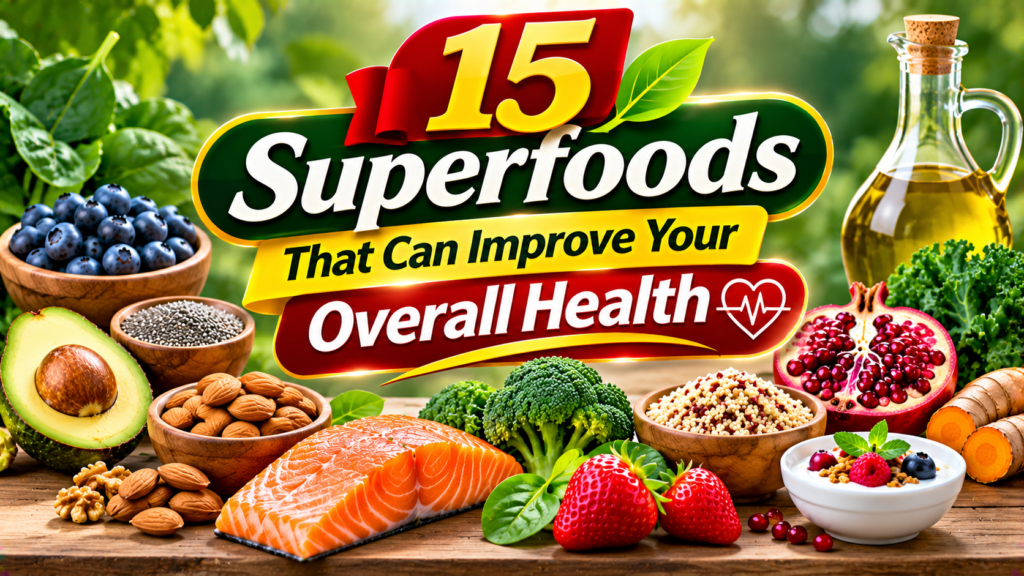
So, which foods deserve a place on your shopping list? Here are 15 superfoods that can improve your overall health and help you build a more balanced diet.
1. Blueberries: Why Are They Considered One of the Best Superfoods?
Blueberries are among the most popular superfoods because they contain antioxidants, vitamins, and dietary fibre. Their deep blue colour comes from natural plant compounds called anthocyanins, which help protect cells against oxidative stress.
These small berries are particularly useful for people looking to add more antioxidant-rich foods to their everyday diet. They also contain vitamin C, vitamin K, and manganese, which contribute to different bodily functions.
Potential health benefits of blueberries include:
- Providing antioxidants that help protect cells from oxidative damage.
- Supporting heart health as part of a balanced diet.
- Contributing to normal immune system function.
- Providing dietary fibre for digestive health.
- Adding natural sweetness to meals without requiring added sugar.
You can enjoy blueberries fresh or frozen. Add them to breakfast cereals, smoothies, yoghurt, oatmeal, or fruit salads for a nutritious start to your day.
2. Spinach: How Does This Leafy Green Vegetable Support Your Health?
Spinach is a nutrient-dense leafy green vegetable that deserves a regular place in a healthy diet. It contains vitamins A, C, and K, folate, iron, magnesium, and several beneficial plant compounds.
Vitamin K plays an important role in normal blood clotting and bone health, while folate supports cell division and normal tissue development. Spinach also contains lutein and zeaxanthin, plant compounds associated with eye health.
Why should you eat spinach regularly?
- It provides essential vitamins and minerals.
- Its fibre content supports digestive health.
- It contains plant compounds that support cellular health.
- It contributes nutrients important for normal bone function.
- It is low in calories and easy to include in different meals.
Spinach can be added to salads, soups, sandwiches, vegetable curries, smoothies, and omelettes. Lightly cooking spinach can also make it easier to consume in larger portions.
People who take blood-thinning medication such as warfarin should maintain consistent vitamin K intake and discuss significant dietary changes with their healthcare professional.
3. Salmon: Why Is This Fish Excellent for Heart and Brain Health?
Salmon is a nutritious fish known for its high-quality protein and omega-3 fatty acids. It contains EPA and DHA, two important omega-3 fats that contribute to normal heart and brain function.
These healthy fats are associated with several benefits, particularly when salmon replaces foods high in saturated fat. Salmon also provides vitamin D, vitamin B12, selenium, and other important nutrients.
Potential benefits of eating salmon include:
- Supporting normal cardiovascular function.
- Providing omega-3 fatty acids for brain health.
- Helping maintain muscle through high-quality protein.
- Supplying vitamin D for bone health.
- Providing vitamin B12 for normal nerve function and red blood cell formation.
Grilled, baked, or steamed salmon can be included in lunch or dinner. Try pairing it with vegetables, brown rice, or whole grains for a balanced meal.
If you do not eat fish, walnuts, chia seeds, and flaxseeds can provide plant-based omega-3 fats, although they contain a different type of omega-3.
4. Walnuts: Can Eating a Handful of Nuts Improve Your Health?
Walnuts are a convenient and nutritious snack that contains healthy fats, plant-based protein, fibre, magnesium, and antioxidants. They are particularly recognised for their alpha-linolenic acid (ALA), a plant-based omega-3 fatty acid.
Including walnuts in a balanced eating pattern may support cardiovascular health. Their combination of healthy fats, fibre, and protein can also help make meals more satisfying.
Some reasons to include walnuts in your diet are:
- They provide plant-based omega-3 fatty acids.
- They contain antioxidants and beneficial plant compounds.
- They contribute fibre for digestive health.
- They provide minerals such as magnesium and copper.
- They make a filling snack when eaten in moderate portions.
You can add walnuts to oatmeal, smoothies, salads, homemade energy bites, and yoghurt. Choose unsalted varieties where possible and be mindful of portion sizes because nuts are energy-dense.
5. Avocado: What Makes This Creamy Fruit a Nutritional Powerhouse?
Avocado is a unique fruit that contains monounsaturated fats, dietary fibre, potassium, folate, and vitamins E and K. Unlike many fruits, it is relatively rich in healthy fats, making it a satisfying addition to meals.
Monounsaturated fats can help support healthy cholesterol levels when they replace saturated fats in the diet. Potassium also contributes to normal muscle function and blood pressure regulation.
Potential health benefits of avocado include:
- Supporting heart health through unsaturated fats.
- Providing fibre that supports digestive function.
- Supplying potassium for normal muscle function.
- Helping make meals more filling.
- Providing vitamin E, which contributes to protecting cells from oxidative stress.
Avocado can be enjoyed on whole-grain toast, in salads, sandwiches, smoothies, and homemade dips. It can also replace butter or mayonnaise in some recipes.
6. Broccoli: How Can This Green Vegetable Strengthen Your Diet?
Broccoli is a cruciferous vegetable packed with fibre, vitamin C, vitamin K, folate, and several plant compounds. One of its notable natural compounds is sulforaphane, which has attracted scientific interest for its potential role in cellular protective processes.
Broccoli is also a useful vegetable for people who want to increase their intake of fibre and micronutrients without adding many calories.
Why is broccoli considered a superfood?
- It provides vitamin C for normal immune function.
- It contains fibre that supports digestion.
- It supplies vitamin K for normal blood clotting.
- It contains beneficial plant compounds.
- It contributes nutrients that support overall health.
Enjoy broccoli steamed, roasted, stir-fried, or added to soups and vegetable dishes. Avoid overcooking it if you want to preserve its texture and some heat-sensitive nutrients.
7. Chia Seeds: Are These Tiny Seeds Really That Nutritious?
Chia seeds may be small, but they contain an impressive combination of fibre, plant-based omega-3 fatty acids, protein, calcium, magnesium, and phosphorus.
One of their most interesting features is their ability to absorb water and form a gel-like texture. This makes them useful for preparing filling breakfasts and snacks.
Potential benefits of chia seeds include:
- Supporting digestive health through dietary fibre.
- Providing plant-based omega-3 fatty acids.
- Contributing minerals important for bone health.
- Adding protein and healthy fats to meals.
- Helping create satisfying snacks and breakfasts.
You can mix chia seeds into yoghurt, oatmeal, smoothies, and homemade puddings. Soaking them before consumption is a convenient way to soften their texture.
8. Turmeric: Why Is This Golden Spice Famous for Its Health Benefits?
Turmeric is a traditional spice widely used in Indian and Asian cooking. Its bright yellow colour comes from curcumin, a natural compound that has been extensively studied for its antioxidant and anti-inflammatory properties.
Although turmeric has a long history of traditional use, the health effects of ordinary culinary amounts should not be confused with the effects of concentrated supplements.
Why should turmeric be part of a healthy diet?
- It contains natural antioxidant compounds.
- Curcumin has been studied for its role in inflammatory processes.
- It adds flavour and colour to everyday meals.
- It can be used in a variety of traditional recipes.
- It complements other nutritious ingredients in a balanced diet.
Turmeric can be added to vegetable curries, lentil dishes, soups, rice, and warm milk. Combining turmeric with black pepper may improve curcumin absorption, although concentrated turmeric supplements are not suitable for everyone and may interact with medications.
9. Greek Yoghurt: How Does It Support Gut and Bone Health?
Greek yoghurt is a protein-rich dairy food that contains calcium, vitamin B12, and other important nutrients. Some varieties also contain live cultures that may support a healthy gut microbiome.
Its higher protein content compared with many regular yoghurts makes it a satisfying breakfast or snack option.
Some potential benefits of Greek yoghurt include:
- Providing protein for muscle maintenance.
- Supplying calcium for strong bones and teeth.
- Offering vitamin B12 for normal nerve function.
- Supporting digestive health when it contains suitable live cultures.
- Helping create filling and balanced meals.
Choose plain, unsweetened Greek yoghurt to avoid unnecessary added sugar. You can combine it with berries, walnuts, chia seeds, or fresh fruit for a nutritious snack.
People with lactose intolerance may tolerate some yoghurt products better than milk, but individual tolerance varies.
10. Sweet Potatoes: Why Should You Choose This Colourful Root Vegetable?
Sweet potatoes are a nutritious root vegetable that provides complex carbohydrates, dietary fibre, potassium, and beta-carotene. Orange-fleshed varieties are particularly rich in beta-carotene, which the body can convert into vitamin A.
Vitamin A contributes to normal vision, immune function, and healthy skin.
What makes sweet potatoes beneficial?
- They provide carbohydrates for everyday energy.
- They contain fibre that supports digestion.
- They supply beta-carotene for vitamin A production.
- They contribute potassium to the diet.
- They are naturally versatile and easy to prepare.
Sweet potatoes can be baked, boiled, steamed, or roasted. They work well in soups, salads, vegetable curries, and healthy homemade snacks.
11. Oats: Can Eating Oatmeal Every Morning Improve Your Health?
Oats are whole grains that contain soluble fibre, particularly beta-glucan. This type of fibre has been shown to help lower LDL cholesterol when consumed regularly as part of an appropriate diet.
Oats also provide complex carbohydrates, magnesium, phosphorus, and plant-based protein. Their fibre content makes them a popular breakfast choice for people seeking longer-lasting fullness.
Why are oats an excellent everyday food?
- Beta-glucan fibre can help support healthy cholesterol levels.
- Fibre contributes to normal digestive function.
- Whole grains provide sustained dietary energy.
- Oats contain minerals important for normal bodily functions.
- They can help make breakfast more satisfying.
Prepare oatmeal with milk or fortified plant-based milk and add fresh fruit, nuts, cinnamon, or chia seeds. Choose plain oats rather than heavily sweetened instant varieties whenever possible.
12. Garlic: What Makes This Everyday Ingredient So Powerful?
Garlic is more than a flavouring ingredient. It contains natural sulphur compounds, including allicin, which forms when fresh garlic is crushed or chopped.
Garlic has been studied for its possible cardiovascular benefits, including modest effects on blood pressure and cholesterol in certain populations. However, it should not be considered a replacement for prescribed treatment.
Potential reasons to include garlic in your meals include:
- It contains naturally occurring sulphur compounds.
- It provides flavour without requiring excessive salt.
- It contains antioxidant compounds.
- It may support cardiovascular health as part of a balanced diet.
- It makes nutritious vegetable and whole-grain dishes more flavourful.
Add fresh garlic to soups, lentils, vegetable curries, stir-fries, sauces, and roasted vegetables. People taking blood-thinning medication should seek medical advice before using high-dose garlic supplements.
13. Pomegranate: How Can This Colourful Fruit Support Your Well-Being?
Pomegranate is a fruit known for its bright red seeds, refreshing taste, and antioxidant content. It contains polyphenols, including punicalagins and anthocyanins, which have attracted scientific interest because of their antioxidant properties.
Pomegranate also provides dietary fibre, potassium, and vitamin C in smaller amounts.
Why should you add pomegranate to your diet?
- It provides antioxidant-rich plant compounds.
- Its seeds contain dietary fibre.
- It adds natural sweetness to meals.
- It contributes to a varied and colourful diet.
- It offers a refreshing alternative to sugary desserts.
Enjoy fresh pomegranate seeds as a snack or add them to salads, yoghurt, oatmeal, and fruit bowls. Whole fruit is generally a better everyday choice than sweetened packaged juice because it retains its fibre.
14. Green Tea: Can This Popular Beverage Support Healthy Ageing?
Green tea is widely consumed around the world and is known for its natural plant compounds called catechins. One of its best-known antioxidants is epigallocatechin gallate (EGCG).
Green tea also contains a moderate amount of caffeine, although the exact quantity depends on the variety and preparation method.
Potential benefits of green tea include:
- Providing antioxidant plant compounds.
- Contributing to hydration.
- Offering a lower-calorie alternative to sugary beverages when consumed without added sugar.
- Supporting a healthy lifestyle when used as part of a balanced diet.
- Providing a combination of caffeine and L-theanine.
Enjoy one or two cups of unsweetened green tea according to your caffeine tolerance. Avoid excessive consumption of concentrated green tea extracts, which have been associated with liver injury in some cases.
15. Lentils: Why Are These Affordable Protein-Rich Foods So Important?
Lentils are among the most nutritious and affordable plant-based foods. They provide protein, dietary fibre, iron, folate, potassium, and magnesium.
They are particularly valuable for vegetarians and people looking to reduce their reliance on animal-based protein sources. Their fibre and protein content can also help make meals more satisfying.
Why should lentils be included in a healthy diet?
- They provide plant-based protein for muscle maintenance.
- Their fibre supports digestive health.
- They contain iron for normal red blood cell production.
- Folate supports normal cell division.
- They provide complex carbohydrates for energy.
- They are affordable, versatile, and easy to prepare.
Lentils can be used in dal, soups, salads, stews, vegetable curries, and homemade patties. Pairing lentils with vitamin C-rich foods such as tomatoes, lemon, or bell peppers can improve the absorption of plant-based iron.
How Can You Include These 15 Superfoods in Your Daily Diet?
Knowing which 15 Superfoods are nutritious is only the first step. The real benefit comes from incorporating them into everyday meals in practical and enjoyable ways.
You do not need to eat all 15 superfoods every day. Instead, focus on variety and build meals around different food groups.
Here are some simple ways to include 15 Superfoods:
Breakfast ideas:
- Prepare oatmeal with blueberries, walnuts, and chia seeds.
- Enjoy Greek yoghurt with pomegranate seeds.
- Add spinach to an omelette.
- Drink unsweetened green tea alongside breakfast.
Lunch ideas:
- Prepare a lentil and vegetable curry.
- Enjoy a spinach and avocado salad.
- Add broccoli to a whole-grain vegetable bowl.
- Use garlic and turmeric to flavour homemade meals.
Dinner ideas:
- Enjoy grilled salmon with roasted sweet potatoes.
- Prepare lentil soup with garlic and turmeric.
- Add steamed broccoli and leafy greens to your meal.
- Include a small portion of walnuts or pomegranate seeds in a salad.
Healthy snack ideas:
- A handful of unsalted walnuts.
- Fresh blueberries or pomegranate seeds.
- Plain Greek yoghurt with chia seeds.
- Roasted sweet potato slices.
Are Superfoods Better Than Ordinary Healthy Foods?
15 Superfoods are often promoted as extraordinary foods, but this does not mean ordinary fruits, vegetables, grains, and legumes are less valuable.
In reality, many everyday foods offer similar nutritional benefits. Apples, bananas, carrots, cabbage, beans, tomatoes, oranges, and brown rice can all contribute to a healthy eating pattern.
The important factor is dietary variety rather than relying on a small selection of fashionable ingredients.
A healthy diet should include 15 Superfoods:
- Fruits and vegetables of different colours.
- Whole grains and fibre-rich foods.
- Protein sources such as lentils, beans, eggs, fish, and dairy.
- Healthy fats from nuts, seeds, and vegetable oils.
- Adequate water and other unsweetened beverages.
Eating a wide range of nutritious foods helps provide the different nutrients your body needs.
Can 15 Superfoods Help Improve Immunity?
A healthy immune system depends on several nutrients, including vitamins A, C, D, and E, zinc, selenium, iron, and protein.
Many 15 superfoods contain some of these nutrients. For example, spinach provides folate and vitamin A precursors, blueberries provide vitamin C and antioxidants, broccoli contains vitamin C, and lentils supply protein and iron.
However, no single superfood can guarantee protection against infections or instantly strengthen immunity.
For better immune health, focus on a balanced diet, regular physical activity, sufficient sleep, good hygiene, and recommended vaccinations.
Can Eating 15 Superfoods Support Weight Management?
Many superfoods can fit into a balanced weight-management plan because they provide fibre, protein, healthy fats, and essential nutrients.
Foods such as oats, lentils, chia seeds, spinach, blueberries, and broccoli can help create satisfying meals. Fibre-rich foods may increase fullness and support better appetite management.
However, eating superfoods alone does not automatically lead to weight loss. Overall calorie intake, portion sizes, activity levels, sleep, and long-term eating habits also matter.
A practical approach is to replace highly processed snacks and sugary foods with nutritious alternatives rather than following restrictive diets.
Are There Any Risks Associated With Eating 15 Superfoods?
Most common 15 superfoods are safe for healthy adults when consumed as part of a varied diet. However, some foods and concentrated supplements require additional care.
Consider the following points:
- People with nut allergies should avoid walnuts and products containing them.
- Individuals taking warfarin should maintain consistent vitamin K intake from foods such as spinach.
- People taking blood-thinning medication should consult a healthcare professional before using concentrated garlic supplements.
- Concentrated turmeric and green tea extracts may interact with medicines or cause side effects.
- People with kidney disease may need to monitor their potassium intake depending on their medical advice.
- Excessive consumption of any single food can create nutritional imbalances.
It is also important to remember that superfood supplements are not necessarily better than whole foods. Always seek professional guidance before starting concentrated nutritional supplements.
Conclusion: Which 15 Superfoods Should You Add to Your Diet First?
15 Superfoods can be a valuable addition to a healthy lifestyle because they provide essential nutrients, antioxidants, fibre, healthy fats, and plant-based compounds. From blueberries and spinach to salmon, walnuts, turmeric, oats, and lentils, each food offers a different nutritional advantage.
The biggest benefit comes from combining these foods rather than relying on one particular ingredient. A colourful plate containing vegetables, fruits, whole grains, healthy fats, and quality protein can help support overall health and long-term well-being.
You do not need an expensive diet or exotic ingredients to eat well. Many nutritious foods, including lentils, spinach, oats, garlic, and sweet potatoes, are affordable and readily available.
Start with small changes, experiment with different recipes, and choose foods that suit your preferences and nutritional needs. Consistency, variety, and balance are the real foundations of healthy eating.
Read More – European Men Style Guide