
Ultimate Guide to Know How Communities Across Europe Are Changing?
Communities across Europe are changing in ways that reflect broader shifts in society, technology, demographics, work, culture and lifestyles. From large cities to small towns and rural villages, the traditional idea of a community is evolving. People are building connections through neighborhoods, workplaces, cultural groups, online platforms, local organizations and shared interests.
But what is driving these changes? Several factors are working together. Migration has increased cultural diversity in many European communities, while population ageing is influencing local services and social relationships. Digital technology has created new ways for people to communicate and organize. At the same time, changing work patterns, urbanization, housing pressures and environmental concerns are affecting how people interact with the places where they live.
The result is not one single model of a European community. Instead, communities across Europe are becoming increasingly diverse, connected and adaptable.
Why Are European Communities Becoming More Diverse?
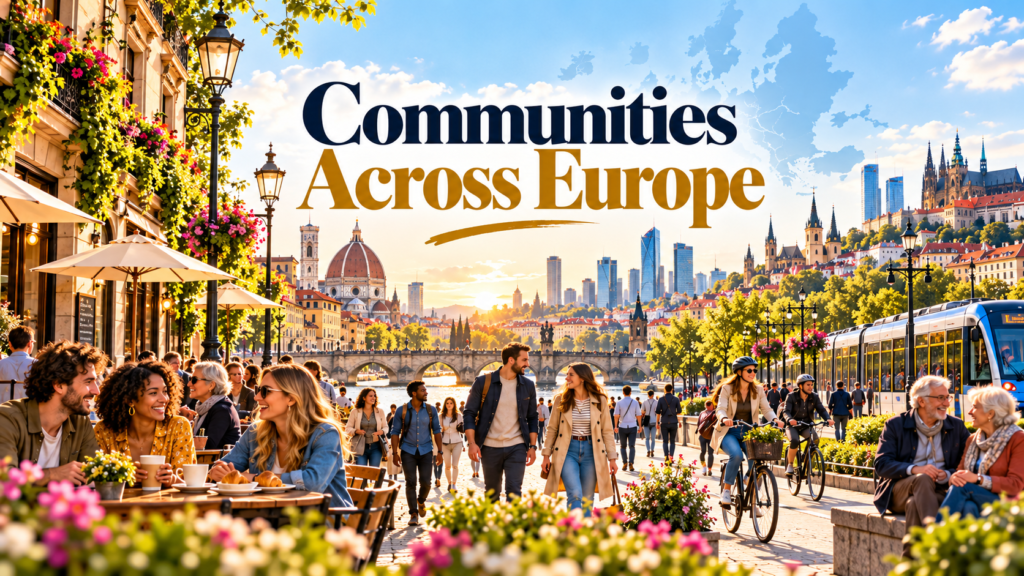
One of the most visible changes in European communities is growing diversity. European countries have long been shaped by different languages, traditions and regional identities, but migration and international mobility have added new cultural influences to many cities and towns.
People from different countries and backgrounds increasingly live, work and study alongside one another. This can introduce new cuisines, languages, festivals, businesses, religious traditions, artistic influences and social practices into local communities.
Cities such as London, Paris, Berlin, Amsterdam, Madrid and Milan illustrate how international populations can become an important part of everyday community life. However, cultural diversity is not limited to major capitals. Smaller cities and towns are also experiencing demographic changes.
What does greater diversity mean for communities?
It can create opportunities for:
- Cultural exchange and understanding
- New businesses and employment opportunities
- International education and professional networks
- Greater variety in food, arts and entertainment
- Multilingual community services
- New cultural and social events
- Stronger connections between European countries and the wider world
At the same time, diverse communities may need effective approaches to inclusion, language access and social integration. Successful community development often depends on whether residents have meaningful opportunities to participate in local life.
How Is Migration Affecting Communities Across Europe?
Migration is another major factor changing communities across Europe. People move for many different reasons, including employment, education, family, safety and personal opportunities.
How does migration influence everyday community life?
New residents can contribute skills, entrepreneurship, cultural traditions and new perspectives. Migrants may establish restaurants, shops, professional services and community organizations that become part of the local economy.
Schools may also become more culturally diverse, while neighborhoods can develop new social networks connecting people from different backgrounds.
However, migration can also place pressure on housing, public services and local infrastructure when communities experience rapid population growth. The impact varies considerably between countries, regions and individual communities.
The most important point is that migration does not affect every European community in the same way. Large metropolitan areas may experience international migration differently from rural regions, while countries also have different immigration policies and demographic circumstances.
Is Europe Becoming More Urban?
Yes, urbanization continues to influence the way many Europeans live and interact. Cities provide employment, education, healthcare, cultural activities and transportation connections, attracting residents from both within countries and internationally.
But what happens to communities when more people move toward urban areas?
Urban growth can create vibrant neighborhoods with restaurants, cultural institutions, public spaces and diverse businesses. It can also support innovation and new forms of community organization.
However, growing cities can face challenges such as:
- Housing affordability
- Traffic congestion
- Pressure on public transport
- Higher living costs
- Limited public space
- Unequal access to services
- Social isolation in densely populated areas
This has encouraged many European cities to think more carefully about walkability, public spaces, cycling infrastructure, neighborhood services and sustainable urban planning.
Are Rural Communities Across Europe Changing Too?
While cities receive considerable attention, rural communities are also undergoing significant change.
Some rural areas face population decline as younger residents move to cities for education and employment. This can leave smaller communities with an older population and fewer workers.
At the same time, some rural regions are attracting new residents who are looking for lower housing costs, quieter lifestyles or opportunities to work remotely.
How could remote work change rural Europe?
Remote employment can make it possible for some professionals to live outside major cities without giving up access to jobs based in urban centers. This could create new opportunities for rural economies.
Rural communities can also benefit from:
- Tourism
- Local food production
- Renewable energy
- Small businesses
- Remote work
- Nature-based activities
- Digital services
However, reliable broadband, transportation, healthcare and educational services remain important for rural communities seeking long-term sustainability.
How Is an Ageing Population Changing European Communities?
Demographic change is one of the most important factors shaping communities across Europe. Many European countries have ageing populations, while birth rates have generally declined over recent decades.
What does an ageing population mean for community life?
It can increase demand for healthcare, social care, accessible transportation and age-friendly housing. Communities may also need to rethink public spaces so that older residents can participate comfortably in social and cultural activities.
An ageing population can also change the relationship between generations. Community programs that bring younger and older residents together can help encourage social connections and knowledge sharing.
Examples of intergenerational activities include:
- Community gardens
- Local cultural projects
- Mentoring programs
- Shared educational activities
- Volunteer programs
- Neighborhood events
Rather than viewing ageing only as a challenge, communities can recognize the experience, knowledge and contributions of older residents.
Are Young Europeans Creating New Types of Communities?
Young people are also influencing how European communities evolve. Younger generations often maintain social relationships across borders through education, travel, employment and digital communication.
University students, young professionals, creatives and entrepreneurs frequently form communities based on shared interests rather than simply geographical location.
For example, a person living in Barcelona may participate in a professional network involving people in Stockholm, Lisbon and Prague. Digital platforms make such connections relatively easy.
This creates a broader understanding of what a community can be. A community may now be based on:
- Location
- Profession
- Culture
- Hobbies
- Education
- Environmental interests
- Entrepreneurship
- Online interests
The traditional neighborhood remains important, but it is increasingly complemented by communities that cross geographical boundaries.
How Is Technology Changing Community Life in Europe?
Technology has transformed communication and community participation. Smartphones, social networks, messaging applications and online forums allow residents to communicate quickly about local issues and events.
How can digital technology strengthen communities?
Residents can use digital tools to organize neighborhood activities, share information, promote local businesses and respond to emergencies. Local authorities and community organizations can also use digital platforms to communicate with residents.
Digital communities can be particularly useful for people who have difficulty participating in traditional community activities because of work schedules, mobility limitations or geographical distance.
However, technology can also create challenges. Not everyone has the same level of digital access or digital literacy. Online discussions can also become fragmented when people interact mainly with groups that share similar views.
For communities to benefit from digital transformation, technology needs to complement rather than completely replace face-to-face interaction.
Are Local Businesses Becoming More Important to European Communities?
Local businesses remain an important part of community life. Cafés, markets, independent shops, restaurants, bookstores and family-owned businesses can provide places where people meet and interact.
Why do local businesses matter?
They can contribute to local employment while creating spaces for social interaction. A neighborhood café, for example, can become more than a place to purchase coffee. It may serve as a meeting point for residents, freelancers, students and community groups.
The growth of online shopping has created challenges for some traditional retailers. Nevertheless, many communities are supporting local businesses through markets, cultural events and neighborhood initiatives.
There is also growing interest in buying locally produced food and supporting independent businesses. These trends can strengthen connections between consumers, producers and their local economies.
How Is the Cost of Living Affecting Communities Across Europe?
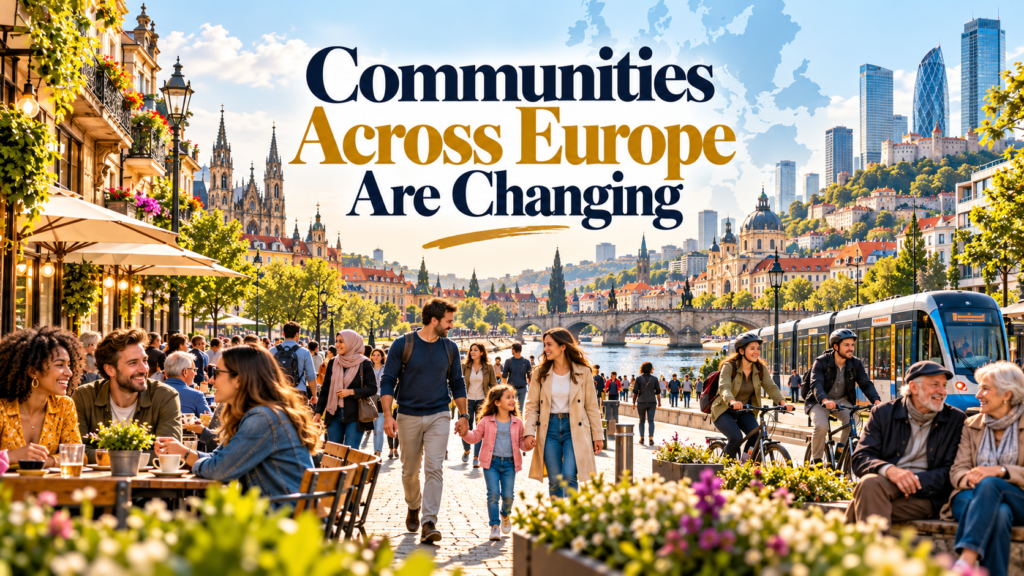
The cost of housing, energy, food and other essential goods can influence community life significantly. When living expenses rise, residents may have less money and time available for social activities.
Housing is particularly important. In some European cities, demand for housing has contributed to affordability challenges. When residents struggle to remain in a neighborhood, long-standing community networks can become disrupted.
How can communities respond?
Possible approaches include:
- Increasing affordable housing
- Supporting social housing
- Improving public transportation
- Protecting essential local services
- Supporting community organizations
- Encouraging mixed-income neighborhoods
- Making public spaces accessible
The exact solutions differ by country and city, but housing affordability increasingly forms part of discussions about the future of European communities.
Are Europeans Becoming More Environmentally Conscious?
Environmental issues are also influencing community development across Europe. Climate change, energy transition, recycling, sustainable transportation and urban green spaces have become increasingly important topics in many communities.
How does environmental awareness affect everyday community life?
Residents may participate in community gardens, recycling programs, clean-up campaigns, cycling initiatives or local environmental groups. Cities may also invest in parks, pedestrian areas and public transportation.
Community-based environmental projects can provide both ecological and social benefits. A community garden, for instance, can encourage local food production while creating opportunities for neighbors to meet.
Sustainability is therefore not only an environmental issue. It can also become a way of strengthening local connections.
How Are European Communities Preserving Local Culture?
Despite globalization and digital connectivity, local culture remains important. Communities across Europe continue to celebrate regional traditions, festivals, music, crafts, food and languages.
Why does local culture matter?
Cultural traditions can create a sense of identity and belonging. Local festivals and community events give residents opportunities to meet and celebrate shared heritage.
At the same time, cultural identity is becoming more complex. A community may combine long-established traditions with influences brought by newer residents.
This can create a dynamic cultural environment in which traditional and contemporary practices coexist.
How Are Community Events Changing Across Europe?
Community events are adapting to changing interests and demographics. Traditional festivals remain popular, but many communities are also organizing events focused on food, art, sustainability, technology, entrepreneurship and multicultural exchange.
Modern community events may include:
- Food festivals
- Music performances
- Art exhibitions
- Street markets
- Cultural celebrations
- Sports activities
- Sustainability fairs
- Local business events
- Community workshops
These events can help residents build relationships beyond their immediate social circles.
Is Social Isolation Becoming a Community Concern?
While digital technology can connect people, physical distance and changing lifestyles can also contribute to social isolation.
People may live in large apartment buildings without knowing their neighbors. Remote work can reduce everyday workplace interactions. Older residents may face mobility challenges, while newcomers may struggle to establish social networks.
How can communities encourage stronger social connections?
Simple initiatives can make a difference, including shared public spaces, volunteer programs, neighborhood gatherings, sports clubs and community centers.
Community connection does not always require large organizations. Sometimes regular local activities provide the most effective opportunities for people to build relationships.
How Are Volunteers Supporting European Communities?
Volunteers continue to play an important role in community life. Local volunteers may support charities, cultural organizations, environmental projects, sports clubs and social programs.
Why is volunteering important?
It gives residents an opportunity to contribute directly to their communities. It can also help people develop relationships, skills and a stronger sense of belonging.
Volunteer networks can become particularly valuable during emergencies or periods of economic difficulty.
Community organizations often depend on volunteers to organize events, provide assistance and maintain local initiatives.
How Is Remote Work Changing Community Relationships?
Remote and hybrid work have changed how some professionals interact with their communities. Without daily commuting, workers may spend more time in their neighborhoods.
Could this strengthen local communities?
Potentially. Remote workers may use local cafés, coworking spaces, libraries, gyms and shops during the day. This can increase daytime activity in residential neighborhoods.
However, remote work can also reduce opportunities for workplace socialization and may blur the boundary between home and work.
The long-term impact will depend on how employers, cities and residents adapt to changing work patterns.
What Role Do Community Spaces Play in Modern Europe?
Public and shared spaces remain central to community life. Parks, libraries, community centers, plazas, markets and sports facilities give people places to interact.
What makes a good community space?
A successful public space is generally accessible, safe, welcoming and useful for different age groups. It can support informal interactions as well as organized events.
Well-designed public spaces can help create stronger connections between residents while making neighborhoods more attractive and livable.
How Can European Communities Become More Inclusive?
As communities become more diverse, inclusion becomes increasingly important. People need opportunities to participate regardless of age, cultural background, income level or physical ability.
Inclusive communities can focus on:
- Accessible public infrastructure
- Affordable community activities
- Multilingual information
- Equal access to services
- Inclusive cultural events
- Opportunities for civic participation
- Support for vulnerable residents
Inclusion does not mean that every resident has the same experiences. Instead, it can mean creating opportunities for different groups to participate in community life.
What Challenges Could European Communities Face in the Future?
Communities across Europe are likely to continue experiencing demographic, economic, technological and environmental changes.
Some important challenges may include:
- Population ageing: More communities may need to adapt services and infrastructure for older residents.
- Housing affordability: High housing costs can affect where people live and whether they can remain connected to established neighborhoods.
- Digital inequality: Differences in internet access and digital skills can exclude some residents from increasingly digital services.
- Climate adaptation: Communities may need to prepare for changing weather patterns and environmental pressures.
- Social isolation: Modern lifestyles can make it harder for some people to develop strong local relationships.
- Population movement: Migration and internal mobility can reshape local demographics.
- Rural population decline: Some rural areas may continue searching for ways to attract residents, jobs and investment.
These challenges are interconnected, meaning that community development will often require coordinated approaches rather than individual solutions.
What Opportunities Are Emerging for Communities Across Europe?
Change also creates opportunities. New technologies, cultural diversity, flexible working arrangements and environmental initiatives can provide new ways for communities to develop.
Digital platforms can help residents organize local activities. New businesses can bring fresh services to neighborhoods. Cultural diversity can create opportunities for international exchange. Sustainable infrastructure can make communities healthier and more accessible.
Young entrepreneurs and community organizations may also create innovative projects addressing local challenges.
The future of European communities may therefore depend partly on how effectively residents, businesses, civil society organizations and local institutions cooperate.
What Will the Future of Communities Across Europe Look Like?
The future is unlikely to involve one universal model. Communities across Europe have different histories, economies, demographics and cultural identities.
Some cities may become increasingly international and digitally connected. Some rural communities may focus on attracting remote workers and entrepreneurs. Other areas may concentrate on ageing populations, tourism, sustainability or preserving local traditions.
One important trend is that the meaning of community itself is expanding. People can belong simultaneously to a neighborhood, workplace, cultural group, online network and international professional community.
This means future communities may be both local and global.
How Can Individuals Contribute to Stronger European Communities?
Community development is not only the responsibility of governments or large organizations. Individuals can also play an important role.
Residents can contribute by:
- Supporting local businesses
- Participating in community events
- Volunteering
- Joining local clubs and organizations
- Looking after shared public spaces
- Learning about different cultures
- Supporting environmental initiatives
- Helping neighbors when possible
- Participating in local discussions
- Building relationships across generations
Small actions can contribute to stronger social networks over time.
Why Does Community Matter in a Changing Europe?
Communities provide more than geographical boundaries. They can create relationships, identity, support and opportunities for participation.
As Europe experiences demographic changes, technological development, migration, urbanization and evolving lifestyles, community relationships can help people adapt.
The most important change may therefore be the expanding definition of community. It is no longer limited to people who live on the same street. Communities can exist across neighborhoods, cities, countries and digital platforms.
At the same time, physical communities remain essential. A digital connection cannot completely replace the experience of meeting neighbors, sharing public spaces or participating in local activities.
What Is the Key Takeaway About Communities Across Europe?
Communities across Europe are changing because the people who live in them, the way they work, the technology they use and the challenges they face are changing.
Cultural diversity, migration, ageing populations, urbanization, rural transformation, digital technology, environmental awareness and changing economic conditions are all contributing to this transformation.
The future will not necessarily mean the disappearance of traditional communities. Instead, European community life is likely to become more diverse, interconnected, flexible and multidimensional.
The central question is no longer simply where people live. It is also how people connect, participate and create a sense of belonging.
As Europe continues to evolve, communities will remain an important part of understanding the continent’s social and cultural future. Whether in a major city, a small town or a rural village, the ways people connect with one another will continue to shape everyday life across Europe.
Read More – Best places to visit in Europe