
Complete Guide to Exploring Europe: How to Plan a Multi Country Europe Trip
Europe is one of the most fascinating travel destinations in the world, offering a remarkable combination of historic cities, beautiful landscapes, diverse cultures, world-famous attractions, and unforgettable culinary experiences. From the romantic streets of Paris and the historic landmarks of Rome to the breathtaking Swiss Alps and the picturesque canals of Amsterdam, every European country offers something unique. Planning a multi country Europe trip allows travelers to experience several destinations in one holiday while discovering the continent’s incredible diversity.
However, travelling across multiple European countries requires thoughtful planning. Choosing the right destinations, arranging transportation, managing travel expenses, understanding visa requirements, and creating a realistic itinerary can make a significant difference to the overall experience. Whether you are planning your first European vacation or returning to explore more destinations, having a well-organized travel plan can help you enjoy a smooth and memorable journey.
So, how do you plan a multi country Europe trip without feeling overwhelmed? What countries should you visit, how many days should you spend in each destination, and what is the best way to travel between European cities? Here is a complete guide to planning an unforgettable European adventure.
1. Why Should You Plan a Multi Country Europe Trip?
A multi country Europe trip offers an opportunity to experience different cultures, traditions, languages, cuisines, and landscapes within a single vacation. Unlike travelling to just one destination, exploring multiple European countries allows visitors to understand how diverse the continent can be.
For example, travelers can enjoy French architecture in Paris, explore Italy’s ancient Roman history, admire Switzerland’s mountain scenery, and experience the vibrant atmosphere of Spain. These destinations offer completely different experiences despite being relatively accessible through Europe’s extensive transportation network.

Some major advantages of planning a multi country European vacation include:
- Cultural diversity: Experience different traditions, festivals, languages, and lifestyles.
- Historical discoveries: Explore castles, museums, ancient monuments, and UNESCO World Heritage Sites.
- Convenient transportation: Travel between many European destinations through trains, buses, and flights.
- Culinary experiences: Taste traditional dishes, regional specialities, and local delicacies.
- Natural beauty: Discover beaches, mountains, lakes, countryside, and scenic villages.
- More travel experiences: Explore several destinations during one extended holiday.
A carefully planned itinerary helps travellers enjoy these experiences without spending too much time travelling between destinations.
2. How Many European Countries Should You Visit on One Trip?
One of the first decisions when planning a multi country Europe trip is determining how many countries to include. Although Europe makes it possible to visit several countries relatively easily, attempting to explore too many destinations in a short period can make the journey exhausting.
For a trip lasting seven to ten days, visiting two or three countries is generally more comfortable. Travellers with approximately two weeks can consider three or four countries, depending on the distances between destinations. Those planning a three-week or month-long European vacation have more flexibility to explore additional countries.
Consider the following general itinerary suggestions:
- 7 days: Two countries with two or three main destinations.
- 10 days: Two or three countries.
- 14 days: Three or four countries.
- 21 days: Four or five countries.
- 30 days: Five to seven countries, depending on travel preferences.
These are planning guidelines rather than strict rules. The ideal number of countries depends on your interests, travel budget, transportation choices, and preferred pace.
Instead of counting how many borders you can cross, focus on how much time you can spend enjoying each destination.
3. Which European Countries Are Best for a Multi Country Trip?
Multi country Europe trip offers numerous travel combinations, making it possible to create an itinerary based on history, culture, nature, shopping, food, adventure, or relaxation.
Some countries are particularly convenient to combine because of their geographical proximity and transportation connections.
France
France is one of Europe’s most popular tourist destinations. Paris attracts visitors with its Eiffel Tower, Louvre Museum, Notre-Dame area, charming neighbourhoods, and world-famous cafés. Beyond the capital, travellers can explore the French Riviera, Provence, Bordeaux, and the beautiful countryside.
France is an excellent starting point for a European journey because it has convenient international connections with several neighbouring countries.
Italy
Italy is an essential destination for travellers interested in history, architecture, food, and culture. Rome offers ancient landmarks such as the Colosseum and Roman Forum, while Florence is famous for Renaissance art and architecture. Venice attracts visitors with its canals, bridges, and romantic atmosphere.
Travellers can also discover Milan, Naples, Tuscany, and the Amalfi Coast.
Switzerland
Switzerland is famous for its spectacular mountains, peaceful lakes, scenic railway journeys, and picturesque villages. Popular destinations include Zurich, Lucerne, Interlaken, Zermatt, and Geneva.
It is particularly attractive to nature lovers and travellers seeking breathtaking Alpine scenery. However, Switzerland can be relatively expensive compared with several other European destinations.
Germany
Germany combines modern cities, historical attractions, cultural experiences, and beautiful countryside. Berlin offers museums and historical landmarks, Munich is known for Bavarian traditions, and Frankfurt is an important financial and transportation hub.
Germany is also a convenient destination for connecting trips to France, Austria, Switzerland, Belgium, and the Netherlands.
Spain
Spain is known for its lively cities, beautiful beaches, traditional cuisine, architecture, and vibrant festivals. Barcelona attracts visitors with its distinctive architecture, while Madrid offers world-class museums and cultural attractions.
Other popular destinations include Seville, Valencia, Granada, and Malaga.
Netherlands
The Netherlands is famous for Amsterdam’s canals, cycling culture, historic buildings, museums, and colourful flower fields. It is also convenient to combine with Belgium, Germany, and France.
Austria
Austria offers impressive Alpine landscapes, historic architecture, classical music heritage, and charming cities. Vienna and Salzburg are particularly popular among travellers interested in history, music, and European culture.
4. How Should You Choose the Best Route for Your European Vacation?
Selecting an efficient travel route is one of the most important parts of planning a multi country Europe trip. A well-designed route can reduce transportation costs, save time, and prevent unnecessary backtracking.
The best approach is to select destinations that are geographically close to one another. For example, France, Belgium, and the Netherlands form a convenient travel combination. Similarly, Italy, Switzerland, and Austria can work well together.
Before finalising your route, consider:
- The distance between each destination.
- Available train, bus, and flight connections.
- Transportation costs.
- The total duration of your vacation.
- Seasonal weather conditions.
- Your preferred attractions and activities.
- Entry and exit points for international flights.
Try to create a logical travel route instead of moving repeatedly between distant cities.
For example, a journey starting in Paris, continuing to Brussels, Amsterdam, and Berlin, and ending in Munich can be more practical than travelling randomly between different European regions.
5. What Is a Good 14-Day Multi Country Europe Trip Itinerary?
A two-week European vacation provides enough time to experience several countries without making the journey excessively rushed.
Here is an example of a four-country itinerary covering France, Belgium, the Netherlands, and Germany.
Days 1–4: Explore Paris, France
Begin your journey in Paris, one of the most recognisable cities in Europe. Spend your first few days exploring the Eiffel Tower, Louvre Museum, Arc de Triomphe, and the beautiful streets of Montmartre.
Recommended experiences include:
- Visiting the Eiffel Tower.
- Exploring the Louvre Museum.
- Walking along the Seine River.
- Discovering historic neighbourhoods.
- Enjoying French cafés and traditional cuisine.
Days 5–6: Discover Brussels, Belgium
Travel from Paris to Brussels by train. Brussels is known for its impressive architecture, historic squares, chocolate shops, and Belgian food.
Popular attractions include the Grand Place, Atomium, Royal Gallery of Saint Hubert, and Manneken Pis.
Travellers can also consider a day trip to Bruges to explore its medieval streets and beautiful canals.
Days 7–9: Experience Amsterdam, Netherlands
Continue your journey to Amsterdam, a city famous for its canals, museums, cycling culture, and historic architecture.
Important attractions include:
- Anne Frank House.
- Rijksmuseum.
- Van Gogh Museum.
- Dam Square.
- Amsterdam Canal District.
If travelling during spring, consider visiting the Keukenhof flower gardens, subject to their seasonal opening dates.
Days 10–14: Explore Germany
Finish your journey in Germany by visiting Cologne, Frankfurt, or Berlin, depending on your preferred travel route.
Cologne is famous for its magnificent cathedral, while Frankfurt offers modern architecture and historical attractions. Berlin is particularly appealing to visitors interested in museums, history, and contemporary culture.
This itinerary is flexible and can be adjusted according to transportation schedules, personal interests, and accommodation availability.
6. When Is the Best Time to Visit Multi Country Europe Trip?
The best time for a multi country Europe trip depends on your preferred weather, budget, activities, and destinations.
Europe experiences four distinct seasons, and each offers different travel opportunities.
Spring (March to May)
Spring is an excellent time to explore European cities. Temperatures gradually become warmer, flowers bloom, and outdoor attractions become more enjoyable.
Advantages include:
- Beautiful gardens and countryside.
- Pleasant sightseeing conditions.
- Fewer crowds than during peak summer in many destinations.
- Opportunities to enjoy spring festivals.
However, weather conditions can vary significantly between northern, central, and southern Europe.
Summer (June to August)
Summer is one of the busiest travel seasons in Europe. Longer daylight hours, warmer temperatures, and numerous festivals make it popular among international visitors.
It is an ideal season for beach destinations, outdoor activities, and mountain excursions.
However, accommodation and flight prices can increase significantly, particularly in popular tourist cities.
Autumn (September to November)
Autumn is an attractive period for travellers looking for pleasant sightseeing conditions and potentially lower prices after the summer peak.
Visitors can enjoy beautiful autumn landscapes, wine regions, cultural events, and less crowded attractions in many destinations.
Winter (December to February)
Winter offers a completely different European experience. Christmas markets, snow-covered landscapes, winter sports, and festive decorations attract visitors to several countries.
Austria, Switzerland, Germany, and France are particularly popular during the winter season.
Travellers should remember that daylight hours are shorter and weather disruptions can affect transportation.
7. How Much Does a Multi Country Europe Trip Cost?
Budget planning is essential when visiting several European countries. The total cost depends on the destinations, travel duration, accommodation standards, transportation methods, food preferences, and activities.
Western and Northern European destinations are generally more expensive than several Central and Eastern European destinations.
The main expenses to consider include:
- International flights.
- Accommodation.
- Intercity transportation.
- Local public transportation.
- Food and beverages.
- Sightseeing tickets.
- Travel insurance.
- Visa expenses, where applicable.
- Shopping and personal expenses.
- Emergency funds.
How Can You Estimate Your Travel Budget?
A practical way to estimate your expenses is to create a daily budget for each destination.
For example, budget-conscious travellers may choose hostels, public transport, supermarkets, and free attractions. Mid-range travellers may prefer comfortable hotels, occasional restaurant meals, and selected guided tours. Luxury travellers may choose premium hotels, private transfers, fine dining, and exclusive experiences.
Remember that Switzerland, Norway, Denmark, and Iceland can require a higher daily budget than destinations such as Poland, Hungary, and the Czech Republic.
Keep some additional money aside for unexpected expenses, transportation changes, and emergencies.
8. Do You Need a Schengen Visa to Visit Multiple European Countries?
Visa requirements are among the most important considerations when planning a multi country Europe trip.
Many European countries belong to the Schengen Area, which allows eligible travellers to move between participating countries without routine internal border checks.
Travellers who need a Schengen visa can generally use a valid short-stay Schengen visa to visit multiple Schengen countries, subject to its validity, entry conditions, and permitted duration of stay.
A standard short-stay Schengen visa generally allows a maximum stay of 90 days within any 180-day period across the Schengen Area.
However, not every European country is part of the Schengen Area. Some European destinations have separate entry requirements.
Before travelling, check:
- Whether your nationality requires a visa.
- Whether your intended destinations belong to the Schengen Area.
- Passport validity requirements.
- Visa application documents.
- Travel medical insurance requirements.
- Proof of accommodation and travel arrangements.
- Financial documentation.
- Rules for countries outside the Schengen Area.
If you are visiting several Schengen countries, you generally apply through the country that is your main destination in terms of the purpose or length of stay. If there is no main destination, the first country of entry is generally relevant.
Always consult the official embassy or consular website before submitting your application because visa policies can change.
9. What Is the Best Way to Travel Between European Countries?
Europe has an extensive transportation network that makes travelling between countries relatively convenient. Trains, buses, flights, and rental cars all offer different advantages.
Choosing the right transportation method can significantly affect your travel budget and schedule.
Travelling by Train
Train travel is one of the most enjoyable ways to explore Europe. Many routes connect major cities through high-speed and international rail services.
Advantages include:
- Comfortable journeys.
- Scenic countryside views.
- City-centre departure and arrival stations on many routes.
- No need to arrive as early as for most international flights.
- Convenient connections between neighbouring countries.
The Eurail Global Pass may be worth considering for eligible non-European residents planning extensive train travel. European residents generally have access to Interrail instead.
However, compare pass prices with individual tickets before purchasing. Some trains require additional reservations or supplements.
Travelling by Bus
International buses can be a cost-effective option, particularly for shorter distances and budget-conscious travellers.
Companies such as FlixBus operate numerous routes across European countries.
Bus journeys may take longer than trains, but they can offer attractive fares and convenient connections.
Travelling by Air
Flying can be practical when destinations are far apart. Low-cost airlines operate numerous routes connecting European cities.
However, remember to consider baggage fees, airport transfers, check-in requirements, and the time needed to reach airports.
Renting a Car
A rental car offers greater flexibility for exploring rural areas, small towns, and scenic destinations.
It can be particularly useful in parts of Italy, France, Austria, and Switzerland.
Before renting a vehicle, check international driving permit requirements, insurance coverage, toll systems, parking rules, and cross-border rental restrictions.
10. How Should You Book Accommodation Across Multiple Countries?
Accommodation planning becomes especially important when travelling across several destinations. Booking hotels or apartments in convenient locations can save time and reduce transportation expenses.
For major cities, consider staying near public transport stations or within walking distance of important attractions.
Popular accommodation options include:
- Hotels for comfort and convenience.
- Hostels for budget-conscious travellers.
- Holiday apartments for families and longer stays.
- Boutique hotels for unique local experiences.
- Guesthouses for a more personal atmosphere.
Compare accommodation prices across different booking platforms and check cancellation conditions before confirming reservations.
It is also useful to examine guest reviews, neighbourhood safety, transport connections, and additional charges.
Avoid changing accommodation every night unless absolutely necessary. Staying two or three nights in a destination often provides a more comfortable travel experience.
11. How Can You Save Money on a Multi Country Europe Trip?
A European vacation does not necessarily need to be expensive. With proper planning, travelers can enjoy several countries while keeping their expenses under control.
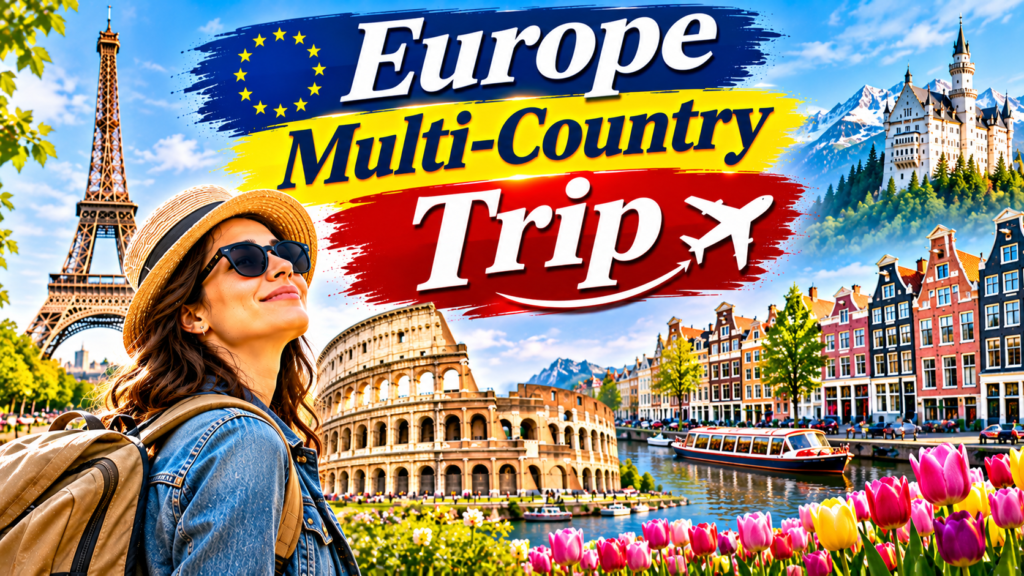
Here are some practical money-saving strategies:
1. Book transportation early: Advance train and flight bookings can offer better prices, although flexible tickets may cost more.
2. Travel during shoulder seasons: Spring and autumn can offer a balance of comfortable weather, manageable crowds, and competitive prices.
3. Choose affordable destinations: Consider including Central and Eastern European countries in your itinerary.
4. Use public transportation: Local buses, trams, metros, and regional trains can reduce transportation costs.
5. Explore free attractions: Parks, public squares, historic neighbourhoods, and some museums offer free access.
6. Compare accommodation options: Hostels, guesthouses, and apartments can be economical alternatives to expensive hotels.
7. Eat local food: Traditional bakeries, local markets, and casual restaurants can provide affordable meals.
8. Avoid unnecessary luggage: Travelling with lighter bags can help prevent baggage fees and make transfers easier.
9. Check city passes carefully: Museum and attraction passes are worthwhile only when you plan to use enough of their included benefits.
10. Maintain an emergency budget: Unexpected expenses can occur during international travel, so avoid spending your entire budget on advance bookings.
12. What Essential Travel Documents Should You Carry?
International travel requires proper documentation, particularly when visiting multiple countries.
Before departure, organise your important documents and keep digital copies in a secure location.
Your travel checklist should include:
- Valid passport.
- Required visas and residence permits.
- Flight confirmations.
- Train and bus tickets.
- Hotel reservations.
- Travel insurance documents.
- Driving licence and international driving permit, if applicable.
- Emergency contact information.
- Copies of important identification documents.
- Prescription documents for necessary medicines, where applicable.
Keep original documents secure and accessible when required. Digital copies can be useful backups, but they do not replace official documents.
13. What Travel Apps Are Useful for Exploring Europe?
Travel apps can make a multi country European vacation easier by helping travelers organize routes, find accommodation, navigate unfamiliar cities, and manage bookings.
Some useful applications include:
- Google Maps: Useful for navigation, walking directions, and public transportation information.
- Google Translate: Helps with basic communication in different languages.
- Rome2Rio: Useful for comparing possible transportation connections between destinations.
- Trainline: Helps travellers search for and book selected train and bus journeys.
- Booking.com: Useful for comparing accommodation options.
- Skyscanner: Helps compare available flight options.
- XE Currency: Useful for checking exchange rates.
- Citymapper: Offers public transportation information in supported cities.
Download essential maps, tickets, and travel information before departure. Some European destinations may have limited mobile connectivity, and offline access can be particularly helpful.
14. What Should You Pack for a Multi Country European Vacation?
Packing for multiple European destinations requires flexibility because weather conditions can differ considerably from one country to another.
A traveller visiting Spain, Switzerland, and Germany during the same holiday may experience very different temperatures and weather conditions.
Consider packing the following essentials:
- Comfortable walking shoes.
- Weather-appropriate clothing.
- Lightweight jackets or sweaters.
- Travel documents and passport holder.
- Universal travel adapter compatible with your destinations.
- Portable power bank.
- Personal toiletries.
- Reusable water bottle.
- Basic first-aid supplies.
- Day backpack.
- Sunglasses and sunscreen.
- Weatherproof outerwear.
Choose versatile clothing that can be mixed and matched. Packing light is particularly useful when frequently changing trains, buses, and hotels.
15. How Can You Stay Safe While Travelling Across Europe?
Europe is a popular destination for international tourists, but travellers should still take basic safety precautions.
Pickpocketing and tourist scams can occur in crowded areas, particularly around major attractions, railway stations, and public transportation networks.
Follow these practical safety tips:
- Keep passports and valuables in secure locations.
- Be aware of your surroundings in crowded tourist areas.
- Avoid displaying expensive jewellery and electronics unnecessarily.
- Use official taxi services or trusted transport applications.
- Keep emergency contact details accessible.
- Purchase suitable travel insurance.
- Follow local laws and regulations.
- Avoid poorly lit or unfamiliar areas late at night.
- Check official travel advisories before visiting destinations.
Travellers should also understand local emergency numbers and healthcare arrangements before beginning their journey.
16. What Common Mistakes Should You Avoid When Planning a Multi Country Europe Trip?
Even experienced travellers can make mistakes when organising an international vacation. Avoiding a few common planning errors can make the journey more enjoyable.
Visiting Too Many Countries
Trying to visit eight or nine countries in two weeks can leave very little time for sightseeing and relaxation. Focus on fewer destinations and explore them properly.
Ignoring Travel Time
A train journey lasting three hours may require additional time for hotel checkout, station transfers, boarding, and reaching your next accommodation.
Always account for the complete door-to-door journey.
Not Checking Visa Requirements
Do not assume that every European country follows the same entry rules. Verify requirements for every destination on your itinerary.
Booking Everything Without Flexibility
Unexpected weather conditions, transport disruptions, or personal changes can affect your schedule. Consider flexible bookings when the additional cost is reasonable.
Underestimating Travel Expenses
Food, local transport, attraction tickets, luggage fees, and city taxes can add up quickly.
Prepare a realistic budget rather than calculating expenses based only on flights and hotels.
Forgetting Travel Insurance
Travel insurance can provide protection for eligible unexpected medical expenses, trip interruptions, lost luggage, and other covered situations.
Review the policy carefully to understand its exclusions and limitations.
17. Is a Multi Country Europe Trip Suitable for Families and First-Time Travelers?
Yes, a multi country Europe trip can be suitable for families, couples, solo travelers, and first-time international visitors.
However, the itinerary should reflect the needs and comfort levels of everyone travelling.
Families with children may prefer fewer destinations, comfortable accommodation, and direct transportation connections. Couples might enjoy romantic cities, countryside experiences, and scenic train journeys. Solo travellers may prioritise well-connected destinations, convenient public transportation, and accommodation with good security arrangements.
First-time visitors should consider beginning with familiar and well-connected destinations such as France, Italy, Germany, the Netherlands, or Austria.
Planning a slower itinerary can also make the experience less stressful and more rewarding.
18. How Can You Make Your European Vacation More Memorable?
A successful European vacation is not simply about visiting famous attractions. It is also about experiencing local culture, discovering hidden places, and creating meaningful memories.
Instead of spending every day rushing between tourist landmarks, leave room for spontaneous experiences.
Consider these ideas:
- Explore local neighbourhoods beyond the main tourist attractions.
- Visit traditional food markets.
- Attend cultural festivals and local events.
- Try regional dishes and traditional desserts.
- Explore small towns and countryside destinations.
- Visit museums and historic buildings.
- Take scenic train journeys.
- Learn a few basic phrases in local languages.
- Spend time interacting respectfully with local communities.
These experiences can provide a deeper understanding of European culture and make your journey more rewarding.
Conclusion: How Can You Plan the Perfect Multi Country Europe Trip?
Planning a multi country Europe trip requires careful preparation, but the experience can be incredibly rewarding. From selecting the right destinations and arranging transportation to managing your budget and understanding visa requirements, every planning decision contributes to a smoother holiday.
The most important thing is to create an itinerary that matches your interests, travel duration, and financial resources. Rather than attempting to visit as many countries as possible, choose destinations that complement one another and allow enough time to explore each location.
Whether you dream of discovering Paris, experiencing Italy’s historic cities, admiring Switzerland’s mountains, or exploring the cultural attractions of Germany and the Netherlands, Europe offers countless opportunities for unforgettable adventures.
With a realistic itinerary, suitable accommodation, proper documentation, and a flexible travel approach, you can turn your European travel plans into a memorable journey across the continent.
Read More – How Ordinary People Become Everyday Heroes?