
Ultimate Guide For 10 European Cities Where Life Feels Less Stressful
Modern city life can be exciting, but does it always have to feel rushed? Between long commutes, crowded streets, demanding work schedules and constant digital notifications, many people are increasingly looking for destinations where everyday life feels calmer and more manageable. Europe offers plenty of cities where a slower pace, access to nature, efficient public transportation and strong community spaces can make urban living feel more balanced.
But which European cities offer that combination of convenience and calm? And what makes a city feel less stressful in the first place?
From Scandinavian capitals known for thoughtful urban planning to smaller Mediterranean destinations where outdoor living is part of everyday culture, these 10 European cities where life feels less stressful offer different interpretations of a balanced lifestyle.
It is important to note that no city is completely stress-free. Housing costs, employment opportunities, weather, tourism and personal circumstances can affect how comfortable someone finds a particular destination. Instead, the cities below are interesting examples of places where aspects such as green spaces, walkability, public transport, cultural life and a generally relaxed atmosphere can contribute to a more comfortable urban experience.
1. Why Does Copenhagen Feel Like One of Europe’s Less Stressful Cities?
Could a major European capital really combine urban convenience with a relaxed lifestyle? Copenhagen, Denmark, provides a compelling example.
The Danish capital is known for its cycling culture, waterfront areas, pedestrian-friendly streets and emphasis on livability. Instead of designing the city entirely around cars, Copenhagen has invested heavily in infrastructure that makes cycling and walking practical parts of everyday transportation.
Why can that matter for stress levels? A daily commute does not necessarily have to mean sitting in traffic. Residents who can walk, cycle or use public transportation may have more opportunities to incorporate movement and outdoor time into their routines.
Copenhagen also offers numerous parks, waterfront spaces, cafés and public areas where people can spend time outside. The city’s compact urban structure means many everyday destinations can be reached without lengthy journeys.
What makes Copenhagen feel more relaxed?
- Extensive cycling infrastructure
- Walkable central areas
- Waterfront recreational spaces
- Numerous parks and public squares
- Strong café and cultural culture
- Efficient public transportation
- A strong emphasis on urban livability
Does that mean Copenhagen is inexpensive or completely stress-free? Certainly not. The cost of living can be high, and housing affordability remains an important consideration. Nevertheless, for people who value mobility, public spaces and a balanced urban environment, Copenhagen can offer an appealing lifestyle.
2. Why Is Vienna Considered a Comfortable City for Everyday Living?
What happens when a historic European capital combines culture with extensive public transportation and abundant green space? Vienna, Austria, offers one answer.
Vienna is famous for imperial architecture, museums, classical music and grand public buildings, but its appeal goes beyond tourism. The city has an extensive public transportation network, numerous parks and access to recreational areas.
One of the interesting aspects of Vienna is that residents can enjoy a major-city lifestyle without necessarily relying on a car. Trams, buses, trains and underground services connect different parts of the city, making everyday travel relatively convenient.
Could cultural life also contribute to a sense of well-being? For many people, having easy access to museums, concerts, cafés, historic neighborhoods and public parks adds variety to everyday life without requiring long-distance travel.
Why might Vienna feel less stressful?
- Extensive public transportation
- Large parks and recreational areas
- Walkable neighborhoods
- Rich cultural calendar
- Historic architecture and attractive public spaces
- Easy access to nature outside the city
- Numerous cafés and leisure spaces
Vienna is still a busy capital with the challenges that come with metropolitan living. Yet its combination of infrastructure, culture and public spaces makes it an interesting destination for anyone researching peaceful European cities.
3. Could Ljubljana Be One of Europe’s Most Relaxed Capitals?
What if you could experience the advantages of a capital city without the overwhelming scale of a megacity? Ljubljana, Slovenia, is an excellent example.
Slovenia’s capital is relatively compact, and its central area has a strong pedestrian character. The Ljubljanica River passes through the city, while cafés, bridges, squares and riverside spaces create a pleasant environment for walking and socializing.
One of Ljubljana’s biggest advantages is its proximity to nature. Slovenia is known for its mountains, lakes, forests and outdoor landscapes, and many natural attractions can be reached from the capital without requiring extremely long journeys.
Why does this matter for people seeking a less stressful lifestyle? Easy access to nature can make it simpler to escape the intensity of urban surroundings on weekends or even during shorter breaks.
What makes Ljubljana attractive for a calmer lifestyle?
- Compact city center
- Pedestrian-friendly central areas
- Riverside cafés and public spaces
- Nearby mountains and forests
- Strong cycling culture
- Relaxed café culture
- Easy access to Slovenia’s natural attractions
Is Ljubljana suitable for everyone? People looking for a huge metropolitan job market or nonstop nightlife may prefer a larger capital. For those prioritizing a smaller-scale urban experience, however, Ljubljana can be particularly appealing.
4. Why Does Helsinki Offer a Different Kind of Calm?
Can a northern European capital feel peaceful even during the colder months? Helsinki, Finland, demonstrates how thoughtful urban design and close proximity to nature can create a distinctive lifestyle.
Helsinki combines modern infrastructure with forests, islands, parks and coastal landscapes. The sea is an important part of the city’s identity, and residents have access to numerous outdoor spaces.
Finland is also widely associated with a culture that values personal space, nature and a relatively straightforward approach to everyday life. Helsinki’s public transportation system makes it possible to move around the city using buses, trams, metro services, commuter trains and other connections.
Why might Helsinki appeal to people seeking less stressful city life?
- Close relationship with nature
- Coastal and island landscapes
- Extensive public transportation
- Walkable neighborhoods
- Parks and forests within the metropolitan area
- Public spaces designed for everyday use
- Opportunities for outdoor recreation
Of course, Helsinki’s winters can be long and dark, which may not suit everyone. Yet for people who enjoy cooler climates and outdoor environments, its combination of urban convenience and nature can create a distinctive sense of balance.
5. Can Porto Offer a More Relaxed European Lifestyle?
What happens when a historic city combines a slower rhythm with riverfront scenery, traditional neighborhoods and a strong outdoor culture? Porto, Portugal, offers exactly that kind of experience.
Located along the Douro River, Porto has a character that differs considerably from Europe’s larger capitals. Its historic center, traditional cafés, riverside areas and relatively compact scale encourage walking and exploration.
Portugal’s lifestyle is often associated with spending time outdoors, socializing over meals and enjoying public spaces. In Porto, the relationship between the city and the river provides additional opportunities to slow down.
What can make Porto feel less rushed?
- Walkable historic neighborhoods
- Riverside public spaces
- Outdoor cafés and restaurants
- Strong local food culture
- Coastal access
- Relatively compact urban environment
- Distinctive architectural character
However, Porto also faces modern urban challenges, including tourism pressure and housing affordability concerns. Anyone considering a long-term move should look beyond the relaxed atmosphere and research current housing, employment and cost-of-living conditions.
For travelers, digital nomads and people looking for a relaxed city in Europe, Porto can nevertheless provide a compelling combination of culture and leisure.
6. Why Is Zurich Associated With an Organized and Comfortable Lifestyle?
Could efficiency itself contribute to a calmer daily routine? Zurich, Switzerland, is an interesting case.
Zurich is a major financial center, so it would be misleading to describe it as universally slow-paced. Yet the city combines economic activity with highly organized infrastructure, access to nature and an attractive lakeside setting.
Public transportation is a major part of life in Zurich. Trains, trams, buses and boats connect the city and surrounding areas. The city is also close to mountains, forests and Lake Zurich, providing numerous opportunities for outdoor activities.
What contributes to Zurich’s balanced urban environment?
- Highly developed public transportation
- Lakefront recreational areas
- Easy access to mountains and nature
- Clean and well-maintained public spaces
- Walkable areas
- Strong infrastructure
- Numerous opportunities for outdoor activities
Is Zurich expensive? Yes, Switzerland is known for its high costs, and Zurich is not generally considered a budget destination. Therefore, affordability should be evaluated separately from lifestyle quality.
For someone whose definition of a less stressful life includes reliable infrastructure, easy access to nature and organized transportation, Zurich may be worth considering.
7. Could Amsterdam Make Everyday Travel Feel Easier?
Why does transportation matter so much when people think about stress? One reason is that commuting can consume a substantial amount of time and energy.
Amsterdam, Netherlands, has developed a transportation culture in which cycling is deeply integrated into everyday life. Dedicated cycling infrastructure allows many residents to use bicycles for commuting, shopping and social activities.
The city also offers canals, parks, museums, neighborhood cafés and pedestrian-friendly areas. Instead of separating transportation from recreation, cycling can become part of the everyday experience.
Why might Amsterdam feel less stressful for some residents?
- Extensive cycling infrastructure
- Strong public transportation
- Walkable neighborhoods
- Canal-side public spaces
- Numerous parks
- Diverse cultural attractions
- Easy access to surrounding towns
Amsterdam is not without challenges. Tourism, housing costs, congestion in popular areas and high demand for accommodation can affect the experience.
Still, if reducing car dependence and incorporating active transportation into daily life are priorities, Amsterdam provides an interesting model of European urban living.
8. Why Does Stockholm Combine Urban Life With Nature?
Can you live in a capital city while staying close to forests and water? Stockholm, Sweden, makes that possible.
Built across islands and surrounded by water, Stockholm has a distinctive geographic character. Parks, waterfront areas and nearby natural landscapes are integrated into the wider metropolitan environment.
Swedish culture is also often associated with the concept of balance and spending time outdoors. Stockholm’s urban design provides numerous opportunities for walking, cycling and recreational activities.
What makes Stockholm appealing for a balanced lifestyle?
- Numerous waterfront areas
- Parks and green spaces
- Strong public transportation
- Cycling and walking opportunities
- Access to nearby nature
- Attractive historic neighborhoods
- Cultural and recreational activities
Stockholm can also be expensive, particularly when it comes to housing. The climate and winter darkness are other factors potential residents need to consider.
Nevertheless, the city’s combination of nature, infrastructure and public spaces makes it a noteworthy entry among European cities where life feels less stressful.
9. Why Is Salzburg Ideal for People Who Want a Smaller City Experience?
What if the ideal European city is not a huge capital at all? Salzburg, Austria, shows how a smaller city can provide culture, history and access to nature without the scale of a major metropolitan area.
Known for its historic architecture and connection to classical music, Salzburg is surrounded by an impressive Alpine landscape. Mountains and outdoor recreation are close to the city, making it easy to combine cultural experiences with time in nature.
Walking through historic streets, spending time along the Salzach River or exploring nearby landscapes can create a different rhythm from life in a densely populated megacity.
What makes Salzburg attractive?
- Smaller urban scale
- Historic city center
- Nearby Alpine landscapes
- Riverside walking areas
- Outdoor recreation
- Strong cultural identity
- Easy access to surrounding nature
Salzburg’s tourism industry can make some central areas busy, particularly during peak travel periods. Housing and employment opportunities also need to be considered by anyone planning a long-term stay.
For travelers and residents who value scenery, culture and a smaller urban environment, however, Salzburg can offer a strong sense of place.
10. Could Valencia Be One of Europe’s More Relaxed Mediterranean Cities?
What if a less stressful lifestyle means more sunshine, outdoor time and proximity to the sea? Valencia, Spain, provides a Mediterranean interpretation of urban balance.
Valencia combines a historic city center with beaches, parks and extensive outdoor spaces. One of its defining features is the Turia Gardens, a large linear park created in the former riverbed of the Turia.
The city also has a strong cycling culture, and its relatively flat geography makes cycling practical for many journeys. Mediterranean food culture and outdoor socializing add another dimension to everyday life.
Why might Valencia feel more relaxed?
- Mediterranean climate
- Beaches and waterfront areas
- Large urban green spaces
- Cycling infrastructure
- Outdoor cafés and restaurants
- Walkable neighborhoods
- Strong food and cultural traditions
Does Valencia have the same challenges as other popular European destinations? It does. Tourism, housing demand and seasonal pressures can affect different parts of the city.
Still, for someone searching for a peaceful European city with access to beaches and outdoor recreation, Valencia offers a very different alternative to northern European capitals.
What Actually Makes a European City Feel Less Stressful?
Is it simply about having beautiful streets? Not necessarily. A city’s perceived stress level can depend on a combination of factors.
For some people, efficient public transportation is the most important factor. For others, access to parks and nature may matter more. Someone working remotely may prioritize cafés and walkability, while a family may focus on schools, housing and neighborhood safety.
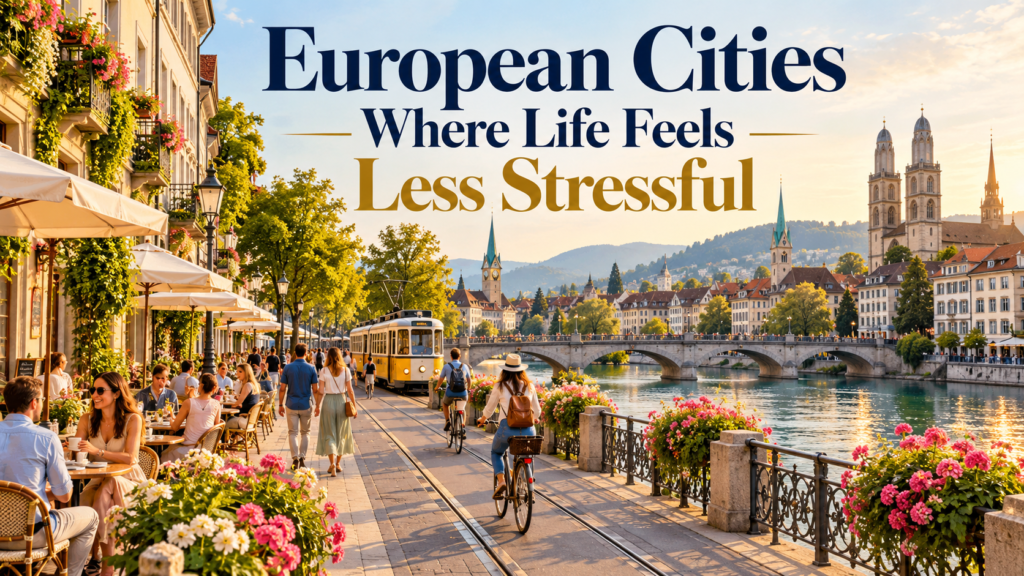
Several features commonly contribute to a more comfortable urban lifestyle:
Does Access to Green Space Matter?
Yes, access to parks, gardens, forests and waterfront areas can make urban environments more enjoyable. Green spaces provide places for walking, exercise, relaxation and social activities.
Cities such as Stockholm, Helsinki, Vienna and Copenhagen demonstrate different approaches to integrating nature into urban life.
Can Walkability Reduce Everyday Friction?
A walkable neighborhood can make ordinary activities simpler. Being able to reach shops, cafés, parks, public transportation and services without a car can reduce the number of logistical decisions people have to make every day.
Does Public Transportation Influence Quality of Life?
It can. Reliable transportation gives residents alternatives to driving and can make commuting more predictable. Cities such as Vienna, Zurich, Copenhagen and Helsinki illustrate how public transportation can form an important part of urban mobility.
Does a Smaller City Automatically Mean Less Stress?
Not necessarily. Smaller cities can have fewer employment opportunities, limited services or higher tourism pressure relative to their size. Meanwhile, some large cities can provide excellent transportation, healthcare, cultural opportunities and public spaces.
The better question may be: Does the city’s size match your lifestyle?
Can Climate Affect the Experience?
Absolutely. Some people enjoy long, cool winters, while others prefer warm Mediterranean weather. Helsinki and Stockholm may appeal to people who enjoy northern climates, while Porto and Valencia can be attractive to those who prefer milder or warmer conditions.
Which European City Is Right for a Slower Lifestyle?
Is there one universally least stressful city in Europe? Probably not.
Stress is highly personal. A city that feels peaceful to one person may feel expensive, cold, crowded or isolated to another. Someone who enjoys cycling may find Copenhagen or Amsterdam particularly convenient, while someone who prefers mountains might feel more comfortable in Salzburg or Zurich.
Similarly, someone who enjoys Mediterranean outdoor culture may prefer Valencia or Porto, while another person may appreciate the organization and public infrastructure associated with Vienna or Helsinki.
Before choosing a destination, it can help to compare:
- Housing costs
- Employment opportunities
- Public transportation
- Climate
- Healthcare access
- Green spaces
- Walkability
- Local culture
- Language
- Tourism levels
- Family requirements
- Access to nature
What Can We Learn From These 10 European Cities?
What do Copenhagen, Vienna, Ljubljana, Helsinki, Porto, Zurich, Amsterdam, Stockholm, Salzburg and Valencia have in common?
They demonstrate that a comfortable urban lifestyle can take many forms.
Some cities emphasize cycling and compact neighborhoods. Others rely on excellent public transportation. Some offer immediate access to forests and mountains, while others provide beaches, rivers and waterfront promenades.
The common thread is not the absence of stress. Instead, these destinations show how urban design, access to nature, transportation, public spaces and lifestyle culture can influence the way people experience city life.
For travelers, these cities can provide inspiration for a slower European itinerary. For people considering relocation, they can serve as starting points for deeper research into housing, work, healthcare and living expenses.
Ultimately, the ideal city depends on what “less stressful” means to you. Is it a short commute? A walk in the park after work? A quiet café near home? Easy access to mountains or beaches? Or simply having more opportunities to spend time outdoors?
Europe offers all of these possibilities—and these 10 cities provide some of the most interesting examples of how urban life can be balanced with relaxation, culture and nature.
Read More – Starting a Business in Europe Complete Guide to Know