
What Are the Most Beautiful Traditional Festivals in Europe? A Journey Through Culture, History and Celebration
Europe is a continent rich in history, cultural diversity, artistic traditions and unforgettable celebrations. From colorful flower parades in the Netherlands to spectacular fire festivals in Spain, Europe traditional festivals offer a fascinating glimpse into the customs, beliefs and lifestyles of different communities. Every country has its own unique way of celebrating its heritage, bringing people together through music, dance, food, costumes and centuries-old rituals.
But what are the most beautiful traditional festivals in Europe? Which celebrations offer the most memorable cultural experiences? And why do these festivals continue to attract visitors from around the world?
European traditional festivals are much more than entertaining public events. They represent the identity of local communities, preserve historical customs and celebrate the changing seasons, religious beliefs, agricultural traditions and important moments in history. Whether you enjoy spectacular street parades, traditional folk performances, historic ceremonies or colorful seasonal celebrations, Europe has something special to offer.
Let’s explore some of the most beautiful Europe traditional festivals and discover what makes each celebration unique.
1. What Makes Traditional Festivals in Europe So Special?
Europe traditional festivals are special because they connect modern communities with their cultural roots. Many celebrations have been observed for hundreds of years, while others have developed from ancient seasonal rituals, religious traditions and local historical events.
Unlike ordinary entertainment events, traditional festivals often involve entire communities. Families, local artists, musicians, dancers and businesses participate in celebrations that reflect their regional identities.
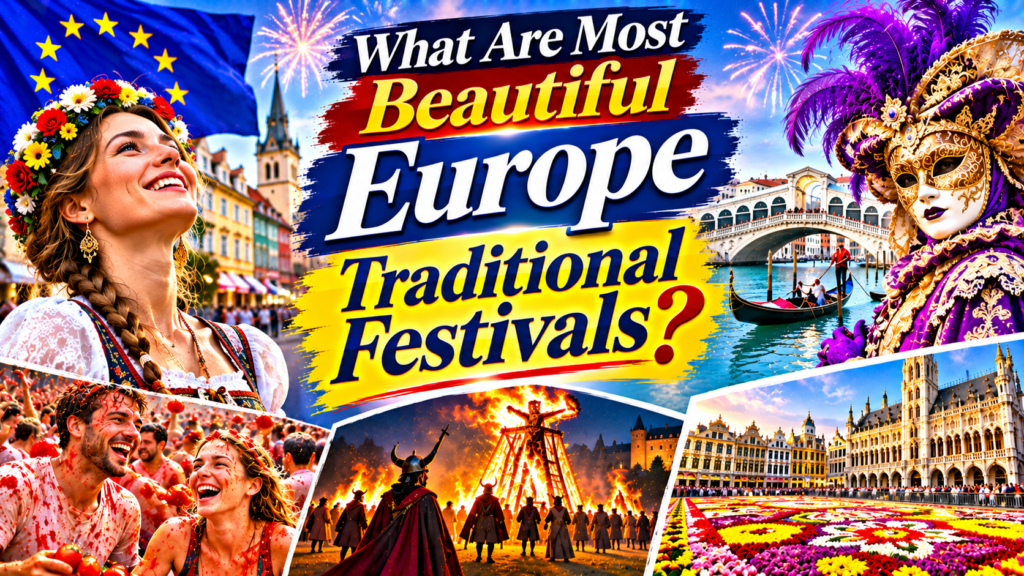
Several elements make Europe traditional festivals particularly fascinating:
- Historical heritage: Many festivals preserve customs and rituals passed down through generations.
- Traditional costumes: Colorful clothing, handmade masks and regional dresses create unforgettable visual experiences.
- Music and dance: Folk music, traditional instruments and cultural performances bring communities together.
- Local food: Festivals offer opportunities to experience regional dishes, traditional recipes and seasonal specialties.
- Religious and cultural significance: Many celebrations are connected with important religious occasions and historical traditions.
- Community participation: Residents and visitors come together to celebrate shared cultural values.
These traditions make European festivals an excellent way to understand the continent beyond its famous landmarks and tourist attractions.
2. Why Is Carnival of Venice One of the Most Beautiful Festivals in Europe?
The Carnival of Venice is undoubtedly one of Europe’s most visually spectacular traditional celebrations. Famous for its elaborate masks, elegant costumes and mysterious atmosphere, this festival transforms the historic streets and canals of Venice into a magnificent stage.
The carnival has roots dating back to the medieval period, with the celebration becoming particularly prominent during the Venetian Republic. Masks traditionally allowed people from different social backgrounds to participate in public festivities with greater anonymity.
Today, the festival attracts visitors who come to admire its extraordinary costumes, attend masquerade events and experience the historic atmosphere of Venice.
What makes the Carnival of Venice special?
- Elaborate handmade Venetian masks.
- Beautiful historical costumes inspired by the Renaissance and Baroque periods.
- Traditional masquerade balls and costume competitions.
- Street performances and artistic entertainment.
- Spectacular celebrations around St. Mark’s Square.
The combination of architecture, history, costumes and artistic creativity makes the Carnival of Venice one of the most beautiful cultural experiences in Europe.
3. What Makes Spain’s La Tomatina Festival So Unique?
The La Tomatina is one of the world’s most unusual and entertaining traditional festivals. Held in the town of Buñol in Spain, this famous celebration is known for its massive tomato-throwing event.
During the festival, participants gather in the streets and throw tomatoes at one another in a lively atmosphere filled with excitement and laughter.
La Tomatina began in 1945, reportedly following a spontaneous street incident involving young people. Over time, the activity developed into an organized annual celebration.
Although the festival is relatively modern compared with some European traditions, it has become an important part of Buñol’s cultural identity.
Why is La Tomatina worth experiencing?
- It offers a unique and playful cultural experience.
- Thousands of participants join the famous tomato fight.
- The celebration brings international visitors to a small Spanish town.
- Music, street entertainment and local festivities create a lively atmosphere.
- It highlights Spain’s enthusiastic approach to public celebrations.
La Tomatina demonstrates that traditional festivals do not always need elaborate ceremonies or historical costumes to become memorable.
4. Why Is Oktoberfest One of Germany’s Most Famous Traditional Festivals?
The Oktoberfest is one of Europe’s largest and most internationally recognized folk celebrations. Held annually in Munich, Bavaria, it celebrates Bavarian culture through traditional clothing, music, food, entertainment and regional customs.
Oktoberfest originated in 1810 when celebrations were organized to mark the marriage of Crown Prince Ludwig of Bavaria and Princess Therese of Saxony-Hildburghausen.
Over the years, the event developed into a major cultural festival attracting millions of visitors.
Although beer tents are internationally famous, Oktoberfest offers much more than beverages. Visitors can enjoy traditional Bavarian costumes, brass bands, amusement rides, parades and regional food.
Major attractions include:
- Traditional Bavarian clothing, including dirndls and lederhosen.
- Colorful opening ceremonies and folk parades.
- Traditional Bavarian music and dancing.
- Regional dishes such as pretzels, sausages and roasted chicken.
- Historic carousels and amusement attractions.
Oktoberfest is a wonderful example of how regional traditions can become internationally celebrated cultural events.
5. What Is the Beauty of the Netherlands’ King’s Day Festival?
King’s Day is one of the Netherlands’ most colorful national celebrations. Observed on April 27, the festival marks the birthday of King Willem-Alexander.
The entire country participates in the celebration, with Amsterdam becoming one of the most popular destinations for visitors.
Orange is the dominant color because of its association with the Dutch royal House of Orange-Nassau. Streets, canals, buildings and public spaces become filled with orange decorations.
One of the most interesting traditions is the vrijmarkt, or free market, where people sell second-hand goods, handmade products and various household items.
What can visitors experience during King’s Day?
- Orange-themed street celebrations.
- Outdoor concerts and live music.
- Traditional flea markets and street trading.
- Canal parties and boat celebrations.
- Family-friendly games and cultural activities.
King’s Day reflects Dutch national identity, community participation and the country’s lively celebration culture.
6. Why Is Sweden’s Midsummer Festival So Beautiful?
The Midsummer Festival is one of Scandinavia’s most beautiful seasonal celebrations. It welcomes summer and celebrates nature, sunlight and community traditions.
In Sweden, Midsummer is traditionally celebrated around the summer solstice, usually on a Friday between June 19 and June 25.
The celebration is particularly meaningful because northern European countries experience very long daylight hours during summer.
One of the most recognizable traditions is the maypole, decorated with flowers and greenery. People gather around it to sing traditional songs and perform folk dances.
Popular Midsummer traditions include:
- Wearing flower crowns made from fresh seasonal flowers.
- Decorating and dancing around the maypole.
- Enjoying traditional Swedish dishes.
- Gathering with family and friends outdoors.
- Celebrating the arrival of summer in the countryside.
The combination of natural beauty, traditional clothing, folk music and joyful community gatherings makes Swedish Midsummer an unforgettable European festival.
7. What Makes France’s Nice Carnival a Spectacular Celebration?
The Nice Carnival is one of the most famous winter celebrations in Europe. Held in the French Riviera city of Nice, the carnival is known for its impressive floats, artistic decorations, colorful costumes and spectacular street performances.
The festival has a long history, with references to carnival celebrations in Nice dating back to the late 13th century.
One of its most beautiful attractions is the Battle of Flowers, during which decorated floats covered with fresh flowers travel through the streets. Performers distribute flowers to spectators, creating a wonderful display of color and creativity.
What makes Nice Carnival special?
- Giant artistic floats and themed parades.
- Beautiful flower-covered decorations.
- Elaborate costumes and street performances.
- Music, dancing and nighttime celebrations.
- A spectacular Mediterranean festival atmosphere.
Nice Carnival combines artistic creativity with traditional carnival culture, making it one of France’s most attractive annual events.
8. Why Is Switzerland’s Basel Fasnacht Festival So Fascinating?
The Basel Fasnacht is one of Switzerland’s most distinctive cultural celebrations. Known for its artistic lanterns, traditional costumes, marching bands and satirical performances, the festival offers a unique experience of Swiss heritage.
Basel Fasnacht usually begins on the Monday after Ash Wednesday and continues for 72 hours.
One of its most impressive moments is the Morgestraich, which begins at 4 a.m. on the first day. The city switches off its streetlights, allowing beautifully illuminated lanterns to create a magical atmosphere.
Participants wear elaborate costumes and masks while playing traditional drums and piccolo flutes.
Important festival highlights include:
- The famous Morgestraich opening ceremony.
- Beautifully decorated lanterns.
- Traditional drumming and piccolo performances.
- Elaborate costumes and masks.
- Satirical artistic displays commenting on social and political issues.
Basel Fasnacht is particularly special because it combines entertainment, craftsmanship, music and social commentary.
9. What Is Special About Portugal’s Festa de São João?
The Festa de São João is one of Portugal’s most exciting traditional celebrations. Held annually on the night of June 23, the festival transforms Porto into a lively city filled with music, dancing, fireworks and street parties.
The celebration honors Saint John the Baptist and combines Christian traditions with popular local customs.
One of the most unusual features is the tradition of gently tapping other people’s heads with plastic toy hammers. Participants also use garlic flowers and enjoy grilled sardines, traditional bread and local specialties.
At midnight, a spectacular fireworks display illuminates the Douro River.
Festival highlights include:
- Colorful street decorations and music.
- Traditional grilled sardines and local food.
- Fireworks over the Douro River.
- Dancing and celebrations throughout the night.
- The traditional use of small plastic hammers.
Festa de São João is a wonderful representation of Portuguese hospitality, community spirit and cultural heritage.
10. Why Is Ireland’s St. Patrick’s Festival So Popular?
The St. Patrick’s Festival is one of Europe’s most recognizable cultural celebrations. Observed on March 17, St. Patrick’s Day honors Ireland’s patron saint and celebrates Irish heritage.
Although the occasion has religious origins, it has developed into a major cultural event celebrated in Ireland and by Irish communities worldwide.
Dublin hosts some of the most impressive celebrations, including colorful parades, traditional music performances, dance shows and cultural activities.
Green decorations, shamrocks and Irish flags are common features throughout the celebrations.
Why is the festival special?
- Spectacular public parades.
- Traditional Irish music and dancing.
- Cultural performances and storytelling.
- Celebrations of Irish history and identity.
- Community events attracting international visitors.
St. Patrick’s Festival demonstrates how a traditional religious occasion can become a worldwide celebration of national culture.
11. What Makes Italy’s Siena Palio One of Europe’s Most Historic Festivals?
The Palio di Siena is one of Italy’s most fascinating traditional events. Held in the historic city of Siena, this famous horse race represents centuries of local history, neighborhood rivalry and civic pride.
The event takes place in Piazza del Campo, a beautiful medieval square transformed into a horse-racing arena.
Two main races are traditionally held each year, on July 2 and August 16. Representatives of Siena’s historic districts, known as contrade, compete in the event.
The celebrations include medieval costumes, traditional flag displays, ceremonial processions and neighborhood festivities.
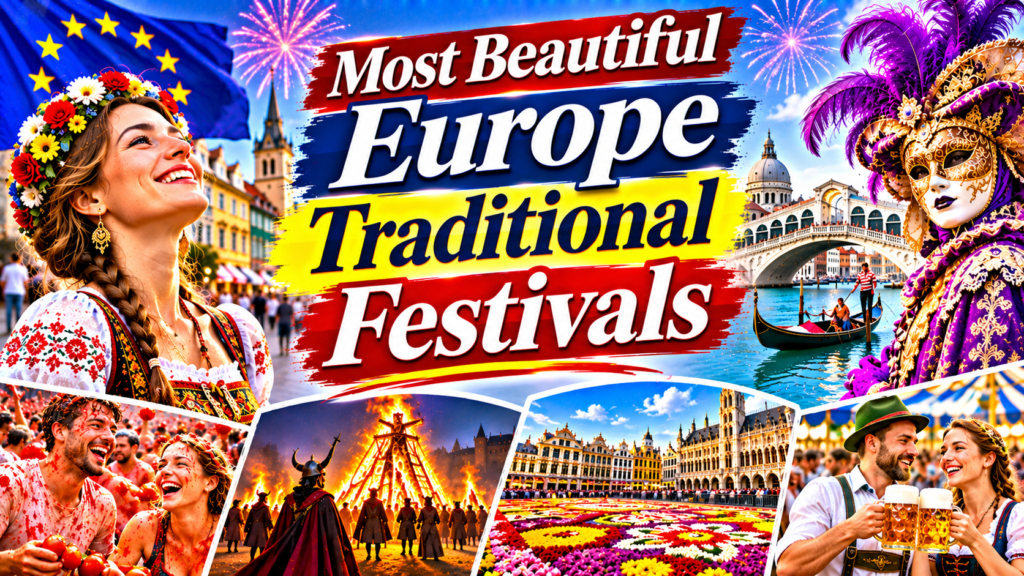
What makes the Siena Palio unforgettable?
- A historic horse race in a medieval city square.
- Traditional costumes and colorful district flags.
- Centuries-old neighborhood rivalries.
- Ceremonial parades and religious traditions.
- A strong connection with Siena’s local identity.
The Palio is more than a sporting competition. It is an important expression of the city’s history and community spirit.
12. Why Is Belgium’s Carnival of Binche a UNESCO-Recognized Tradition?
The Carnival of Binche is one of Belgium’s most remarkable cultural celebrations. It is particularly famous for the Gilles, traditional performers who wear distinctive costumes, wax masks and large feathered hats.
The carnival takes place in the days leading up to Shrove Tuesday and has roots in historical local customs.
The Gilles perform traditional dances, march through the streets and participate in ceremonial activities. Their colorful costumes and unique appearance make the celebration visually unforgettable.
UNESCO recognizes the carnival as an important example of intangible cultural heritage.
Major attractions include:
- Traditional Gilles costumes.
- Unique wax masks and feathered hats.
- Folk music and rhythmic performances.
- Street parades and ceremonial dances.
- Long-standing community traditions.
The Carnival of Binche demonstrates the importance of preserving traditional cultural practices for future generations.
13. What Is the Beauty of Austria’s Krampusnacht Festival?
The Krampusnacht is one of Europe’s most unusual winter traditions. Celebrated in parts of Austria and other Alpine regions, the event takes place around December 5, the eve of St. Nicholas Day.
According to Alpine folklore, Krampus is a horned figure who accompanies Saint Nicholas. While Saint Nicholas rewards well-behaved children, Krampus traditionally represents a frightening character associated with misbehavior.
During Krampusnacht, participants wear elaborate wooden masks, animal skins, horns and heavy bells. They parade through streets and villages, creating a dramatic atmosphere.
Why is Krampusnacht fascinating?
- Traditional handcrafted wooden masks.
- Elaborate Alpine folklore costumes.
- Dramatic nighttime parades.
- Historical winter customs.
- Unique regional storytelling traditions.
The festival offers visitors a glimpse into the mysterious side of European winter folklore.
14. Why Is Finland’s Juhannus Festival Important?
Juhannus is Finland’s traditional Midsummer celebration, marking the arrival of summer and the longest days of the year.
The festival is usually celebrated around the summer solstice, often with bonfires, lakeside gatherings, traditional food and outdoor activities.
Many Finnish families travel to countryside cottages to enjoy nature, relax beside lakes and spend time together.
Bonfires are among the most recognizable elements of the celebration. They are traditionally associated with summer festivities and community gatherings.
Popular Juhannus activities include:
- Lighting large Midsummer bonfires.
- Spending time in lakeside cottages.
- Enjoying traditional Finnish food.
- Visiting saunas and swimming in lakes.
- Celebrating the long summer daylight.
Juhannus represents Finland’s close relationship with nature and its seasonal traditions.
15. What Makes Croatia’s Dubrovnik Summer Festival Special?
The Dubrovnik Summer Festival is one of the most beautiful cultural celebrations in southeastern Europe.
Established in 1950, the festival brings theatre, classical music, dance and artistic performances to the historic streets and buildings of Dubrovnik.
The city’s medieval architecture provides a remarkable backdrop for outdoor performances. Historic squares, fortresses and public spaces become stages for artists from Croatia and other countries.
Festival highlights include:
- Open-air theatrical performances.
- Classical music concerts.
- Traditional and contemporary dance.
- Artistic events in historic locations.
- International cultural participation.
The combination of artistic excellence and Dubrovnik’s architectural beauty makes this festival especially memorable.
16. Which European Festivals Are Best for Experiencing Traditional Music and Dance?
Europe has an extraordinary variety of traditional music and dance festivals. These celebrations preserve regional musical styles, folk instruments and traditional performances that have been passed down through generations.
Some particularly interesting examples include:
- Celtic Connections: Celebrates Celtic music and cultural traditions.
- Lorient Interceltic Festival: Brings together music, dance and traditions from Celtic communities.
- National Folk Festival: Celebrates Bulgarian folk music, dancing and traditional costumes.
- Sziget Festival: Although primarily a modern music festival rather than a traditional folk celebration, it showcases Europe’s contemporary cultural diversity.
These events help preserve musical heritage while introducing traditional performances to new generations.
17. When Is the Best Time to Experience Traditional Festivals in Europe?
The best time to experience European traditional festivals depends on the type of celebration you want to enjoy. Different seasons offer different cultural experiences, from winter carnivals to summer solstice celebrations.
Here is a general seasonal guide:
| Season | Popular festivals | Country |
|---|---|---|
| Winter | Carnival of Venice | Italy |
| Winter | Basel Fasnacht | Switzerland |
| Spring | St. Patrick’s Festival | Ireland |
| Spring | Nice Carnival | France |
| Summer | Midsummer Festival | Sweden |
| Summer | Juhannus | Finland |
| Summer | Palio di Siena | Italy |
| Summer | Festa de São João | Portugal |
| Autumn | Oktoberfest | Germany |
| Autumn | La Tomatina | Spain |
Festival dates can change from year to year, so travelers should check official event announcements before planning their trips.
18. How Can Travelers Enjoy Traditional Festivals in Europe Responsibly?
Traditional festivals provide wonderful opportunities to explore local culture, but visitors should respect the customs and communities that make these celebrations special.
A little preparation can help travelers enjoy the experience while supporting local traditions.
Here are some useful travel tips:
- Research festival traditions: Understand the historical and cultural significance of the event before attending.
- Book accommodation early: Popular festivals can attract large crowds, making hotels and transport more expensive.
- Respect local customs: Follow community guidelines, especially during religious ceremonies and traditional performances.
- Try regional food: Explore local dishes and traditional specialties associated with the celebration.
- Support local businesses: Purchase handmade souvenirs and products from local artisans.
- Follow safety instructions: Pay attention to crowd-management rules and official event announcements.
- Protect the environment: Avoid littering and respect historic buildings and natural surroundings.
- Ask before taking photographs: Be considerate when photographing performers and local residents.
Responsible tourism helps preserve the cultural character of traditional festivals and ensures that future generations can enjoy them.
19. Why Should Everyone Experience at Least One Traditional Festival in Europe?
Experiencing a traditional European festival can be one of the most rewarding ways to understand the continent’s cultural diversity. These events bring history, community identity, music, food and artistic expression together in a way that ordinary sightseeing cannot always provide.
A visit to the Carnival of Venice reveals the artistic elegance of Italian history, while Sweden’s Midsummer celebrations offer a beautiful connection with nature. Similarly, the Palio of Siena introduces visitors to historic community rivalries, and Portugal’s Festa de São João showcases the country’s lively social traditions.
Europe traditional festivals also encourage cultural exchange. Visitors meet people from different backgrounds, learn about local customs and discover how communities preserve their identities in a rapidly changing world.
Whether you are interested in history, photography, architecture, music, food or cultural tourism, Europe’s festivals provide countless opportunities for meaningful experiences.
20. What Is the Future of Europe Traditional Festivals?
Traditional festivals continue to play an important role in European cultural life. However, changing lifestyles, tourism pressures, environmental concerns and digital technology are influencing how these celebrations are organized.
Many communities are finding new ways to preserve their traditions while making festivals accessible to younger generations.
Some important developments include:
- Cultural preservation: Local organizations are documenting traditional music, costumes, dances and ceremonies.
- Sustainable celebrations: Festival organizers are introducing waste reduction, recycling and environmentally responsible practices.
- Digital promotion: Social media and online platforms help traditional festivals reach international audiences.
- Youth participation: Workshops and cultural education encourage younger people to learn traditional crafts and performances.
- Responsible tourism: Communities are increasingly balancing visitor experiences with the needs of local residents.
The future of Europe traditional festivals will depend on maintaining a balance between cultural preservation and modern development.
Conclusion: Which Are the Most Beautiful Traditional Festivals in Europe?
Europe traditional festivals offer a wonderful journey through the continent’s history, culture and community traditions. From the elegant masks of Venice and the colorful celebrations of Nice to the joyful Midsummer traditions of Sweden and Finland, every festival tells a unique story.
The Carnival of Venice stands out for its artistic beauty, Oktoberfest celebrates Bavarian heritage, the Siena Palio preserves centuries-old civic traditions, and Festa de São João brings Portuguese communities together through music, food and fireworks. Meanwhile, Basel Fasnacht and the Carnival of Binche demonstrate the extraordinary richness of European folklore.
There is no single answer to which European festival is the most beautiful because each celebration offers something different. Some are visually spectacular, others are deeply connected to history, and many provide unforgettable opportunities to experience local life.
Ultimately, traditional festivals are among Europe’s greatest cultural treasures. They preserve the past, strengthen communities and create shared memories that bring people together across generations.
For travelers seeking authentic cultural experiences, exploring Europe’s traditional festivals is an excellent way to discover the continent’s spirit, diversity and timeless charm.
Read More – What Are the Biggest Challenges Facing European Democracy?