Ultimate Guide To Know How to Build the Perfect Europe Winter Wardrobe: Essential Clothing, Styling Tips and Fashion Trends
How can you build the perfect Europe winter wardrobe that combines warmth, comfort, practicality, and timeless style? Winter in Europe brings beautiful snow-covered streets, festive Christmas markets, chilly city walks, and picturesque mountain destinations. However, travelling or living through the European winter also means preparing for changing temperatures, cold winds, rain, snow, and occasional freezing conditions. Whether you are planning a winter holiday in Paris, exploring the streets of London, enjoying the Christmas markets in Germany, or visiting the snowy landscapes of Switzerland, having the right winter wardrobe can make a significant difference to your experience.
Building a European winter wardrobe is not simply about purchasing expensive coats or following the latest fashion trends. It is about choosing versatile clothing that can be layered, mixed, and matched for different occasions and weather conditions. From cosy knitwear and insulated jackets to comfortable boots, thermal clothing, scarves, and stylish accessories, every item should serve a purpose.
So, what should you include in your winter wardrobe for Europe? How can you look fashionable without compromising on comfort? And which essential pieces can help you create multiple outfits with fewer clothes? This guide explores everything you need to know about building the perfect Europe winter wardrobe.
1. Why Is Building the Right Europe Winter Wardrobe Important?
European winters can vary significantly depending on the country, region, and month. While southern European destinations such as Spain, Portugal, and parts of Italy may experience relatively mild winters, northern and central European countries can experience freezing temperatures, snowfall, and strong winds.
For example, winter in Scandinavia can be considerably colder than winter in southern France. Similarly, travelling between cities with different climates may require clothing that adapts to changing weather conditions.
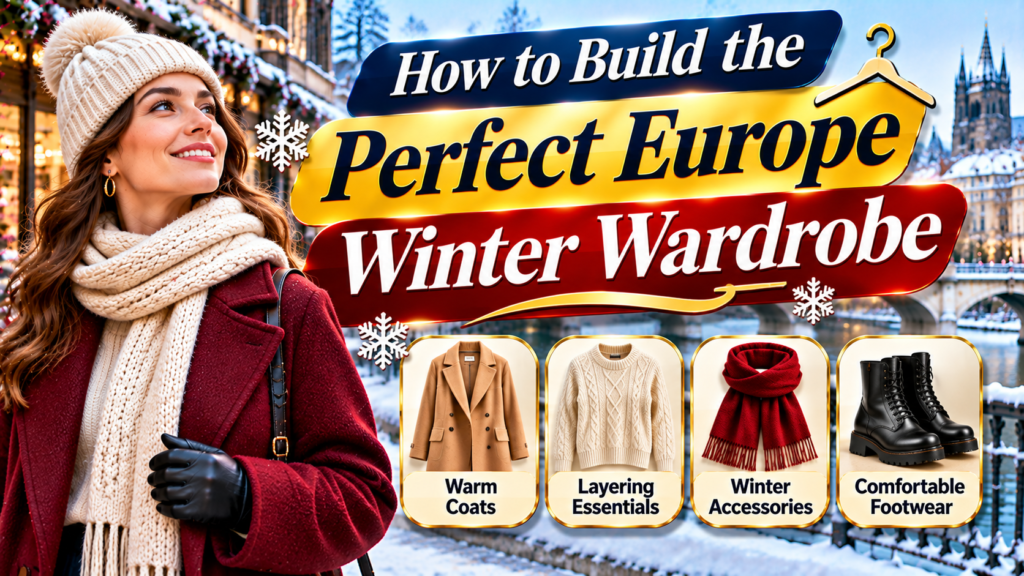
A well-planned winter wardrobe helps you:
- Stay warm and comfortable throughout the day.
- Protect yourself from cold winds, rain, and snow.
- Create stylish outfits suitable for different occasions.
- Avoid carrying unnecessary clothing while travelling.
- Save money by investing in versatile wardrobe essentials.
- Enjoy sightseeing and outdoor activities without worrying about the weather.
The best approach is to prioritise quality, layering, functionality, and timeless fashion rather than buying too many seasonal outfits.
2. What Are the Essential Clothing Items for a European Winter?
A perfect European winter wardrobe begins with a collection of essential clothing pieces that provide warmth and flexibility. Instead of purchasing separate outfits for every day, choose clothing that works together and can be styled in different ways.
Here are the most important wardrobe essentials.
Winter Coats
A winter coat is one of the most important investments for a European winter wardrobe. It provides protection against cold temperatures while becoming the central element of your outfit.
Some popular winter coat styles include:
- Wool coats: Ideal for city outings, office wear, and sophisticated everyday outfits.
- Puffer jackets: Excellent for colder destinations because they provide insulation and warmth.
- Longline coats: Offer additional coverage and create an elegant silhouette.
- Trench coats: Suitable for milder winter days, particularly when layered with warm sweaters.
- Waterproof winter jackets: Practical for rainy, snowy, and windy weather.
Neutral shades such as black, camel, grey, navy, and beige are particularly versatile because they coordinate with most winter outfits.
If you are travelling to colder European destinations, consider an insulated coat with weather-resistant fabric.
Thermal Wear and Base Layers
Thermal clothing is an essential part of winter dressing, particularly when temperatures drop below freezing.
Base layers sit directly against your skin and help retain body warmth without adding unnecessary bulk.
Consider including:
- Thermal tops with long sleeves.
- Thermal leggings.
- Lightweight merino wool base layers.
- Heat-retaining innerwear.
- Moisture-wicking clothing for outdoor activities.
Merino wool is a popular choice because it offers warmth, breathability, and comfort. Lightweight thermal clothing also makes layering easier.
Sweaters and Knitwear
Can you imagine a European winter wardrobe without cosy sweaters? Knitwear is one of the most versatile clothing categories for cold-weather fashion.
Choose different styles to create outfits for casual outings, travel days, and evening occasions.
Popular options include:
- Wool sweaters.
- Cashmere jumpers.
- Turtleneck sweaters.
- Cable-knit pullovers.
- Oversized knitwear.
- Cardigans.
- Half-zip sweaters.
A combination of neutral and seasonal colours can make your wardrobe more interesting. Cream, burgundy, chocolate brown, forest green, charcoal, and navy are excellent winter choices.
Winter Trousers and Jeans
Comfortable trousers are essential for everyday European winter outfits. Choose fabrics that offer sufficient warmth while allowing easy movement.
Some useful options include:
- Straight-leg jeans.
- Dark denim trousers.
- Wool trousers.
- Corduroy pants.
- Fleece-lined leggings.
- Tailored winter trousers.
- Insulated outdoor pants.
Dark denim is particularly versatile because it works well with sweaters, coats, boots, and casual jackets.
For colder destinations, thermal leggings underneath trousers can provide additional warmth.
3. Which Winter Footwear Should You Choose for Europe?
Choosing the right footwear is just as important as selecting winter clothing. European cities are often best explored on foot, which means you may spend several hours walking on pavements, cobblestone streets, and occasionally snowy or wet surfaces.
The wrong shoes can quickly make a winter trip uncomfortable.
Essential Winter Footwear
Consider including the following footwear options:
1. Waterproof ankle boots: These are excellent for everyday city outfits and can be paired with jeans, trousers, skirts, and dresses.
2. Leather boots: Leather boots offer durability and timeless style. Choose weather-treated leather for better protection.
3. Knee-high boots: These create elegant winter outfits and work particularly well with dresses, skirts, and fitted trousers.
4. Insulated snow boots: Essential for destinations experiencing heavy snowfall or freezing temperatures.
5. Comfortable walking sneakers: Suitable for mild winter days, airport travel, and casual sightseeing, provided they offer adequate grip and weather protection.
What Features Should Winter Shoes Have?
Before purchasing winter footwear, check for:
- Water-resistant or waterproof materials.
- Comfortable cushioning.
- Non-slip rubber soles.
- Good ankle support.
- Insulated lining for colder climates.
- Enough space for thicker winter socks.
Avoid wearing brand-new boots for the first time during a long sightseeing day. Breaking them in beforehand can help prevent blisters and discomfort.
4. How Important Is Layering for European Winter Fashion?
Layering is one of the most effective ways to stay warm and stylish during winter in Europe. Since indoor heating can make buildings, restaurants, museums, and public transport considerably warmer than outdoor spaces, wearing several removable layers offers greater flexibility.
A practical winter layering system includes three main levels.
Base Layer
The base layer sits closest to your body and helps retain warmth.
Examples include:
- Thermal tops.
- Merino wool shirts.
- Lightweight long-sleeved tops.
- Thermal leggings.
Middle Layer
The middle layer provides insulation and traps warm air.
Suitable options include:
- Wool sweaters.
- Fleece jackets.
- Cashmere jumpers.
- Knitted cardigans.
- Insulated vests.
Outer Layer
The outer layer protects you against wind, rain, and snow.
Examples include:
- Wool coats.
- Down jackets.
- Waterproof parkas.
- Insulated winter jackets.
- Weather-resistant coats.
A simple winter layering combination:
- Thermal long-sleeved top.
- Wool or cashmere sweater.
- Insulated winter coat.
- Comfortable trousers.
- Thermal socks.
- Waterproof boots.
- Wool scarf and gloves.
This combination can be adjusted depending on the weather and your destination.
5. Which Winter Accessories Should You Include in Your Wardrobe?
Winter accessories are not just decorative additions. They provide essential protection against cold temperatures and help transform simple outfits into fashionable winter looks.
A few carefully selected accessories can make a basic outfit look completely different.
Scarves
A warm scarf is one of the most useful winter accessories. Wool, cashmere, and soft knitted scarves provide insulation while adding texture and colour to your outfit.
Consider owning:
- A neutral wool scarf.
- A chunky knitted scarf.
- A cashmere scarf for elegant outfits.
- A colourful scarf to brighten neutral clothing.
Gloves
Cold hands can make sightseeing uncomfortable, especially in northern European destinations.
Choose insulated gloves, wool gloves, or touchscreen-compatible gloves that allow you to use your smartphone without removing them.
Water-resistant gloves are especially useful during snowy weather.
Winter Hats and Beanies
A good winter hat helps protect your head and ears from cold winds.
Popular options include:
- Wool beanies.
- Knitted hats.
- Cashmere hats.
- Berets.
- Ear warmers.
A neutral beanie can complement almost any casual winter outfit.
Socks
Warm socks are particularly important when wearing boots for extended periods.
Choose wool or merino wool socks for better insulation and comfort. Thermal socks are useful for colder destinations, while moisture-wicking options can help keep your feet comfortable during long walks.
Other Useful Accessories
You can also include:
- Ear muffs.
- Warm tights.
- Leather belts.
- Sunglasses.
- Crossbody bags.
- Compact umbrellas.
- Weather-resistant handbags.
The key is to choose accessories that are both practical and visually coordinated with your clothing.
6. What Colours Work Best for a European Winter Wardrobe?
Colour selection plays an important role in creating a versatile winter wardrobe. European winter fashion often features neutral tones, earthy shades, rich colours, and understated combinations.
Choosing a coordinated colour palette makes it easier to mix and match your clothing.
Best Neutral Winter Colours
- Black.
- White.
- Cream.
- Beige.
- Camel.
- Grey.
- Navy.
- Chocolate brown.
These colours are timeless and suitable for casual, professional, and formal outfits.
Popular Seasonal Colours
If you want to introduce more personality into your winter wardrobe, consider:
- Burgundy.
- Forest green.
- Deep red.
- Plum.
- Olive green.
- Rust.
- Mustard yellow.
How Can You Combine Winter Colours?
Here are some stylish combinations:
| Colour Combination | Styling Idea |
|---|---|
| Camel and cream | Elegant everyday outfit |
| Black and grey | Minimalist city look |
| Burgundy and beige | Sophisticated winter styling |
| Navy and white | Classic casual outfit |
| Chocolate brown and cream | Warm, understated appearance |
| Forest green and black | Refined seasonal look |
A useful strategy is to build your wardrobe around three or four main neutral colours and introduce seasonal shades through accessories, sweaters, and scarves.
7. How Can You Create Stylish European Winter Outfits?
Creating fashionable winter outfits does not require an oversized wardrobe. A few essential pieces can produce numerous combinations when styled creatively.
Here are some outfit ideas suitable for different European winter occasions.
Casual City Walking Outfit
For sightseeing and exploring European cities, comfort should be your priority.
Try combining:
- Straight-leg jeans.
- A warm knitted sweater.
- A padded winter jacket.
- Waterproof ankle boots.
- A knitted beanie.
- A crossbody bag.
This outfit is practical for visiting attractions, shopping streets, and outdoor cafés.
Elegant Parisian-Inspired Winter Outfit
For a sophisticated city look, choose classic clothing with clean silhouettes.
Try wearing:
- A long camel or black wool coat.
- A black turtleneck.
- Tailored trousers.
- Leather ankle boots.
- A wool scarf.
- A structured handbag.
Keep the colour palette simple for an effortlessly elegant appearance.
Christmas Market Outfit
European Christmas markets are popular winter attractions, but spending several hours outdoors requires warm clothing.
An ideal combination includes:
- Thermal base layers.
- A thick wool sweater.
- An insulated puffer jacket.
- Warm jeans or trousers.
- Insulated boots.
- Wool socks.
- Gloves and a chunky scarf.
Choose clothing that allows you to move comfortably while keeping warm.
Winter Dinner Outfit
For restaurants, evening events, and special occasions, you can combine comfort with sophistication.
Consider wearing:
- A knitted midi dress.
- Thick thermal tights.
- Knee-high boots.
- A tailored wool coat.
- A stylish scarf.
- Minimal jewellery.
Alternatively, a tailored trouser outfit with a fitted sweater and long coat creates an equally elegant appearance.
Snowy Destination Outfit
If you are visiting Switzerland, Austria, Norway, or other snowy destinations, functionality becomes especially important.
Choose:
- Thermal base layers.
- Insulated trousers.
- A waterproof winter jacket.
- Snow boots with good traction.
- Thick wool socks.
- Waterproof gloves.
- A warm beanie.
For outdoor activities, make sure your clothing is specifically designed for the expected temperature and conditions.
8. How Can You Build a Capsule Winter Wardrobe for Europe?
A capsule wardrobe is a collection of carefully selected clothing pieces that work together to create multiple outfits. It is particularly useful for European winter travel because it reduces packing while maintaining outfit variety.
Instead of packing a different outfit for every day, focus on versatile essentials.
Suggested Europe Winter Capsule Wardrobe
| Clothing Category | Suggested Quantity |
|---|---|
| Winter coats | 2 |
| Thermal tops | 3 |
| Thermal leggings | 2 |
| Sweaters | 3–4 |
| Long-sleeved tops | 3 |
| Jeans and trousers | 3 |
| Winter dresses | 1–2 |
| Comfortable boots | 1–2 pairs |
| Walking shoes | 1 pair |
| Scarves | 2 |
| Gloves | 1–2 pairs |
| Winter hats | 1–2 |
| Warm socks | 4–5 pairs |
These quantities are suggestions rather than strict requirements. Your packing list should depend on the length of your trip, laundry access, planned activities, and destination temperatures.
What Makes a Good Capsule Wardrobe?
A successful capsule wardrobe should follow a few basic principles:
- Choose clothing in complementary colours.
- Prioritise comfortable and durable fabrics.
- Select items that can be layered.
- Avoid packing too many similar pieces.
- Include clothing for both casual and formal occasions.
- Invest in versatile footwear.
- Choose accessories that work with multiple outfits.
For example, one black sweater can be styled with jeans, wool trousers, or a winter skirt. Similarly, a camel coat can complement several different colour combinations.
9. Which Fabrics Are Best for European Winter Clothing?
Fabric selection can determine how comfortable and warm your winter wardrobe feels. Some materials provide better insulation, while others offer improved breathability, moisture management, and weather resistance.
Here are some of the most useful winter fabrics.
Wool
Wool is one of the most popular materials for winter clothing because it provides natural insulation. It is commonly used in sweaters, coats, scarves, and socks.
Merino Wool
Merino wool is soft, breathable, and suitable for base layers. It can help regulate temperature while managing moisture.
Cashmere
Cashmere is known for its softness, lightweight feel, and warmth. It is commonly used in premium sweaters, scarves, and cardigans.
Fleece
Fleece is lightweight and comfortable. It works particularly well as a middle layer under winter jackets.
Down and Synthetic Insulation
Down provides excellent warmth for its weight and is popular in puffer jackets. Synthetic insulation can be a useful alternative, particularly in damp conditions, depending on the garment’s construction.
Waterproof Materials
Waterproof fabrics are essential when visiting rainy or snowy destinations. Look for garments with appropriate weather protection and sealed seams where necessary.
Choosing the right fabric helps ensure that your clothing performs well in different European winter conditions.
10. How Should You Dress for Different European Winter Destinations?
Europe does not have one uniform winter climate. The ideal wardrobe depends on where you are travelling and what activities you plan to enjoy.
Northern Europe
Countries such as Norway, Sweden, Finland, and Denmark can experience extremely cold winter temperatures, particularly in northern regions.
Your wardrobe should include:
- Heavy insulated coats.
- Thermal base layers.
- Wool sweaters.
- Waterproof winter boots.
- Insulated gloves.
- Warm hats and scarves.
For Arctic destinations, specialised winter clothing may be necessary.
Central Europe
Germany, Austria, Switzerland, Poland, and the Czech Republic can experience cold temperatures, snowfall, and freezing conditions.
Useful essentials include:
- Wool coats or insulated jackets.
- Thermal innerwear.
- Warm trousers.
- Waterproof footwear.
- Wool accessories.
- Layered knitwear.
Western Europe
France, Belgium, the Netherlands, and the United Kingdom often experience chilly, rainy, and windy winter weather, although conditions vary.
Consider packing:
- Water-resistant coats.
- Wool sweaters.
- Comfortable ankle boots.
- Lightweight thermal clothing.
- Umbrellas.
- Scarves and gloves.
Southern Europe
Spain, Portugal, Greece, and southern Italy generally have milder winters than northern Europe, although mountainous and inland areas can be much colder.
Your wardrobe may include:
- Medium-weight coats.
- Lightweight knitwear.
- Long-sleeved tops.
- Jeans and tailored trousers.
- Comfortable walking shoes.
- A few warmer layers for evenings.
Checking the weather forecast before departure is always recommended.
11. What Fashion Mistakes Should You Avoid During a European Winter?
Even a stylish wardrobe can become impractical if you overlook basic winter dressing principles.
Here are some common mistakes to avoid.
1. Choosing Fashion Over Comfort
Beautiful shoes and fashionable coats may look appealing, but they should also provide sufficient warmth and comfort.
2. Ignoring Layering
Wearing one extremely thick garment may not provide the flexibility of multiple layers. Layering allows you to adapt when moving between outdoor and heated indoor environments.
3. Packing Too Many Clothes
Carrying too many unnecessary outfits makes travelling difficult. Choose versatile clothing that can be worn in different combinations.
4. Wearing Unsuitable Footwear
Thin-soled shoes and slippery footwear can become uncomfortable or unsafe on wet and icy streets.
5. Ignoring Weather Conditions
A light coat may be sufficient in southern Europe but unsuitable for a freezing winter destination.
6. Forgetting Accessories
Gloves, scarves, hats, and warm socks are small items that can make a significant difference to your comfort.
7. Choosing Poor-Quality Fabrics
Low-quality materials may not provide sufficient insulation or durability. Check fabric composition and garment construction before purchasing winter clothing.
12. How Can You Build a Budget-Friendly Europe Winter Wardrobe?
Building a fashionable winter wardrobe does not necessarily require spending a large amount of money. With thoughtful planning, you can create stylish outfits without purchasing expensive designer clothing.
Here are some practical ways to save money.
- Invest in essential outerwear: A good winter coat can be worn repeatedly across different seasons and occasions.
- Choose versatile basics: Neutral sweaters, trousers, and jackets are easier to combine.
- Shop seasonal sales: Winter clothing discounts can help you find quality items at lower prices.
- Explore second-hand fashion: Pre-owned wool coats, scarves, and leather boots can offer excellent value when properly inspected.
- Avoid unnecessary trends: Focus on timeless designs that remain fashionable for years.
- Compare fabric quality: Look beyond brand names and evaluate warmth, comfort, durability, and construction.
- Create outfits before shopping: Planning combinations helps prevent duplicate purchases.
A balanced wardrobe should focus on cost per wear rather than the initial price alone. A durable coat worn regularly may offer better value than several inexpensive alternatives.
13. What Should You Pack for a Europe Winter Trip?
Packing for a European winter holiday requires a balance between warmth, practicality, and luggage space.
Before travelling, create a checklist based on your destination, trip duration, and planned activities.
Europe Winter Packing Checklist
CLOTHING
- One or two winter coats.
- Three to four sweaters.
- Thermal tops and leggings.
- Long-sleeved shirts.
- Jeans and tailored trousers.
- One or two winter outfits for evenings.
- Warm sleepwear.
FOOTWEAR
- Comfortable waterproof boots.
- Walking shoes.
- Thermal or wool socks.
- Optional insulated snow boots.
ACCESSORIES
- Wool scarves.
- Warm gloves.
- Beanie or winter hat.
- Sunglasses.
- Compact umbrella.
- Crossbody bag.
TRAVEL ESSENTIALS
- Travel-size moisturiser.
- Lip balm.
- Hand cream.
- Reusable water bottle.
- Portable phone charger.
- Travel documents.
Remember that winter air can be dry, especially in heated indoor environments. Carrying moisturiser and lip balm can help keep your skin comfortable during your journey.
14. How Can You Make Your Europe Winter Wardrobe More Sustainable?
Sustainable fashion is becoming increasingly important as consumers look for clothing that offers quality, durability, and responsible production.
Building a sustainable winter wardrobe involves purchasing fewer but better-quality items and making thoughtful clothing choices.
Consider these practices:
- Choose durable fabrics such as wool and high-quality cotton.
- Purchase timeless designs rather than short-lived trends.
- Explore second-hand and vintage winter clothing.
- Repair damaged clothing instead of replacing it immediately.
- Follow proper washing and storage instructions.
- Buy versatile garments that can be worn for several seasons.
- Consider brands that provide transparent information about their materials and manufacturing practices.
A sustainable winter wardrobe is not about owning the most expensive clothing. It is about making thoughtful decisions and getting more use from every item.
15. What Are the Biggest Europe Winter Fashion Trends to Watch?
European winter fashion combines classic designs with contemporary styling. While trends change every season, certain fashion elements continue to remain popular.
Some winter fashion trends worth exploring include:
Oversized Coats: Relaxed silhouettes and longline coats create sophisticated winter outfits while allowing room for additional layers.
Minimalist Knitwear: Simple sweaters in neutral shades offer timeless styling options for everyday wear.
Chocolate Brown Fashion: Rich brown shades bring warmth and elegance to winter clothing combinations.
Statement Scarves: Oversized scarves add texture, colour, and visual interest to basic outfits.
Leather Boots: Classic leather footwear remains a versatile choice for winter city dressing.
Monochromatic Outfits: Wearing different shades of one colour creates a coordinated and polished appearance.
Layered Styling: Combining thermal tops, knitwear, coats, and accessories creates practical outfits with a fashionable finish.
Rather than following every trend, choose elements that suit your personal style, climate, and lifestyle.
16. How Can You Maintain Your Winter Wardrobe Throughout the Season?
Proper clothing care helps extend the life of winter essentials and keeps your wardrobe looking fresh.
Different fabrics require different cleaning and storage methods.
Here are some useful maintenance tips:
- Follow garment care labels before washing.
- Hand-wash or use appropriate wool-care settings for delicate knitwear.
- Store cashmere and wool clothing in clean, dry conditions.
- Use suitable garment hangers for structured coats.
- Dry wet footwear properly before storing it.
- Apply appropriate leather protection products to leather boots.
- Remove lint and fabric pills carefully.
- Store seasonal clothing in breathable garment bags.
Avoid placing damp winter clothing directly into wardrobes, as trapped moisture can damage fabrics and create unpleasant odours.
Regular maintenance helps you get more value from your winter wardrobe while reducing unnecessary replacement purchases.
Conclusion: How Can You Build the Perfect Europe Winter Wardrobe?
Building the perfect Europe winter wardrobe is about finding the right balance between fashion, comfort, warmth, and practicality. Whether you are planning to explore the romantic streets of Paris, visit London’s famous attractions, enjoy festive markets in Germany, or experience snowy mountain destinations in Switzerland, the right clothing can make your winter experience more enjoyable.
Start with essential pieces such as a quality winter coat, thermal base layers, versatile sweaters, comfortable trousers, and weather-appropriate footwear. Add practical accessories like scarves, gloves, wool socks, and winter hats to improve warmth and complete your outfits. Choose a coordinated colour palette so that individual clothing pieces can be mixed and matched easily.
Most importantly, remember that European winters differ from one destination to another. A wardrobe suitable for a mild winter in Portugal may not provide enough protection in Norway or Finland. Always consider local temperatures, wind, rain, and snowfall when planning your outfits.
You do not need an enormous collection of clothes to look fashionable during winter. A thoughtfully designed capsule wardrobe, quality fabrics, practical layering, and timeless styling choices can help you create countless winter outfits.
Ultimately, the perfect Europe winter wardrobe is one that keeps you comfortable, confident, and stylish while allowing you to enjoy everything the European winter season has to offer.
Read More – How Do European Healthcare Systems Work?