
Where Should You Go in 2026? Best European Destinations for Families
Europe is one of the most exciting places in the world for a family holiday. From fairy-tale castles and beautiful beaches to interactive museums, scenic mountain villages, and world-famous theme parks, the continent offers something for travellers of every age. Parents can explore historic cities and cultural landmarks, while children can enjoy outdoor adventures, playgrounds, wildlife experiences, and fun-filled attractions.
One of the biggest advantages of travelling around Europe is its diversity. Families can experience several cultures, cuisines, landscapes, and traditions within a single trip. Well-connected trains, family-friendly accommodation, and a wide range of travel experiences make it possible to plan holidays for different budgets and interests.
But which European destinations are best for families? The answer depends on the ages of your children, your travel budget, the time of year, and the experiences you want to enjoy. Some families prefer relaxing beach holidays, while others look for theme parks, historical adventures, or nature-based escapes.
In this guide to the best European destinations for families, discover where to go, what to do, and how to plan a memorable European family vacation in 2026.
1. Why Should Families Choose Paris, France?
Paris is one of the most popular European destinations for families because it combines iconic landmarks, beautiful parks, cultural attractions, and easy access to world-famous entertainment. Although the city is known for its art, architecture, and romantic atmosphere, it also offers plenty of experiences that children can enjoy.
The Eiffel Tower is an exciting attraction for visitors of all ages. Families can admire the city from above, take photographs, and enjoy a picnic in the nearby green spaces. A boat trip along the River Seine provides another way to see famous Parisian landmarks without spending the entire day walking.
One of the biggest attractions for families visiting Paris is Disneyland Paris, located outside the city. It offers themed rides, character experiences, entertainment, and activities for children and adults. Families can combine a few days at the theme park with sightseeing in central Paris.
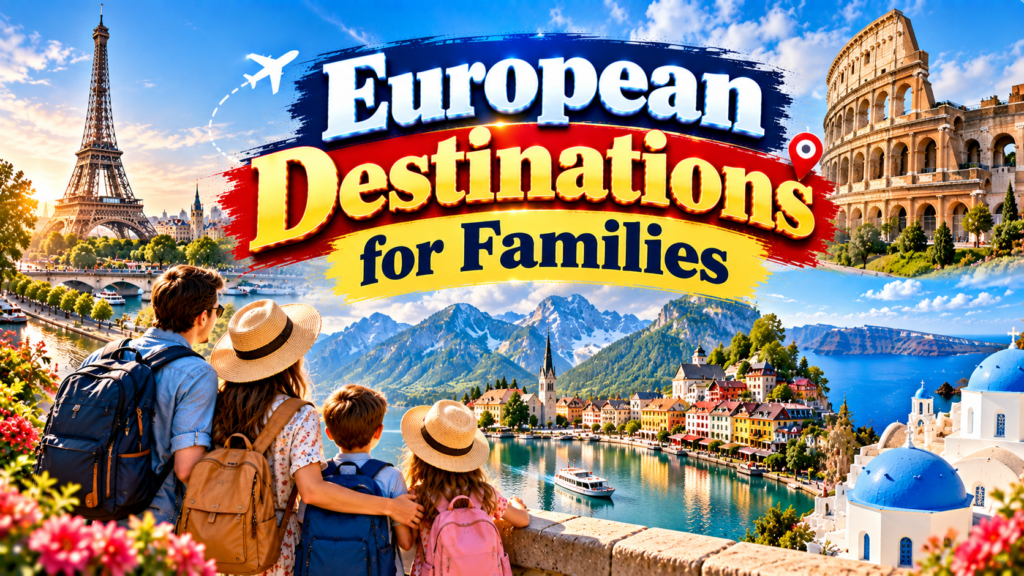
What are the best family activities in Paris?
- Visit the Eiffel Tower and enjoy panoramic city views.
- Take a sightseeing cruise along the River Seine.
- Explore the gardens of the Tuileries and Luxembourg Gardens.
- Discover interactive exhibits at family-friendly museums.
- Spend a day or more at Disneyland Paris.
Paris is especially suitable for families who want a combination of culture and entertainment. However, popular attractions can become crowded, so advance reservations and a flexible daily itinerary can make the visit easier.
2. Is Rome, Italy, a Good Destination for a Family Holiday?
Rome is an excellent choice for families interested in history, food, architecture, and outdoor exploration. The Italian capital allows visitors to turn historical learning into an exciting adventure, with ancient monuments, fascinating legends, lively public squares, and delicious local food.
The Colosseum is one of Rome’s most recognisable landmarks. Children can learn about ancient Roman life, gladiators, and the history of the Roman Empire. Nearby, the Roman Forum and Palatine Hill provide additional opportunities to explore the remains of an ancient civilisation.
Families can also enjoy Rome at a slower pace by visiting public squares, eating gelato, and strolling through picturesque streets. The Trevi Fountain and Piazza Navona are popular stops for photographs and sightseeing.
What can families do in Rome?
- Explore the Colosseum and learn about ancient Roman history.
- Visit the Roman Forum and other archaeological sites.
- Toss a coin into the Trevi Fountain.
- Enjoy authentic Italian pizza, pasta, and gelato.
- Relax in Villa Borghese gardens and explore its green spaces.
Rome is best for families who enjoy cultural experiences and walking tours. During summer, temperatures can be high, so plan outdoor sightseeing for the morning or evening and allow time for rest and hydration.
3. Why Is Barcelona, Spain, Ideal for Families?
Barcelona is a fantastic family destination because it combines Mediterranean beaches, colourful architecture, parks, food markets, and lively neighbourhoods. The city offers a relaxed atmosphere compared with some major European capitals, making it attractive for families seeking both sightseeing and leisure.
The architectural works of Antoni Gaudí are among Barcelona’s most distinctive attractions. Families can admire the extraordinary design of the Sagrada Família and explore Park Güell, where colourful mosaics, unusual structures, and open spaces create a memorable experience.
Barcelona’s waterfront is another major advantage. Families can spend time on the beach, enjoy seaside walks, or visit the city’s aquarium. Public markets and local restaurants provide opportunities to discover Spanish food, including tapas and traditional dishes.
What are the top family attractions in Barcelona?
- Explore Park Güell and its colourful architectural features.
- Admire the Sagrada Família from inside and outside.
- Spend a relaxing afternoon at Barceloneta Beach.
- Visit the Barcelona Aquarium.
- Walk along La Rambla and discover local food markets.
Barcelona is a strong option for families who want a city break with beach access. Keep an eye on belongings in crowded tourist areas, and check beach conditions before swimming.
4. What Makes London, United Kingdom, a Great Family Destination?
London offers an impressive range of attractions for families, from royal landmarks and historic museums to beautiful parks and theatrical entertainment. It is particularly appealing to families who want a varied holiday without needing to travel far between major attractions.
The Natural History Museum is a favourite for many children because of its dinosaur displays and fascinating scientific collections. The Science Museum also offers interactive exhibits that introduce children to technology, space, engineering, and scientific discovery.
Families can see famous sights such as Big Ben, Buckingham Palace, Tower Bridge, and the London Eye. London’s parks, including Hyde Park and Regent’s Park, provide places to relax between sightseeing activities.
Which London attractions are best for children?
- Visit the Natural History Museum and its dinosaur galleries.
- Explore the interactive displays at the Science Museum.
- Ride the London Eye for views across the city.
- Watch the Changing of the Guard when scheduled.
- Enjoy playgrounds and open spaces in London’s royal parks.
London can be expensive, especially for accommodation and certain attractions. However, many major museums offer free general admission, making it possible to create an enjoyable itinerary without paying an entry fee at every stop.
5. Is Amsterdam, Netherlands, Suitable for a Family Vacation?
Amsterdam is a charming destination for families who enjoy canals, cycling, museums, and relaxed city exploration. Its compact central area makes it possible to combine several attractions in one day, although parents should take extra care around cycle lanes and busy roads.
A canal cruise is one of the easiest ways to experience Amsterdam. Children can see historic houses, bridges, and boats while learning about the city’s relationship with water and trade.
The NEMO Science Museum is another excellent family attraction. Its hands-on exhibits encourage children to experiment, explore scientific ideas, and learn through play. Families can also visit Vondelpark for picnics, playgrounds, and outdoor relaxation.
What are the best things to do with children in Amsterdam?
- Take a family-friendly canal cruise.
- Discover interactive science exhibits at NEMO.
- Spend time in Vondelpark.
- Explore the ARTIS Royal Zoo.
- Visit the city’s markets and sample Dutch snacks.
Amsterdam is especially suitable for families who prefer a manageable city break with educational activities. If travelling with younger children, choose accommodation away from the busiest nightlife areas and supervise children carefully near canals.
6. Why Should Families Visit Copenhagen, Denmark?
Copenhagen is known for its attractive waterfront, cycling culture, welcoming atmosphere, and family-oriented attractions. The Danish capital is an appealing choice for families who appreciate outdoor spaces, thoughtful urban design, and activities that combine entertainment with learning.
Tivoli Gardens is one of the city’s most famous attractions. This historic amusement park offers rides, gardens, performances, and seasonal events. It can provide an enjoyable day out for children and adults, with activities suitable for different ages.
Families can also explore Nyhavn, the colourful waterfront district, or visit the National Museum of Denmark to learn about the country’s history. Copenhagen’s parks and pedestrian-friendly areas offer opportunities to enjoy the city at a relaxed pace.
What can families enjoy in Copenhagen?
- Spend a day at Tivoli Gardens.
- Walk along the colourful Nyhavn waterfront.
- Explore the National Museum of Denmark.
- Visit playgrounds and green spaces around the city.
- Enjoy Danish pastries and local cuisine.
Copenhagen can be more expensive than some other European destinations. Families should compare accommodation and transport options before travelling, particularly during school holidays and major events.
7. Is Vienna, Austria, a Family-Friendly European City?
Vienna is an excellent destination for families who enjoy grand palaces, classical music, historic streets, and beautiful gardens. The Austrian capital combines cultural experiences with attractions that appeal to children, making it a good option for a balanced family holiday.
Schönbrunn Palace is one of Vienna’s major highlights. Its gardens offer space to walk and explore, while the nearby Schönbrunn Zoo is a popular choice for families. The zoo has a long history and provides opportunities to learn about animals and conservation.
Prater is another attractive area, featuring a famous giant Ferris wheel and amusement rides. Families can also explore Vienna’s museums, cafés, and public parks between sightseeing stops.
What are the best family activities in Vienna?
- Explore Schönbrunn Palace and its gardens.
- Visit Schönbrunn Zoo.
- Ride the giant Ferris wheel at the Prater amusement park.
- Discover child-friendly museum exhibitions.
- Try traditional Austrian pastries and desserts.
Vienna is particularly suitable for families who prefer a clean, organised city with a mix of history, outdoor activities, and entertainment. Public transport can help reduce the need for taxis and make sightseeing more convenient.
8. Why Is Zurich, Switzerland, Perfect for Nature-Loving Families?
Zurich is a wonderful base for families who want to combine a comfortable city stay with lakeside scenery and easy access to the Swiss outdoors. Switzerland is famous for its mountains, clear lakes, scenic rail journeys, and beautiful landscapes, all of which can create memorable experiences for children and adults.
Families can take a boat trip on Lake Zurich, enjoy lakeside walks, or visit parks and public gardens. A trip to Uetliberg, the mountain overlooking Zurich, offers panoramic views and opportunities for gentle walks, depending on weather and trail conditions.
Zurich can also serve as a starting point for excursions to other Swiss destinations. Families may plan scenic train journeys or visit mountain resorts for cable-car rides and outdoor activities.
What can families do in Zurich?
- Take a boat trip on Lake Zurich.
- Enjoy the views from Uetliberg.
- Visit the Zurich Zoo.
- Explore parks and family-friendly walking routes.
- Plan a scenic train excursion into the Swiss countryside.
Switzerland is generally an expensive destination, so budget-conscious families should book accommodation early, compare transport passes, and plan meals carefully. Weather conditions can also affect mountain excursions, particularly outside summer.
9. Is Lisbon, Portugal, a Good Choice for Families?
Lisbon is an appealing destination for families who want sunshine, historic neighbourhoods, scenic viewpoints, and access to nearby beaches. Portugal can also offer good value compared with some Western European destinations, although costs vary considerably by season and location.
The city’s historic trams are a memorable way to travel through its streets. Families can explore the Belém district, discover Portuguese architecture, and sample traditional pastries such as pastéis de nata.
The Oceanário de Lisboa, one of Europe’s notable aquariums, is another popular attraction. Children can discover marine life and learn about ocean ecosystems. Families with extra time can consider a day trip to Sintra, where colourful palaces and historic estates create a fairy-tale atmosphere.
What are the top family attractions in Lisbon?
- Visit the Oceanário de Lisboa.
- Explore Belém and its historic landmarks.
- Ride a historic tram on a suitable route.
- Try Portuguese pastries and local cuisine.
- Take a day trip to Sintra’s palaces and gardens.
Lisbon has steep hills and cobbled streets, which can be challenging with strollers. Families travelling with toddlers may find lightweight pushchairs, comfortable footwear, and accommodation near public transport particularly helpful.
10. Why Should Families Consider Munich, Germany?
Munich is a strong choice for families who enjoy parks, museums, science, and easy access to the Bavarian countryside. The city offers a balance between urban attractions and outdoor experiences, with plenty of opportunities for children to learn and play.
The Deutsches Museum is a major attraction for science and technology enthusiasts. Its exhibits cover subjects such as transport, engineering, natural sciences, and technology, making it a worthwhile stop for curious children.
Families can also visit the English Garden, one of Munich’s best-known green spaces. Its open lawns and walking paths provide a welcome break from sightseeing. Depending on the season, day trips to Bavarian castles, lakes, or mountain areas can add variety to a family itinerary.
What are the best family things to do in Munich?
- Explore the Deutsches Museum.
- Enjoy a picnic in the English Garden.
- Visit Marienplatz and watch the famous Rathaus-Glockenspiel when operating.
- Discover traditional Bavarian food.
- Plan a countryside excursion to lakes or castles.
Munich is especially enjoyable during spring, summer, and early autumn, although winter brings seasonal markets and festive activities. Families should check event dates and accommodation prices before booking.
11. Is Dubrovnik, Croatia, a Good Destination for a Family Beach Holiday?
Dubrovnik is a beautiful coastal destination for families who want a combination of historic sightseeing, swimming, and Adriatic Sea views. Its old town is surrounded by impressive stone walls, while nearby beaches and boat excursions offer opportunities to relax outdoors.
Walking through the historic centre can feel like stepping into another era. Families can explore narrow streets, discover historic buildings, and enjoy views across the sea. A boat trip to nearby islands can provide a refreshing change from sightseeing on foot.
For families with older children, exploring the city walls can be a memorable experience, although the route includes stairs and exposed sections. During the summer, it is important to avoid the hottest part of the day and carry water.
What can families do in Dubrovnik?
- Explore the historic Old Town.
- Enjoy coastal views from suitable sections of the city walls.
- Spend time at family-friendly beaches.
- Take a boat trip to nearby islands.
- Sample Croatian seafood and regional dishes.
Dubrovnik can become crowded during peak summer months, particularly when cruise ships arrive. Families seeking a quieter experience may prefer late spring or early autumn, depending on swimming conditions and their travel plans.
12. What Makes the Swiss Alps a Memorable Family Holiday Destination?
The Swiss Alps are ideal for families who want fresh air, mountain scenery, outdoor adventures, and time away from busy cities. Rather than focusing on a single town, families can choose a mountain resort or village that suits their preferred activities and travel budget.
In summer, the Alps offer hiking routes, mountain railways, cable cars, lakes, and opportunities to observe wildlife. In winter, many resorts provide skiing, snowboarding, sledging, and beginner-friendly lessons for children.
Destinations around Interlaken, Grindelwald, and the Jungfrau region are popular starting points for exploring dramatic landscapes. Families should choose activities according to the ages and abilities of their children, as mountain weather and altitude can affect the experience.
Which activities are suitable for families in the Swiss Alps?
- Take scenic mountain train journeys.
- Explore easy walking trails and nature paths.
- Visit mountain viewpoints using cable cars where available.
- Try supervised beginner skiing or sledging in winter.
- Enjoy lakeside picnics and outdoor photography in summer.
The Swiss Alps are especially attractive for families who enjoy nature, but costs can be high. Before travelling, check seasonal operating schedules, weather forecasts, transport prices, and whether particular activities require advance reservations.
13. Which European Destinations Are Best for Theme Park Holidays?
Families who love roller coasters, fantasy worlds, character experiences, and water rides may want to build their European holiday around a theme park. Several destinations combine major amusement parks with nearby cities, allowing parents to balance excitement with sightseeing.
Popular choices include Disneyland Paris in France, Europa-Park in Germany, Efteling in the Netherlands, and PortAventura World in Spain. Each offers a different experience, from fairy-tale settings and themed attractions to larger thrill rides and water-based entertainment.
Which theme park should your family choose?
- Disneyland Paris: A strong option for Disney fans and families with children of different ages.
- Europa-Park: Offers a wide range of themed areas and attractions in Germany.
- Efteling: Known for fairy-tale storytelling, imaginative settings, and family rides.
- PortAventura World: Offers themed areas, entertainment, and attractions near Spain’s Mediterranean coast.
The best choice depends on children’s ages, height restrictions, preferred rides, and the amount of time available. Check official attraction schedules, ticket conditions, and seasonal opening dates before finalising your itinerary.
14. Which European Countries Offer More Affordable Family Holidays?
Europe includes destinations for a wide range of budgets. While cities such as Zurich and Copenhagen can be expensive, families may be able to manage costs more comfortably in parts of Portugal, Spain, Poland, Hungary, and the Czech Republic.
The final cost of a family holiday depends on flights, accommodation, food, transport, entrance fees, and the time of year. A destination that seems inexpensive can become costly during a major festival or school holiday, while an expensive city may offer savings through free museums and public parks.
How can families save money while travelling in Europe?
- Book flights and accommodation well in advance when possible.
- Travel during shoulder seasons if school schedules allow.
- Choose accommodation with kitchen facilities.
- Compare train tickets, public transport passes, and family fares.
- Visit free parks, public gardens, and museums with free admission.
- Look for family packages and attraction bundles.
- Plan a realistic daily budget for meals and activities.
Families should also check cancellation policies and baggage allowances before booking. Saving money is useful, but convenience, safety, and sufficient rest are equally important when travelling with children.
15. When Is the Best Time to Visit Europe with Family?
The best time to visit Europe with family depends on your destination, budget, children’s school holidays, and preferred activities. Spring, summer, autumn, and winter each offer different advantages, so families should choose travel dates based on their priorities.
Spring (March to May) is a wonderful time for sightseeing, garden visits, and exploring historic cities. Temperatures are often comfortable, and some destinations are less crowded than during the peak summer season. However, the weather can be unpredictable, so packing layers and rain jackets is advisable.
Summer (June to August) is popular for beach holidays, outdoor adventures, and theme parks. Families can enjoy longer daylight hours and a wide range of seasonal activities. However, popular destinations can become crowded, accommodation prices may rise, and southern European cities can experience intense heat.
Autumn (September to November) can be an excellent choice for families seeking a more relaxed holiday. Early autumn often offers pleasant temperatures, colourful landscapes, and fewer crowds at some attractions.
Winter (December to February) is ideal for families interested in Christmas markets, festive city breaks, and snow activities. Destinations in Austria, Switzerland, and Germany can be especially appealing during the winter season.
Before booking, check local weather conditions, school holiday dates, attraction opening hours, and seasonal transport schedules.
16. How Can Parents Plan a Stress-Free European Family Vacation?
Planning a family holiday in Europe becomes easier when parents create a flexible itinerary that balances sightseeing, entertainment, meals, and rest. Trying to visit too many attractions in one day can make children tired and reduce the enjoyment of the trip.
Start by choosing a destination that matches your family’s interests. For example, families who enjoy beaches may prefer Barcelona or Dubrovnik, while those interested in history might choose Rome or Vienna. Families seeking outdoor adventures could consider Switzerland or the Bavarian countryside.
Here are some practical tips for planning a successful European family vacation:
- Choose fewer destinations: Spend enough time in each place rather than changing hotels every day.
- Book family-friendly accommodation: Look for suitable room arrangements, convenient transport links, and nearby food options.
- Plan around children’s ages: Younger children may need naps and shorter sightseeing sessions, while teenagers might enjoy more adventurous activities.
- Reserve popular attractions: Book major attractions and theme parks in advance when necessary.
- Use public transport wisely: Trains, buses, and metro systems can make many European cities easier to explore.
- Pack essential items: Bring comfortable shoes, weather-appropriate clothing, medicines your family normally uses, and necessary travel documents.
- Allow free time: Leave space for playground visits, spontaneous discoveries, and relaxing meals.
Parents travelling internationally should also check passport validity, visa requirements, travel insurance, and any relevant entry rules before departure.
17. What Should Families Consider Before Choosing a European Destination?
Every family has different needs, and the best destination is not necessarily the most famous one. Parents should compare several factors before deciding where to spend their holiday.
For families with toddlers, convenient transport, accessible accommodation, nearby parks, and shorter travel times can be particularly important. School-age children may enjoy interactive museums, zoos, castles, and theme parks. Teenagers might prefer outdoor adventures, shopping districts, beaches, and destinations with a lively cultural scene.
Families should also consider the total travel budget rather than focusing only on hotel prices. Food, local transport, attraction tickets, airport transfers, and luggage charges can significantly affect overall spending.
Accessibility is another important consideration. Some European cities have cobbled streets, steep hills, and historic buildings with stairs. Families using strollers or travelling with relatives who have mobility requirements should investigate routes and accommodation facilities in advance.
Finally, consider the pace of the trip. A relaxing seven-day holiday in one or two destinations may be more enjoyable than trying to visit five countries in the same period.
Frequently Asked Questions About the Best European Destinations for Families
Q1. Which European country is best for a family holiday?
Ans: France, Italy, Spain, Portugal, Denmark, Austria, and Switzerland are all excellent choices. The best country depends on whether your family prefers beaches, history, theme parks, outdoor adventures, or city sightseeing.
Q2. What is the best European city to visit with children?
Ans: Paris, London, Barcelona, Copenhagen, Amsterdam, and Vienna are popular options because they offer a variety of attractions, parks, museums, and family activities.
Q3. Which European destinations are best for families on a budget?
Ans: Families can compare destinations in Portugal, Spain, Poland, Hungary, and the Czech Republic. Costs vary by season, so booking early and travelling outside peak periods may help reduce expenses.
Q4. How many days are enough for a European family vacation?
Ans: A trip of seven to ten days can provide enough time to explore one or two destinations without rushing. Families planning to visit several countries may benefit from a longer holiday.
Q5. Is Europe safe for family travel?
Ans: Many European destinations welcome families and have established tourist infrastructure. However, parents should take normal precautions, supervise children in crowded places, follow local safety guidance, and arrange appropriate travel insurance.
Q6. What should families pack for a European holiday?
Ans: Pack comfortable walking shoes, weather-appropriate clothing, essential medicines, travel documents, chargers, and any items your children need for comfort. Adjust your packing list to the season and planned activities.
Q7. Which European destinations are best for a summer family holiday?
Ans: Barcelona, Lisbon, Dubrovnik, and other Mediterranean coastal destinations are popular for summer holidays. Families should plan around high temperatures, crowds, and local swimming conditions.
Conclusion: Which Are the Best European Destinations for Families in 2026?
Europe offers an extraordinary range of destinations for families, from historic cities and sunny coastal resorts to mountain villages and world-famous theme parks. Whether your family enjoys cultural discoveries, outdoor adventures, exciting rides, or relaxing beach days, there is a European holiday to suit different interests and budgets.
Paris is an excellent choice for iconic landmarks and theme park entertainment, while Rome offers history and delicious Italian cuisine. Barcelona combines city sightseeing with Mediterranean beaches, and London provides museums, royal landmarks, and activities for children. Copenhagen and Vienna are appealing for families who enjoy organised cities and cultural attractions, while Lisbon offers sunshine, historic neighbourhoods, and access to nearby coastal experiences.
For nature lovers, Zurich and the Swiss Alps offer beautiful scenery and outdoor activities. Dubrovnik is a memorable option for coastal exploration, and Munich provides a convenient base for discovering Bavaria.
Ultimately, the best European destination for your family depends on your budget, travel dates, children’s ages, and the experiences you want to share. Plan ahead, leave room for flexibility, and choose activities that everyone can enjoy.
A well-planned family trip to Europe can create lasting memories, introduce children to new cultures, and bring families closer together. With the right destination and a thoughtful itinerary, your European family vacation in 2026 can become an unforgettable adventure.
Read More – How AI Is Transforming Europe