
European Volunteers Whose Work Inspires Others: Stories of Kindness, Compassion and Positive Change
What makes someone dedicate their time, energy and skills to helping others without expecting anything in return? Across Europe, thousands of volunteers are answering this question through their remarkable contributions to society. From supporting vulnerable communities and protecting the environment to helping refugees, caring for older people and promoting education, European volunteers are creating meaningful change in people’s lives.
Volunteering is more than an act of kindness. It is a powerful expression of humanity, solidarity and social responsibility. People from different backgrounds, professions, age groups and cultures come together to address challenges that affect their communities. Some volunteer in local neighbourhoods, while others travel across countries to participate in humanitarian missions, environmental campaigns and educational programmes.
The inspiring work of European volunteers demonstrates that even small acts of kindness can create lasting change. Their dedication encourages others to participate in community development and build a more inclusive, compassionate and sustainable society.
1. Who Are European Volunteers and Why Does Their Work Matter?
European volunteers are individuals who willingly contribute their time, knowledge, abilities and energy to support people, communities, organizations or causes. They may work with charities, non-governmental organizations, schools, hospitals, environmental groups, cultural institutions and community associations.
European volunteers contributions cover a wide range of activities, including social welfare, healthcare assistance, education, disaster relief, animal protection and cultural preservation.
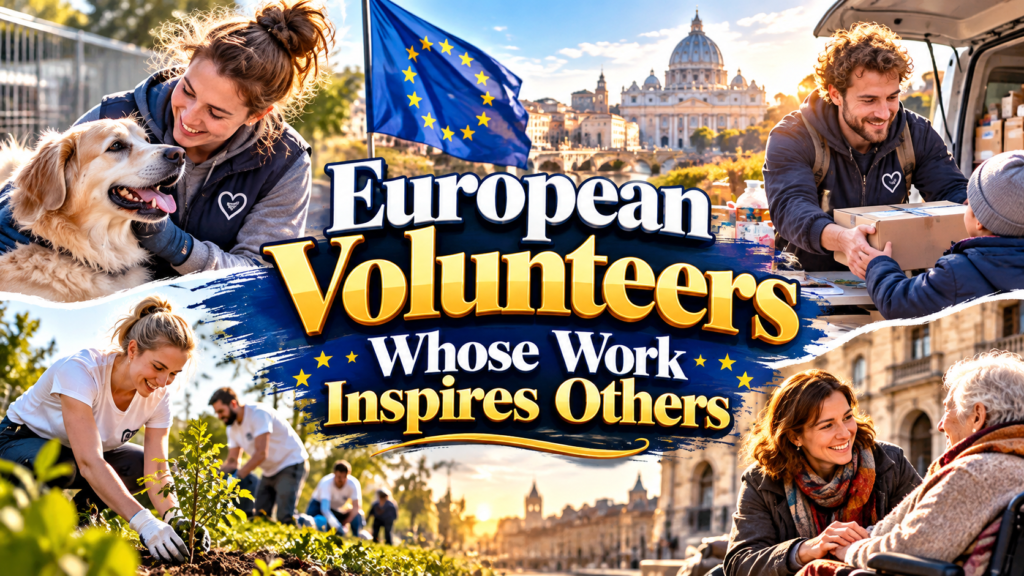
But why does their work matter so much?
Volunteers often reach people and communities that need additional support. They help organisations extend their services, raise awareness about important issues and encourage citizens to become more actively involved in society.
Their work matters because it:
- Supports vulnerable individuals and disadvantaged communities.
- Promotes equality, inclusion and social understanding.
- Strengthens relationships between people from different backgrounds.
- Protects nature, wildlife and local environments.
- Encourages young people to become responsible citizens.
- Provides emotional and practical support during difficult times.
- Creates stronger and more connected communities.
European volunteers remind society that meaningful progress does not always require extraordinary resources. Sometimes, it begins with one person deciding to help another.
2. What Motivates People Across Europe to Become Volunteers?
What inspires someone to spend weekends helping strangers, supporting elderly neighbours or participating in environmental campaigns?
The reasons vary, but compassion, personal experiences and a desire to contribute to society are common motivations.
Many volunteers are inspired by challenges they have witnessed in their communities. Someone who has experienced poverty may decide to support food distribution programmes. A person who has benefited from educational assistance may choose to teach children from disadvantaged backgrounds.
Others volunteer because they believe that everyone has a responsibility to make the world a better place.
Some major motivations include:
A desire to help others: Many volunteers find satisfaction in improving the lives of people who need assistance.
Personal experiences: Difficult experiences can inspire individuals to support people facing similar challenges.
Community responsibility: Some people believe that strong communities depend on active and caring citizens.
Learning new skills: Volunteering offers opportunities to develop leadership, communication, teamwork and organisational abilities.
Cultural exchange: International volunteering allows people to understand different traditions, languages and lifestyles.
Environmental awareness: Growing concerns about climate change, pollution and biodiversity encourage people to participate in conservation projects.
Whatever their motivation, volunteers share one important characteristic: they are willing to turn their beliefs into meaningful action.
3. How Are European Volunteers Supporting Vulnerable Communities?
One of the most important contributions of European volunteers is their support for vulnerable communities.
Across European cities, towns and rural areas, volunteers work with people experiencing poverty, homelessness, unemployment, social isolation and other difficulties.
They assist charities, community centres, food banks and social organisations that provide essential services to people in need.
For example, volunteers may help prepare meals, distribute clothing, organise fundraising activities and provide information about available support services.
In many communities, volunteers also visit people who are isolated or have limited family support. Their conversations, companionship and practical assistance can make an important difference.
Some common volunteering activities include:
- Distributing food packages to low-income households.
- Supporting homeless shelters and community kitchens.
- Organising clothing and essential-item donation drives.
- Helping families access social support services.
- Providing companionship to older people.
- Supporting individuals with disabilities.
- Organising community events that promote social inclusion.
These activities demonstrate that social responsibility is not limited to large organisations or government institutions. Ordinary citizens can also play an important role in improving community welfare.
4. How Are European Volunteers Making a Difference Through Education?
Education is one of the most powerful tools for creating opportunities and reducing inequality. However, not every child has equal access to educational resources.
European volunteers are helping address this challenge by supporting schools, libraries, educational charities and community learning programmes.
Many volunteers work as tutors, reading assistants, language instructors and mentors. They help children improve their literacy, develop confidence and discover new interests.
Some also support adult education programmes that provide opportunities for people who want to improve their professional skills or learn new languages.
Educational volunteering can include:
Tutoring disadvantaged children: Volunteers help students understand school subjects and improve academic performance.
Language learning: Volunteers support migrants and refugees who need language skills to participate more fully in society.
Digital education: Technology volunteers teach basic computer skills, online safety and digital communication.
Reading programmes: Volunteers organise reading sessions and encourage children to develop a love of books.
Career guidance: Experienced professionals mentor young people and help them understand employment opportunities.
Such contributions can influence an individual’s future. A few hours of educational support each week may help a student develop the confidence to pursue higher education or a professional career.
5. Why Are Young European Volunteers Becoming Important Agents of Change?
Can young people make a meaningful difference in society? European youth volunteering provides a powerful answer.
Young volunteers are increasingly participating in social, environmental, cultural and humanitarian initiatives. Students, university graduates and young professionals are using their energy and creativity to address challenges affecting their communities.
Youth volunteering is particularly valuable because it develops responsible citizenship while encouraging practical problem-solving.
Young volunteers often participate in:
- Beach and river clean-up campaigns.
- Tree-planting and biodiversity projects.
- Educational support for disadvantaged children.
- Fundraising activities for humanitarian causes.
- Community awareness programmes.
- Cultural exchange initiatives.
- Digital literacy and technology education.
- Support programmes for older people.
The European Solidarity Corps is one notable European Union initiative that provides opportunities for young people to participate in solidarity activities and volunteering projects.
Such programmes encourage young people to work with communities, understand different cultures and develop professional and personal skills.
Youth volunteering also creates opportunities for friendships across national boundaries. Young people from different European countries can work together, exchange ideas and develop a stronger understanding of shared social responsibilities.
6. How Are European Volunteers Helping Refugees and Migrants?
Migration and displacement have created significant humanitarian and social challenges across Europe. People arriving in unfamiliar countries often face language barriers, housing difficulties, employment challenges and cultural adjustment.
Volunteers play an important role in helping refugees and migrants navigate these circumstances.
Many support local charities and humanitarian organisations that provide essential services to displaced individuals and families.
Their work may include:
- Distributing food, clothing and hygiene products.
- Helping newcomers understand local services.
- Providing language-learning assistance.
- Supporting children with school integration.
- Organising cultural orientation activities.
- Offering companionship and community support.
- Helping refugees develop employment-related skills.
For a person arriving in a new country, even simple assistance can make a significant difference.
A volunteer who helps someone understand a public transport system, complete a basic application or communicate with a local institution can reduce stress and encourage independence.
Beyond practical assistance, volunteering promotes understanding between communities. It helps challenge stereotypes and creates opportunities for people from different cultural backgrounds to build relationships.
7. How Are European Volunteers Protecting the Environment?
Environmental protection has become an important area of volunteering across Europe. Climate change, plastic pollution, biodiversity loss and habitat destruction require collective action.
Environmental volunteers are contributing to conservation projects and encouraging sustainable lifestyles.
From coastal clean-ups to forest restoration, their activities demonstrate how communities can participate in protecting the natural world.
Some important environmental volunteering activities include:
Tree-planting campaigns: Volunteers help restore green spaces, improve local biodiversity and raise awareness about the importance of forests.
Beach clean-ups: Community groups collect plastic waste and other litter from beaches and coastal areas.
Wildlife conservation: Volunteers assist conservation organisations with habitat protection and awareness campaigns.
River restoration: Local volunteers participate in cleaning waterways and protecting aquatic ecosystems.
Community gardening: Volunteers create green spaces and encourage sustainable food production.
Recycling awareness: Volunteers educate households and businesses about responsible waste management.
Across countries such as Germany, France, Spain, Italy and the Netherlands, environmental organisations and community groups provide different opportunities for people to participate in conservation activities.
These efforts may appear small individually, but collective participation can help improve local environments and encourage long-term behavioural change.
8. What Role Do European Volunteers Play in Healthcare and Community Well-Being?
Healthcare volunteering is another important area where compassion and practical assistance come together.
Volunteers support hospitals, care homes, rehabilitation centres, mental health charities and community health organisations. Although they do not replace trained medical professionals, they provide valuable non-clinical assistance.
Their activities may include:
- Visiting patients who have limited family support.
- Providing companionship to older people.
- Supporting hospital information desks.
- Organising fundraising campaigns for healthcare charities.
- Helping community organisations distribute health information.
- Supporting disability inclusion programmes.
- Participating in public health awareness campaigns.
Mental well-being is also an important focus of many volunteering initiatives.
Social isolation and loneliness can affect people of different ages. Volunteers who organise community activities, social gatherings and friendly visits can help individuals feel more connected.
Some volunteers also support mental health charities by helping organise awareness events and community programmes.
Their contributions highlight an important message: well-being involves not only medical treatment but also social connection, dignity and emotional support.
9. How Are European Volunteers Helping Older People Feel Less Isolated?
Europe has an ageing population, making support for older people increasingly important.
Many elderly individuals experience loneliness, mobility difficulties and limited social interaction. Volunteers help address these challenges through companionship and community engagement.
Some visit older residents in care homes, while others assist elderly people living independently.
Their activities can include:
- Regular friendly visits and conversations.
- Helping with shopping and essential errands.
- Organising recreational activities.
- Teaching older people basic digital skills.
- Supporting community meals and social gatherings.
- Accompanying people to community events.
- Helping older residents remain socially connected.
Technology-based volunteering is becoming particularly useful. Volunteers can help elderly people learn how to use smartphones, communicate with relatives through video calls and access digital public services.
These seemingly simple activities can improve confidence and reduce feelings of isolation.
The relationship between older people and volunteers also creates opportunities for intergenerational learning. Older generations share their experiences and knowledge, while younger volunteers introduce new ideas and technologies.
10. How Do European Volunteers Support Animals and Wildlife?
Animal welfare is another cause that attracts compassionate volunteers across Europe.
Animal shelters, rescue organisations and wildlife conservation groups often depend on volunteers to support their daily activities.
Some volunteers care for abandoned animals, while others participate in wildlife protection and public education campaigns.
Common activities include:
- Feeding and caring for rescued animals.
- Helping maintain animal shelters.
- Supporting pet adoption programmes.
- Assisting with wildlife rehabilitation under professional supervision.
- Organising responsible pet ownership campaigns.
- Raising awareness about animal protection.
- Supporting habitat conservation projects.
Volunteers may also help organise fundraising events that provide resources for veterinary treatment, food and shelter maintenance.
Their work encourages responsible relationships between humans and animals while promoting awareness of biodiversity and conservation.
11. Which European Countries Have Strong Volunteering Traditions?
Volunteering takes different forms across Europe. Each country has its own charitable organizations, community networks and traditions of civic participation.
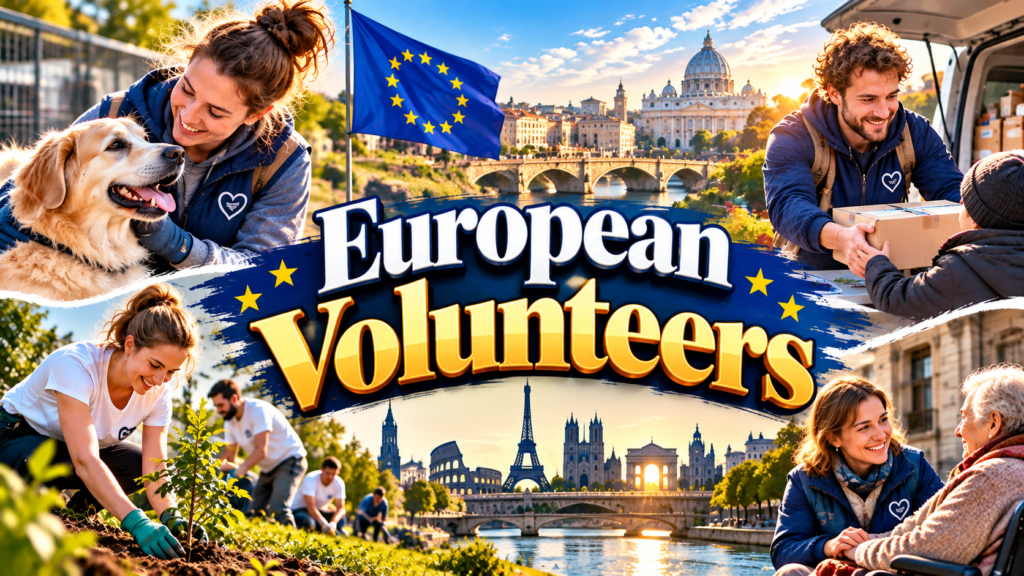
Some examples illustrate the diversity of European volunteering.
Germany: Volunteers participate in social welfare programmes, refugee assistance, sports clubs, environmental conservation and community services.
France: Charitable organisations and local associations organise food distribution, social support, educational assistance and humanitarian activities.
United Kingdom: Volunteers contribute to food banks, healthcare charities, community projects, heritage preservation and environmental initiatives.
Spain: Community groups participate in social inclusion, disaster support, cultural activities and environmental conservation.
Italy: Volunteers support cultural heritage preservation, community kitchens, elderly care and humanitarian organisations.
Netherlands: Volunteers contribute to cycling safety initiatives, environmental projects, community welfare and social inclusion.
Sweden: Volunteering includes environmental campaigns, youth programmes, sports activities and community support.
Portugal: Local organisations encourage participation in social welfare, marine conservation and community development.
Although volunteering structures differ, the central objective remains similar: creating stronger communities through cooperation and shared responsibility.
12. What Are Some Well-Known European Volunteering Organisations?
Several European and international organisations provide opportunities for people who want to contribute to social causes.
Understanding their work can help aspiring volunteers find suitable opportunities.
European Solidarity Corps
The European Solidarity Corps is a European Union programme that provides young people with opportunities to participate in solidarity projects.
Activities can involve environmental protection, social inclusion, community development and humanitarian support.
The programme encourages young people to gain experience while contributing to meaningful causes.
Red Cross and Red Crescent Movement
The International Federation of Red Cross and Red Crescent Societies supports humanitarian activities through its national societies.
Volunteers contribute to disaster response, first aid, community health, emergency assistance and social welfare.
Caritas
Caritas is a charitable network that supports disadvantaged individuals and communities.
Its activities include poverty reduction, refugee assistance, food support, social inclusion and emergency relief.
WWF
WWF works on environmental conservation, biodiversity protection and climate-related initiatives.
People can support conservation awareness, community activities and environmental campaigns.
Médecins Sans Frontières
Médecins Sans Frontières is an international medical humanitarian organisation founded in France.
It provides medical assistance to people affected by conflicts, epidemics, disasters and limited access to healthcare. Its field operations rely on qualified professionals and specialised teams, rather than general volunteer participation alone.
These organisations demonstrate how different approaches to volunteering can contribute to humanitarian assistance, environmental protection and community welfare.
13. How Does Volunteering Bring People From Different Cultures Together?
Europe is home to diverse languages, traditions, religions and cultural identities. Volunteering provides an opportunity for people from different backgrounds to work towards shared objectives.
When individuals cooperate on community projects, they learn to appreciate different perspectives and develop mutual understanding.
For example, an international volunteering project may bring together participants from several countries to restore a natural habitat, support a community centre or organise educational activities.
During these experiences, volunteers exchange ideas, learn new languages and develop friendships.
Cultural exchange through volunteering offers several benefits:
- Encourages respect for different traditions.
- Reduces cultural misunderstandings.
- Builds international friendships.
- Promotes cooperation between communities.
- Develops communication and teamwork skills.
- Strengthens a shared sense of European identity.
These experiences demonstrate that kindness and cooperation can cross geographical and cultural boundaries.
14. Can Volunteering Help People Develop Professional Skills?
Volunteering is not only beneficial for communities; it can also support personal and professional development.
People who participate in volunteering activities often develop practical skills that are useful in education and employment.
For students and young professionals, volunteering can provide valuable experience outside traditional academic or workplace environments.
Some important skills gained through volunteering include:
Communication: Volunteers learn to interact with different people and communicate ideas clearly.
Leadership: Managing activities and coordinating teams can improve leadership abilities.
Problem-solving: Community projects often require creative solutions to unexpected challenges.
Teamwork: Volunteers learn how to cooperate with individuals who have different experiences and perspectives.
Time management: Balancing volunteering responsibilities with personal commitments encourages discipline.
Cultural awareness: International projects help participants understand different working styles and traditions.
Volunteering experience can strengthen a CV, but it should not be viewed only as a career-building activity. Its greatest value lies in combining personal growth with meaningful contributions to society.
15. What Challenges Do European Volunteers Face?
Although volunteering can be rewarding, it also involves challenges.
People who dedicate their time to helping others may face financial, emotional, organisational and practical difficulties.
Some common challenges include:
- Limited financial resources for community projects.
- Travel and accommodation expenses.
- Language barriers in international programmes.
- Emotional stress when working with vulnerable individuals.
- Difficulty balancing volunteering with employment or education.
- Limited access to training and resources.
- Administrative and organisational challenges.
- Volunteer shortages during emergencies.
Another concern is volunteer burnout. People who regularly support demanding causes may experience exhaustion if they do not receive adequate rest and support.
Organisations can address these issues by providing appropriate training, clear responsibilities, supervision, safety measures and emotional support.
Volunteers should also understand their limits and choose activities that match their skills, availability and interests.
Sustainable volunteering depends on supporting volunteers as well as the communities they serve.
16. How Can Someone Become a Volunteer in Europe?
Becoming a volunteer does not necessarily require professional experience or specialised qualifications. Many organisations welcome individuals who are enthusiastic, responsible and willing to learn.
However, some activities, particularly healthcare, childcare and specialised humanitarian work, require specific qualifications, background checks or training.
People interested in volunteering can begin by following a few practical steps.
Step 1: Identify a cause
Decide which area interests you most, such as education, environmental protection, animal welfare, healthcare or community development.
Step 2: Research organisations
Explore established charities, local associations, community centres and recognised volunteering programmes.
Step 3: Understand the requirements
Check age limits, eligibility, language requirements, working hours, training and any necessary qualifications.
Step 4: Choose a suitable opportunity
Select an activity that matches your interests, skills, location and availability.
Step 5: Complete the application process
Some programmes require application forms, interviews or references.
Step 6: Participate in training
Learn about responsibilities, safety procedures, ethical guidelines and the needs of the community.
Step 7: Remain committed
Consistent participation helps organisations plan their activities and build meaningful relationships with beneficiaries.
Useful places to explore include:
- European Solidarity Corps.
- Red Cross EU Office.
- Caritas Europa.
- WWF European Policy Office.
- United Nations Volunteers.
People considering international volunteering should carefully check eligibility, travel requirements, insurance and programme conditions before applying.
17. Why Are Small Acts of Kindness Just as Important as Large Humanitarian Projects?
When people think about volunteering, they often imagine international missions, large charities or major environmental campaigns.
However, meaningful contributions can begin within local communities.
A student helping a classmate, a neighbour assisting an elderly resident or a family participating in a local clean-up campaign can all make a positive difference.
Small acts of kindness matter because they create relationships based on trust, cooperation and respect.
Consider these simple examples:
- Helping an elderly neighbour carry groceries.
- Donating books to a community library.
- Supporting a local food distribution programme.
- Teaching basic computer skills to someone unfamiliar with technology.
- Participating in a neighbourhood clean-up.
- Spending time with people experiencing loneliness.
- Helping organise a community fundraising event.
These actions may not attract public attention, but they can improve everyday life.
The most inspiring aspect of volunteering is not always the size of the project. It is the willingness to take responsibility and make a positive contribution.
18. How Can European Volunteers Inspire the Next Generation?
The example set by volunteers can influence children, students and young adults to become more socially responsible.
When young people see others helping their communities, they learn that individual actions can contribute to collective progress.
Parents, teachers, educational institutions and community organisations can encourage this mindset by introducing volunteering opportunities at an early age.
Schools can organise environmental projects, charity events, reading programmes and community service activities.
Universities can establish student volunteering groups and partnerships with non-profit organisations.
Families can also participate in local charitable initiatives, allowing children to understand the importance of compassion and cooperation.
Young people who experience volunteering often develop a stronger awareness of social challenges.
They learn that positive change requires patience, commitment and teamwork.
By inspiring the next generation, today’s volunteers help create a culture in which community service becomes an important part of everyday life.
19. What Is the Future of Volunteering Across Europe?
The future of European volunteering is likely to be influenced by technological development, environmental concerns, demographic changes and evolving social needs.
As communities face new challenges, volunteering organisations will need innovative approaches to attract participants and deliver support.
Digital volunteering is one area offering new possibilities. People can contribute remotely through online tutoring, translation, fundraising, mentoring and awareness campaigns.
Environmental volunteering is also expected to remain important as communities respond to climate change, biodiversity loss and pollution.
Other emerging areas include:
- Digital inclusion for older people.
- Mental health awareness and social support.
- Refugee integration and language education.
- Sustainable food systems and community gardens.
- Disaster preparedness and emergency assistance.
- Intergenerational learning programmes.
- Technology education for disadvantaged communities.
Organisations will also need to make volunteering more accessible to people with disabilities, working professionals and individuals living in rural areas.
A strong volunteering culture requires cooperation between governments, non-profit organisations, educational institutions, businesses and ordinary citizens.
The future will depend not only on attracting more volunteers but also on ensuring that volunteering is ethical, inclusive, safe and genuinely beneficial to the communities involved.
20. Why Should Everyone Consider Becoming a Volunteer?
Volunteering offers an opportunity to make a difference while developing a deeper understanding of society.
People often assume that they need considerable money, professional experience or large amounts of free time to help others. In reality, many volunteering activities require only a few hours, a willingness to learn and a genuine interest in supporting a cause.
Every individual has something valuable to contribute.
A teacher can share knowledge, a student can support environmental campaigns, a professional can offer mentoring and a retired person can provide companionship or practical assistance.
The important thing is to identify a cause and take the first step.
Volunteering also encourages people to look beyond their personal circumstances and understand the challenges experienced by others.
It creates opportunities for meaningful relationships, shared experiences and positive social change.
European volunteers demonstrate that a compassionate society is built through everyday actions, collective responsibility and a willingness to support one another.
Conclusion: How Are European Volunteers Creating a More Compassionate Society?
European volunteers whose work inspires others demonstrate the extraordinary power of ordinary people working together for a common purpose.
Whether they are supporting disadvantaged families, teaching children, protecting wildlife, helping refugees, caring for elderly residents or responding to humanitarian emergencies, their contributions strengthen communities and improve lives.
Their stories remind us that positive change does not always begin with governments or large institutions. It can start with an individual who decides to give their time, share their knowledge or extend a helping hand.
Volunteering also creates a powerful connection between generations and cultures. It encourages empathy, promotes social inclusion and strengthens the values of solidarity and mutual respect.
As Europe continues to face social, economic and environmental challenges, the contribution of volunteers will remain essential.
Ultimately, the greatest achievement of volunteering is not simply the work completed or the number of people assisted. It is the inspiration created in others to continue spreading kindness.
European volunteers show that when people come together with compassion and determination, even small actions can create lasting change.
Read More – Healthy Aging Habits That Matter