
Multicultural Communities in Europe: How Different Cultures Shape European Society
Multicultural communities in Europe are groups of people from different cultural, ethnic, religious, and linguistic backgrounds who live together within the same society. These communities contribute to the continent’s social, economic, and cultural development through their traditions, languages, cuisines, art, music, and lifestyles. Europe has a long history of cultural exchange, shaped by migration, trade, education, international relationships, and the movement of people across borders.
Today, multiculturalism is an important part of European life. Cities such as London, Paris, Berlin, Amsterdam, Brussels, and Barcelona are home to people with roots in different parts of the world. Residents celebrate different festivals, speak multiple languages, enjoy diverse foods, and participate in a wide range of cultural activities. While every country has its own identity and traditions, multicultural communities demonstrate how different backgrounds can coexist and influence one another.
Cultural diversity in Europe is not limited to immigration. Indigenous and historic minority communities, regional languages, and long-established ethnic groups have also shaped European society. Understanding multicultural communities means recognising both the continent’s historic diversity and the changes brought about by modern migration.
Why Is Europe Known for Its Cultural Diversity?
Europe is known for its cultural diversity because its history includes centuries of trade, migration, political change, cultural exchange, and interaction between neighbouring regions. Different civilisations have influenced European architecture, philosophy, food, literature, music, and social customs. Over time, these connections created societies with distinct local identities and overlapping cultural influences.
Modern transportation, international education, employment opportunities, and global communication have further strengthened cultural connections across the continent. People move to European countries to study, work, reunite with family members, seek safety, or build new lives. As a result, many European cities have become places where different cultural experiences meet in everyday life.
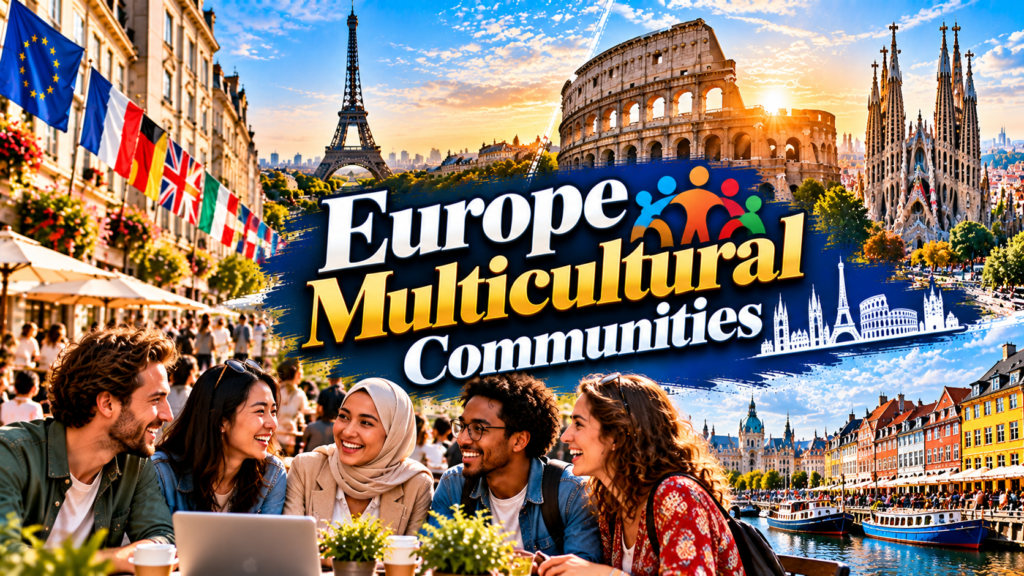
Several factors contribute to Europe’s multicultural character:
- Historical migration: Communities have moved across European borders for generations.
- International employment: Workers relocate to meet labour market needs and pursue career opportunities.
- Education: International students bring different languages, experiences, and perspectives to universities.
- Family connections: Family reunification helps establish long-term multicultural communities.
- Refuge and protection: People fleeing conflict or persecution may find safety in European countries.
- Globalisation: Travel, business, media, and digital communication encourage cultural exchange.
These influences vary by country and region. Europe’s multicultural identity is therefore not a single uniform experience but a collection of diverse communities, histories, and relationships.
Which Countries in Europe Have Multicultural Communities?
Multicultural communities can be found throughout Europe, although their size, history, and social experiences differ between countries. Some countries have long-standing immigrant populations, while others have experienced more recent migration or are home to established ethnic and linguistic minorities.
The United Kingdom has communities with roots in South Asia, Africa, the Caribbean, the Middle East, and many European countries. London is particularly recognised for its international population, multilingual neighbourhoods, and diverse food and arts scenes.
France has a multicultural population shaped partly by historical connections with North Africa, sub-Saharan Africa, the Caribbean, and other regions. Paris and Marseille are important examples of cities where different cultural traditions influence public life.
Germany has welcomed generations of migrants, including people with Turkish, Italian, Polish, Syrian, and other backgrounds. Cities such as Berlin, Frankfurt, and Hamburg reflect this diversity through their restaurants, cultural organisations, and neighbourhood communities.
The Netherlands and Belgium are also known for diverse urban populations. Amsterdam, Rotterdam, Brussels, and Antwerp bring together people with different linguistic and cultural backgrounds. Spain and Italy have experienced significant immigration alongside their own regional cultural differences, while Sweden and other Nordic countries have developed multicultural communities through labour migration, family reunification, and humanitarian migration.
Central and Eastern European countries also have diverse societies, including historic minority populations and newer migrant communities. The cultural picture differs from place to place, making it important to avoid treating Europe as if every country follows the same model of multiculturalism.
How Do Immigrant Communities Contribute to European Society?
Immigrant communities contribute to European society in many ways, including business development, employment, education, healthcare, research, arts, and community life. People who settle in a new country may establish businesses, work in essential services, support local economies, or introduce new skills and ideas.
In many European cities, immigrant entrepreneurs operate restaurants, grocery stores, clothing shops, technology companies, and other businesses. These enterprises create employment, provide specialised services, and bring new products and experiences to local neighbourhoods. Migrants also work across a wide range of occupations, although their employment opportunities and working conditions differ according to qualifications, legal status, language skills, and national policies.
Cultural contributions are equally significant. Writers, musicians, filmmakers, designers, athletes, chefs, and artists with diverse backgrounds influence European creative industries. Their work often explores identity, belonging, migration, family, and the relationship between tradition and modern life.
Immigrant communities can contribute to European society through:
- Creating businesses and employment opportunities.
- Bringing professional knowledge and international experience.
- Supporting healthcare, hospitality, construction, agriculture, and other sectors.
- Enriching literature, film, music, fashion, and visual arts.
- Developing international trade and cultural connections.
- Participating in neighbourhood organisations, volunteering, and public life.
These contributions should not obscure the challenges that some migrants face, including discrimination, insecure work, difficulties with qualification recognition, and barriers to housing. Successful integration depends on opportunities, fair treatment, and participation by both newcomers and established communities.
How Do Different Cultures Influence European Food and Cuisine?
Food is one of the most visible expressions of multicultural communities in Europe. Restaurants, markets, bakeries, cafés, and home kitchens introduce people to flavours and cooking traditions from around the world. In many cities, residents can enjoy Italian pasta, Turkish kebabs, Indian curries, Lebanese mezze, Moroccan tagines, Japanese sushi, and countless other dishes alongside regional European specialities.
These culinary influences reflect migration, trade, family traditions, and the creativity of chefs and food businesses. Dishes may also change as communities adapt recipes to local ingredients and tastes. Over time, some foods that were once unfamiliar become popular parts of everyday dining.
Multicultural food culture offers several benefits:
- Cultural discovery: Traditional dishes introduce people to the customs and histories of other communities.
- Local entrepreneurship: Restaurants and food markets create business opportunities.
- Social interaction: Sharing meals can bring neighbours, colleagues, and families together.
- Culinary innovation: Chefs combine ingredients and techniques to develop new styles of cooking.
- Community identity: Traditional recipes help families preserve cultural connections across generations.
Food cannot represent every aspect of a culture, but it often provides a welcoming starting point for learning about other people and their experiences.
What Role Do Languages Play in Multicultural European Communities?
Language plays a central role in multicultural European communities because it shapes communication, education, employment, identity, and social participation. Many European countries have one or more official languages, while their residents may also speak regional, minority, heritage, or international languages at home and in their communities.
In multicultural neighbourhoods, it is common to hear several languages spoken in shops, schools, public transport, and community centres. Children from multilingual families may grow up using one language with relatives and another at school. Adults may learn the language of their country of residence while continuing to use their first language to maintain family and cultural connections.
Multilingualism can provide several advantages:
- It supports communication across national and cultural boundaries.
- It helps people maintain relationships with family and heritage communities.
- It can improve access to international education and employment.
- It encourages understanding of different literary and cultural traditions.
- It supports translation, interpreting, tourism, and international business.
However, language barriers can make it difficult to access public services, secure employment, or participate in education. Accessible language courses, translation services where appropriate, and inclusive school environments can help reduce these difficulties. Learning the local language can support integration without requiring people to abandon their heritage languages.
How Do Festivals and Traditions Bring Communities Together?
Festivals and cultural celebrations offer opportunities for people to share traditions, express their identities, and learn about the experiences of others. Across Europe, public celebrations may include religious holidays, national days, music festivals, seasonal events, and community gatherings organised by cultural associations.
Depending on the city and its communities, residents may encounter celebrations such as Diwali, Eid, Lunar New Year, Hanukkah, Christmas, Easter, Nowruz, and cultural events connected to African, Caribbean, Asian, and European heritage. The traditions observed vary between neighbourhoods, and not every celebration is equally visible or officially recognised in every country.
Community festivals often include music, dancing, traditional clothing, storytelling, crafts, and food. These activities create spaces where people can share their histories and develop relationships with neighbours from different backgrounds.
Cultural celebrations can help communities by:
- Preserving customs and knowledge across generations.
- Giving younger people opportunities to explore their heritage.
- Encouraging participation in local cultural life.
- Creating opportunities for dialogue between different groups.
- Supporting local artists, performers, and small businesses.
Respectful participation matters. Learning about the meaning of a celebration and following the guidance of its organisers can help visitors engage with traditions in a thoughtful way rather than treating them simply as entertainment.
How Does Multiculturalism Influence European Art, Music, and Fashion?
Multiculturalism has influenced European art, music, and fashion by creating opportunities for artists and designers to combine different traditions, techniques, and perspectives. European creative industries have long developed through international exchange, and contemporary multicultural communities continue this process through music, photography, theatre, film, street art, clothing, and digital media.
Musicians may combine European musical styles with African rhythms, Middle Eastern instruments, South Asian sounds, or Caribbean influences. Filmmakers and writers explore experiences of migration, identity, belonging, and life between cultures. Fashion designers draw inspiration from textiles, patterns, traditional clothing, and craftsmanship from different regions, while adapting these influences to contemporary styles.
Multicultural art can also challenge stereotypes and create opportunities for underrepresented communities to tell their own stories. Galleries, cultural centres, independent cinemas, and festivals may provide platforms for artists whose experiences have historically received less attention.
Some important ways multiculturalism influences creative expression include:
- Music: Different musical traditions inspire new genres and collaborations.
- Fashion: Designers explore global textiles, craftsmanship, patterns, and silhouettes.
- Literature: Authors examine migration, cultural identity, family, and belonging.
- Film and theatre: Productions portray diverse communities and cross-cultural experiences.
- Visual arts: Artists use photography, painting, sculpture, and digital media to explore identity and social change.
These influences do not erase Europe’s established artistic traditions. Instead, they add new perspectives to the continent’s already diverse creative heritage.
What Challenges Do Multicultural Communities Face in Europe?
Although multicultural communities bring many opportunities, they can also face significant challenges. These include discrimination, social exclusion, language barriers, unequal employment opportunities, housing difficulties, and differences in access to education and public services. The nature and severity of these issues vary across countries, cities, and individual circumstances.
Some people from minority backgrounds experience prejudice because of their ethnicity, religion, accent, name, or appearance. Discrimination can affect recruitment, career progression, housing applications, and everyday interactions. Such experiences can weaken trust and prevent individuals from participating fully in society.
Language difficulties may create additional barriers, particularly for newly arrived migrants. People who have professional qualifications from another country may also encounter difficulties getting those qualifications recognised. In some places, high housing costs, limited public services, and economic inequality can make settlement more challenging.
Other issues include:
- Social isolation: Newcomers may struggle to build friendships or professional networks.
- Cultural misunderstandings: Different customs or communication styles can sometimes lead to confusion.
- Educational inequalities: Children may need language support or additional help adapting to a new school system.
- Religious discrimination: Some individuals may face prejudice related to their beliefs or religious clothing.
- Limited representation: Minority communities may be underrepresented in leadership, media, or public institutions.
- Generational differences: Younger and older family members may have different expectations about cultural traditions and identity.
Addressing these challenges requires cooperation between governments, schools, employers, community organisations, and residents. Anti-discrimination protections, fair employment practices, affordable housing, accessible education, and opportunities for community participation can help create more inclusive societies.
How Do European Cities Encourage Cultural Integration?
European cities encourage cultural integration through education, language programmes, community activities, employment support, public services, and cultural initiatives. Local authorities and community organisations may organise events that bring residents together, provide information to newcomers, or support people learning the language of their new home.
Schools are especially important because children from different backgrounds meet, learn, and develop friendships in shared environments. Inclusive teaching, language assistance, and lessons that acknowledge different histories and perspectives can help students participate more confidently.
Libraries, sports clubs, neighbourhood associations, museums, and community centres also provide spaces for interaction. Shared activities allow residents to build relationships based on common interests rather than cultural differences alone.
Effective approaches to integration may include:
- Offering accessible language classes and employment guidance.
- Supporting community festivals and intercultural events.
- Ensuring that public services are accessible and understandable.
- Promoting equal opportunities in schools and workplaces.
- Encouraging participation in sports, volunteering, and local organisations.
- Providing clear information about civic responsibilities and residents’ rights.
Integration is a two-way process. Newcomers may learn local languages, laws, and customs, while established communities can benefit from understanding the experiences and contributions of new residents. Integration does not require everyone to share the same cultural identity; it involves building a common social framework in which different people can participate.
What Is the Difference Between Multiculturalism and Cultural Integration?
Multiculturalism refers to the presence and recognition of different cultural communities within a society. Cultural integration describes the process through which people from different backgrounds participate in shared institutions, activities, and public life.
These concepts are connected, but they are not identical. A city can have a diverse population while some groups remain socially isolated. Conversely, people can participate fully in education, employment, and civic life while continuing to maintain their languages, religious traditions, and cultural identities.
For example, a family might celebrate traditional holidays at home, speak a heritage language with relatives, and participate in local community activities. Their cultural identity and participation in wider society can exist together.
Successful multicultural societies aim to balance several goals:
- Recognising cultural and religious freedom.
- Promoting equal rights and responsibilities.
- Encouraging communication between communities.
- Reducing discrimination and social exclusion.
- Creating shared opportunities in education, employment, and civic life.
Different European countries approach multiculturalism and integration in different ways. Their policies reflect national histories, legal systems, political debates, and social priorities. There is no single model that applies equally to every European community.
How Do Multicultural Communities Benefit Young People in Europe?
Young people growing up in multicultural communities may have opportunities to learn about different cultures through friendships, school activities, food, music, languages, and shared experiences. Regular interaction with people from different backgrounds can encourage curiosity, adaptability, and an appreciation of different perspectives.
Multicultural environments can also support language development. Children who encounter several languages may develop communication skills that are valuable in education, travel, and future employment. Exposure to different traditions can encourage them to question stereotypes and understand that people may share similar aspirations despite having different customs.
Schools and youth organisations can support these benefits by creating welcoming spaces where every student feels respected. Activities such as international food days, cultural storytelling, collaborative sports, art projects, and language exchanges can encourage participation when they are organised thoughtfully.
However, diversity alone does not guarantee inclusion. Young people may still experience bullying, racism, identity-related pressure, or unequal educational opportunities. Supportive teachers, family involvement, accessible counselling, and fair school policies can help ensure that multicultural environments benefit everyone.
How Can Tourism Help People Discover Multicultural Europe?
Tourism can help visitors discover multicultural Europe through neighbourhood markets, cultural festivals, museums, restaurants, religious heritage sites, music events, and local walking tours. Travelling beyond well-known monuments can reveal the communities and everyday experiences that contribute to a city’s identity.
Visitors to London might explore markets and neighbourhoods shaped by international migration. In Paris, multicultural influences can be found in food, music, and arts venues. Berlin offers opportunities to explore contemporary creative scenes and communities with different migration histories. Brussels reflects Belgium’s linguistic diversity as well as its international character, while Barcelona combines Catalan traditions with influences from residents and visitors from many parts of the world.
Responsible cultural tourism involves more than photographing interesting places. Travelers can learn about local histories, support independent businesses, attend public cultural events respectfully, and listen to the perspectives of residents.
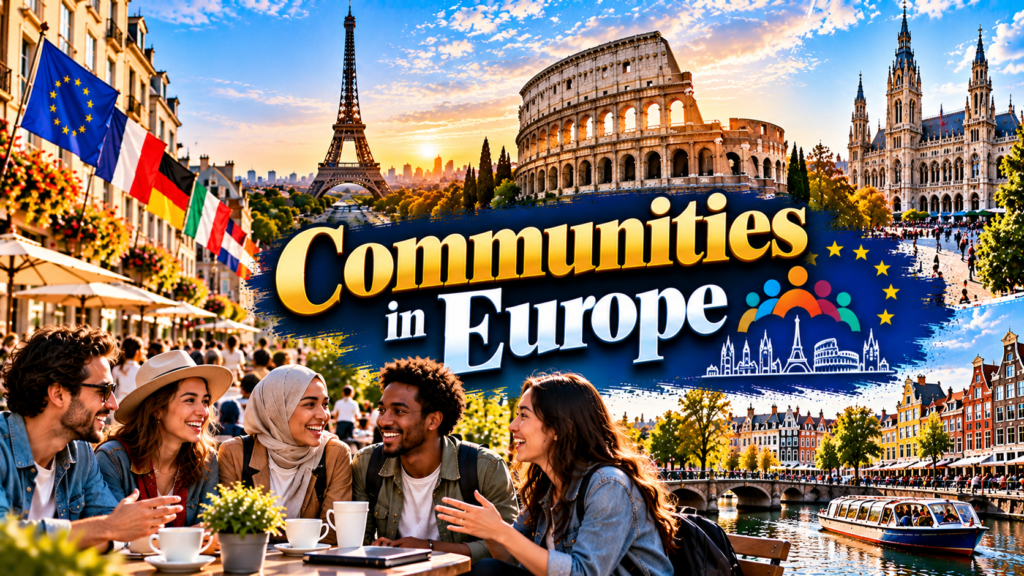
Consider these ways to explore multicultural Europe:
- Visit local markets and independent food businesses.
- Attend public festivals and performances.
- Learn about the histories of neighbourhoods before visiting.
- Explore museums and cultural centres that represent different communities.
- Respect religious sites, local customs, and photography guidelines.
- Support locally owned businesses and community-led tours.
Tourism can create opportunities for cultural exchange, but visitors should avoid assuming that one restaurant, festival, or neighbourhood represents an entire community. Each culture contains diverse traditions, beliefs, and individual experiences.
What Role Does Education Play in Building Inclusive European Communities?
Education plays a crucial role in building inclusive European communities because schools and universities bring together people with different experiences, languages, and cultural backgrounds. Educational institutions can help students understand cultural differences, recognise discrimination, and develop the skills needed to participate in diverse societies.
Multicultural education may include teaching European history from different perspectives, introducing students to literature from around the world, providing language support, and encouraging respectful classroom discussions. Universities also contribute through international exchange programmes, collaborative research, and student communities that connect people across national boundaries.
Teachers and educational leaders can support inclusion by ensuring that learning materials reflect diverse experiences without reducing individuals to cultural stereotypes. Students should have opportunities to discuss differences openly while recognising their shared rights and responsibilities.
Inclusive education can help to:
- Encourage respect for different cultural and religious backgrounds.
- Improve communication between students and families.
- Address prejudice and stereotypes through informed discussion.
- Support students learning the language of instruction.
- Prepare young people for international workplaces and communities.
- Promote equal access to educational opportunities.
Education cannot solve every challenge associated with multiculturalism, but it can establish a strong foundation for understanding, cooperation, and social participation.
How Can People Support Multicultural Communities in Europe?
Supporting multicultural communities begins with everyday actions that encourage respect, communication, and equal participation. Individuals do not need to travel abroad or become experts in every culture to make a positive difference. Listening to others, challenging unfair stereotypes, and taking part in local activities can help strengthen relationships between neighbours.
Employers can promote fair recruitment and provide equal opportunities for career development. Schools can create inclusive learning environments, while local authorities can make public services accessible to residents from different backgrounds. Community organisations can arrange events that encourage people to meet through shared interests, volunteering, sport, and the arts.
Residents can contribute by taking practical steps such as:
- Learning about the histories and traditions of local communities.
- Supporting independent businesses owned by people from diverse backgrounds.
- Participating in neighbourhood events and cultural activities.
- Treating people fairly regardless of ethnicity, nationality, or religion.
- Speaking up against discrimination and harassment.
- Helping newcomers access reliable information and community resources.
- Encouraging respectful conversations about cultural differences.
It is also important to recognise that no individual should be expected to represent an entire culture. People from the same ethnic or national background may have very different beliefs, lifestyles, and personal experiences. Respecting these differences helps build relationships based on individual understanding rather than assumptions.
What Is the Future of Multicultural Communities in Europe?
The future of multicultural communities in Europe will be shaped by migration, demographic change, economic conditions, education, public policy, and relationships between different generations. As European societies continue to change, questions about cultural identity, integration, citizenship, social equality, and shared values will remain important.
Technology is likely to influence how communities maintain cultural connections. Digital platforms allow families to communicate across borders, help people discover cultural events, and create opportunities for international collaboration. At the same time, online misinformation and discriminatory content can reinforce stereotypes, making media literacy and responsible communication increasingly important.
Younger generations may also influence how cultural identities develop. Some people maintain strong connections to their family heritage while identifying closely with their country or city of residence. Others develop identities that combine several cultural influences. These experiences demonstrate that cultural identity can evolve across time and generations.
The future of multicultural Europe will depend partly on how successfully societies address persistent challenges, including discrimination, housing pressures, unequal opportunities, and social polarisation. Policies that support fair access to education, employment, public services, and civic participation can help communities build trust.
Multiculturalism is not simply about the presence of different cultures in the same place. It is also about whether people have meaningful opportunities to participate in society, maintain their identities, and contribute to a shared future.
Why Are Multicultural Communities Important for Europe’s Identity?
Multicultural communities are important for Europe’s identity because they reflect the continent’s long history of movement, exchange, regional diversity, and international relationships. Different communities contribute to the development of European cities, economies, creative industries, educational institutions, and everyday social life.
Europe’s cultural identity has never been completely uniform. Regional languages, historic minorities, religious traditions, national identities, and international influences have all played a role in shaping its societies. Contemporary multicultural communities add further dimensions to this diversity.
Their importance can be seen in several areas:
- Cultural heritage: Communities preserve traditions while adapting them to changing circumstances.
- Economic participation: Workers, entrepreneurs, and professionals contribute to local and national economies.
- Creative expression: Diverse experiences influence art, literature, music, film, and fashion.
- International connections: Cultural and family networks strengthen links between Europe and other regions.
- Social learning: Interactions between communities create opportunities for dialogue and mutual understanding.
However, a diverse population alone does not automatically create a fair or cohesive society. Inclusion requires sustained efforts to protect rights, address discrimination, and ensure that people have opportunities to participate in public life.
Conclusion: How Do Multicultural Communities Shape Europe’s Future?
Multicultural communities in Europe demonstrate how people with different histories, languages, beliefs, and traditions can contribute to a shared society. From international food markets and cultural festivals to education, business, music, fashion, and community life, cultural diversity influences many aspects of the European experience.
At the same time, multicultural societies face challenges that require practical solutions, including discrimination, language barriers, social isolation, and unequal access to opportunities. Building inclusive communities requires cooperation among governments, employers, educational institutions, local organizations, and residents.
For Europe Saga readers, understanding multicultural communities offers a valuable way to explore the people and experiences shaping modern Europe. By recognizing cultural differences while promoting equality, mutual respect, and participation, European societies can work towards a future in which diversity becomes a source of connection, creativity, and shared progress.
Read More – Highest Paying Jobs in Europe