
Europeans Celebrate Midsummer: Traditions, Festivals and Cultural Significance
Europe comes alive with music, flowers, bonfires, traditional dances and outdoor feasts when Midsummer arrives. Celebrated around the summer solstice, Midsummer is one of Europe’s most fascinating seasonal traditions, bringing communities together to welcome the longest days of the year and enjoy the beauty of summer. From Sweden’s flower-crowned celebrations to Finland’s lakeside bonfires and Spain’s lively Saint John’s Eve festivities, the occasion reflects the continent’s rich cultural diversity.
But why do Europeans celebrate Midsummer, how did these traditions begin, and what makes the festival so special in different countries? Exploring these questions reveals a remarkable combination of ancient seasonal customs, local folklore, family gatherings and modern celebrations that continue to connect Europeans with nature and their cultural heritage.
What Is Midsummer and Why Do Europeans Celebrate It?
Midsummer is a traditional seasonal celebration associated with the summer solstice, the time of year when the Northern Hemisphere experiences its longest day and shortest night. The summer solstice usually falls around June 20 or 21, although the dates of Midsummer festivals vary between countries and communities.
For many Europeans, Midsummer represents the arrival of summer, the abundance of nature and the opportunity to spend time outdoors with family and friends. In northern Europe, where winter days can be extremely short, the long hours of daylight have special cultural significance. The festival provides an opportunity to celebrate sunshine, greenery, flowers and the natural world.
Historically, seasonal celebrations around the solstice were connected with agriculture, fertility, protection and hopes for a successful harvest. Communities welcomed the warmer season and marked the changing relationship between daylight, farming and everyday life.
Over time, Christian traditions became associated with some Midsummer festivities, particularly the feast of Saint John the Baptist on June 24. As a result, modern celebrations often combine pre-Christian seasonal customs, Christian observances and contemporary community events.
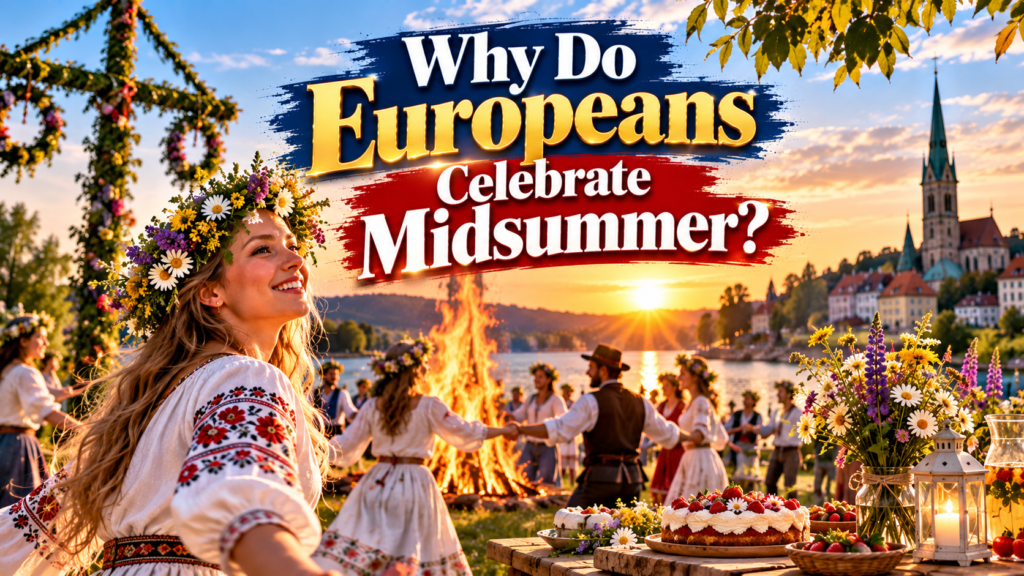
Today, Europeans celebrate Midsummer in different ways, but many traditions share common themes:
- Celebrating the longest days of the year.
- Gathering with family, friends and neighbours.
- Decorating homes and public spaces with flowers and greenery.
- Enjoying traditional food, music and dancing.
- Lighting bonfires and participating in outdoor festivities.
- Preserving local folklore, songs and cultural customs.
These shared elements make Midsummer an important part of Europe’s cultural calendar while allowing each country to maintain its own distinctive identity.
When Do Europeans Celebrate Midsummer?
The timing of Midsummer depends on local traditions, religious calendars and national customs. Although the astronomical summer solstice takes place around June 20 or 21, celebrations may occur on the nearest weekend or on dates connected with particular religious festivals.
In Sweden, Midsummer celebrations generally take place on a Friday between June 19 and June 25, followed by Midsummer Day on Saturday. Finland also celebrates Midsummer around the weekend close to the summer solstice, with the festival known as Juhannus.
In Denmark, Saint John’s Eve is celebrated on June 23, often with bonfires and community gatherings. Norway also observes Sankthansaften around the same date. In Spain, the Night of Saint John, known as La Noche de San Juan, brings beach celebrations, fires and traditional festivities to many coastal communities.
The Baltic countries of Estonia, Latvia and Lithuania also maintain important summer solstice traditions, often involving bonfires, singing, dancing and time spent in the countryside.
Because national customs differ, there is no single date or universal way to celebrate Midsummer across Europe. Instead, the festival forms a collection of related traditions that reflect the history, climate and cultural identity of different regions.
How Do Swedes Celebrate Midsummer?
Sweden is among the countries most strongly associated with Midsummer celebrations. For many Swedes, the festival is one of the most anticipated occasions of the year, bringing families and friends together for a day of traditional food, dancing and outdoor activities.
One of the most recognisable Swedish Midsummer traditions is the maypole, known as the midsommarstång. Decorated with leaves and flowers, the pole is raised in an open space where people gather to sing and dance around it. The event often takes place in villages, parks, gardens and countryside locations.
Flower crowns are another popular feature. People collect seasonal flowers and greenery to create wreaths that they wear throughout the celebrations. Children and adults alike participate in decorating the maypole and preparing festive surroundings.
Food is equally important. Traditional Swedish Midsummer meals commonly include pickled herring, boiled new potatoes with dill, sour cream, chives, crispbread and strawberries. Some adults enjoy traditional celebratory drinks, while families also serve non-alcoholic beverages.
Why is Midsummer so important in Sweden? The answer lies partly in the country’s northern geography. Long daylight hours are especially noticeable in summer, offering a welcome contrast to the dark winter months. Midsummer provides an opportunity to appreciate nature, enjoy the outdoors and strengthen relationships.
For many Swedes, the celebration is less about elaborate ceremonies and more about simple pleasures: sharing a meal, singing familiar songs, dancing around the maypole and enjoying the light of a summer evening.
Why Is Midsummer Special in Finland?
Finland celebrates Midsummer as Juhannus, a major summer holiday associated with lakeside cottages, traditional saunas, bonfires and gatherings with loved ones. The festival is especially meaningful because Finland experiences long summer days, and areas in the north can enjoy the midnight sun.
Many Finnish families leave cities and travel to countryside cottages, where they spend time swimming, fishing, boating and relaxing in nature. Lakes and forests become central to the celebration, creating an atmosphere of peace and togetherness.
Bonfires, known as kokko, are an important part of many Finnish Midsummer celebrations. They are traditionally lit near lakeshores or other open areas, creating a striking sight against the evening sky. Local rules and weather conditions determine whether fires can be safely held.
The sauna is another essential element of Finnish summer culture. During Midsummer, families may enjoy a traditional sauna session before cooling off outdoors or swimming in a lake where conditions permit.
What foods do Finns enjoy during Midsummer? Meals vary by family and region, but grilled fish, sausages, new potatoes, fresh vegetables and seasonal berries are popular choices. Outdoor dining makes the occasion particularly enjoyable.
Finnish Midsummer reflects a close relationship with nature. Rather than focusing only on formal festivities, many people celebrate by slowing down, enjoying the countryside and appreciating the extended daylight.
How Do Denmark and Norway Celebrate Midsummer?
Denmark and Norway have their own distinctive ways of marking the summer season, with celebrations influenced by local folklore and the Christian feast of Saint John the Baptist.
In Denmark, the occasion is commonly called Sankt Hans Aften and takes place on June 23. Communities gather in parks, along beaches and beside lakes to enjoy bonfires, speeches, songs and social activities. In some traditional Danish celebrations, a symbolic figure is placed on the bonfire, a custom associated with older folklore. The practice varies and is not universal.
One of the best-known elements of Danish celebrations is communal singing. Groups often sing traditional songs as the bonfire burns, creating a festive atmosphere that connects people with local history.
Norway celebrates Sankthansaften, also known in some places as Jonsok. Families and friends gather outdoors, especially near the coast, where they may enjoy picnics, boat trips and bonfires. In some communities, historical traditions include building small model houses or structures to burn during the festivities.
Why do bonfires appear so often in Scandinavian Midsummer celebrations? Fire has long held symbolic importance in seasonal folklore, with associations including light, protection and the transition into summer. Today, bonfires also provide a natural gathering point for music, conversation and community activities.
Although the details differ, Denmark and Norway share a common appreciation for outdoor celebrations, seasonal food and spending time with loved ones during the brightest part of the year.
What Makes Midsummer Traditions Unique in Estonia, Latvia and Lithuania?
The Baltic countries preserve some of Europe’s most distinctive summer solstice customs. Estonia, Latvia and Lithuania celebrate the season through bonfires, traditional songs, wreath-making and gatherings that connect people with their rural heritage.
In Estonia, Midsummer is known as Jaanipäev, with festivities commonly taking place around June 23 and 24. Families often travel to the countryside, light bonfires where permitted and enjoy music and outdoor activities. The occasion has strong cultural significance because it combines national traditions with the natural beauty of the summer landscape.
Latvia celebrates Jāņi, a festival closely connected with folklore, plants and traditional singing. People may wear wreaths made from flowers, grasses or oak leaves, decorate their surroundings and participate in traditional songs known as līgo songs. Certain customs vary according to family and region.
Lithuania observes Joninės, a celebration associated with Saint John and the summer solstice. Traditional activities can include gathering herbs, making wreaths, lighting bonfires and spending the evening outdoors. In some communities, people also participate in folklore-inspired activities connected with nature and seasonal renewal.
Why are these traditions important today? They help preserve languages, songs, crafts and customs passed from one generation to another. Festivals provide an opportunity for younger people to learn about their cultural heritage while participating in celebrations that remain relevant to modern life.
Across the Baltic region, Midsummer demonstrates how seasonal festivals can strengthen national identity while celebrating the shared natural rhythms of Europe.
How Does Spain Celebrate the Night of Saint John?
Spain celebrates the summer season through a variety of local festivities, including La Noche de San Juan, or the Night of Saint John, on June 23. In many coastal areas, the celebration centres on beaches, where people gather to enjoy the evening, listen to music and welcome summer.
Bonfires are a familiar feature of these celebrations. In some communities, people traditionally jump over small fires or take part in symbolic customs associated with good fortune and leaving behind the past. These practices differ by location, and participants should follow local safety rules.
One of the most famous related celebrations takes place in Alicante, where the Hogueras de San Juan festival features elaborate artistic monuments, public festivities, music and spectacular bonfires. The event has its own distinct history and should not be confused with every local Saint John’s Eve celebration in Spain.
Food, friendship and community activities also play important roles. Coastal towns may organise concerts and public gatherings, while inland communities observe their own versions of the festival.
What makes Spanish Midsummer celebrations different from those in northern Europe? The atmosphere often reflects the country’s warm summer evenings, Mediterranean lifestyle and strong tradition of public festivities. Beaches, plazas and streets become gathering places where residents and visitors celebrate together.
Despite differences in timing, local customs and religious influences, these events share the wider European theme of welcoming summer through light, community and seasonal renewal.
Do People in Other European Countries Celebrate Midsummer?
Yes. Summer solstice celebrations and Saint John’s festivities can be found in many other parts of Europe, although their popularity and traditions differ considerably.
In France, Saint John’s Day traditions have historically included community bonfires and local gatherings. Some towns continue to organise seasonal events, while others observe the occasion less prominently.
In parts of Germany, celebrations associated with Johannistag and regional summer customs may include bonfires, village events and outdoor gatherings. Practices depend on local history and community traditions.
In the United Kingdom, the summer solstice attracts visitors to historic and prehistoric sites, most famously Stonehenge in England. People gather to mark the astronomical event and, where access arrangements permit, observe the sunrise. This gathering is associated with the solstice itself rather than being identical to Scandinavian Midsummer festivals.
In Ireland, the summer solstice has connections with seasonal folklore and ancient monuments. Certain communities organise gatherings around the solstice, while other areas have traditions linked with Saint John’s Eve.
Across central and eastern Europe, local celebrations may feature bonfires, folk music, dancing and seasonal foods. Some traditions are associated with the Slavic celebration of Kupala Night, although dates and customs vary between countries and communities.
These examples show that Midsummer is not one uniform European festival. Instead, it is a broad family of traditions shaped by local landscapes, religious influences, folklore and historical experiences.
What Are the Most Popular Midsummer Traditions in Europe?
Although every country has its own customs, several activities appear repeatedly in European Midsummer celebrations. These traditions give the festival its distinctive character and help communities preserve cultural practices.
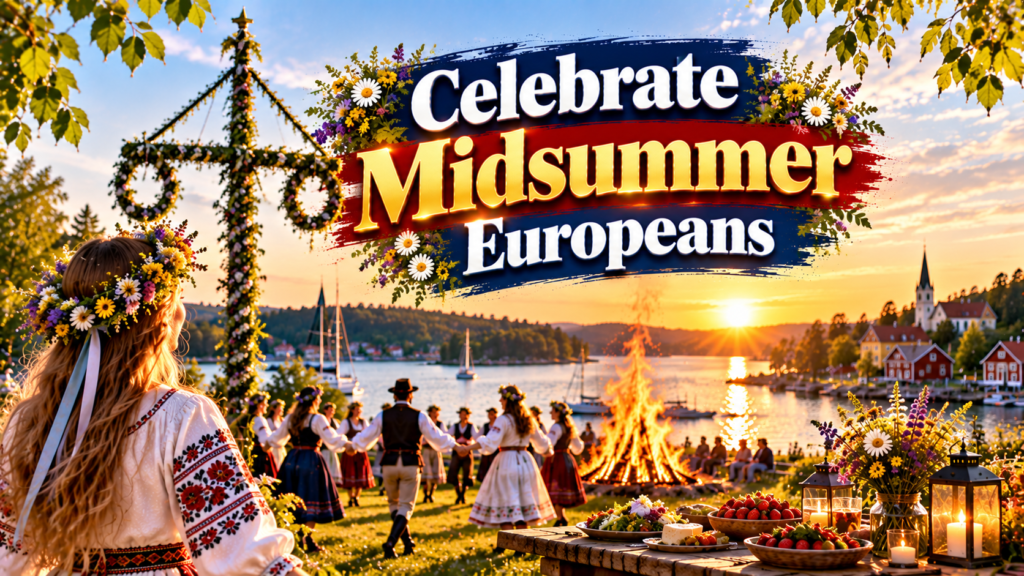
1. Why Do Europeans Light Midsummer Bonfires?
Bonfires are among the most recognisable elements of Midsummer festivities. They are particularly popular in parts of Scandinavia, the Baltic region and other areas with Saint John’s Eve traditions.
Historically, fire played an important role in seasonal folklore. Some communities associated bonfires with protection, purification or good fortune, while others used them as gathering points for village celebrations. Today, bonfires are often enjoyed as a social tradition accompanied by singing, conversation and outdoor meals.
2. Why Are Flower Crowns Important During Midsummer?
Flowers and greenery symbolise the abundance of summer. In Sweden and other northern European countries, people make wreaths from wildflowers, leaves and seasonal plants.
Flower crowns are worn during festivities, used as decorations and included in family photographs. In some traditions, flowers also have associations with romance, dreams and good fortune.
Collecting flowers can be a meaningful activity for children and adults, although it is important to avoid picking protected plants or flowers from private land without permission.
3. How Does Music Bring People Together?
Music is central to many European Midsummer festivals. Traditional songs, folk dances and communal singing allow communities to celebrate their heritage while welcoming new generations.
In Sweden, people dance around maypoles, while Baltic celebrations often feature traditional songs and folklore-inspired performances. Danish bonfire gatherings may include familiar communal songs, and Spanish festivities frequently feature live music and public entertainment.
These musical traditions turn Midsummer into a shared experience rather than simply a holiday observed by individuals.
4. Why Do Some Midsummer Celebrations Include Water?
Water is another important element in European summer traditions. Lakes, rivers and beaches become popular gathering places, particularly in Finland and other Nordic countries.
Swimming, boating, fishing and lakeside picnics are common recreational activities during the holiday. In certain local traditions, water is also associated with renewal, purification and good fortune.
However, these activities are primarily cultural and recreational today, and not every Midsummer celebration includes a specific water-related ritual.
What Traditional Foods Do Europeans Eat During Midsummer?
Food brings families and friends together and reflects the seasonal ingredients available in different parts of Europe. Many Midsummer meals feature fresh vegetables, fish, potatoes, berries and other foods associated with summer.
Popular examples include:
- Sweden: Pickled herring, boiled new potatoes, dill, sour cream and fresh strawberries.
- Finland: Grilled fish, sausages, new potatoes, salads and seasonal berries.
- Denmark and Norway: Regional dishes, grilled foods, fish, potatoes and festive desserts.
- The Baltic countries: Traditional breads, dairy products, seasonal produce and regional festive dishes.
- Spain: Local specialities, pastries and foods shared during Saint John’s Eve gatherings, depending on the region.
Why is seasonal food so important? Fresh ingredients reflect the connection between Midsummer, agriculture and the natural world. Sharing a meal also strengthens family relationships and creates opportunities to pass down recipes and food traditions.
Although menus vary, the emphasis on gathering around a table remains one of the most familiar features of Midsummer celebrations.
How Has Midsummer Changed in Modern Europe?
Midsummer traditions have evolved over centuries, adapting to changing lifestyles, religious influences and social expectations. What began in many places as a seasonal celebration connected with agriculture and folklore has become a mixture of cultural heritage, public entertainment and family recreation.
Modern celebrations may include organised festivals, concerts, outdoor markets, traditional dance performances and community events. Some people observe the occasion through religious services, while others focus on nature, food and social gatherings.
Tourism has also increased interest in European Midsummer traditions. Visitors travel to Scandinavia and the Baltic countries to experience flower crowns, traditional dancing, countryside celebrations and the distinctive atmosphere of long summer evenings.
At the same time, many families continue to celebrate privately. They may prepare traditional dishes, decorate their homes, visit relatives or spend a weekend in the countryside.
Social media has helped introduce these traditions to international audiences, making Midsummer more visible beyond Europe. Nevertheless, the festival’s cultural meaning remains rooted in local customs and community participation.
Why Does Midsummer Matter to European Culture Today?
Midsummer remains significant because it connects people with nature, family history and cultural identity. In an increasingly digital and urban world, seasonal celebrations provide opportunities to step away from everyday routines and spend time outdoors.
The festival also helps preserve intangible cultural heritage, including traditional songs, dances, crafts, recipes and folklore. These practices can be passed from grandparents to children, ensuring that local customs remain part of everyday cultural life.
For northern European communities, the long daylight hours carry particular emotional significance after months of limited winter sunshine. Midsummer offers a chance to enjoy the outdoors and appreciate a distinctive feature of the region’s natural environment.
The festival also encourages social connections. Neighbours meet at public gatherings, families share meals and communities organise events that welcome residents and visitors alike.
Its continued popularity demonstrates that traditional festivals can remain meaningful even as lifestyles change. People may celebrate differently from previous generations, but the central themes of togetherness, seasonal renewal and appreciation of nature continue to resonate.
How Can Visitors Experience Midsummer in Europe?
Travellers interested in European culture can experience Midsummer through public festivals, countryside gatherings and local cultural events. Sweden and Finland are especially well known for their celebrations, while Estonia, Latvia, Lithuania, Denmark, Norway and Spain offer distinctive regional experiences.
Visitors can make the most of the occasion by following a few simple suggestions:
- Plan ahead: Check local festival dates, accommodation availability and public transport schedules.
- Choose local events: Village celebrations and community festivals can offer insights into regional traditions.
- Try traditional foods: Explore seasonal dishes and local specialities served during the festivities.
- Respect local customs: Ask before photographing people or participating in ceremonies.
- Follow fire safety rules: Bonfires may be restricted because of weather conditions or environmental regulations.
- Prepare for the weather: Summer evenings can still be cool or rainy in northern Europe.
- Respect nature: Avoid disturbing wildlife, damaging plants or leaving litter at lakes, beaches and countryside locations.
Travellers should also remember that not every Midsummer event is open to the public. Some gatherings are private family occasions, and local arrangements may change from year to year.
Experiencing Midsummer respectfully allows visitors to appreciate Europe’s cultural diversity while supporting the communities that preserve these traditions.
Frequently Asked Questions About Europeans Celebrating Midsummer
Q1. Is Midsummer celebrated throughout Europe?
Ans: Midsummer and related summer solstice traditions are observed in many European countries, but the festival is more prominent in some regions than others. Scandinavia and the Baltic countries are particularly well known for their celebrations, while other countries observe local Saint John’s Eve or solstice customs.
Q2. Is Midsummer the same as the summer solstice?
Ans: Not exactly. The summer solstice is an astronomical event marking the longest day of the year in the Northern Hemisphere. Midsummer is a cultural celebration associated with this seasonal turning point, and its date may differ from the exact solstice.
Q3. Why are flowers used in Midsummer celebrations?
Ans: Flowers represent the beauty and abundance of summer. They are used to create wreaths, decorate homes and maypoles, and add colour to traditional celebrations. Some local customs also connect flowers with romance and good fortune.
Q4. Which European country is most famous for Midsummer?
Ans: Sweden is among the countries most closely associated with Midsummer, especially because of its maypole dancing, flower crowns, traditional meals and family gatherings. Finland and the Baltic countries also maintain strong summer solstice traditions.
Q5. Do Europeans celebrate Midsummer with bonfires?
Ans: Yes, bonfires are an important feature of celebrations in several European countries, including Denmark, Norway, Finland and parts of the Baltic region. However, their use depends on local customs, weather conditions and fire regulations.
Q6. Is Midsummer a public holiday in Europe?
Ans: It depends on the country. Midsummer-related holidays are particularly important in Sweden and Finland, where public holiday arrangements affect many workplaces and services. Other countries may have local festivities without a nationwide public holiday.
Q7. Can tourists participate in Midsummer festivals?
Ans: Many public events welcome visitors, particularly concerts, community dances and organised festivals. Tourists should check local event information in advance and respect private gatherings and cultural customs.
Conclusion: Why Do Europeans Continue to Celebrate Midsummer?
Europeans celebrate Midsummer because it represents much more than the arrival of summer. It is a celebration of nature, cultural heritage, family relationships and the shared experiences that bring communities together.
From Sweden’s flower crowns and maypole dances to Finland’s lakeside saunas, the Baltic countries’ traditional songs and Spain’s lively Saint John’s Eve festivities, each region contributes its own character to this remarkable seasonal tradition.
While the customs vary, the central message remains similar: appreciate the natural world, spend time with loved ones and celebrate the changing seasons. As modern lifestyles continue to evolve, Midsummer provides a valuable connection between Europe’s past and present.
For readers exploring European culture, understanding Midsummer offers a fascinating insight into the continent’s traditions, regional identities and enduring appreciation for the beauty of summer.
Read More – Future of the Europe Union