Which European Nations Offer the Best Opportunities for Entrepreneurs? Best Countries to Start a Business in Europe
Europe has long been an attractive destination for entrepreneurs, investors, startups and small business owners looking to build sustainable businesses in a competitive global market. With access to international markets, modern infrastructure, skilled professionals, digital services and diverse consumer economies, the continent offers a wide range of opportunities for people who want to turn business ideas into reality.
However, choosing the right country can make a significant difference when starting a business. Some European nations are known for their startup ecosystems and technological innovation, while others attract entrepreneurs through business-friendly regulations, international connectivity, access to talent, financial services or strong consumer markets.
For Europe Saga, this article is structured around search-friendly questions to help readers explore business destinations, practical considerations and opportunities.
Whether someone wants to establish a technology startup, open a consultancy, launch an e-commerce company, create a manufacturing business or expand an existing enterprise, understanding the advantages of different European countries is an important first step.
Why Is Europe an Attractive Destination for Starting a Business?
Europe offers a combination of economic diversity, international connectivity, developed infrastructure and access to customers across different markets. Entrepreneurs can choose countries based on their business models, budgets, industries and long-term ambitions.
One of the continent’s biggest advantages is its access to international markets. Businesses established in certain European countries may benefit from the European Union’s single market, which facilitates the movement of goods, services, capital and people across participating member states, subject to applicable rules.
Europe also offers a strong environment for innovation, including technology, renewable energy, healthcare, financial services, tourism, manufacturing, logistics and creative industries. Many countries provide startup support programmes, business incubators, innovation hubs and opportunities to connect with investors.
Other advantages include:
- Access to skilled professionals and international talent.
- Developed transport, digital and financial infrastructure.
- Diverse consumer markets and business opportunities.
- Startup accelerators, incubators and business networks.
- Research institutions and innovation ecosystems.
- Opportunities to build international partnerships.
Nevertheless, not every country offers the same advantages. Business registration procedures, tax obligations, operating costs, language requirements, immigration rules and access to funding can vary considerably.
Which Are the Best Countries to Start a Business in Europe?
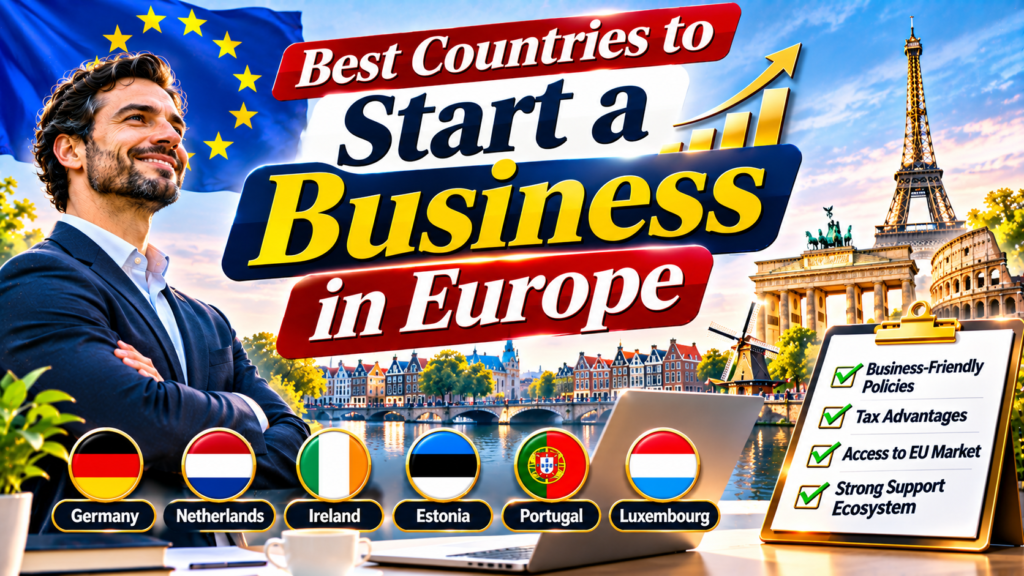
There is no single country that is perfect for every entrepreneur. The best destination depends on whether the business needs access to investors, affordable labour, digital registration, international customers, manufacturing facilities or a strong local consumer market.
Several European countries consistently attract entrepreneurs because of their business ecosystems, international connectivity and economic opportunities. The following countries are worth considering when planning a new venture.
1. Is Estonia One of the Best Countries to Start a Business?
Estonia is widely recognised as one of Europe’s most digitally advanced countries and an attractive destination for entrepreneurs who want to establish and manage a business online. Its digital public services, startup-friendly environment and international business infrastructure make it particularly appealing to technology entrepreneurs, freelancers, software developers and online business owners.
The country’s e-Residency programme allows eligible international entrepreneurs to access certain Estonian digital business services and manage an Estonian company remotely. However, e-Residency is not a residence permit, citizenship or automatic right to live in Estonia.
Estonia is particularly attractive to founders who operate businesses that do not require a physical storefront or large office. Software development, consulting, digital marketing, e-commerce, IT services and SaaS businesses may find its digital infrastructure useful.
What are the advantages of starting a business in Estonia?
- Digital company administration and government services.
- Internationally connected startup ecosystem.
- Business-friendly digital infrastructure.
- Opportunities for technology and innovation companies.
- A system that generally taxes corporate profits when distributed rather than retained, subject to applicable tax rules.
- Access to the European Union’s single market.
Estonia has a growing startup ecosystem and strong digital entrepreneurship infrastructure. The European Commission’s country profile also highlights startup support measures and innovation-related programmes.
What businesses can entrepreneurs start in Estonia?
Entrepreneurs may explore:
- Software development companies.
- Artificial intelligence and technology startups.
- Digital marketing agencies.
- Online consulting services.
- E-commerce businesses.
- IT and cybersecurity services.
- SaaS platforms.
Estonia may be a particularly appealing choice for founders who want to operate a digitally managed company and reinvest earnings into growth. However, banking, taxation, local substance and immigration considerations should be assessed before incorporation.
2. Why Is Ireland a Popular Country for Starting a Business?
Ireland has become an important international business destination, attracting technology companies, financial services firms, pharmaceutical businesses, multinational corporations and startups. Its English-speaking business environment, skilled workforce, international connectivity and established corporate ecosystem make it attractive to entrepreneurs from different parts of the world.
The country offers access to the European Union and has a well-established business environment, particularly for companies operating in technology, digital services, financial services, life sciences and international trade.
Ireland is also known for its connections with multinational companies and international investors. Dublin is one of Europe’s recognised technology and business hubs, while other cities such as Cork, Galway and Limerick also provide opportunities for entrepreneurs.
What are the benefits of starting a business in Ireland?
- English-speaking business environment.
- Access to European and international markets.
- Strong technology and innovation ecosystem.
- Established multinational business presence.
- Skilled workforce.
- Business support and startup programmes.
Ireland’s corporate tax regime is often discussed by international entrepreneurs, but applicable rates depend on the nature of income, company size and relevant tax rules. Entrepreneurs should not assume that the headline rate applies universally.
Which businesses are suitable for Ireland?
Ireland can be attractive for:
- Technology startups.
- Software and cloud businesses.
- Financial technology companies.
- Pharmaceutical and healthcare businesses.
- Consulting companies.
- International services businesses.
- Digital and creative enterprises.
Entrepreneurs who want to build a company serving international customers may find Ireland’s business networks and English-language environment helpful. However, office rents, salaries, accommodation and operating costs can be significant, particularly in Dublin.
3. Is the Netherlands a Good Place to Start a Business?
The Netherlands is one of Europe’s prominent business destinations because of its international trade infrastructure, logistics networks, highly connected economy and access to European markets. It is particularly attractive to entrepreneurs who want to develop a business serving customers in multiple European countries.
The country has a strong logistics and distribution sector, modern infrastructure, international airports, ports, digital connectivity and a well-developed professional services ecosystem.
Amsterdam is known for its international business environment, while Rotterdam plays a major role in international trade and logistics. Other cities also provide opportunities in technology, manufacturing, creative industries and professional services.
Why do entrepreneurs choose the Netherlands?
- Strong international logistics and transportation infrastructure.
- Access to European markets.
- International business networks.
- Developed digital and financial services.
- Skilled and internationally oriented workforce.
- Opportunities in technology, trade and innovation.
What businesses can be started in the Netherlands?
Entrepreneurs may consider:
- E-commerce businesses.
- Import and export companies.
- Logistics and supply chain businesses.
- Technology startups.
- Consulting and professional services.
- Sustainable technology companies.
- International distribution businesses.
The Netherlands is particularly useful for companies that need efficient distribution, international connections and access to business partners across Europe.
However, entrepreneurs should evaluate incorporation costs, payroll obligations, corporate taxes, office expenses, regulatory requirements and housing costs before choosing the country.
4. Is Germany a Good Country for Entrepreneurs?
Germany is Europe’s largest economy and offers significant opportunities for entrepreneurs across manufacturing, engineering, technology, automotive, healthcare, professional services, logistics and industrial innovation.
Its established industrial infrastructure, skilled workforce, research institutions and strong domestic market make it an important destination for companies seeking long-term growth.
Germany is especially attractive for entrepreneurs interested in industrial production, engineering services, manufacturing technology, automation and businesses serving large corporate customers.
Cities such as Berlin, Munich, Frankfurt, Hamburg and Stuttgart offer different business opportunities. Berlin is known for its startup ecosystem, Munich for technology and engineering, Frankfurt for financial services, and Stuttgart for industrial and automotive-related industries.
What are the advantages of starting a business in Germany?
- Large domestic consumer and industrial market.
- Established manufacturing and engineering sectors.
- Skilled professionals.
- Strong research and development ecosystem.
- Developed transport and logistics infrastructure.
- Business opportunities across multiple industries.
Which business ideas are suitable for Germany?
- Manufacturing and industrial services.
- Engineering and automation.
- Artificial intelligence and software.
- Healthcare services and technology.
- Logistics and supply chain management.
- Renewable energy and sustainability.
- Professional consulting.
Germany is an attractive destination for businesses that require customers, suppliers, industrial partnerships or specialised talent. Nevertheless, business registration, accounting, legal compliance, employment regulations and taxation can be more demanding than entrepreneurs expect.
For many businesses, understanding German administrative requirements and language expectations is essential for long-term success.
5. Why Is Portugal Becoming Attractive for Entrepreneurs?
Portugal has gained attention among entrepreneurs, remote professionals, startup founders and international investors. Its growing technology ecosystem, relatively attractive lifestyle, international communities and business opportunities make it an interesting destination for people considering starting a company in Europe.
Lisbon and Porto have developed active startup communities, while other cities and regions offer opportunities in tourism, agriculture, renewable energy, services, manufacturing and technology.
Portugal may be particularly appealing to entrepreneurs who want to establish a digital business, consulting company, tourism venture or small business while operating in a European environment.
What are the advantages of starting a business in Portugal?
- Growing startup ecosystem.
- International entrepreneurial communities.
- Opportunities in tourism and hospitality.
- Business potential in technology and digital services.
- Access to the European Union market.
- Opportunities in renewable energy and sustainable businesses.
What businesses can entrepreneurs start in Portugal?
- Tourism and hospitality businesses.
- Digital marketing agencies.
- Online businesses.
- Software development companies.
- Consulting and professional services.
- Renewable energy ventures.
- Food and lifestyle businesses.
Portugal’s appeal extends beyond business opportunities. Its cities, lifestyle, cultural attractions and international communities can attract entrepreneurs who want to relocate and build businesses.
However, entrepreneurs should carefully evaluate local demand, business registration procedures, taxation, employment regulations, immigration rules and operating expenses.
6. Is Spain a Good Country to Start a Business?
Spain is an attractive business destination for entrepreneurs who want access to a large consumer market, international tourism, growing startup communities and opportunities in technology, retail, hospitality, renewable energy and professional services.
Barcelona and Madrid are among the country’s prominent business hubs. Barcelona has an internationally recognised technology and startup ecosystem, while Madrid is an important centre for finance, corporate services, commerce and business operations.
Spain also offers opportunities in tourism, hospitality, food, real estate-related services, renewable energy, logistics and digital businesses.
What are the advantages of starting a business in Spain?
- Large domestic consumer market.
- Strong tourism and hospitality sector.
- Growing technology ecosystem.
- Opportunities in renewable energy.
- International business connections.
- Access to the European Union market.
Which businesses are suitable for Spain?
- Tourism and hospitality businesses.
- E-commerce companies.
- Food and restaurant businesses.
- Digital technology startups.
- Renewable energy companies.
- Consulting services.
- Creative and lifestyle businesses.
Spain may be a suitable destination for entrepreneurs who want to combine a local customer base with opportunities to serve international markets.
However, business owners should carefully review company registration procedures, taxes, employment rules, regional regulations and licensing requirements.
7. Why Should Entrepreneurs Consider Denmark?
Denmark is known for its developed infrastructure, digital services, innovation, sustainability and business environment. It is particularly attractive to entrepreneurs who want to build companies in technology, renewable energy, healthcare, design, logistics and sustainable industries.
Copenhagen is an important business and innovation centre, while other Danish cities also provide opportunities in technology, manufacturing, research and services.
Denmark has a reputation for efficient digital public services, strong institutional infrastructure and an internationally oriented business environment.
What are the advantages of starting a business in Denmark?
- Digital government infrastructure.
- Strong innovation ecosystem.
- Skilled workforce.
- Opportunities in sustainability.
- Developed healthcare and technology sectors.
- International business environment.
What businesses can entrepreneurs start in Denmark?
- Green technology companies.
- Renewable energy businesses.
- Healthcare technology startups.
- Software development companies.
- Design and creative businesses.
- Consulting and professional services.
- Sustainable consumer products.
Denmark is particularly appealing to entrepreneurs who focus on innovation, sustainable solutions and specialised services.
However, wages and operating costs may be higher than in several other European countries, making financial planning essential.
8. Is Sweden a Good Destination for Startups?
Sweden is recognised for innovation, technology, entrepreneurship, design and digital development. Its startup ecosystem has attracted founders, investors, technology professionals and companies working in software, fintech, telecommunications, sustainability and consumer technology.
Stockholm is one of Europe’s recognised startup cities and offers connections to investors, business networks, innovation communities and technology talent.
Sweden is also known for its emphasis on innovation, sustainability, research and digital services.
What are the benefits of starting a business in Sweden?
- Strong technology ecosystem.
- Skilled workforce.
- Innovation and research infrastructure.
- Opportunities in sustainable technology.
- International business environment.
- Digital services and infrastructure.
What businesses can entrepreneurs start in Sweden?
- Fintech startups.
- Software and SaaS companies.
- Artificial intelligence businesses.
- Sustainable technology ventures.
- Digital design businesses.
- Healthcare technology.
- Consulting services.
Sweden may be a good choice for entrepreneurs who want to develop innovative products, build technology businesses or work with specialised professionals.
However, founders should consider labour costs, taxation, regulatory obligations and the cost of living when planning their operations.
9. Is Poland a Good Country for Starting a Business?
Poland has become an increasingly interesting destination for entrepreneurs looking for business opportunities in Central and Eastern Europe. Its sizeable domestic market, skilled workforce, developed business centres, industrial infrastructure and competitive operating costs make it attractive to businesses across several industries.
Warsaw, Kraków, Wrocław, Gdańsk and Poznań are important business centres. They offer opportunities in technology, financial services, manufacturing, logistics, outsourcing and professional services.
Poland’s location also provides a strategic connection to several Central European markets.
What are the advantages of starting a business in Poland?
- Large domestic market.
- Competitive operating costs compared with many Western European locations.
- Skilled professionals.
- Strong manufacturing and industrial sectors.
- Opportunities in technology and outsourcing.
- International logistics and transportation connections.
What businesses are suitable for Poland?
- Software development.
- Business process outsourcing.
- Manufacturing.
- Logistics and transportation.
- E-commerce.
- Consulting services.
- Financial technology.
Poland may be attractive to entrepreneurs who want to build a company with competitive operating costs while serving local and international customers.
However, business owners should review company registration requirements, taxation, employment obligations, licensing, accounting and local regulatory rules.
10. Why Is Luxembourg Attractive for International Businesses?
Luxembourg is a small but internationally connected European country with a strong financial services sector, international business environment and opportunities in technology, logistics and specialised professional services.
Its location between major European markets and its multilingual business environment make it attractive to companies seeking international connectivity.
Luxembourg is particularly known for financial services, investment management, corporate services and international business operations.
What are the advantages of starting a business in Luxembourg?
- International financial services ecosystem.
- Multilingual business environment.
- Strong international connectivity.
- Access to European markets.
- Opportunities in technology and professional services.
- Developed infrastructure.
Which businesses can entrepreneurs start in Luxembourg?
- Financial technology companies.
- Consulting businesses.
- Corporate and professional services.
- Investment-related services, subject to licensing.
- Software companies.
- Logistics businesses.
- International services companies.
Luxembourg may be particularly attractive to businesses that require international financial connections, professional services or a strategically located European base.
However, operating costs, office expenses, compliance requirements and sector-specific regulations should be carefully considered.
11. Is Malta a Good Place to Start a Business in Europe?
Malta is a small European country with an internationally oriented economy and opportunities in tourism, digital services, financial services, maritime industries, technology and professional services.
Its English-language business environment and international connections make it attractive to certain entrepreneurs who want to establish a company serving European and international customers.
Malta has developed business opportunities in digital services, hospitality, financial services, gaming-related industries, maritime activities and specialized commercial operations.
What are the benefits of starting a business in Malta?
- English is widely used in business.
- International business connections.
- Opportunities in tourism and hospitality.
- Digital services and technology sectors.
- Financial and professional services infrastructure.
- Access to European markets.
What businesses can entrepreneurs start in Malta?
- Tourism businesses.
- Hospitality services.
- Software development.
- Digital marketing.
- International consulting.
- Maritime services.
- Technology and digital services.
Malta may be an attractive destination for businesses with an international focus, particularly in specialised sectors.
However, entrepreneurs should carefully examine licensing, financial services regulations, taxation, compliance and the practical requirements of operating a business in the country.
Which European Country Is Best for Different Types of Businesses?
The best country for a new business depends on the sector, target market, available capital, business structure and operational requirements. Instead of choosing a country solely based on its reputation, entrepreneurs should match their business model with the country’s strengths.
| Country | Particularly suitable for |
|---|---|
| Estonia | Digital businesses, software, online companies |
| Ireland | Technology, international services, life sciences |
| Netherlands | Trade, logistics, e-commerce, international operations |
| Germany | Manufacturing, engineering, industrial technology |
| Portugal | Digital businesses, tourism, services, startups |
| Spain | Hospitality, technology, retail, renewable energy |
| Denmark | Green technology, innovation, healthcare |
| Sweden | Technology, fintech, innovation, sustainability |
| Poland | Manufacturing, technology, outsourcing, logistics |
| Luxembourg | Financial services, international business |
| Malta | Tourism, digital services, specialised industries |
This is a practical sector-based comparison, not an official ranking. Actual suitability depends on the entrepreneur’s circumstances.
What Should Entrepreneurs Consider Before Starting a Business in Europe?
Choosing the right country is only one part of the process. Entrepreneurs must also evaluate legal, financial, operational and strategic factors before registering a company.
1. How Much Does It Cost to Start a Business?
Startup costs vary depending on the country, industry, business structure and operational requirements.
Entrepreneurs should consider the following expenses:
- Company registration fees.
- Legal and accounting services.
- Business licences and permits.
- Office rent or workspace costs.
- Employee salaries.
- Insurance.
- Website development and digital tools.
- Marketing and advertising.
- Banking and financial services.
- Initial inventory and equipment.
A digital consulting business may require relatively little initial investment compared with a manufacturing business, restaurant or physical retail shop.
2. Which Country Has the Best Tax System for Entrepreneurs?
Corporate taxation is an important consideration when choosing a European business destination. However, the lowest tax rate does not necessarily make a country the best choice.
Entrepreneurs should examine:
- Corporate income tax.
- VAT or sales-related tax obligations.
- Payroll taxes and social contributions.
- Dividend taxation.
- Personal income tax.
- Tax treaties.
- Tax residency rules.
- Local compliance requirements.
Tax rules can change, and different tax treatments may apply depending on the type of business, revenue, ownership structure and location of management.
3. Can Foreigners Start a Business in Europe?
Many European countries allow foreign nationals to establish companies, but the rules vary.
Company ownership, residence rights, work permits, banking requirements and business management obligations are separate matters. A foreign entrepreneur may be able to own a company without automatically receiving permission to live or work in the country.
Before starting a business, international entrepreneurs should check:
- Company ownership rules.
- Residence and visa requirements.
- Startup visa eligibility.
- Business management requirements.
- Banking and identity verification.
- Tax residency implications.
- Local licensing requirements.
4. Which European Country Offers the Best Access to Customers?
Entrepreneurs should consider where their customers are located and whether the business needs a local presence.
For example, a manufacturing company may benefit from being near suppliers, industrial customers and transport infrastructure. An e-commerce company may prioritise distribution centres, shipping networks and access to online consumers.
A consulting company may prioritise international business networks, professional services and communication infrastructure.
Understanding customer demand is often more important than choosing a country based solely on business registration convenience.
5. How Important Is Access to Skilled Workers?
Talent availability is an important factor for businesses that depend on specialised professionals.
Technology companies may need software developers, engineers, cybersecurity experts and data specialists. Manufacturing companies may need industrial engineers and skilled technicians. Professional services firms may need accountants, legal professionals, consultants and business managers.
Entrepreneurs should evaluate:
- Availability of qualified professionals.
- Recruitment costs.
- Employment regulations.
- Language skills.
- Remote work opportunities.
- Work permits and immigration requirements.
6. Should Entrepreneurs Choose a Country Based on Lifestyle?
Lifestyle can influence the decision to establish a business, especially for entrepreneurs who intend to relocate.
Climate, housing, healthcare, transportation, education, language, culture and personal preferences can influence long-term business decisions.
However, lifestyle considerations should be balanced with financial sustainability, customer demand, business infrastructure and legal obligations.
Frequently Asked Questions About the Best Countries to Start a Business in Europe
Q1. Which is the easiest country to start a business in Europe?
Ans: Estonia is often considered one of the easiest countries for digitally managed businesses because of its online administration and e-Residency infrastructure. The Netherlands, Ireland and other countries also offer attractive business environments, depending on the type of company and founder’s circumstances.
Q2. Which European country is best for small businesses?
Ans: Portugal, Estonia, Poland, the Netherlands and Spain may be attractive to small business owners, depending on their business models, budgets, target customers and operational requirements.
There is no universal best country for every small business.
Q3. Which country is best for startups in Europe?
Ans: Estonia, Ireland, Sweden, the Netherlands, Germany, Denmark and France are among the countries entrepreneurs may consider for startup opportunities. Their ecosystems differ in talent, funding, industry specialisation, infrastructure and costs.
Recent European startup ecosystem comparisons highlight differences between countries in startup density, funding, innovation, talent and internationalisation.
Q4. Which European country is best for technology businesses?
Ans: Estonia, Ireland, Sweden, the Netherlands, Germany and Denmark are worth considering for technology businesses.
Entrepreneurs should compare the availability of technical talent, investors, customers, research institutions, business networks and relevant industry support.
Q5. Can I start a business in Europe without living there?
Ans: In some European countries, foreign entrepreneurs may establish or own companies without residing there. However, company ownership does not automatically grant immigration rights, permission to work, banking access or tax advantages.
The rules depend on the country, company structure and the entrepreneur’s circumstances.
Q6. Which country is best for e-commerce businesses in Europe?
Ans: The Netherlands, Germany, Poland, Estonia and Ireland may be attractive to e-commerce entrepreneurs because of their logistics infrastructure, digital services, market access and business networks.
The right location depends on shipping costs, warehousing, suppliers, customers, VAT obligations and fulfilment requirements.
Q7. Is it better to start a business in Western or Eastern Europe?
Ans: Western European countries may offer established international business networks, developed infrastructure and strong consumer markets, but they may also have higher operating costs.
Central and Eastern European countries may offer competitive operating costs, skilled professionals, growing technology ecosystems and manufacturing opportunities.
The best choice depends on the company’s business model and long-term strategy.
Conclusion: Which Country Should You Choose to Start a Business in Europe?
Europe offers a wide range of business opportunities for entrepreneurs, investors, freelancers and startup founders. From Estonia’s digital infrastructure and Ireland’s international business environment to Germany’s industrial strength, the Netherlands’ logistics network and Portugal’s growing startup ecosystem, each country offers different advantages.
The best country to start a business in Europe is the one that aligns with your business idea, financial resources, target customers, industry requirements and long-term growth strategy.
Entrepreneurs should compare company registration procedures, taxation, operating costs, skilled talent, infrastructure, immigration requirements and customer access before making a final decision.
Starting a business in Europe can open doors to international partnerships, innovation, new customers and long-term growth. With careful planning, market research and the right business strategy, entrepreneurs can explore opportunities across one of the world’s most diverse business regions.
Read More – Best European Crime Movies Must-Watch