
Best Train Journeys in Europe: Scenic Routes Every Traveller Should Experience
Europe is one of the world’s most exciting destinations for railway travel, offering a unique combination of spectacular landscapes, historic cities, charming villages, and modern transportation. From snow-covered Alpine mountains to Mediterranean coastlines, travelling by train allows visitors to experience the continent’s beauty in a relaxed and memorable way. The best train journeys in Europe are not just about reaching a destination; they are about enjoying the scenery, discovering local cultures, and experiencing the journey itself.
Unlike air travel, which often involves airport transfers, security checks, and waiting times, train travel can take passengers directly from city centres to city centres. Travellers can admire rolling countryside, cross impressive bridges, pass through mountain tunnels, and watch picturesque villages appear outside their windows. Many European railway networks also offer comfortable seating, dining facilities, panoramic windows, and convenient connections between popular destinations.
Whether you are planning a romantic holiday, a family adventure, a solo backpacking trip, or a luxury European vacation, scenic train travel offers something for everyone. With suitable planning, passengers can explore several countries during one trip while enjoying the comfort and convenience of rail transportation.
Which Are the Best Train Journeys in Europe?
Europe has numerous unforgettable railway routes, each offering its own combination of scenery, culture, and travel experiences. Some routes are famous for spectacular mountain views, while others follow dramatic coastlines or connect historic European capitals.
The following are among the best train journeys in Europe for travelers seeking beautiful landscapes and memorable rail adventures.
1. Why Is the Glacier Express in Switzerland So Famous?
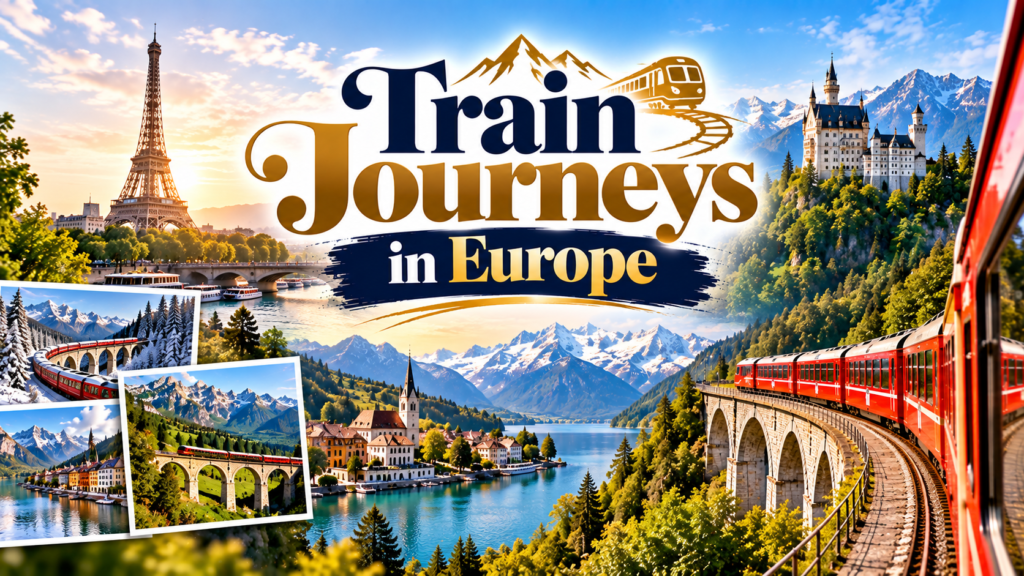
The Glacier Express is one of the most famous scenic train journeys in Europe. Connecting Zermatt and St. Moritz in Switzerland, this remarkable railway journey crosses the Swiss Alps and offers magnificent views of mountain peaks, deep valleys, alpine villages, and dramatic bridges.
The route is especially popular with travellers who want to experience Switzerland’s natural beauty without driving through winding mountain roads. Large panoramic windows allow passengers to enjoy the surrounding scenery while travelling comfortably through the Alps.
Highlights of the Glacier Express include:
- Spectacular views of the Swiss Alps and mountain landscapes.
- The impressive Landwasser Viaduct, a celebrated railway landmark.
- Deep valleys, mountain passes, and picturesque villages.
- Comfortable seating and onboard dining options on applicable services.
The complete journey typically takes around eight hours, although travel times and services can vary by timetable and season. It is an excellent option for couples, photographers, nature lovers, and luxury travel enthusiasts.
Travellers should reserve seats in advance, particularly during popular holiday periods. It is also worth remembering that the Glacier Express is a specific panoramic service, rather than simply any train travelling between its endpoints.
2. What Makes the Bernina Express One of Europe’s Most Scenic Rail Routes?
The Bernina Express is another outstanding Swiss railway experience, connecting Chur or other points on the route with Tirano in northern Italy. The journey is famous for its extraordinary mountain scenery and its transition from the high Alps towards the warmer landscapes of Italy.
Passengers can admire glaciers, alpine lakes, snow-covered peaks, stone bridges, and dramatic mountain curves. The railway’s changing elevation makes the journey particularly interesting, as the scenery gradually transforms from rugged alpine terrain to valleys with Mediterranean influences.
Important highlights include:
- The impressive Brusio Circular Viaduct.
- Views of the Bernina mountain region and its glaciers.
- Beautiful alpine lakes and traditional mountain settlements.
- A memorable rail connection between Switzerland and Italy.
The journey is ideal for travellers who want to experience two countries in a single railway adventure. The panoramic Bernina Express offers reserved seating arrangements, while regular regional trains on the same railway can provide a more flexible alternative.
For the best experience, check seasonal conditions and timetable details before travelling. Clear weather can improve mountain views, but the route remains attractive throughout the year.
3. Why Should You Experience the West Highland Line in Scotland?
The West Highland Line in Scotland is one of Europe’s most atmospheric railway journeys. Running from Glasgow towards destinations such as Fort William and Mallaig, the route takes passengers through remote countryside, rugged mountains, tranquil lochs, and dramatic Highland landscapes.
The journey is particularly appealing to travellers who appreciate natural beauty and quieter destinations. As the train moves away from Glasgow, urban surroundings give way to open countryside and the distinctive scenery of the Scottish Highlands.
One of the most celebrated features is the Glenfinnan Viaduct, which has become internationally recognisable through its appearance in the Harry Potter films. The surrounding landscape includes hills, waterways, and spectacular views that attract photographers throughout the year.
Why is this railway journey worth considering?
- It offers access to the dramatic Scottish Highlands.
- It passes through remote and sparsely populated landscapes.
- It provides opportunities to explore Fort William and Mallaig.
- It is especially appealing to nature lovers and railway enthusiasts.
Travellers can combine the railway experience with hiking, sightseeing, wildlife watching, and exploring Scotland’s historic communities. Weather conditions can change quickly, so carrying waterproof clothing is advisable.
4. What Can You See on the Bergen Railway in Norway?
The Bergen Railway, also known as Bergensbanen, connects Oslo and Bergen through some of Norway’s most impressive landscapes. The route crosses mountainous terrain and the expansive Hardangervidda plateau, offering a remarkable introduction to Norway’s natural environment.
During the journey, passengers may see snow-covered landscapes, mountain lakes, forests, and remote settlements. Seasonal changes make the route particularly interesting: winter can create a dramatic snowy atmosphere, while summer brings longer daylight hours and opportunities to enjoy the surrounding scenery.
The journey generally takes around six to seven hours, depending on the service and timetable. It is popular with visitors travelling between Norway’s capital and its scenic western coast.
The Bergen Railway is also a useful starting point for a wider Norwegian adventure. Travellers can connect their rail trip with local transportation and organised excursions to explore fjords, mountain villages, and coastal attractions.
For those searching for scenic train journeys in Europe, the Bergen Railway offers an excellent combination of practical transportation and unforgettable views.
5. Is the Flam Railway Worth Visiting in Norway?
The Flåm Railway, or Flåmsbana, is one of Norway’s best-known tourist railways. It connects the mountain station of Myrdal with the village of Flåm, near the Aurlandsfjord, and is celebrated for its steep descent through a spectacular valley.
Although the railway journey is relatively short compared with some other European routes, its scenery is remarkably varied. Passengers can enjoy views of towering mountains, waterfalls, green valleys, and traditional Norwegian landscapes.
The train also makes a scheduled stop near the impressive Kjosfossen waterfall when operating conditions and the timetable permit.
Reasons to include the Flåm Railway in your itinerary include:
- A memorable journey through a steep mountain valley.
- Views of waterfalls, cliffs, and green countryside.
- Convenient connections with the Bergen Railway at Myrdal.
- Opportunities to explore the fjord region around Flåm.
Travellers can combine the Flåm Railway with a fjord cruise, local hiking trails, or a stay in a small Norwegian village. Booking ahead is advisable during the busy summer season.
6. Why Is the Venice Simplon-Orient-Express a Dream Journey for Luxury Travellers?
The Venice Simplon-Orient-Express is among the world’s most iconic luxury train experiences. Associated with the glamour of classic European rail travel, it features beautifully restored carriages, elegant interiors, attentive service, and fine dining on selected journeys.
The train operates on specific itineraries rather than as a regular everyday service between all European cities. Depending on the departure and scheduled route, passengers may experience famous destinations such as Paris, Venice, or other European locations.
What makes this journey special is the atmosphere. Vintage design, carefully prepared meals, formal evening experiences, and historic railway traditions create a distinctive style of travel.
The experience is particularly suited to:
- Couples celebrating anniversaries or special occasions.
- Luxury travellers seeking a unique European holiday.
- Railway enthusiasts interested in historic train design.
- Visitors who value fine dining and personalised service.
Prices are generally much higher than conventional train tickets, and availability depends on the specific itinerary and departure date. Travellers should consult the operator’s current schedule and accommodation options before planning their trip.
7. What Makes the Cinque Terre Train Route in Italy So Beautiful?
Italy’s Cinque Terre railway connects a collection of picturesque coastal villages along the Ligurian Riviera. The area is known for colourful buildings, steep hillsides, seaside views, walking trails, and a relaxed Mediterranean atmosphere.
The local railway is particularly useful because it connects villages that can be difficult to access by car. Trains run between destinations such as Monterosso al Mare, Vernazza, Corniglia, Manarola, and Riomaggiore, although service frequency varies.
The journey itself is relatively short, but its value lies in the opportunity to explore multiple coastal communities in one day or over several days.
Visitors can enjoy:
- Colourful seaside villages and historic streets.
- Mediterranean food, including regional seafood and pesto.
- Coastal walking trails where open and accessible.
- Beaches, harbours, and scenic viewpoints.
Spring and early autumn can be attractive times to visit because temperatures are often comfortable for walking. Summer is also popular but can be crowded. Check local trail access and train timetables before travelling, particularly during periods of maintenance or severe weather.
8. Why Is the West Coast Main Line Important for Exploring Britain?
The West Coast Main Line is one of Britain’s major railway corridors, linking London with important destinations in the Midlands, northwest England, and Scotland. It is primarily a practical intercity route rather than a dedicated panoramic tourist train, but it provides an excellent way to explore several parts of the country.
Depending on the service, passengers can travel between London and cities such as Birmingham, Manchester, Liverpool, Glasgow, and Edinburgh through connections or related rail routes.
The appeal of this journey is its convenience. Visitors can enjoy city-centre arrivals, avoid long-distance driving, and combine cultural attractions with countryside excursions.
Travellers can use the route as part of an itinerary that includes:
- London’s museums, theatres, and historic landmarks.
- Manchester’s music, football, and cultural attractions.
- Liverpool’s waterfront and maritime heritage.
- Scottish destinations accessible through rail connections.
Because the line includes different services and routes, travellers should check their exact train and connections rather than assuming every service visits every destination.
9. What Makes the Train Journey from Paris to the French Riviera Special?
Travelling by train from Paris towards the French Riviera offers an enjoyable way to connect France’s capital with its Mediterranean coast. High-speed services operate on this corridor, with destinations and journey times depending on the train and stopping pattern.
Passengers can leave the busy capital and travel south through changing landscapes towards cities such as Marseille, Cannes, Nice, or other destinations served directly or through connections.
Although high-speed trains are designed primarily for efficient travel, parts of the journey provide views of the French countryside and southern landscapes. The greatest reward is the ability to arrive in the Riviera region without the stress of driving long distances.
Highlights of a rail holiday in southern France include:
- Exploring Nice’s Promenade des Anglais and Old Town.
- Visiting Cannes and its waterfront.
- Discovering Marseille’s historic harbour and food culture.
- Taking regional trains to nearby coastal towns.
Travellers should book popular high-speed services early when possible. Seat reservations and ticket conditions vary by service, and the most convenient route depends on the final destination.
10. Why Should You Take the Train Through the Rhine Valley in Germany?
The Rhine Valley offers one of Germany’s most attractive railway experiences, particularly along sections of the Rhine Gorge between Bingen and Koblenz. This landscape is known for its river views, hillside vineyards, medieval castles, and picturesque riverside towns.
Regional trains make it possible to enjoy the area without renting a car. Depending on the route, passengers can look out over the Rhine River while passing villages and historic landmarks that reflect the region’s long trading and cultural history.
The Rhine Valley is especially attractive to travellers interested in history, wine-growing landscapes, photography, and relaxed sightseeing.
What can visitors experience along the way?
- Views of castles overlooking the river.
- Traditional towns with historic architecture.
- Vineyards and scenic walking paths.
- River cruises and local food experiences.
Travellers can combine the train with a river cruise or overnight stay in a town such as Bacharach or Boppard. Since not every train offers identical views or stops, checking the specific route and direction of travel can help maximise the experience.
11. Is the Train Journey Across the Austrian Alps Worth It?
Austria is another excellent destination for scenic railway travel. Routes through the Austrian Alps connect major cities and smaller mountain communities, providing access to beautiful valleys, historic towns, and dramatic alpine scenery.
The Semmering Railway is especially notable for its historic engineering, mountain curves, tunnels, and impressive viaducts. It forms part of a UNESCO World Heritage-listed railway landscape and demonstrates how railway construction helped connect challenging mountain regions.
Other Austrian rail routes provide convenient links to destinations such as Innsbruck, Salzburg, and the Tyrol region. The views vary by service, season, and route.
Travellers can enjoy:
- Alpine scenery and mountain villages.
- Historic railway engineering and impressive bridges.
- Access to hiking, skiing, and outdoor activities.
- Connections to Austrian cities known for architecture and culture.
Winter can be particularly attractive for snow-covered scenery, while warmer months are excellent for walking and exploring the countryside. Travellers should check seasonal timetables and local transport connections when planning mountain excursions.
12. What Is the Best Train Journey for Exploring Spain?
Spain offers an extensive high-speed railway network that makes travelling between major cities convenient. Routes connect destinations such as Madrid, Barcelona, Seville, Valencia, and Málaga, depending on the service and itinerary.
Spain’s high-speed trains are generally better known for speed and comfort than for dedicated panoramic sightseeing. However, the changing landscapes of the Spanish interior, historic cities, and easy access to regional destinations make railway travel an excellent choice for a broader holiday.
A train-based Spanish itinerary can include:
- Madrid for museums, royal landmarks, and lively neighbourhoods.
- Barcelona for architecture, food, and Mediterranean beaches.
- Seville for Andalusian culture and historic monuments.
- Valencia for its old town, modern architecture, and coastline.
Travellers should distinguish between high-speed services and regional trains, as travel times, fares, baggage arrangements, and reservation requirements differ. Booking early can help secure better fares on popular routes.
13. Which European Train Journeys Are Best for Romantic Holidays?
Train travel can create a memorable setting for a romantic European holiday. Couples can enjoy beautiful scenery, unhurried conversations, picturesque destinations, and the pleasure of travelling together without the demands of driving.
The best route depends on the type of experience a couple wants. The Glacier Express is ideal for mountain scenery, while the Rhine Valley provides historic towns and river landscapes. The Cinque Terre railway offers access to charming Italian coastal villages, and luxury services such as the Venice Simplon-Orient-Express provide an especially distinctive atmosphere.
For a romantic trip, consider the following ideas:
- Choose a scenic route with comfortable daytime travel.
- Reserve seats together and, where available, select panoramic seating.
- Plan an overnight stay rather than rushing between destinations.
- Include local restaurants, walking tours, or boat excursions.
- Consider travelling outside the busiest holiday periods.
A well-planned rail holiday can be more rewarding than trying to visit too many places in a short period. Leaving time to explore each destination helps couples enjoy the experience at a relaxed pace.
14. When Is the Best Time to Experience Scenic Train Journeys in Europe?
The best time for train travel in Europe depends on the route, climate, scenery, and activities you want to enjoy. Each season offers different advantages, and there is no single perfect month for every railway journey.
Spring (March to May): Spring is appealing for travellers who want milder weather, greener landscapes, and opportunities to explore towns on foot. However, mountain routes can still experience winter conditions, and some seasonal services may not yet be operating at full frequency.
Summer (June to August): Summer offers long daylight hours, making it an excellent time for mountain scenery, fjord excursions, and coastal destinations. It is also a peak travel period, so popular routes can be busy and advance reservations are often important.
Autumn (September to November): Autumn can bring attractive colours to forests, vineyards, and countryside landscapes. September and early October are particularly appealing in many regions, although daylight hours become shorter as the season progresses.
Winter (December to February): Winter is ideal for travellers seeking snowy Alpine scenery, festive markets, and atmospheric city breaks. However, weather conditions may affect services, and some mountain excursions or seasonal attractions may have limited availability.
Before booking, review the railway operator’s timetable, expected weather conditions, daylight hours, and any seasonal service changes.
15. How Can You Plan a Budget-Friendly Train Trip Across Europe?
European train travel can suit a range of budgets, from economical regional journeys to premium luxury experiences. Careful planning can make even a multi-country railway holiday more affordable.
One of the most important decisions is whether to buy individual tickets or a rail pass. Individual tickets may offer good value when your itinerary is fixed and booked early. A pass can be useful for travellers making multiple journeys across countries, but it is not automatically the cheapest option.
Here are some practical ways to manage your costs:
- Book early: High-speed and popular scenic services may offer limited lower-priced fares.
- Compare ticket types: Check standard tickets, advance fares, and flexible options.
- Evaluate rail passes: Compare the pass price with the cost of your planned journeys, including reservation fees.
- Travel off-peak: Where available, quieter departures may offer better value.
- Use regional trains: These can be economical and may offer scenic alternatives to faster services.
- Pack snacks and water: This can reduce onboard food expenses, subject to the train’s rules.
- Stay near stations: Convenient accommodation can reduce local transport costs.
Remember that panoramic tourist trains may require supplements or mandatory seat reservations even when you have a rail pass. Check the complete cost before committing to a route.
16. Should You Buy a Eurail Pass for European Train Journeys?
A Eurail Pass can be useful for eligible visitors who want to travel extensively by train across participating European countries. It may provide flexibility for exploring multiple destinations without purchasing every journey separately.
However, a pass does not necessarily include every service without additional charges. Some high-speed trains and popular scenic services require reservations or supplements, and reservation availability can be limited during busy periods.
Before purchasing a pass, consider:
- How many long-distance journeys you plan to take.
- Whether your preferred trains require reservations.
- The total price of individual tickets for your itinerary.
- Whether you need flexibility or prefer fixed travel dates.
- Which countries and transport services are covered by the pass.
A pass may be worthwhile for a multi-country itinerary with several expensive best train journeys in Europe. For a short holiday involving only two or three fixed routes, individual tickets may be more economical. Always verify the current pass conditions and eligible services before booking.
17. What Should You Pack for a Long Train Journey in Europe?
Packing appropriately can make a significant difference to your comfort during a European railway holiday. While most trains provide seating and basic facilities, the exact amenities vary by operator, service type, and journey length.
Useful items to pack include:
- A valid passport or accepted identification, along with required travel documents.
- Train tickets, reservation details, and travel insurance information.
- A phone charger and power bank.
- Headphones, reading material, or downloaded entertainment.
- Water and snacks where permitted.
- Comfortable clothing and a light layer for changing temperatures.
- Any necessary medication and personal essentials.
- A small day bag for items you need during the journey.
For scenic journeys, keep a camera or phone easily accessible. If you plan to explore mountain areas or stop in small towns, bring suitable walking shoes and weather-appropriate clothing.
Check luggage restrictions and onboard facilities before departure, particularly when travelling on international services or luxury trains.
18. What Are the Most Important Tips for First-Time Train Travellers in Europe?
First-time visitors can make their European rail holiday smoother by understanding how ticketing, reservations, stations, and connections work. Although rail travel is generally straightforward, a little preparation helps prevent unnecessary stress.
Follow these practical tips:
- Check the exact station: Large cities may have several stations, and your train may not depart from the one you expect.
- Arrive early: Allow enough time to find the platform, check departure information, and board comfortably.
- Verify reservations: A ticket and a seat reservation are not always the same thing.
- Check platform information: Platforms can change, so monitor departure boards.
- Allow connection time: Avoid tight transfers, particularly when travelling internationally or carrying luggage.
- Keep valuables secure: Use normal precautions in crowded stations and onboard trains.
- Understand ticket conditions: Some discounted tickets have restrictions on changing departure times.
- Prepare for disruptions: Check operator updates and know your options if a connection is delayed.
For overnight or international journeys, confirm passport requirements and border procedures where applicable. Travellers should also check luggage rules and any special requirements for bicycles, pets, or oversized bags.
19. How Can You Build a Memorable European Train Travel Itinerary?
The best itinerary balances scenic journeys with time to enjoy the destinations themselves. Instead of trying to cross the entire continent in a few days, select a region and build a route around the experiences that matter most to you.
For example, a Swiss railway holiday could combine Zurich, Lucerne, the Glacier Express route, and the Bernina region. A Norwegian trip could connect Oslo and Bergen with the Flåm Railway and a fjord excursion. Travellers interested in Italy might combine Milan, the Cinque Terre villages, and Venice using a mix of regional and long-distance services.
A practical planning approach is to:
- Select two or three main destinations.
- Identify the railway routes that connect them.
- Check journey duration, departure frequency, and reservation requirements.
- Add extra time for sightseeing and possible delays.
- Compare accommodation prices and local transport options.
- Confirm all bookings and travel documents before departure.
Remember that a train route can be the highlight of a trip, but not every section of every journey is panoramic. Researching the specific railway service helps set realistic expectations.
Conclusion: Which Are the Best Train Journeys in Europe for Your Next Holiday?
The best train journeys in Europe offer much more than convenient transportation. They provide an opportunity to admire extraordinary landscapes, discover historic towns, experience different cultures, and travel at a more relaxed pace. From the majestic Swiss Alps and Norway’s dramatic mountain valleys to Scotland’s rugged Highlands and Italy’s colourful coastline, Europe’s railways offer unforgettable experiences for every kind of traveller.
The Glacier Express and Bernina Express are excellent choices for spectacular alpine scenery, while the West Highland Line and Bergen Railway appeal to nature lovers. The Flam Railway offers a remarkable journey through a Norwegian valley, and the Cinque Terre railway makes it easy to explore beautiful Italian coastal villages. Travelers seeking a premium experience can consider the Venice Simplon-Orient-Express, while regional and high-speed trains make it possible to explore many other European destinations efficiently.
The right and the best train journeys in Europe depends on your budget, travel dates, interests, and preferred pace. By comparing routes, checking current timetables, reserving popular services early, and leaving enough time to explore each destination, you can create a European railway holiday that is both practical and memorable.
Whether you are planning your first visit or returning to discover new destinations, exploring best train journeys in Europe is a wonderful way to make the journey as rewarding as the destination itself.
Read More – Europe Global AI Trends to Watch