
Famous European Festivals: Which Celebrations Should You Experience in Europe?
Europe is famous for its rich cultural heritage, historic cities, diverse traditions, and spectacular celebrations. Throughout the year, countries across the continent host exciting festivals that attract millions of visitors from around the world. From colourful carnivals and world-famous music events to traditional Christmas markets and historic cultural celebrations, European festivals offer unforgettable experiences for travellers of every age. These events showcase the continent’s unique identity through music, dance, food, art, fashion, and centuries-old customs.
Whether you want to experience the lively streets of Spain, enjoy traditional celebrations in Germany, discover the artistic atmosphere of France, or explore the magical Christmas markets of Central Europe, there is a European festival for every traveller. Understanding the most famous European festivals can help you plan a memorable holiday while discovering the traditions that make each destination special.
What Are the Most Famous European Festivals?
Europe hosts hundreds of festivals every year, ranging from large international music gatherings to small community celebrations rooted in local history. Some festivals are famous for their energetic atmosphere, while others attract visitors through traditional costumes, regional food, religious ceremonies, or artistic performances.
Among the most famous European festivals are Oktoberfest in Germany, La Tomatina in Spain, Carnival of Venice in Italy, the Edinburgh Festival Fringe in Scotland, the Cannes Film Festival in France, and the Christmas markets found across several European countries.
These celebrations offer different experiences depending on the destination and season. Some are ideal for music lovers, while others appeal to food enthusiasts, art fans, families, and travelers interested in cultural heritage.
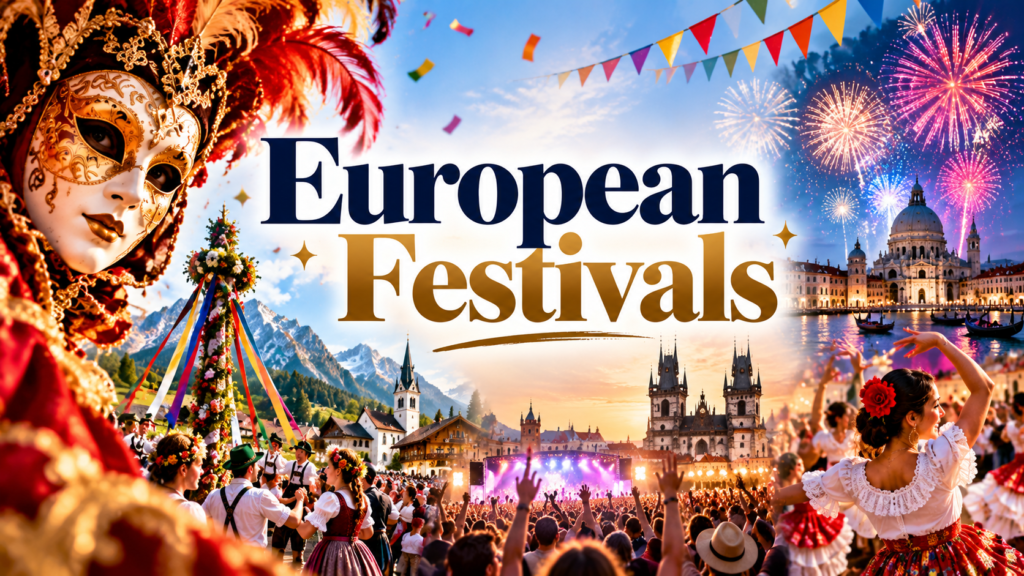
Here are some popular European festivals worth discovering:
- Oktoberfest in Munich, Germany
- Carnival of Venice in Venice, Italy
- La Tomatina in Buñol, Spain
- Edinburgh Festival Fringe in Scotland
- Cannes Film Festival in France
- Running of the Bulls during San Fermín in Pamplona, Spain
- Glastonbury Festival in England
- Sziget Festival in Budapest, Hungary
- King’s Day in the Netherlands
- Christmas markets in Germany, Austria, and other European destinations
Each event offers a different perspective on European culture and creates opportunities to explore local traditions, regional cuisine, and community celebrations.
Why Are European Festivals Popular Among Travellers?
European festivals are popular because they combine entertainment with cultural discovery. Visitors can experience local customs, listen to international performers, taste traditional dishes, and explore historic destinations while participating in exciting public celebrations.
One of the biggest attractions is the diversity of experiences. A festival in Spain may feature street parties and energetic dancing, while an event in Austria may focus on classical music or traditional Christmas markets. In the United Kingdom, major music and arts festivals bring together performers from around the world.
Festivals also allow travellers to experience European destinations beyond their famous landmarks. Instead of simply visiting museums, castles, and monuments, visitors can interact with local communities and understand how traditions continue to shape modern European life.
Many festivals also support local economies by attracting tourists, creating seasonal employment, and generating business for hotels, restaurants, shops, and transport providers.
1. What Makes Oktoberfest in Germany So Famous?
Oktoberfest is one of the most recognised traditional festivals in Europe. Held in Munich, Bavaria, it attracts visitors who want to experience Bavarian culture, traditional food, folk music, and lively festival grounds.
The event originated in 1810 as a celebration of the marriage of Crown Prince Ludwig of Bavaria and Princess Therese of Saxony-Hildburghausen. Over time, the celebration developed into a major annual festival that has become an important part of Munich’s cultural identity.
Oktoberfest usually takes place from late September into early October. Visitors can explore large festival tents, enjoy traditional Bavarian dishes, watch folk performances, and experience amusement rides and parades.
Popular foods include pretzels, roasted chicken, sausages, and other regional specialities. Traditional clothing, including dirndls and lederhosen, is also associated with the celebration.
Why should you visit Oktoberfest?
- Experience traditional Bavarian music and culture.
- Discover regional German food.
- Enjoy carnival rides and festival attractions.
- Learn about Munich’s history and traditions.
- Meet visitors from different countries.
Travellers should book accommodation early because Munich becomes particularly busy during the festival period.
2. Why Is the Carnival of Venice Famous Worldwide?
The Carnival of Venice is one of Italy’s most distinctive cultural celebrations. Known for elaborate masks, elegant costumes, historic architecture, and atmospheric public events, the festival transforms Venice into a spectacular setting for artistic expression.
The carnival has roots in medieval Venetian traditions, although its history includes periods of interruption and revival. Today, it is celebrated in the weeks leading up to Lent, with dates changing each year according to the Christian calendar.
Visitors can see people wearing decorative masks and elaborate costumes in public squares, along canals, and near historic landmarks. Events may include costume contests, theatrical performances, concerts, and special cultural activities.
The famous Venetian mask tradition is central to the festival’s identity. Historically, masks allowed people to conceal their identities during certain celebrations, and they remain an important symbol of Venetian craftsmanship.
What can travellers experience at the Carnival of Venice?
- Admire elaborate masks and historical costumes.
- Photograph Venice’s canals and historic streets.
- Attend cultural performances and organised events.
- Explore Venetian food and traditional cafés.
- Discover local art, architecture, and craftsmanship.
The festival is especially attractive to photographers, history enthusiasts, couples, and travellers interested in European art and fashion.
3. What Is La Tomatina and Why Is It Celebrated in Spain?
La Tomatina is one of the world’s most unusual and entertaining festivals. Held in Buñol, a town in Spain’s Valencia region, it is famous for its large-scale tomato-throwing event.
The celebration usually takes place on the last Wednesday of August. Participants gather in the town centre and take part in an organised tomato fight that turns the streets into a colourful spectacle.
Although the festival’s exact origins are debated, it developed from a local street celebration in the mid-20th century and gradually became an internationally recognised event.
La Tomatina attracts visitors looking for a fun and unconventional cultural experience. The event is generally organised with participation rules, crowd-management measures, and instructions designed to improve safety.
Why is La Tomatina worth experiencing?
- Participate in a distinctive Spanish street celebration.
- Enjoy a lively and playful festival atmosphere.
- Discover the local culture of Buñol.
- Explore Valencia’s regional cuisine and attractions.
- Experience a festival unlike traditional music or art events.
Visitors should check official event rules before attending, wear clothing suitable for getting messy, protect their eyes, and follow instructions from organisers.
4. Why Is the Edinburgh Festival Fringe Famous?
The Edinburgh Festival Fringe is one of the world’s largest performing arts festivals. Held annually in Scotland’s capital, it celebrates creativity through theatre, comedy, dance, music, spoken word, and experimental performances.
The Fringe began in 1947, when several theatre groups performed in Edinburgh alongside the city’s newly established international festival without being part of its official programme. The independent spirit of these performances helped establish the event’s identity.
Today, the festival features performances in theatres, pubs, temporary venues, outdoor spaces, and other locations throughout Edinburgh. Established performers share the programme with emerging artists, making it an important platform for new creative talent.
The festival generally takes place in August, when the city becomes a major international destination for artists and audiences.
What makes the Edinburgh Festival Fringe special?
- Discover comedy shows and innovative theatre.
- Watch performances by emerging artists.
- Experience Scotland’s creative and cultural scene.
- Explore Edinburgh’s historic streets and architecture.
- Choose from performances suited to different interests and budgets.
Because the programme is extensive, visitors should review show schedules, venue locations, ticket prices, and age recommendations before planning their itinerary.
5. What Makes the Cannes Film Festival in France So Prestigious?
The Cannes Film Festival is one of the most influential events in international cinema. Held in Cannes on the French Riviera, it attracts filmmakers, actors, producers, critics, journalists, and film enthusiasts from around the world.
Established in 1946, the festival has become a major platform for international filmmaking. Its official programme showcases selected films from different countries, while awards recognise achievements in directing, acting, storytelling, and other aspects of cinema.
The festival is particularly associated with the Palme d’Or, its highest award for a film in the main competition. The event also receives global attention for its red-carpet appearances, fashion, industry meetings, and film premieres.
Although much of the official programme is intended for accredited participants, Cannes also offers activities and opportunities connected with cinema for wider audiences, depending on the year.
Why is Cannes important to European culture?
- It highlights international films and filmmakers.
- It promotes artistic storytelling and cinematic innovation.
- It influences conversations about film and culture.
- It attracts global media and creative industries.
- It showcases French Riviera culture and hospitality.
Cannes is an excellent festival to follow for people interested in film, celebrity culture, European fashion, and the international entertainment industry.
6. What Is the Running of the Bulls at San Fermín in Spain?
San Fermín is a historic festival held in Pamplona, in Spain’s Navarre region. It takes place every year from 6 to 14 July and combines religious traditions, music, parades, street celebrations, and other public events.
The festival is internationally famous for the Running of the Bulls, known in Spanish as the encierro. During this event, participants run along a designated route ahead of bulls moving towards the bullring.
San Fermín has a complex cultural history, and its modern celebrations include many activities beyond the bull run. Visitors can enjoy concerts, traditional music, processions, local food, and community gatherings.
However, the Running of the Bulls is dangerous. Participants face a genuine risk of severe injury or death, and spectators must follow official safety instructions and remain in authorised viewing areas.
What can visitors discover during San Fermín?
- Experience traditional Navarrese celebrations.
- Attend concerts and public performances.
- Sample regional Spanish cuisine.
- Learn about Pamplona’s history and cultural identity.
- Observe traditional festival customs.
Travellers who prefer a less physically risky experience can enjoy many of the festival’s cultural events without participating in the bull run.
7. Why Is Glastonbury Festival Popular in the United Kingdom?
Glastonbury Festival is one of the best-known music and performing arts festivals in the United Kingdom. Held in Somerset, England, it is celebrated for its broad musical programme, large stages, artistic performances, and distinctive festival atmosphere.
The first Glastonbury Festival took place in 1970. Since then, it has grown into a major cultural event featuring artists from genres such as rock, pop, electronic music, hip-hop, and folk.
Glastonbury is also known for more than music. Depending on the year’s programme, visitors can discover theatre, circus performances, comedy, art installations, dance, and discussions about social and environmental issues.
The festival typically takes place in June, although the event schedule should be checked for each year.
Why do music fans love Glastonbury?
- Watch performances by major international artists.
- Discover new and emerging musicians.
- Explore creative arts and entertainment.
- Experience a large-scale outdoor festival.
- Participate in a community with a strong creative identity.
Tickets are highly sought after, and advance planning is essential. Visitors should also prepare for changing weather, large crowds, and extensive walking.
8. What Makes Sziget Festival in Hungary Unique?
Sziget Festival is a major international music and cultural festival held in Budapest, Hungary. It takes place on Óbuda Island in the Danube River, creating a distinctive setting for several days of entertainment and cultural exchange.
Launched in 1993, Sziget has developed into a large-scale festival that attracts performers and audiences from numerous countries. Its programme typically includes music, dance, theatre, art, and other creative activities.
The event covers a wide range of musical styles, allowing visitors to discover both established performers and emerging talent. Beyond concerts, festival-goers can encounter art installations, cultural activities, and social spaces that encourage international interaction.
What should you expect at Sziget Festival?
- International music performances.
- A diverse selection of entertainment.
- Opportunities to meet travellers from different cultures.
- Creative installations and artistic activities.
- Access to Budapest’s historic attractions and nightlife.
Budapest also offers thermal baths, historic architecture, museums, and traditional Hungarian cuisine, making it a rewarding destination for travellers who want to combine a festival with sightseeing.
9. Why Is King’s Day One of the Netherlands’ Most Famous Celebrations?
King’s Day, or Koningsdag, is a major national celebration in the Netherlands. It is held on 27 April to mark the birthday of King Willem-Alexander. If the date falls on a Sunday, the celebration is generally held on the preceding Saturday.
The country becomes a sea of orange, the colour associated with the Dutch royal family. Cities and towns host street markets, music events, outdoor parties, and family activities.
Amsterdam is particularly famous for its lively King’s Day celebrations, with crowded streets, canal-side gatherings, and boats decorated in orange. Other cities, including Utrecht, Rotterdam, and The Hague, also organise festivities.
One distinctive feature is the vrijmarkt, or free market, where people sell second-hand goods and handmade items in public spaces.
Why should travellers experience King’s Day?
- Discover a distinctive Dutch national tradition.
- Enjoy outdoor music and street celebrations.
- Explore local markets and community activities.
- See Dutch cities decorated in orange.
- Experience Dutch culture in a festive atmosphere.
Visitors should plan transport carefully, check local event rules, and book accommodation early in major cities.
10. What Makes Europe’s Christmas Markets So Magical?
Christmas markets are among Europe’s most beloved seasonal traditions. They take place in cities and towns across Germany, Austria, France, the Czech Republic, Switzerland, and other European countries.
Many markets open in late November and continue through December, although dates vary by destination. Their stalls typically sell handmade decorations, seasonal gifts, traditional foods, and hot drinks.
Germany is particularly famous for its historic Christmas markets. Nuremberg, Dresden, and Cologne are well-known destinations, while Vienna in Austria and Strasbourg in France also attract large numbers of visitors.
Christmas markets often feature illuminated streets, decorated trees, nativity displays, live music, and family-friendly activities. Their atmosphere combines local craftsmanship with seasonal food and festive traditions.
What can you enjoy at European Christmas markets?
- Browse handmade gifts and traditional decorations.
- Taste regional pastries and seasonal dishes.
- Discover local arts and crafts.
- Enjoy festive lights and winter scenery.
- Experience historic European city centres.
Popular foods include gingerbread, roasted nuts, regional sausages, pastries, and other seasonal specialities. Travellers should check market dates before booking a winter holiday because opening periods differ between cities.
11. Which European Festivals Are Best for Music Lovers?
Europe offers an extensive range of music festivals, from major international events to celebrations focused on particular musical styles.
In addition to Glastonbury and Sziget, music fans can explore Tomorrowland in Belgium, known for its elaborate electronic dance music stages and production, and Roskilde Festival in Denmark, a major music event with a broad international programme.
Classical music enthusiasts can explore Salzburg’s festival scene in Austria, while jazz fans can look into events such as the Montreux Jazz Festival in Switzerland. Exact dates, line-ups, ticket availability, and programme formats vary each year.
Music European festivals allow travelers to discover new performers while exploring a destination’s cultural scene. Some events focus on a single genre, while others include pop, rock, electronic music, jazz, folk, and experimental performances.
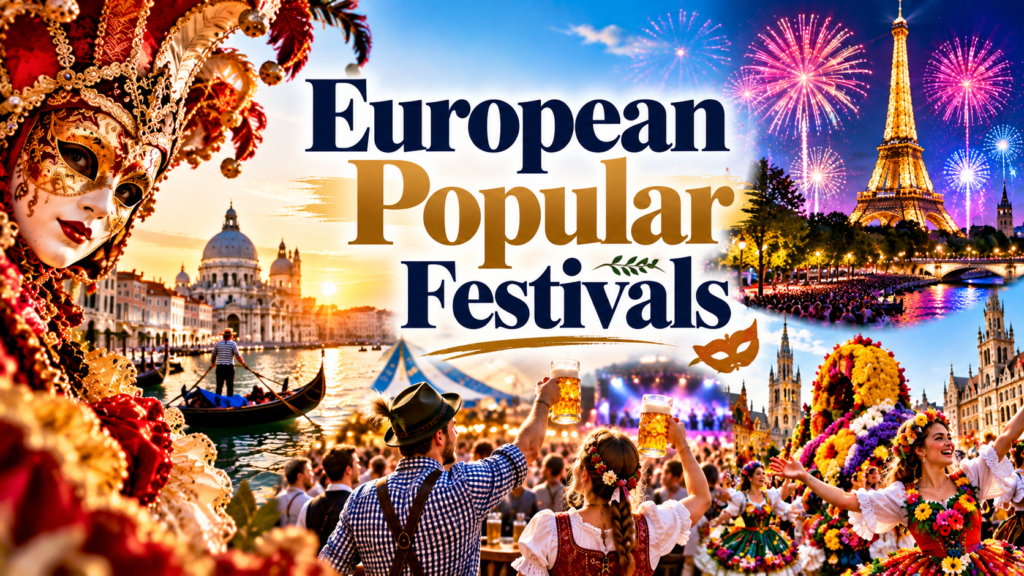
Before choosing a music festival, consider:
- The musical genres and performers you want to see.
- Ticket prices and accommodation costs.
- Festival duration and transport options.
- Camping facilities or nearby hotels.
- Accessibility, crowd size, and weather conditions.
Booking tickets through official festival websites is the best way to check current information and avoid unauthorised sellers.
12. Which European Festivals Celebrate Food and Local Traditions?
Food festivals provide another way to explore European culture. Many events celebrate regional ingredients, traditional cooking methods, agricultural heritage, and local culinary specialities.
In Italy, visitors can discover festivals dedicated to regional pasta, cheese, truffles, olive oil, and wine. France hosts numerous food and culinary events celebrating local produce, while Spain features celebrations connected with seafood, tapas, and regional dishes.
Germany’s traditional festivals often combine regional cuisine with music and community gatherings. In Portugal, local celebrations may showcase seafood, pastries, and traditional cooking.
These events help travellers understand how geography, history, and agriculture influence European food. A coastal festival may focus on fish and seafood, while a celebration in a mountainous region may highlight cheeses, cured meats, or seasonal produce.
How can food festivals improve your European travel experience?
- Introduce you to authentic regional dishes.
- Support local producers and small businesses.
- Provide opportunities to learn about traditional cooking.
- Help you explore destinations beyond major tourist attractions.
- Connect food with regional history and community identity.
Travellers with dietary restrictions should check ingredients and food preparation methods in advance, particularly when dishes contain common allergens.
13. When Is the Best Time to Experience Famous European Festivals?
The best time to visit Europe for festivals depends on the event, destination, climate, and type of experience you prefer. Some festivals take place during the warm summer months, while others are associated with winter traditions or religious calendars.
Spring festivals: March to May
Spring offers celebrations such as King’s Day in the Netherlands and the Carnival of Venice when its dates fall during this period. The season is also suitable for exploring cultural events in cities that begin welcoming larger numbers of outdoor visitors.
Summer festivals: June to August
Summer is one of the busiest festival seasons in Europe. Glastonbury, San Fermín, Edinburgh Festival Fringe, Sziget Festival, and La Tomatina are among the prominent events held during these months.
Autumn festivals: September to November
Autumn brings Oktoberfest in Germany and many harvest-related celebrations. The season can offer cooler weather, changing landscapes, and opportunities to explore regional food traditions.
Winter festivals: November to February
Winter is ideal for exploring Christmas markets and seasonal celebrations. Visitors can experience festive decorations, traditional food, illuminated historic squares, and winter activities in many European cities.
Because festival schedules can change, check the official event website before finalising travel arrangements.
14. How Can You Plan a Trip Around European Festivals?
Planning a festival holiday requires more than choosing an event. Visitors should consider transportation, accommodation, ticket availability, local customs, and the amount of time needed to explore the destination.
Start by selecting one or two festivals that match your interests. Travellers who enjoy music may prioritise summer events, while those interested in history, art, and architecture may prefer Venice’s carnival or Edinburgh’s performing arts programme.
Next, compare the festival dates with your travel schedule. Some events attract large international crowds, which can lead to higher accommodation prices and limited availability.
Useful festival travel tips include:
- Book early: Reserve accommodation and transport well in advance for major events.
- Check official dates: Festival schedules may change each year.
- Plan your budget: Include tickets, accommodation, meals, local transport, and travel insurance.
- Understand local customs: Follow event rules and respect community traditions.
- Pack appropriately: Outdoor festivals may require waterproof clothing, comfortable shoes, and sun protection.
- Use public transport: Trains, buses, and local transit can reduce parking difficulties during busy events.
- Protect personal belongings: Keep valuables secure in crowded areas.
- Check accessibility: Confirm venue facilities and travel arrangements if you have specific access requirements.
A well-planned itinerary can help you enjoy the festival while leaving enough time to discover museums, historic buildings, neighbourhoods, and local restaurants.
15. Are European Festivals Suitable for Families?
Many European festivals offer family-friendly activities, although suitability depends on the event, venue, crowd conditions, and children’s ages.
Christmas markets often feature seasonal decorations, craft stalls, food, and activities for children. Edinburgh’s wider festival programme may include performances suitable for younger audiences, while King’s Day in the Netherlands includes public celebrations and markets that can appeal to families.
Some large music festivals provide dedicated family areas or children’s activities, but visitors should confirm these arrangements before purchasing tickets.
Other events require greater caution. The Running of the Bulls is dangerous and should not be treated as a family participation activity. La Tomatina can also involve dense crowds and slippery streets, making it important to review official age restrictions and safety guidance.
Families planning a festival trip should consider noise levels, crowd density, walking distances, toilet facilities, food options, and access to quiet areas.
Choosing the right event can turn a European festival holiday into an opportunity for children to learn about different languages, foods, traditions, and cultural practices.
16. How Do European Festivals Preserve Cultural Heritage?
European festivals help preserve cultural heritage by passing traditions from one generation to another. Music, costumes, traditional crafts, dances, food, and public ceremonies often reflect the history of a particular region.
The Carnival of Venice preserves traditions connected with masks and Venetian craftsmanship. Oktoberfest showcases Bavarian food, music, and clothing, while San Fermín reflects the historical and religious traditions of Pamplona.
Christmas markets also support traditional craftsmanship and seasonal customs, particularly when local artisans sell handmade products and regional specialities.
At the same time, many festivals have evolved to include international performers, contemporary art, modern technology, and new forms of entertainment. This combination of tradition and innovation allows cultural celebrations to remain relevant to younger generations and international visitors.
Festivals can also encourage intercultural understanding. Visitors learn about customs different from their own, while local communities have opportunities to share their history and identity with a wider audience.
Responsible tourism is important to this process. Travellers can support cultural preservation by purchasing locally made products, respecting community traditions, following venue rules, and considering the environmental impact of large events.
Conclusion: Which Famous European Festivals Should You Experience?
Famous European festivals offer an exciting way to discover the continent’s diversity, creativity, and cultural heritage. From the traditional atmosphere of Oktoberfest in Germany and the elaborate costumes of Venice Carnival to the artistic energy of the Edinburgh Festival Fringe and the cinematic prestige of Cannes, every event presents a distinctive experience.
Music enthusiasts can explore Glastonbury, Sziget, and Tomorrowland, while travelers seeking seasonal charm can visit European Christmas markets. Those interested in local customs may enjoy King’s Day in the Netherlands, San Fermín in Spain, or regional food festivals throughout the continent.
The best festival depends on your interests, budget, travel dates, and preferred destination. Some events offer lively outdoor entertainment, while others provide opportunities to explore art, history, cuisine, and traditional craftsmanship.
By researching festival schedules, booking accommodation early, and respecting local customs, travelers can create a memorable European holiday. Whether you visit for music, food, fashion, film, or cultural discovery, Europe’s festivals offer countless ways to experience the continent beyond its famous landmarks.
Read More – Mediterranean Diet: What Makes It Popular?