
Europe Expat Communities: Where Can You Find Connection, Support and a Sense of Belonging?
Moving to a new country can be an exciting journey filled with opportunities, cultural discoveries and personal growth. However, relocating abroad also brings challenges, from adjusting to unfamiliar traditions and learning a new language to finding friends, building professional networks and navigating everyday life. This is where Europe expat communities across Europe play an important role, helping newcomers feel welcomed, connected and supported as they settle into their new surroundings.
Europe is home to diverse international communities, with people from different countries, cultures, professions and backgrounds living together in major cities, smaller towns and rural regions. Whether someone is moving for work, education, retirement, family life or adventure, Europe expat communities can offer practical guidance, social opportunities and a sense of belonging.
But where can expatriates find these communities? Which European countries are popular among international residents? How can newcomers build meaningful friendships, and what opportunities are available for people living abroad? Understanding these questions can make the transition to European life much smoother.
What Are Europe Expat Communities and Why Are They Important Across Europe?
Europe expat communities are groups of people who live outside their country of origin and connect with others through shared experiences, interests, cultural backgrounds or professional opportunities. These communities may include expatriates, international workers, students, digital nomads, entrepreneurs, retirees and families who have relocated to another country.
Across Europe, Europe expat communities have become an important part of modern society. International residents contribute to local economies, cultural exchange, education, tourism, entrepreneurship and the workforce. At the same time, they often seek support from people who understand the experience of adapting to a new country.

Europe expat communities can help newcomers with:
- Social connections: Meeting people, making friends and building relationships.
- Practical guidance: Understanding housing, transportation, banking and everyday services.
- Career opportunities: Networking, professional events, job recommendations and business connections.
- Cultural adjustment: Learning local customs, traditions, etiquette and languages.
- Family support: Finding schools, childcare, activities and family-friendly resources.
- Emotional wellbeing: Sharing experiences and managing the challenges of relocation.
For many international residents, joining an expat community is not simply about meeting fellow foreigners. It is about developing a support system that helps them establish a comfortable, meaningful and fulfilling life abroad.
Which European Countries Have Popular Europe expat communities?
Europe offers a wide range of destinations for expatriates, each with its own lifestyle, culture, employment opportunities and international networks. Some countries attract professionals through major business hubs, while others appeal to remote workers, students, families and retirees.
Why Are Europe expat communities Popular in Spain?
Spain is a popular destination for international residents seeking a combination of lifestyle, culture, sunshine, food and social opportunities. Cities such as Madrid, Barcelona, Valencia, Málaga and Alicante have diverse international populations and established expat networks.
Europe expat communities in Spain often organise social gatherings, language exchanges, sports activities, cultural outings, networking events and family events. These activities help people connect with others while discovering Spanish traditions and local lifestyles.
Spain may appeal to:
- Remote workers looking for lifestyle flexibility.
- Retirees seeking a relaxed environment.
- Families interested in international education.
- Entrepreneurs and freelancers.
- International professionals and students.
Although English is widely used in some international circles, learning Spanish can significantly improve everyday interactions, employment opportunities and integration into local society.
What Makes Portugal Attractive to Europe expat communities?
Portugal has attracted international residents through its coastal lifestyle, welcoming atmosphere, cultural heritage and growing international business environment. Lisbon, Porto, Braga and parts of the Algarve are among the places where expatriates commonly seek connections.
Europe expat communities in Portugal may include entrepreneurs, technology professionals, remote workers, retirees, students and international families.
New residents often connect through:
- Local international networking groups.
- Language-learning meetups.
- Outdoor activities and hiking groups.
- Cultural festivals and community events.
- Business and coworking spaces.
- Social media communities for newcomers.
Portugal can provide opportunities for people looking for a balance between urban living, coastal experiences and cultural exploration. However, housing affordability, local bureaucracy and language learning can be important considerations when planning a move.
How Do Europe expat communities Thrive in Germany?
Germany is a major destination for international professionals, students, researchers, entrepreneurs and families. Cities such as Berlin, Munich, Frankfurt, Hamburg, Düsseldorf and Cologne attract people from many parts of the world.
Germany’s international communities often connect around professional interests, educational institutions, cultural activities and shared languages.
Expats in Germany can find community through:
- International professional networks.
- University alumni and student organisations.
- Cultural associations.
- Meetup groups and local events.
- Sports and hobby clubs.
- Parenting and family groups.
Berlin is often associated with international creative and startup communities, while Frankfurt attracts professionals connected to finance and business. Munich offers international corporate and technology networks, and Hamburg has diverse business, maritime, creative and cultural communities.
Learning German can make a major difference in accessing local services, developing friendships with German residents and finding long-term opportunities.
Why Do Expats Choose the Netherlands?
The Netherlands is known for its international business environment, urban infrastructure, educational opportunities and multicultural cities. Amsterdam, Rotterdam, Utrecht, Eindhoven, The Hague and Leiden are popular destinations for many international residents.
The country’s Europe expat communities often include professionals working in technology, finance, engineering, research, education, logistics and creative industries.
International residents can participate in:
- Professional networking events.
- International social clubs.
- Language exchanges.
- Cycling and sports groups.
- Cultural and community festivals.
- University and alumni associations.
English is commonly spoken in many urban and professional settings, but learning Dutch can help residents build deeper relationships and become more involved in neighbourhood life.
What Opportunities Do Europe expat communities Offer in France?
France offers international residents a wide variety of experiences, from metropolitan life in Paris to relaxed living in smaller cities and countryside regions.
Paris has a diverse international population, including students, artists, entrepreneurs, diplomats and professionals. Lyon, Bordeaux, Toulouse, Nice, Marseille and Montpellier also attract international residents for education, business, culture and lifestyle.
Europe expat communities in France often organise social events, language exchanges, cultural activities, food gatherings and professional networking.
International residents can benefit from connecting with people who understand the challenges of navigating French administration, housing, healthcare, employment and language requirements.
At the same time, participating in local associations, neighbourhood activities and French language classes can help newcomers build connections beyond international circles.
Where Can Expats Find Communities in Italy?
Italy attracts expatriates interested in art, history, food, fashion, business, education and lifestyle. Milan, Rome, Florence, Bologna, Turin and Naples are among the cities where international residents may find diverse networks.
Italy’s Europe expat communities often bring together people working in international business, tourism, creative industries, education, hospitality and technology.
Community opportunities may include:
- Food and cooking clubs.
- International social events.
- Art and cultural activities.
- Business networking.
- Language exchanges.
- Outdoor activities and travel groups.
Italian language skills are particularly valuable for everyday life, accessing local services and building long-term friendships with residents.
Are Europe expat communities Growing in Scandinavia?
Countries such as Sweden, Denmark, Norway and Finland attract international residents through education, professional opportunities, quality-of-life considerations, innovation and cultural experiences.
Cities such as Stockholm, Copenhagen, Oslo and Helsinki have international networks connecting professionals, students, families and entrepreneurs.
Europe expat communities in Scandinavian countries often organise networking sessions, social gatherings, outdoor activities, family events and cultural exchanges.
Although English is widely used in many professional and international settings, learning the local language is often an important step toward deeper integration and long-term participation in society.
How Can Expats Find Communities in European Cities?
Finding an expat community can be easier when newcomers actively explore different social and professional opportunities. Most European cities have multiple ways for international residents to connect with people who share similar interests, experiences or goals.
Are Online Expat Groups a Good Starting Point?
Online communities are often one of the easiest ways to connect with people before moving to a new country or city. Social media platforms, discussion forums and community websites allow newcomers to ask questions, share experiences and discover events.
Online expat groups may help people find:
- Apartment and housing information.
- Job opportunities and professional advice.
- Local recommendations.
- Social gatherings and meetups.
- Family and childcare resources.
- Language-learning partners.
- Travel and leisure activities.
However, newcomers should exercise caution when interacting with strangers online, particularly when financial transactions, rental agreements, personal documents or employment offers are involved.
How Do Meetup Groups Help Expats Build Friendships?
Meetup-style social groups provide opportunities to meet people in person through shared interests. These groups may organise hiking trips, photography walks, book clubs, board games, dinners, language exchanges and cultural outings.
Joining an activity-based group can be more comfortable than attending an event where the main purpose is simply networking. Shared interests create natural conversation opportunities and can help friendships develop over time.
Expats who attend events regularly may find it easier to establish relationships rather than relying on occasional social gatherings.
Can Coworking Spaces Help Expats Connect?
Coworking spaces are particularly useful for remote workers, freelancers, entrepreneurs and professionals who want to build social and professional networks.
Many coworking spaces host community lunches, workshops, networking sessions, business events and informal gatherings. These activities can help international residents exchange ideas, learn about local opportunities and develop relationships with people from different industries.
Coworking spaces may also provide a more structured environment for people who work remotely and want to avoid isolation.
Are Language Exchange Groups Useful for International Residents?
Language exchange groups offer an opportunity to practise local languages while helping others learn a language that you speak.
For example, an English-speaking newcomer in Spain might practise Spanish with a local resident who wants to improve their English. Similar exchanges can take place across Europe in French, German, Italian, Dutch, Portuguese and many other languages.
Language exchanges can help participants:
- Improve conversational confidence.
- Learn everyday expressions.
- Understand cultural differences.
- Meet local residents.
- Develop friendships.
- Become more comfortable in social situations.
Language exchange activities often take place in cafes, community centres, libraries and online.
How Can Expat Families Find Support Across Europe?
Moving abroad with children involves additional responsibilities, including education, childcare, healthcare, family activities and emotional adjustment. Expat family communities can help parents share information and support each other through the relocation process.
International families often connect through school networks, parenting groups, community events and family-friendly activities.
Expat parents may seek advice about:
- International and local schools.
- Childcare and nursery options.
- Family healthcare services.
- Children’s sports and extracurricular activities.
- Family-friendly neighbourhoods.
- Holiday activities and camps.
- Cultural adjustment for children.
Children can benefit from opportunities to meet peers from different backgrounds and participate in local activities. Parents may also find reassurance in connecting with other families who have experienced similar transitions.
However, international families should also encourage children to build relationships with local classmates and participate in activities that help them understand their new culture.
What Career Opportunities Can Europe expat communities Provide?
Europe expat communities can be valuable professional networks for people seeking employment, changing careers, launching businesses or exploring new industries.
International residents may share information about job openings, recruitment events, professional organisations, workplace expectations and industry trends.
Career-focused expat networks can be especially useful for people who are new to a country’s employment market and unfamiliar with local hiring practices.
Professional networking opportunities may include:
- Industry-specific events.
- Startup and entrepreneurship groups.
- International business associations.
- Professional conferences.
- Mentoring programmes.
- LinkedIn networking communities.
- Career workshops and training sessions.
Building a professional network can help expatriates understand the local market, develop relevant skills and identify opportunities. However, networking should complement formal job applications, qualifications, work authorisation and professional experience rather than replace them.
How Do Europe expat communities Help People Adjust to European Culture?
Cultural adaptation is one of the most important parts of living abroad. Every country has its own traditions, communication styles, social expectations, workplace customs and everyday routines. Europe expat communities can help newcomers understand these differences while encouraging them to explore their new environment.
People who have lived abroad for several years often share valuable experiences about navigating daily life, understanding local etiquette and avoiding common misunderstandings.
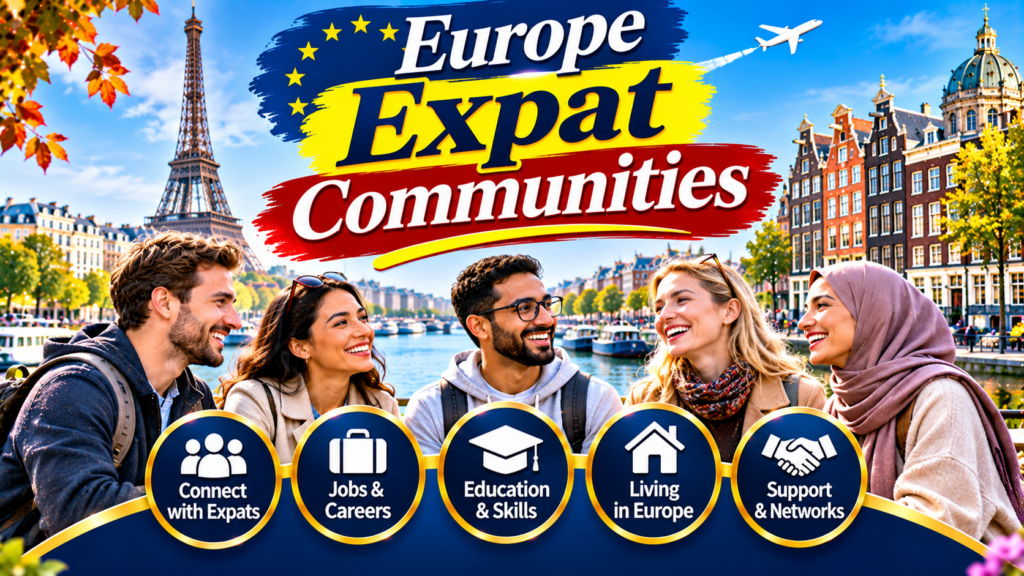
Cultural adaptation may involve:
- Understanding local greetings and communication styles.
- Learning social etiquette and traditions.
- Exploring local festivals and celebrations.
- Becoming familiar with workplace culture.
- Understanding public transportation and daily routines.
- Learning about local food, history and customs.
Europe expat communities can provide a comfortable starting point for cultural exploration. However, the most rewarding experiences often come from combining international friendships with genuine participation in local communities.
What Challenges Do Expats Face When Joining Communities Abroad?
Although Europe expat communities provide valuable support, building a new social life in another country is not always easy. Relocation can involve emotional, financial, professional and cultural challenges.
Is Language a Barrier to Making Friends?
Language differences can make everyday interactions difficult. People may struggle to communicate with neighbours, participate in community activities or understand conversations in social settings.
Joining language classes, practising regularly and participating in language exchange activities can help international residents improve their confidence.
Can Expats Experience Loneliness?
Loneliness is a common challenge during relocation, particularly when people leave friends, family members and familiar surroundings behind.
Finding a community can help people develop social connections, but building meaningful friendships takes time. Regular participation in social activities, volunteering and local events can create opportunities for deeper relationships.
How Can Expats Deal With Bureaucracy?
European countries have different rules and procedures for residency, registration, taxation, healthcare, employment and housing. These processes can sometimes feel complicated for newcomers.
Expats may benefit from sharing experiences with other international residents, consulting official government websites and seeking qualified professional assistance when necessary.
Community advice can be helpful, but legal, financial and immigration decisions should always be based on reliable and up-to-date information.
Is Housing Difficult for Expats in Europe?
Housing can be a significant challenge in popular European destinations. High demand, rental requirements, language barriers and unfamiliar tenancy rules can make finding suitable accommodation difficult.
Europe expat communities may share housing recommendations, neighbourhood information and experiences with local rental markets. Nevertheless, residents should carefully verify landlords, rental contracts, property details and payment requirements before committing to accommodation.
Are Europe expat communities Helpful for Digital Nomads?
Digital nomads and remote workers often relocate frequently, making social connections and professional networks particularly important. Europe offers a variety of cities where remote workers can connect through coworking spaces, networking events, technology communities and lifestyle groups.
Digital nomad communities can help remote workers:
- Discover coworking spaces and work-friendly cafes.
- Meet freelancers and entrepreneurs.
- Exchange business ideas.
- Find travel partners.
- Share information about local services.
- Participate in social and professional activities.
Some international residents choose to remain in one city for several months, while others travel between countries. In either case, community connections can help reduce isolation and create a more balanced lifestyle.
Remote workers should also research residency rules, tax obligations, healthcare coverage and the conditions under which they are permitted to work in their destination country.
How Can Retirees Benefit From Europe expat communities in Europe?
Retirees relocating to Europe may seek comfortable lifestyles, cultural experiences, recreational activities and opportunities to build friendships. Europe expat communities can help older international residents connect with people who share similar interests and experiences.
Retirement communities and social networks may organise:
- Walking and hiking activities.
- Cultural visits and museum trips.
- Social lunches and dinners.
- Gardening clubs.
- Book clubs and discussion groups.
- Volunteer activities.
- Travel and sightseeing events.
Retirees may also find it helpful to connect with people who have experience navigating healthcare services, housing arrangements, residency procedures and local transportation.
However, retirees should avoid relying exclusively on expatriate networks. Developing relationships with local residents can make retirement abroad more fulfilling and help individuals become more closely connected to their surroundings.
Where Can Students Find Expat and International Communities?
International students are an important part of Europe’s multicultural environment. Universities, colleges and educational institutions often provide structured opportunities for students to meet people from different countries.
Student communities may include international student associations, cultural clubs, academic societies, sports teams and volunteer organisations.
These networks can help students:
- Find accommodation and understand campus services.
- Meet students from different cultures.
- Participate in academic and social events.
- Explore cities and cultural attractions.
- Develop professional connections.
- Improve language skills.
Joining university clubs and participating in local activities can help students build friendships beyond their classrooms.
For students studying abroad, a combination of academic networks, international friendships and local engagement can create a valuable experience that extends beyond education.
What Role Do Cultural and Community Events Play in Expat Life?
Cultural and community events provide an opportunity for expatriates to connect with others while discovering the traditions, lifestyles and heritage of their host country.
Europe hosts numerous festivals, exhibitions, concerts, food markets, sporting events, community celebrations and cultural activities throughout the year.
Europe expat communities may organise gatherings around national holidays, international celebrations, seasonal festivals and local events.
Participating in community activities can help international residents:
- Explore local traditions.
- Meet people with similar interests.
- Discover new hobbies.
- Experience different cuisines.
- Develop a stronger connection with their city.
- Share their own cultural traditions.
Community events can also encourage cultural exchange by bringing together people from different backgrounds. This creates opportunities for residents to share experiences, learn from one another and build more inclusive communities.
How Can Expats Build Meaningful Friendships in Europe?
Making friends abroad requires patience, curiosity and consistent participation in social activities. While Europe expat communities can make introductions easier, meaningful friendships often develop through shared experiences and repeated interactions.
Some practical ways to build friendships include:
- Attend events regularly: Repeated participation allows people to become familiar with each other and develop trust.
- Join hobby groups: Sports, cooking, photography, music and outdoor activities create natural opportunities for conversation.
- Learn the local language: Language skills help people communicate more comfortably and participate in local life.
- Volunteer: Community volunteering can connect international residents with local people and organisations.
- Invite people to informal gatherings: Coffee, lunch, walks or small gatherings can help friendships grow.
- Stay open to different cultures: Understanding differences in communication, traditions and expectations can improve relationships.
Friendship is not always immediate. Some people may need months to develop a comfortable social network, particularly when relocating to a city where cultural differences or language barriers are significant.
Are Europe expat communities Better Than Local Communities?
Europe expat communities and local communities offer different advantages, and both can contribute to a rewarding life abroad.
Europe expat communities often provide practical support, shared relocation experiences, international friendships and accessible networking opportunities. Local communities, on the other hand, can help residents develop deeper cultural understanding, language skills and a stronger sense of belonging.
The most balanced approach is to participate in both.
International residents can join expat groups to find practical advice and social connections while also participating in local clubs, neighbourhood events, sports activities, volunteer programmes and cultural organisations.
Building connections across both communities can help expatriates develop a broader social network and enjoy a more authentic experience of living in Europe.
What Should New Expats Consider Before Joining a Community?
Before joining an expat community, newcomers should consider their interests, location, lifestyle, career goals and expectations.
Some groups focus primarily on social gatherings, while others are dedicated to professional networking, family support, language learning, travel or specific cultural backgrounds.
New residents can consider the following factors:
- Location: Choose groups that are accessible and active in your city or neighbourhood.
- Interests: Join communities that match your hobbies, professional goals or lifestyle.
- Activity level: Look for groups that regularly organise gatherings and events.
- Inclusivity: Choose communities that encourage respectful participation and cultural diversity.
- Safety: Be cautious when sharing personal information or making financial commitments.
- Community balance: Participate in international networks while exploring local opportunities.
Finding the right community may take time, but trying different activities can help newcomers discover where they feel most comfortable.
How Are Europe expat communities Changing the European Lifestyle?
Europe expat communities are increasingly connected through digital platforms, international workplaces, educational institutions, travel networks and cultural exchange. These connections allow people to share information, organise events and build relationships across borders.
International communities contribute to the diversity of European cities by bringing different languages, traditions, professional experiences, cuisines and perspectives.
They can also support entrepreneurship, tourism, innovation, cultural activities and international collaboration. In many cities, expatriates participate in local businesses, educational programmes, neighbourhood organisations and community initiatives.
As international mobility continues to shape modern lifestyles, Europe expat communities may remain an important part of how people experience relocation, work, education, retirement and cultural exchange.
The strength of these communities often lies in their ability to connect people who are navigating similar experiences while encouraging them to explore and contribute to their new surroundings.
Conclusion: How Can Europe expat communities Make Life in Europe More Meaningful?
Europe expat communities across Europe offer opportunities to build friendships, exchange knowledge, develop professional networks and create a sense of belonging in a new country. From major international cities such as Berlin, Paris, Madrid, Amsterdam and Lisbon to smaller towns and regional destinations, international residents can find communities that support their interests, lifestyles and ambitions.
Whether someone is relocating for work, education, family life, retirement or adventure, joining a community can make the transition easier and more enjoyable. Social groups, language exchanges, professional networks, cultural events and online platforms provide practical ways to connect with people and explore new opportunities.
However, the most fulfilling expat experience often comes from embracing both international and local communities. Building friendships with fellow expatriates while learning the language, participating in neighbourhood activities and exploring local traditions can create a richer experience of life abroad.
Expat life is not just about moving to another country. It is about creating connections, discovering cultures, sharing experiences and building a place where you feel at home.
Do follow us on Instagram
Read More – How the European Education System Works?