
Ultimate Guide to Know For European Culture, Traditions and Customs
European culture is a diverse collection of traditions, customs, languages, beliefs, artistic expressions, cuisines, social practices, and historical influences that have developed across the continent over thousands of years. From the ancient civilizations of Greece and Rome to medieval kingdoms, the Renaissance, the Industrial Revolution, and modern European societies, each period has contributed to the cultural identity of Europe.
Rather than representing one single culture, Europe is home to many distinct cultural traditions. Countries such as France, Italy, Spain, Germany, Greece, Portugal, the United Kingdom, Sweden, Norway, Poland, Austria, and Switzerland all have their own customs and ways of life. At the same time, they share historical influences that create connections across the continent.
European culture can be experienced through architecture, music, literature, fashion, festivals, food, family traditions, religious celebrations, public holidays, and everyday social customs. Understanding these traditions provides valuable insight into Europe’s history and the diverse communities that continue to shape the continent today.
Why Is European Culture So Diverse?
Why does European culture vary so much from one country to another? One major reason is Europe’s long and complex history. The continent has been influenced by ancient civilizations, migrations, kingdoms, empires, religious movements, wars, trade routes, and political changes.
Geography has also played an important role. Mountain ranges, rivers, seas, forests, and different climates historically separated communities and allowed local traditions to develop independently. Coastal regions often developed strong maritime traditions, while mountainous areas developed distinctive food, clothing, architecture, and festivals.
Language is another important factor. European culture contains dozens of major languages and hundreds of regional and minority languages. Language has helped communities preserve stories, literature, music, folklore, and customs from generation to generation.
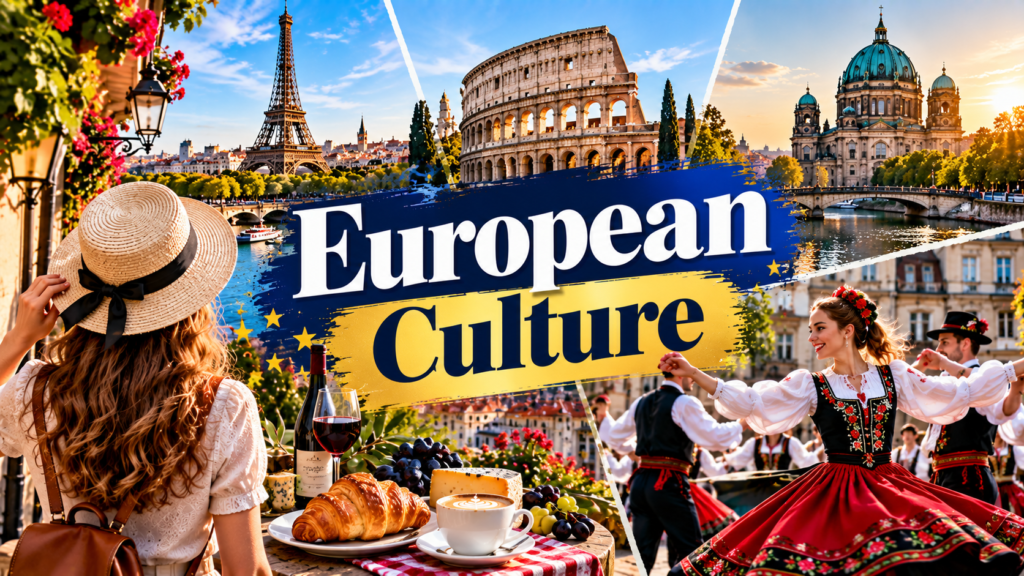
European cultural diversity can be seen in:
- Languages and dialects
- Traditional clothing
- Regional cuisines
- Religious celebrations
- Folk music and dance
- Architecture and historic landmarks
- Family and social customs
- National and regional festivals
- Art and literature
- Traditional crafts
What Are the Most Important European Traditions?
European traditions are deeply connected with family, religion, seasons, food, community celebrations, and historical events. Some traditions are centuries old, while others have evolved into modern celebrations.
Christmas is one of the most widely recognized traditions across Europe, although it is celebrated differently from country to country. Families may decorate Christmas trees, exchange gifts, attend religious services, prepare traditional meals, and visit relatives. Christmas markets are particularly associated with Central and Northern Europe and have become popular attractions for both residents and visitors.
Easter is another important European tradition, especially in countries with strong Christian cultural influences. Easter customs may include church services, processions, special foods, decorated eggs, family gatherings, and community festivals.
Other important European traditions include:
- New Year’s celebrations
- Carnival and pre-Lenten festivals
- Harvest festivals
- National and regional holidays
- Saint-related festivals
- Spring celebrations
- Traditional weddings
- Local food festivals
- Folk music and dance events
These customs differ considerably between countries and regions, making European traditions particularly rich and varied.
How Does Religion Influence European Culture?
Religion has played a major role in shaping European history and culture. Christianity has had a particularly significant influence on European art, architecture, music, literature, festivals, and social traditions. Catholic, Protestant, and Eastern Orthodox traditions have all contributed to different aspects of European cultural development.
Europe is also home to Jewish, Muslim, Buddhist, Hindu, and other religious communities. Modern European societies are increasingly diverse, and many cultural traditions now reflect both historic practices and contemporary multicultural influences.
Historic churches, cathedrals, monasteries, synagogues, mosques, and other religious buildings can be found throughout the continent. These structures are not only places of worship but are also important examples of architecture and cultural heritage.
Religious influence can be observed through:
- Religious festivals and holidays
- Traditional wedding ceremonies
- Historic architecture
- Religious art and music
- Pilgrimage traditions
- Traditional foods
- Community celebrations
At the same time, many Europeans today identify as secular or practice religion privately, showing how cultural traditions can continue even when religious participation changes.
What Are European Family Traditions Like?
Family remains an important part of social life in many European societies, although family structures and lifestyles vary considerably. Family traditions may involve regular meals, holiday gatherings, birthdays, weddings, anniversaries, and visits with relatives.
In many European countries, sharing meals with family is an important social activity. Sunday lunches, holiday dinners, and celebrations often bring multiple generations together.
European family customs may include:
- Celebrating birthdays with family and friends
- Gathering for major holidays
- Sharing traditional recipes
- Visiting older relatives
- Celebrating weddings with extended families
- Passing family stories between generations
- Preserving traditional crafts and recipes
Modern European families may be smaller and more diverse than in previous generations, but family connections continue to play an important role in cultural identity.
What Is European Food Culture?
European food culture is one of the continent’s most recognizable cultural features. European cuisine includes thousands of regional dishes shaped by local ingredients, climate, history, agriculture, and trade.
Italian cuisine is internationally known for pasta, pizza, risotto, and regional specialties. French cuisine is celebrated for its breads, pastries, cheeses, sauces, and sophisticated culinary traditions. Spanish food culture includes tapas, paella, cured meats, and regional seafood dishes. Greek cuisine features ingredients such as olive oil, vegetables, herbs, grains, seafood, and cheese.
Northern and Central European food traditions also have distinctive identities. Scandinavian cuisine often reflects the region’s climate and access to fish, grains, berries, and root vegetables. Central European countries have traditions involving breads, sausages, dumplings, pastries, soups, and hearty seasonal meals.
What makes European food culture particularly interesting is its regional diversity. Even within one country, recipes can vary dramatically between cities, provinces, islands, and rural communities.
Why Are European Cafes and Dining Traditions Important?
Cafés and restaurants have long been important social spaces in European cities. In many places, enjoying food or a drink is not simply about eating; it is also an opportunity to socialize, relax, discuss ideas, and spend time with friends.
European dining customs vary. In some countries, meals may be long social occasions, while in others, people may prefer lighter meals and efficient dining. Coffee culture is particularly important in several European societies, with different countries developing distinctive coffee traditions.
Dining customs may include:
- Taking time to enjoy meals
- Sharing food with family or friends
- Visiting local cafés
- Eating seasonal and regional products
- Buying fresh food from local markets
- Enjoying traditional pastries and desserts
The European emphasis on local food markets, traditional recipes, and regional ingredients continues to influence global food culture.
How Do European Festivals Reflect Cultural Traditions?
European festivals provide an opportunity for communities to celebrate history, religion, seasons, music, food, and local identity. Some festivals attract visitors from around the world, while others remain small community celebrations.
Carnival is particularly important in parts of Southern, Western, and Central Europe. Costumes, parades, music, dancing, and public celebrations are common features. Different cities and regions have developed their own versions of carnival traditions.
Christmas markets are another popular European cultural tradition. Wooden stalls, seasonal foods, handmade crafts, decorations, music, and festive activities create distinctive winter environments.
Other European festivals celebrate:
- Spring and the arrival of warmer weather
- Harvest seasons
- Traditional music
- Regional foods
- Historical events
- Religious occasions
- National identity
- Local arts and crafts
Festivals help communities preserve cultural traditions while allowing them to evolve for modern audiences.
What Role Does Music Play in European Culture?
Music has always been an important part of European cultural life. Europe has produced some of the world’s most influential composers, musicians, opera traditions, folk music styles, and contemporary artists.
Classical music has a particularly important place in European cultural history. Composers such as Johann Sebastian Bach, Wolfgang Amadeus Mozart, Ludwig van Beethoven, Frédéric Chopin, and Antonio Vivaldi influenced music around the world.
However, European music is much broader than classical music. Folk traditions, regional instruments, traditional songs, opera, choral music, electronic music, rock, pop, and contemporary genres all contribute to European musical culture.
Traditional music often reflects local history and identity. Folk dances and songs may be performed during weddings, festivals, national celebrations, and community gatherings.
How Important Is Art to European Culture?
Art is central to European cultural heritage. Europe was home to major artistic movements including the Renaissance, Baroque, Romanticism, Impressionism, Expressionism, and many modern movements.
The Renaissance transformed European art and intellectual life, particularly in parts of Italy and Western Europe. Artists such as Leonardo da Vinci, Michelangelo, and Raphael became influential figures whose work continues to attract global attention.
European art can be found in:
- Museums and galleries
- Historic churches
- Public squares
- Castles and palaces
- Monuments
- Private collections
- Street art and contemporary exhibitions
Art remains an important part of European tourism and education, but it is also part of everyday cultural identity.
How Does European Architecture Reflect Its History?
European architecture provides a visual record of the continent’s history. Visitors can see ancient ruins, medieval castles, Gothic cathedrals, Renaissance buildings, Baroque palaces, Art Nouveau structures, and contemporary architecture within relatively short distances.
Different architectural styles are associated with different historical periods. Gothic architecture is known for features such as pointed arches and large stained-glass windows. Renaissance architecture emphasized symmetry, proportion, and classical influences. Baroque architecture often featured elaborate decoration and dramatic forms.
European cities frequently preserve historic centers alongside modern buildings. This combination allows people to experience different periods of European history within the same urban environment.
What Are Common European Social Customs?
European social customs differ by country and region, so it is important to avoid assuming that one practice represents the entire continent. Nevertheless, several general customs are widely observed.
Greetings can vary significantly. Handshakes are common in many professional situations, while friends and relatives may greet each other with kisses on the cheek or hugs depending on local customs.
Punctuality is generally valued, particularly in professional settings, although expectations vary between countries and social situations.
Respect for personal space, polite conversation, table manners, and appropriate greetings are also important aspects of social interaction.
When visiting Europe, travelers should be aware that:
- Greeting styles differ between countries.
- Dining etiquette can vary by region.
- Some cultures value strict punctuality.
- Others have a more relaxed approach to social timing.
- Dress expectations may change between formal and casual environments.
- Religious and historic sites may require respectful clothing.
What Are Traditional European Wedding Customs?
European weddings are highly diverse and often combine religious traditions, family customs, local foods, music, and modern celebrations. Some couples choose traditional religious ceremonies, while others prefer civil weddings or personalized celebrations.
Wedding customs may include special clothing, family gatherings, traditional dances, speeches, symbolic ceremonies, and regional foods.
In some cultures, wedding celebrations may last for several days, while modern urban weddings may be smaller and more informal.
Common elements include:
- Wedding ceremonies
- Family celebrations
- Traditional music
- Special wedding foods
- Dancing
- Speeches and toasts
- Symbolic gifts
- Regional customs
European weddings demonstrate how older traditions can coexist with modern lifestyles.
How Does Fashion Reflect European Culture?
European fashion has had a major influence on global style. Cities such as Paris, Milan, London, and other European fashion centers have helped shape international trends.
Traditional European clothing also remains an important part of cultural heritage. Folk costumes may be worn during festivals, national celebrations, cultural events, and traditional ceremonies.
European fashion culture combines historical influences with contemporary design. Traditional craftsmanship, tailoring, textiles, embroidery, leatherwork, and jewelry continue to influence modern fashion.
Fashion in Europe can therefore be understood through both heritage and innovation.
What Role Does Language Play in European Identity?
Language is one of the strongest expressions of European cultural identity. Europe contains many major language families and numerous regional languages.
French, German, Italian, Spanish, Portuguese, English, Greek, Polish, Dutch, Swedish, Danish, Norwegian, Finnish, Hungarian, Czech, and many other languages are part of Europe’s linguistic landscape.
Regional languages are also important. Communities often use local languages or dialects to preserve cultural traditions, literature, songs, and historical identities.
Language influences:
- Literature
- Music
- Humor
- Food terminology
- Folklore
- Family traditions
- Regional identity
- Cultural storytelling
Multilingualism is also common in many parts of Europe, especially in countries or regions where several languages coexist.
How Important Are European Markets and Traditional Crafts?
Traditional markets are an important part of European cultural life. Local markets can provide fresh produce, cheese, bread, meat, seafood, flowers, clothing, handicrafts, and regional specialties.
Traditional crafts also contribute to cultural preservation. Pottery, weaving, embroidery, woodworking, glassmaking, jewelry, leatherwork, and other crafts have been passed between generations in many European communities.
These traditions support local economies while preserving cultural knowledge.
Visitors interested in European traditions can explore:
- Farmers’ markets
- Artisan markets
- Flea markets
- Craft fairs
- Seasonal markets
- Christmas markets
- Local food festivals
How Has Modern Life Changed European Traditions?
European traditions have changed significantly because of urbanization, globalization, technology, migration, tourism, and changing lifestyles. Some customs have become less common, while others have been adapted for modern life.
For example, traditional festivals may now include social media, modern entertainment, and international visitors. Traditional recipes may be modified to suit contemporary dietary preferences. Families may live far apart but maintain traditions through digital communication and regular travel.
Modern European culture is therefore not separate from traditional culture. Instead, the two continually influence one another.
Why Is European Cultural Heritage Important?
European cultural heritage provides a connection between the past and the present. Historic buildings, traditional festivals, languages, music, food, art, literature, and crafts help communities understand their history and identity.
Cultural heritage also contributes to education, tourism, local economies, and international cultural exchange.
Preserving European traditions does not necessarily mean keeping everything unchanged. In many cases, preservation means ensuring that knowledge, stories, artistic techniques, and customs can continue to be understood and adapted by future generations.
How Can Travelers Experience Authentic European Culture?
Travelers can experience European culture by going beyond famous landmarks and spending time in local communities. Exploring neighborhood markets, attending cultural festivals, visiting museums, trying regional food, and learning basic local phrases can provide a deeper understanding of European traditions.
Travelers can also support local culture by purchasing products from local artisans and choosing locally owned restaurants and businesses.
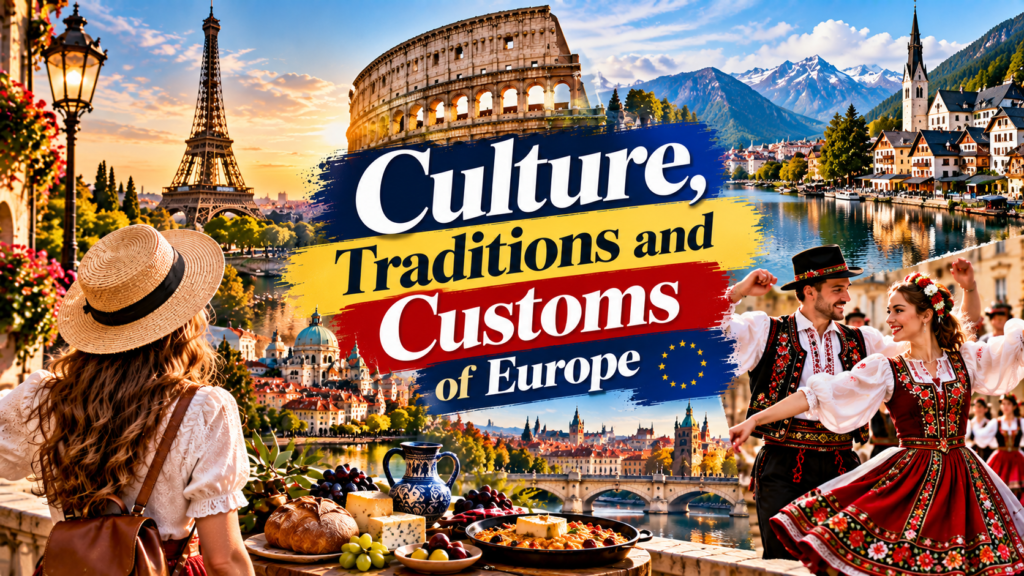
Some useful ways to experience European culture include:
- Visit historic neighborhoods.
- Explore local food markets.
- Attend regional festivals.
- Try traditional dishes.
- Visit museums and cultural centers.
- Learn a few words of the local language.
- Participate respectfully in local customs.
- Explore traditional arts and crafts.
- Attend music or dance performances.
- Speak with local residents when appropriate.
What Makes European Culture Unique?
What makes European culture unique is not one particular tradition but the extraordinary combination of cultures that coexist across the continent. Ancient history, regional identities, languages, food traditions, art, architecture, music, fashion, religion, and modern lifestyles all contribute to Europe’s cultural character.
A traveler can move from one European country to another and experience major differences in cuisine, language, architecture, social customs, and festivals while still discovering shared historical influences.
This combination of diversity and connection is one of the defining characteristics of European culture.
What Is the Future of European Culture and Traditions?
The future of European culture will likely involve an ongoing balance between preservation and change. Globalization and migration are introducing new cultural influences, while technology is changing how traditions are shared and experienced.
Young Europeans are also creating new forms of cultural expression through music, fashion, digital media, art, food, and social communities. At the same time, many young people remain interested in traditional festivals, local cuisine, historic places, and regional heritage.
European culture will therefore continue to evolve rather than remain fixed. Traditional customs may be adapted, combined with new influences, or celebrated in new ways.
Why Should We Learn About European Culture, Traditions and Customs?
Learning about European culture, traditions, and customs helps people understand the history and diversity of one of the world’s most culturally influential regions. It can also make international travel more meaningful by helping visitors understand local behavior, celebrations, food, art, and social expectations.
European culture is not a single set of rules or traditions. It is a constantly evolving collection of regional and national identities shaped by centuries of interaction.
From historic architecture and classical art to local festivals, family meals, traditional crafts, modern fashion, and contemporary music, European cultural life offers an extraordinary variety of experiences.
Understanding these traditions encourages cultural appreciation and respectful interaction. It also demonstrates how communities can preserve their heritage while adapting to changing social conditions.
Ultimately, European culture, traditions and customs represent a fascinating combination of history, diversity, creativity, and modern life. Exploring these traditions offers a deeper appreciation of Europe’s countries and communities and reveals why European cultural heritage continues to influence art, fashion, cuisine, tourism, education, and global popular culture.
Read More – Timeless Europe Fashion Trends